Every year, thousands of Oregon hunters fill out their controlled hunt applications and hope for the best. Some win tags for decent units. A few luck into the big draws. Most go home empty-handed on their first-choice hunts. The hunters who consistently draw premium tags — Steens pronghorn, Wenaha archery elk, Northside Malheur mule deer — aren't luckier than you. They're playing a longer game, and it starts with understanding how Oregon's preference point system actually works.
How Oregon's Controlled Hunt Drawing Works
ODFW manages most premium deer, elk, pronghorn, and bighorn sheep tags through a controlled hunt drawing system. Each year, applicants submit applications for the controlled hunts they want. The draw happens in two phases:
- First Preference Draw: Applicants are sorted by preference point total. All applicants with the most points for a given tag are drawn first. If enough tags exist to satisfy all maximum-point holders, they all receive tags. If not, a random draw among the highest-point applicants determines who gets tags.
- Random Draw: After the preference draw, any remaining tags go to a fully random draw among all applicants who didn't receive a tag in the preference phase — regardless of point totals. This is how zero-point applicants occasionally win premium tags.
This hybrid system means that banking points matters enormously for oversubscribed units, but doesn't guarantee a tag even with maximum points if the unit is popular enough.
Buying Points Without Applying
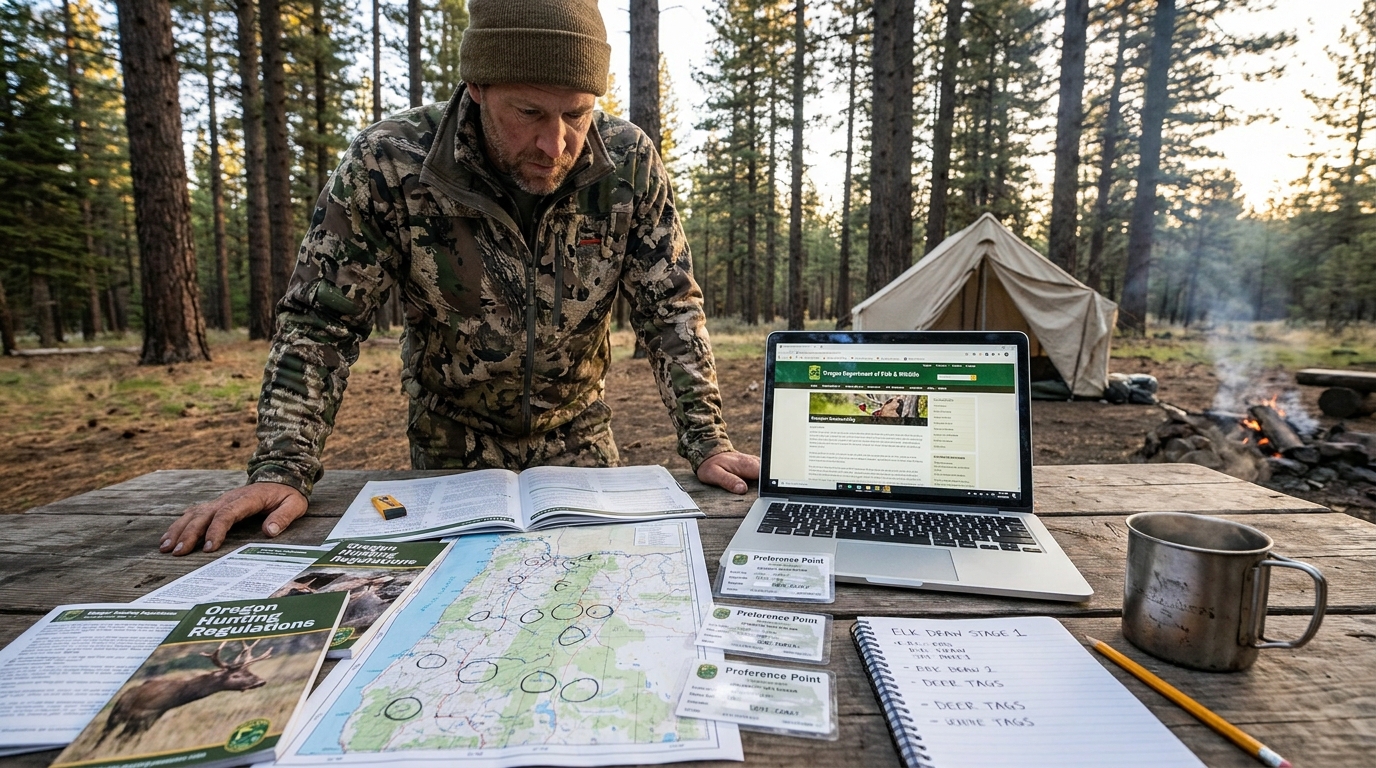
This is the most underused tool in the Oregon hunter's playbook. You can purchase preference points for deer, elk, and pronghorn without applying for a controlled hunt tag. The cost is modest — typically $6.50 to $8.50 per species per year — and the points accumulate toward future draws exactly as if you had applied for and not received a tag.
If you're not interested in any particular controlled hunt this year but know you want to draw a premium unit in five or seven years, buy your points now. Every year you skip costs you future draw position you can never recover. A hunter who buys points from age 25 to 35 without ever applying will have a decade of points banked when they decide to chase a trophy-class unit.
Which Species Have Preference Points
- Deer (controlled hunts only): Most general season deer tags in Oregon require no draw. Preference points apply to premium controlled hunt tags — specific units, seasons, and weapon types that are limited in number.
- Rocky Mountain Elk: Both archery and rifle controlled hunts. Some of Oregon's best elk units (Wenaha, Starkey, Chesnimnus) require multiple points to draw consistently.
- Roosevelt Elk: Coast Range units including some of the best bull tags in the state.
- Pronghorn: Oregon's pronghorn are primarily in the Southeast — Harney, Lake, Malheur, and Grant counties. The top pronghorn units like Steens Mountain and Beatys Butte can require five or more points to draw most years.
- Rocky Mountain Bighorn Sheep and California Bighorn: A completely different system with very limited tags. Points matter, but the wait for premium sheep units can exceed a decade even with maximum points.
- Mountain Goat: Extremely limited permits, points-based. Plan for a very long wait.
Building a Smart Point Strategy
Identify Your Target Hunt
What's your bucket-list Oregon tag? A specific answer is essential — your point strategy depends entirely on how many points it typically takes to draw your target unit. ODFW publishes draw odds statistics for each controlled hunt annually. Review the last five years of draw results for your target hunt to understand how many points the successful applicants averaged. This gives you a realistic timeline.
Buy Points Every Year Without Fail
Set a calendar reminder in March — Oregon's controlled hunt application period typically runs from March 1 through the deadline (usually mid-to-late May). Buy your points every year even if you're not applying for a tag. Missing a single year sets you back permanently in relative standing.
Apply for Achievable Tags While Banking Points
Don't apply your hard-earned points toward a top-tier unit if you're only two-thirds of the way there. Apply for achievable tags with your current points — units that draw at your point level — and continue banking points toward your primary target. This gives you hunting opportunities while your points grow. A good three to five year unit for your current point total that still produces quality animals is better than rolling the dice on a premier unit and potentially wasting points.
Use the Random Draw Strategically
Every year, include at least one desirable unit in your application list that goes to the random draw — a unit where the odds are long but the payoff is exceptional. Steens pronghorn, Trout Creek bighorn, Wallowa Mountain goat. You won't win it most years, but when you do, it's a tag that money and points alone rarely buy. There's no preference point cost to losing a random draw.
Realistic Draw Timelines for Oregon's Premium Units (Approximate)
These are general estimates based on historical draw data and change year-to-year. Always verify against current ODFW draw statistics.
- Steens Mountain Pronghorn (archery or rifle): 5-8 points in most recent years for a reasonable draw probability
- Wenaha Archery Bull Elk: 4-7 points depending on season and weapon type
- Beatys Butte Pronghorn: 6-10 points for premium seasons
- Northside Malheur Mule Deer: 3-6 points for controlled seasons
- Chesnimnus Archery Elk: 3-5 points in most years
- Oregon Rocky Mountain Bighorn Sheep: 10+ years of points; some units effectively require maximum accumulated lifetime points
- Cascade Zone Blacktail Deer (many units): General season, no draw required — no points needed
Non-Resident Considerations
Oregon offers non-resident controlled hunt tags in the same draw system, though point totals are separate from the resident pool. Non-resident preference points cost more per year and the draw odds for premium units are typically tighter given the resident priority built into Oregon's allocation system. Non-residents planning to hunt Oregon's premium units should start buying points as early as possible — the sooner you start, the sooner you'll draw.
Where to Look Up Current Draw Data
The ODFW website (dfw.state.or.us) publishes detailed draw result statistics each year following the controlled hunt drawing. The results tables show the number of applicants at each preference point level, the number of tags allocated, and whether the hunt went to a random draw. This is your primary research tool for building a realistic timeline. Study it carefully before committing your application fees and points toward any specific unit.
The Long Game
Oregon's best hunting isn't locked behind inaccessible private land or unaffordable outfitter fees. It's behind a systematic, patient application strategy that most hunters simply don't maintain consistently. Start buying points this spring. Write down your target hunt. Do the math on your timeline. Then go hunt the general season and public land opportunities that Oregon provides in abundance while you wait — because the wait is part of what makes the tag worth having when you finally hold it in your hands.