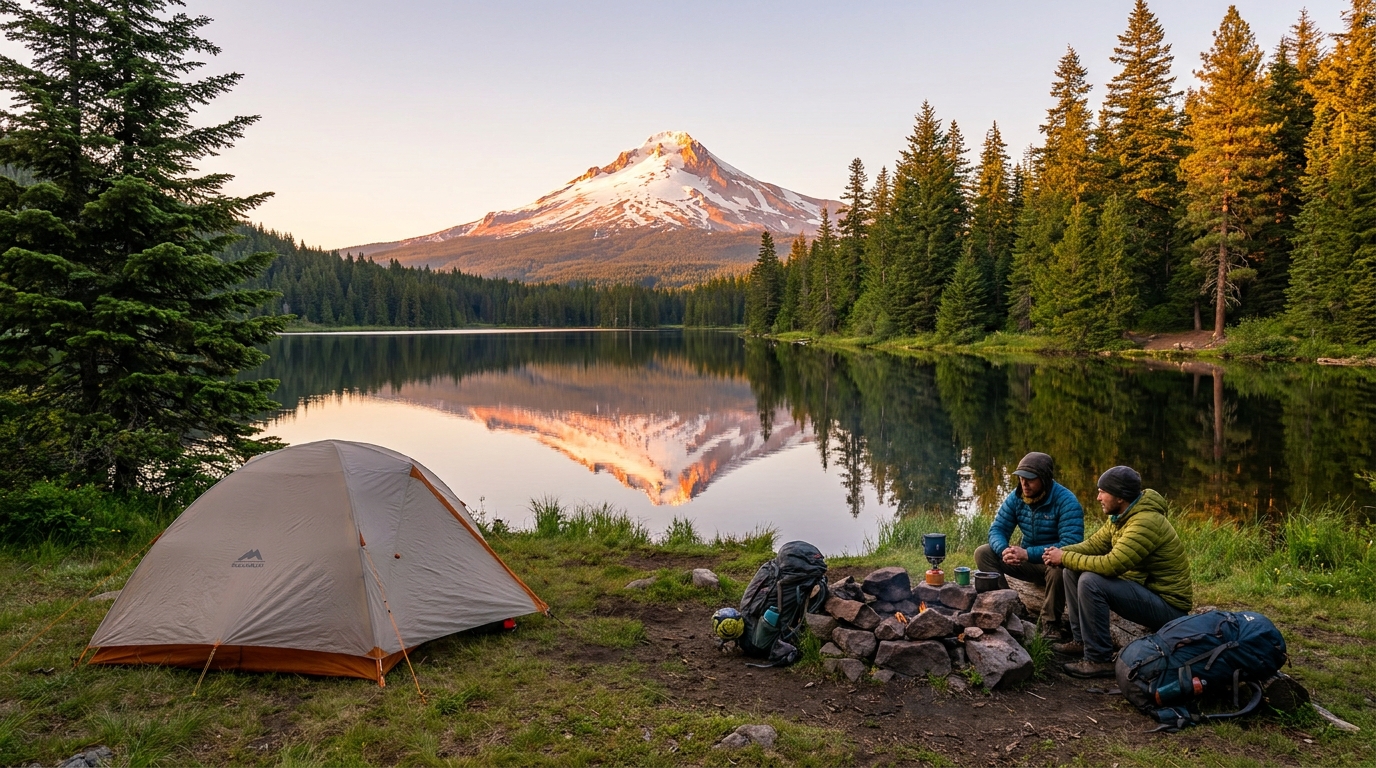
Timothy Lake sits at 3,200 feet in the Mount Hood National Forest, about 60 miles southeast of Portland — close enough for a quick weekend escape but far enough that it still feels like genuine wilderness when you're out on the trail. The 1,400-acre reservoir is surrounded by a 13-mile loop trail that offers backpackers a manageable but rewarding overnight trip with excellent lakeside camping, fishing opportunities, and the chance to catch Mount Hood's reflection in the water at sunset. In July and August, the trail is snow-free, the wildflowers are blooming, and the days are long enough to enjoy several hours of evening fishing before dark.
The Route
The Timothy Lake Loop is roughly 13 miles around the lake perimeter, with minimal elevation gain — you're circling a reservoir, not climbing a mountain. The terrain is gentle enough for first-time backpackers while still being rewarding for experienced hikers looking for a one-night shakedown trip close to Portland.
Most hikers start at the Pine Point Campground trailhead on the lake's north shore, travel counterclockwise (the preferred direction for views), and complete the loop in 1.5–2 days depending on pace and how much time you spend fishing. Day one typically covers 7–8 miles to a lakeside camp on the south shore. Day two brings you back around the western shore through old-growth ponderosa and Douglas fir.
Trailheads
- Pine Point: Main trailhead, north shore, ample parking
- Hoodview: Alternative starting point on the northeast shore
- Gone Creek: South shore access, also used by day hikers
A Northwest Forest Pass is required for trailhead parking. The pass costs $30 annually or $5 per day and is available at the trailhead self-pay station or online from Recreation.gov.
Camping
Designated dispersed camping zones exist around the lake, with the best spots on the south shore providing open lake views, flat tent pads, and fire rings. The area receives heavy weekend use in July and August — arrive mid-week if possible, or plan to camp at least 0.5 miles from the main campgrounds for quieter sites.
Campfire permits are required from June 1 through October 15. In dry years, fire restrictions can prohibit campfires entirely — check with the Mount Hood National Forest ranger district before your trip. A camp stove is always the reliable option regardless of current restrictions.
Bear canisters are strongly recommended, though not currently required. Black bears are present in the area. Hang food, scented items, and cookware using the PCT-standard bear hang method if you don't carry a canister: 10 feet off the ground, 4 feet from the trunk, 4 feet below the hanging branch.
Fishing at Timothy Lake
Timothy Lake is stocked with legal rainbow trout by ODFW and also holds kokanee salmon — landlocked sockeye — that make for excellent eating and aggressive fishing in early summer. July is an excellent time: the kokanee are active at 20–40 foot depths, and rainbows can be taken from the bank on spinners and PowerBait.
Backpacker Fishing Options
- Pack rod: A 5-piece ultralight spinning or fly rod saves space and handles most Timothy Lake conditions
- Bank fishing: Bring PowerBait, small spinners (Panther Martin, Rooster Tail), and Berkley Power Eggs for stocked rainbow trout
- Fly fishing: Caddis and attractor patterns work in the evenings when fish are rising along the shallow margins
- Trolling: Not practical from shore without a boat or float tube, but a float tube backpacked in can access the kokanee fishery effectively
Oregon fishing license required. Statewide trout regulations apply — check current ODFW rules for bag limits on kokanee at Timothy Lake.
What to Pack
Essential Gear
- Lightweight tent or tarp shelter (morning dew can be heavy)
- 30°F sleeping bag or quilt (summer nights at 3,200 feet can drop to 45–50°F even in July)
- 3-liter water capacity minimum — the lake water requires filtering or treatment
- Water filter (Sawyer Squeeze or Katadyn BeFree recommended)
- Camp stove and 1-2 fuel canisters
- Bear hang kit or canister
- Headlamp with extra batteries
- First aid kit
Clothing
Summer days can be warm, but afternoon thunderstorms roll in regularly during July. Pack a rain jacket, a mid-layer fleece for evenings, and sun protection for exposed sections of trail. Merino wool or synthetic base layers dry faster than cotton if you're caught in rain or build up sweat on trail.
Wildlife and Leave No Trace
The Timothy Lake area supports black bear, deer, osprey, bald eagle, and occasional elk in the surrounding forest. Osprey and bald eagles fish the lake regularly in summer — watching them hunt from a lakeside camp at dawn is one of the genuine pleasures of the trip.
The trail sees high weekend use in July and August, and evidence of poor LNT practice is visible near popular camping areas. Pack out everything, camp on durable surfaces, and keep noise to a minimum after dark. This forest is what it is because people treat it well — keep that up.
Planning Your Trip
- Best months: June through early October
- Distance: ~13 miles for the full loop
- Elevation: ~3,200 feet, minimal gain (~500 feet total)
- Permits: Northwest Forest Pass for parking; campfire permit June 1–Oct 15
- Nearest town: Estacada, Oregon (~20 miles northwest)
- Information: Mount Hood National Forest, Zigzag Ranger District
Timothy Lake won't challenge an experienced alpine backpacker, but that's not the point. It's the trip you do in late June when you finally need to get out of town, the shakedown you use to test new gear before a harder trip, and the one you take your first-time backpacking friend on because the loop is beautiful, the fishing is real, and two days of Oregon forest fixes a lot of what ails you.