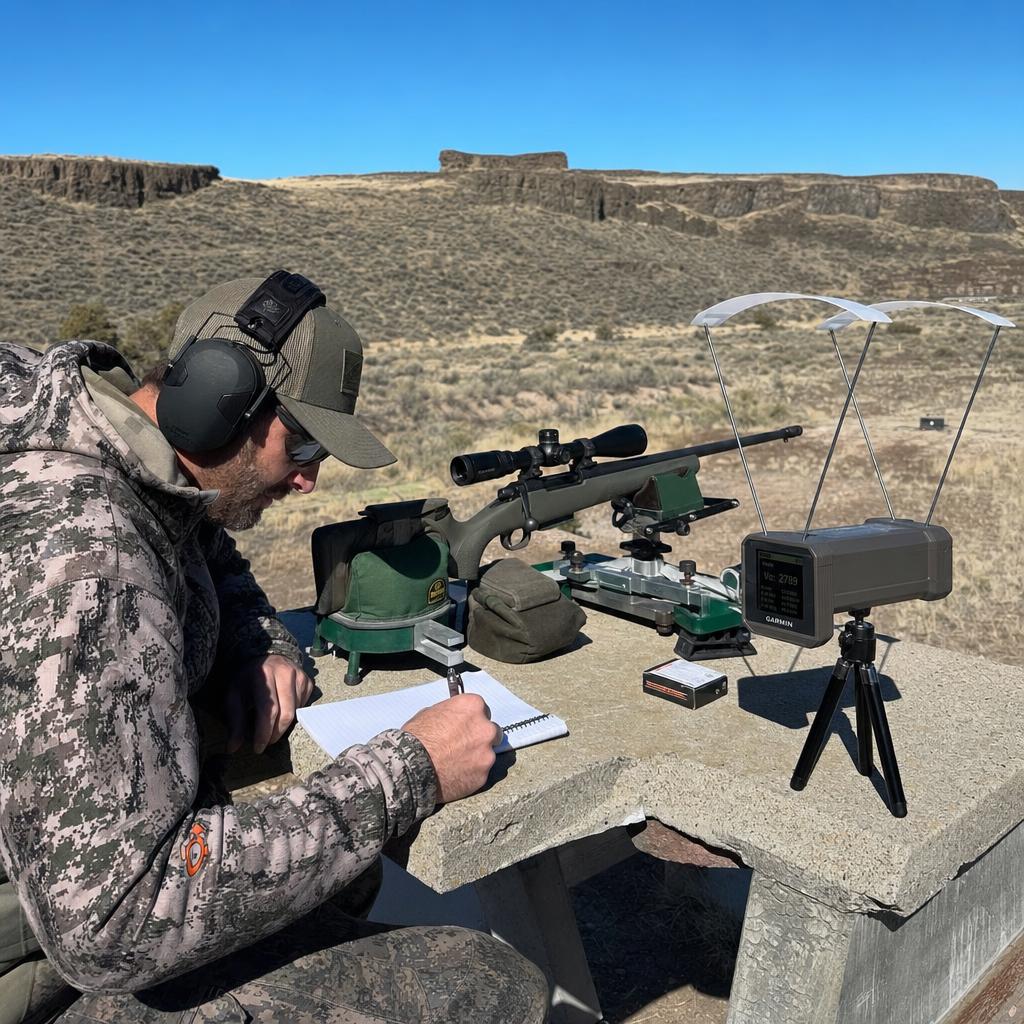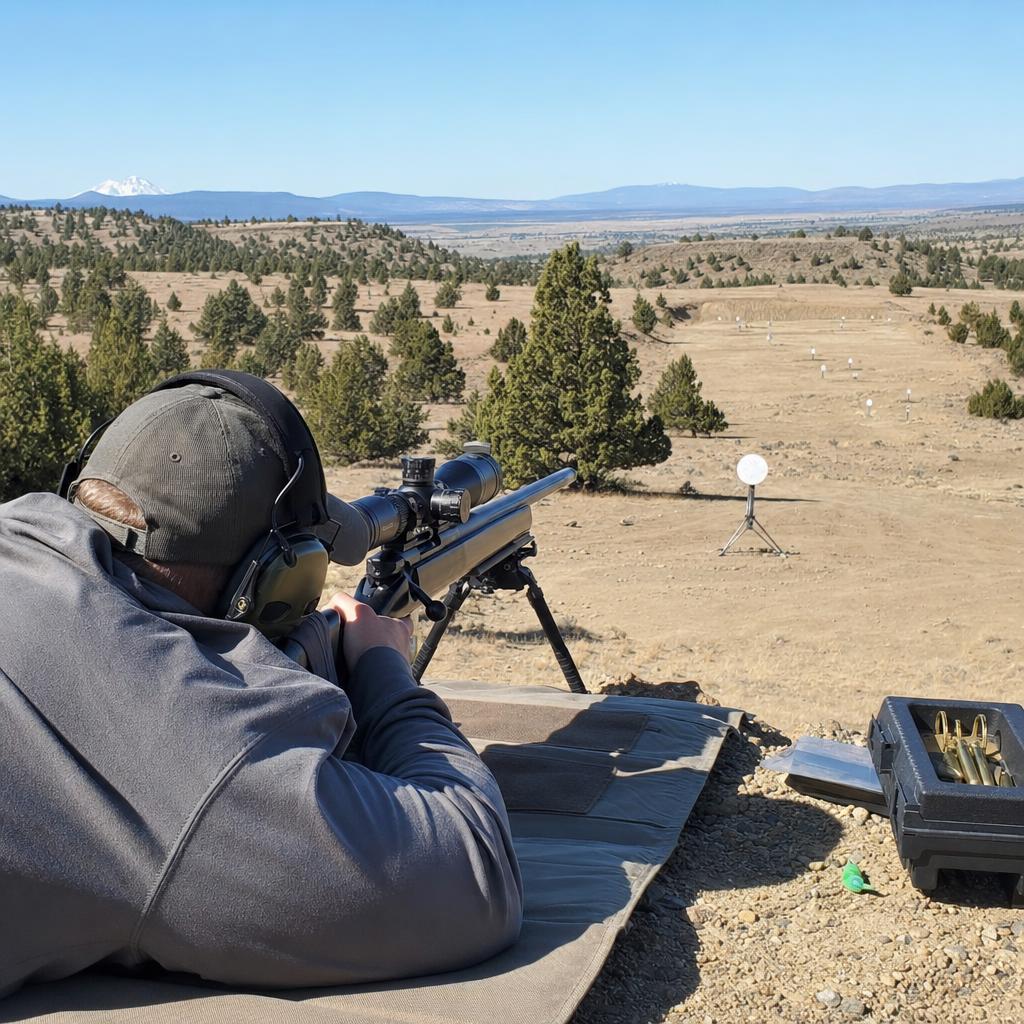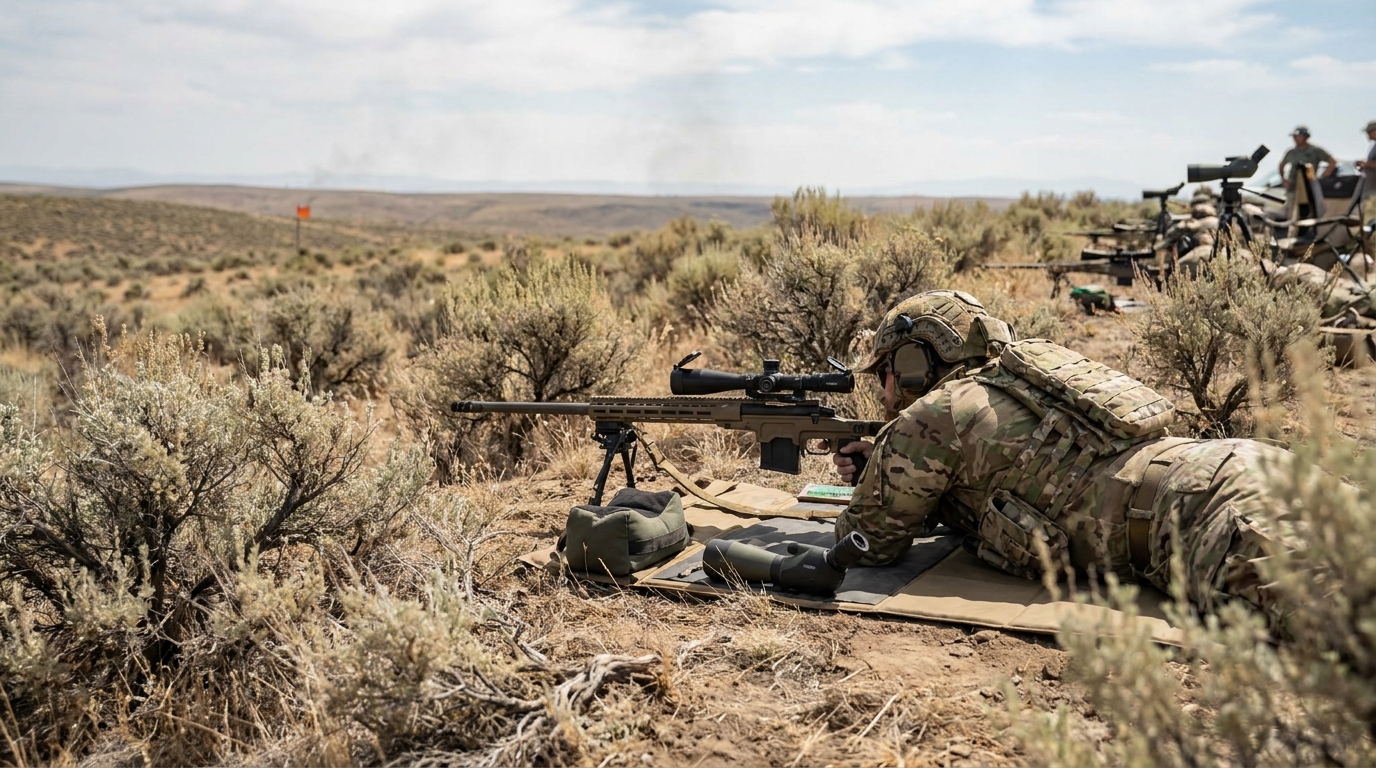
Shooting a target at one mile — 1,760 yards — is one of the most demanding technical challenges in practical marksmanship. It's not something you stumble into with an off-the-shelf hunting rifle and a box of premium ammunition. But extreme long range (ELR) shooting is a legitimate and growing discipline in the Pacific Northwest, with private ranches and open public land in eastern Oregon and Washington offering the distances required. If you want to understand what it actually takes to reach a mile, this is where to start.
What "Extreme Long Range" Actually Means
ELR is generally defined as engagements beyond 1,000 yards — into the transonic and subsonic flight regime where bullets decelerate through the sound barrier and become increasingly difficult to stabilize. Shooting at 1,760 yards (one mile) requires your bullet to remain supersonic, or at least handle the transonic transition without destabilizing. Most hunting bullets in common calibers — .308, 6.5 Creedmoor, even .300 Winchester Magnum — go subsonic somewhere between 1,200 and 1,500 yards under standard conditions. Reaching a mile requires purpose-built cartridges.
Cartridges That Can Reach the Mile
Only a handful of cartridges are genuinely suited to consistent hits at 1,760 yards. The bullet must arrive at the target still supersonic — typically above 1,340 fps — and stable enough to group predictably. This narrows the field considerably.
The Current ELR Leaders
- .416 Barrett: The cartridge built specifically for mile shooting. Pushing a 400+ grain, high-BC projectile at 3,300+ fps, it arrives at the mile with velocity to spare. Heavy, expensive, and demanding to shoot, but purpose-built for the task.
- .375 CheyTac: Another legitimate one-mile cartridge, popular in ELR competition. Very high BC .375 projectiles at 2,950–3,100 fps maintain supersonic flight well past the mile.
- .338 Lapua Magnum / .338 Edge: At the edge of the mile envelope in favorable conditions. Heavy 300-grain, high-BC bullets from Berger or Cutting Edge can remain supersonic to 1,760 yards at altitude and in favorable temperatures, though it's marginal at sea level.
- .300 PRC / .300 Norma Magnum: Can approach mile capability with the highest-BC .30 caliber bullets available, particularly at elevation. Not a consistent mile cartridge at sea level in standard conditions.
Rifles for ELR
The platform must match the ambition. Stock hunting rifles, regardless of caliber, are rarely accurate enough or appropriately configured for ELR shooting. Key requirements include:
- Heavy, hand-lapped barrel: 28–34 inches, minimum, for the large ELR cases. Velocity and barrel life both matter at these distances.
- Chassis or bedded stock: Precision chassis systems (Impact Precision, XLR, McMillan) provide repeatable stock geometry and eliminate the bedding drift that affects traditional wood and fiberglass stocks over time.
- Quality action: Surgeon, Defiance, Kelbly, and similar precision actions with tight tolerances and smooth bolt operation. The bolt must feed the large ELR cases reliably under any field condition.
- Muzzle brake: Not optional. A .416 Barrett without a muzzle brake is physically punishing to shoot in the volume required for practice and competition.
Optics at One Mile
At 1,760 yards, a 10-inch steel plate subtends approximately 0.16 MOA. That's less than two-tenths of a minute of angle — less than the click value on many budget scopes. ELR optics must:
- Track accurately across 80–120+ MOA of elevation travel
- Have repeatable, zero-shift-free adjustments
- Provide enough magnification (25–32x minimum) to see target impacts clearly at one mile
- Maintain image quality in low-light and through heat mirage
Top choices include the Nightforce ATACR 7-35x56 F1, Schmidt & Bender PMII 5-45x56, and Tangent Theta 5-25x56. These are $3,000–$5,000 scopes — appropriate for the $8,000–$15,000 rifles they're mounted on.
Reading Wind at Distance
Wind is the dominant variable at extreme long range. A 10 mph full-value wind produces 15–25 feet of horizontal deflection at one mile depending on bullet and cartridge. At that scale, estimating wind to within 1–2 mph is the difference between a hit and a complete miss. ELR shooters use:
- Multiple wind meters at varying distances downrange when possible
- Vegetation and dust observation at distance
- Mirage reading through the scope to assess near-target wind
- Wind-call experience built through thousands of rounds of practice
There is no software solution that replaces experience in this regard. Ballistic calculators like Applied Ballistics, Kestrel with Ballistic Weather Meter, or TRASOL provide excellent starting points, but the final wind call at the mile must be made by the shooter in real time.
Where to Shoot ELR in the Pacific Northwest
One-mile distances aren't available at public ranges. Oregon and Washington shooters typically access ELR yardages at:
- Private ranches in eastern Oregon and Washington that lease range time — search online forums for ELR groups in the inland northwest
- Competitive ELR matches held on private land (King of 2 Miles, the ELR Steel Challenge, and regional PNW ELR events)
- BLM land in eastern Oregon with sufficient terrain — legal in designated areas, requires verifying backstop safety and compliance with fire restrictions
The Cost of Admission
Budget realistically: $8,000–$15,000 for a purpose-built ELR rifle, $3,000–$5,000 for optics, $1,500–$2,500 for a Kestrel weather station with Applied Ballistics, $200–$400 for a quality spotting scope, and $8–$15 per round for loaded ammunition or comparable component costs for handloaders. Developing a consistent, proven load for an ELR cartridge requires 100–200 rounds of development ammo. This is not a budget hobby.
But if you want to push the absolute limits of marksmanship — to send a bullet a mile through the air and ring steel — the Pacific Northwest's high desert terrain provides the space, and the ELR community provides the knowledge. The first time your spotting partner calls "hit" on a 1,760-yard steel plate, you'll know the investment was worth every dollar.