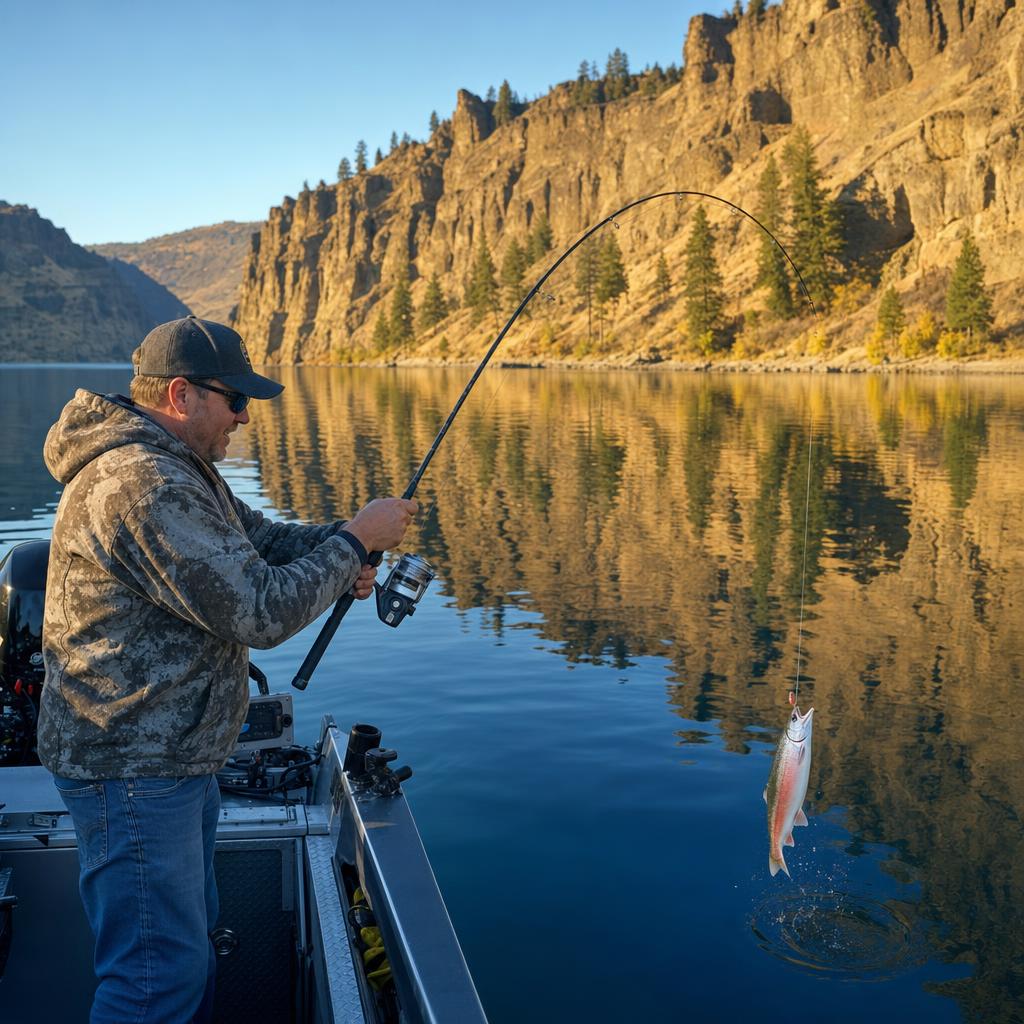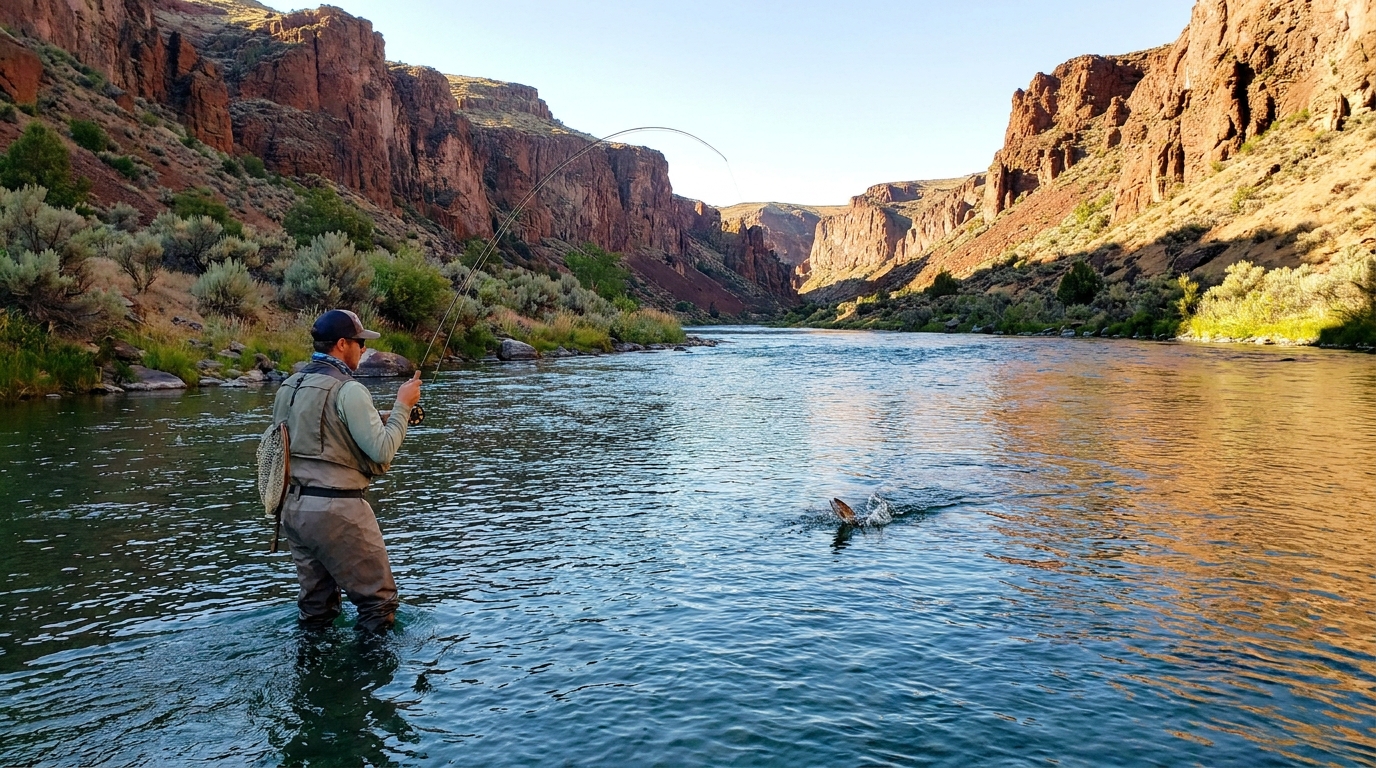
Southeast Oregon's Owyhee River tailwater is one of the Pacific Northwest's best-kept fly fishing secrets. Below Owyhee Dam in Malheur County, cold, clear water releases from the reservoir's depths, creating a year-round tailwater fishery that produces wild rainbow trout in a landscape that feels like it belongs in another state entirely — red canyon walls, basalt columns, rabbitbrush flats, and a river that runs cold even in July's 100-degree heat.
Why the Owyhee Tailwater Is Different
Most Oregon trout rivers are rain- and snowmelt-fed, subject to blowouts, warm summer temperatures, and fluctuating clarity. The Owyhee tailwater is different. Owyhee Reservoir holds an enormous volume of cold water, and the dam releases from depth, keeping the river below it at a consistent 52–58°F year-round. That temperature stability supports a dense population of wild rainbows that grow fat on a consistent food base: Baetis, chironomids, PMDs, and caddis depending on the season.
This is not the wide-open, high-visibility fishing you'll find on the Deschutes. The Owyhee tailwater runs narrow through a steep canyon, demanding precise presentations, thin tippets, and patience. It rewards anglers who slow down.
Access and Getting There
The primary access point is the Leslie Gulch Road turnoff south of Jordan Valley on Highway 95. From Nyssa, head south on Highway 201 to the Owyhee Junction, then continue south toward Adrian and Nyssa. The tailwater section runs roughly from the dam face downstream about 12 miles to Lake Owyhee State Park, where the canyon opens and the river backs up into the reservoir again.
A high-clearance vehicle is strongly recommended for the canyon roads. Cell service is nonexistent. Let someone know your plans and carry extra water — this is the Oregon high desert, and summer temperatures can be brutal once you're out of the canyon shadow.
What You'll Catch
Wild rainbows are the target species, and fish in the 14–20 inch range are common for anglers who dial in their approach. The canyon also holds some brown trout, particularly in the lower reaches and deeper pools. These are not stocked fish — the cold, nutrient-rich tailwater grows naturally reproducing trout that fight hard and look at your fly with appropriate suspicion.
Expect selective feeding. These fish see pressure, particularly from summer visitors who drive the long road expecting easy catching. Match the hatch carefully or you'll spend your afternoon watching refusals.
Seasonal Hatch Guide
Summer (June–August)
The Owyhee's summer hatches center on PMDs (Pale Morning Duns) in the mornings and Tricos earlier in the season. Pale olive and tan Elk Hair Caddis in sizes 14–18 will cover a lot of situations, particularly in faster pocket water. Afternoons often go dead as fish move to shade and wait for evening. Small olive BWOs can produce in the last hour of light.
Spring and Fall
Baetis hatches drive consistent rising fish from March through May and again in October. A size 18–22 Parachute Adams or RS2 nymph under an indicator will produce when the hatch is patchy. Fall evenings can produce exceptional dry fly fishing as fish feed aggressively ahead of winter.
Winter
The tailwater fishes through winter, though flows can be reduced. Midges and tiny Baetis patterns dominate. Size 22–24 zebra midges and mercury midges fished deep on light tippet will produce when nothing else is working.
Gear and Rigging
- Rod: 9-foot 4-weight or 5-weight. The canyon wind can be tricky, so a rod with some backbone helps.
- Tippet: 5X to 7X. These fish have seen enough flies to make you regret anything heavier. The clear water demands fine presentation.
- Leaders: 9–12 foot leaders. The longer the better for dry fly work in calm pools.
- Flies to carry: Parachute Adams (14–20), RS2 nymph (18–22), Elk Hair Caddis (14–18), PMD comparadun (16–18), Zebra Midge (20–24), Copper John (16–18)
Rules and Regulations
The Owyhee River tailwater below the dam is open year-round under Oregon's general trout regulations for most of its length. Check the current ODFW regulations booklet for specific sections — some stretches have special restrictions, gear limitations, or catch-and-release requirements. Wild rainbow trout are marked by their absence of a clipped fin. Know the regulations before you fish.
Make the Drive
The Owyhee tailwater isn't close to anything. It's a three-hour drive from Boise and even longer from the Willamette Valley. But that distance is exactly why it doesn't see the pressure that comparable tailwaters receive. If you want technical, wild trout fishing in a landscape that looks like no other part of Oregon, load up and make the drive to Malheur County. You'll probably have the canyon to yourself.