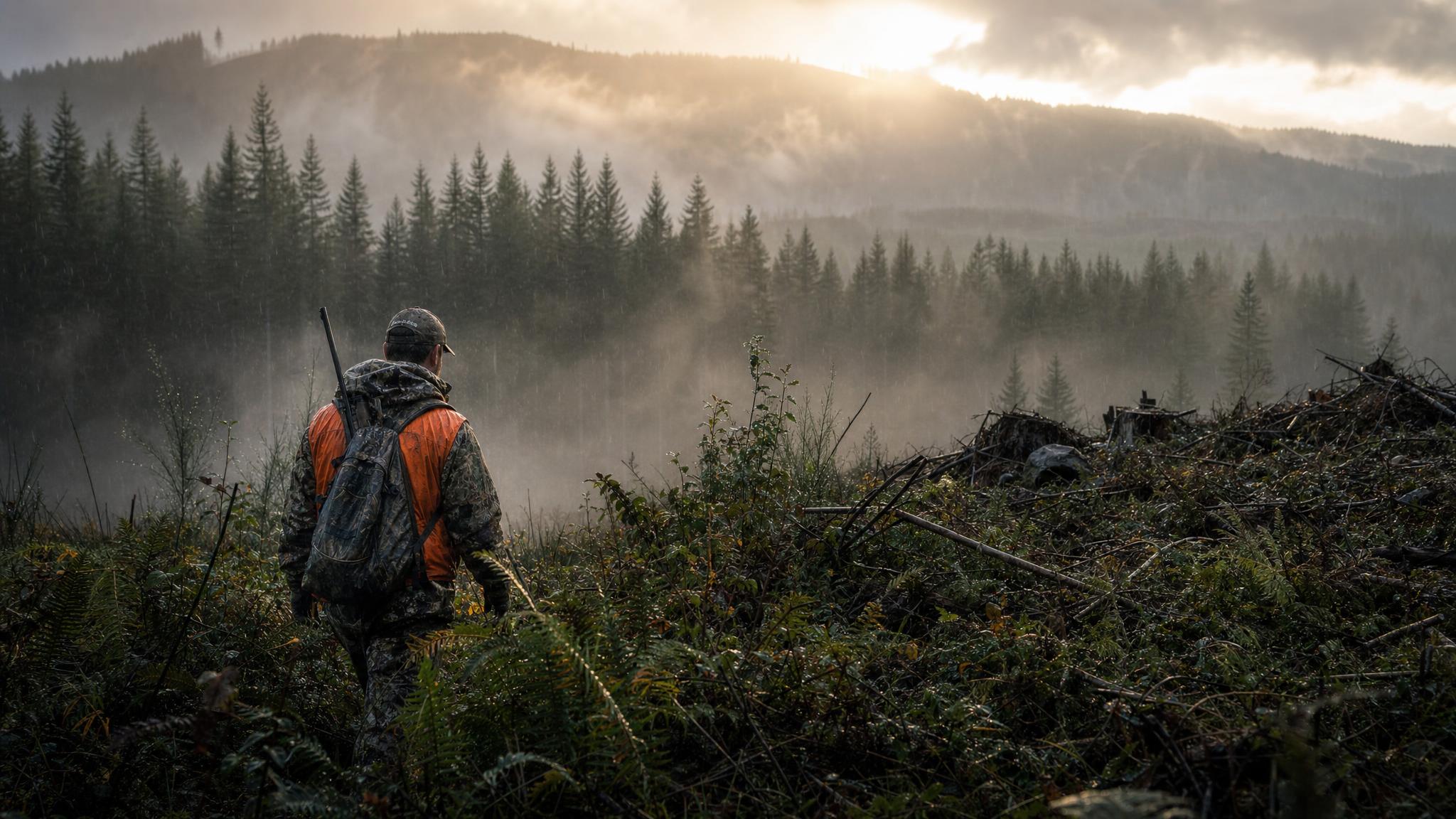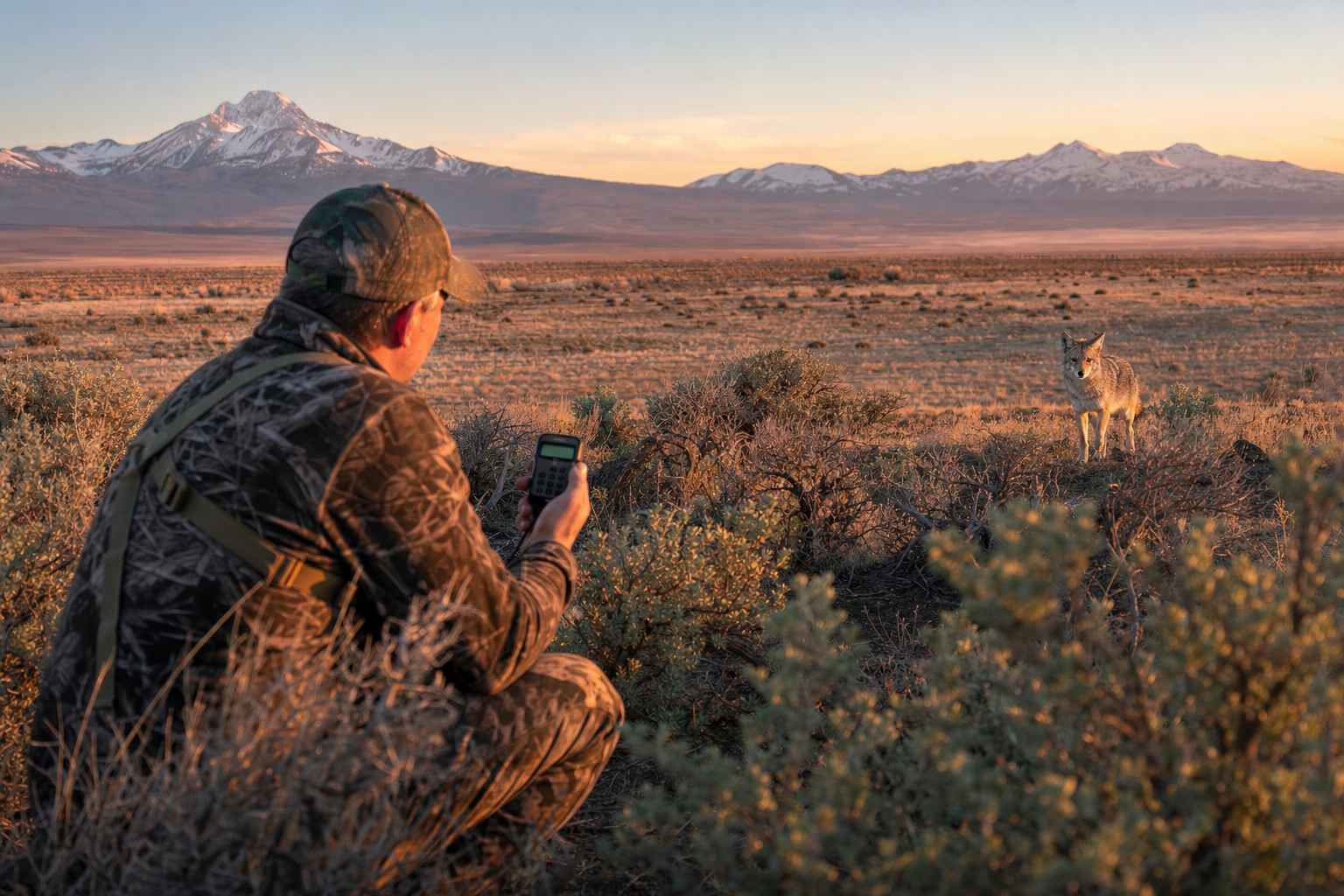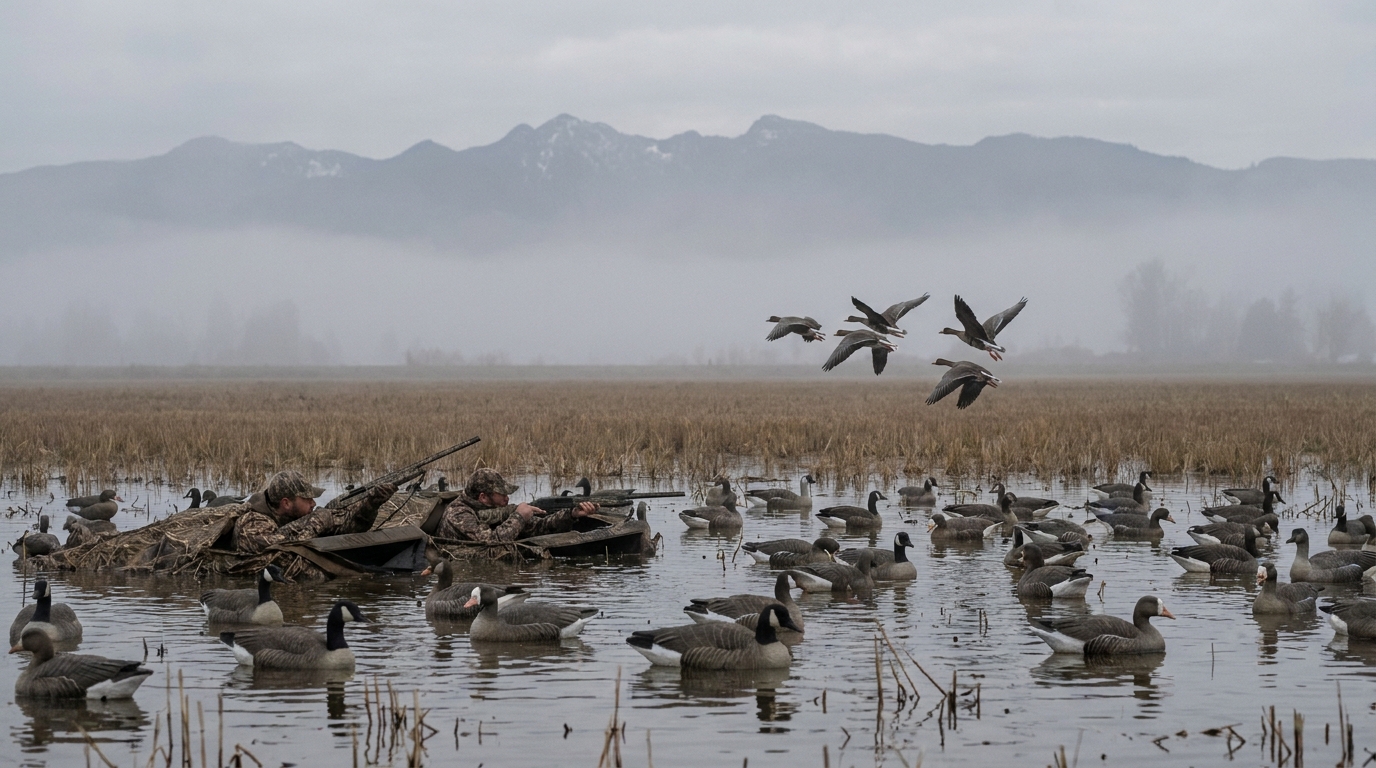
If you've only hunted Canada geese, you owe it to yourself to target specklebellies. White-fronted geese — "specks" to those who've chased them — are widely regarded as the most challenging and rewarding goose to consistently decoy on the Pacific Flyway. They're vocal, wary, and responsive in a way that makes every successful setup feel earned. Oregon sits directly under one of the most productive specklebelly migration corridors in the western United States, and October through December offers excellent hunting across the Willamette Valley, the Klamath Basin, and the Columbia River floodplain.
Know Your Bird
Greater white-fronted geese (Anser albifrons) breed on the Arctic tundra from western Alaska east through Canada. Pacific Flyway birds winter in Oregon's Willamette Valley, the Sacramento Valley of California, and coastal areas. They're mid-sized geese — larger than a Canada's lesser race but smaller than a Cackling — with an orange bill, orange feet, and the diagnostic white forehead patch and black belly barring that gives them the "specklebelly" nickname. Juvenile birds lack the belly barring and white forehead, making them harder to identify on the wing in mixed flocks.
Specks travel in tight, fast-moving flocks that can arrive, work, and flare in seconds. They're exceptionally vocal — their high, laughing call ("wah-wah-wah") is unmistakable and carries far. Learning to call specks convincingly is the single biggest factor separating hunters who consistently kill them from those who watch them flare at 80 yards.
Where to Find Them in Oregon
Willamette Valley
The valley floor between Eugene and Portland holds concentrations of specklebellies from late October through January, feeding on harvested corn, winter wheat, and grass seed fields. Birds roost on the large river sloughs and smaller impoundments. Sauvie Island, the Camas National Wildlife Refuge area, and the farmland south of Corvallis are historically productive. Private land access is critical here — knock on doors in the summer and build relationships with landowners before the season opens.
Klamath Basin
The Klamath Basin complex — including the Klamath National Wildlife Refuges, Upper Klamath Lake, and the surrounding ag fields — produces phenomenal specklebelly hunting during peak migration. The national refuges hold rest areas that push birds onto adjacent private land to feed. Late October and early November often see the highest concentrations.
Columbia River Bottoms
The Columbia River floodplain from Portland east to the Gorge provides migration corridor hunting for specks moving south from Canada. This water holds mixed bags: Canada geese, cackling geese, white-fronted geese, and occasional tundra swans all use the same areas. Scout the bar fields and pastures near the river for feeding birds.
Decoys and Spread Setup
Specklebelly decoys are essential — mixing them with Canada goose decoys alone rarely works as well, particularly if birds have been pressured. Use a minimum of 2–3 dozen speck-specific decoys as the core of your spread, supplemented by Canada decoys if birds in your area mix species.
Landing zone placement matters. Specks want to land into the wind, in a clear area they can see from altitude. Leave a prominent hole in the middle or upwind edge of your spread. Full-body decoys significantly outperform shells and silhouettes in most field situations — the 3D profile gives approaching birds something they can identify from altitude.
Motion is critical on calm days. Add wind-socks, flapper decoys, or remote-controlled flapping dekes in the landing zone. Specklebellies are extremely motion-sensitive — a static spread that looked good in the low-pressure weather of your last hunt may be all wrong in calm, blue-sky conditions.
Calling Specks
The white-fronted goose call is unlike any other waterfowl call. The high, two-note "wah-wah" or laughing cackle carries enormous range and cuts through wind. A properly blown speck call — aggressive, high-pitched, and rhythmic — is one of the most effective sounds in waterfowl hunting when birds are in the area.
- Tim Grounds Specklebelly Call: Industry standard, excellent tone, widely available
- Rich-n-Tone High Ball: Loud, carries well in wind, good for flagging distant birds
- Echo Specklebelly: Excellent for layering subtle comeback and greeting calls
Use calling aggressively when birds are far off and show interest. As they commit and work toward the spread, reduce calling to subtle greeting notes. When birds are inside 100 yards and cupped, silence is often the best call — many experienced hunters stop calling entirely on the final approach to let the decoys do the work.
Shotguns and Loads
Specklebellies in Oregon require non-toxic shot under state and federal law. Steel BBB or BB at 1,400–1,550 fps handles most shots inside 50 yards. For longer presentations, bismuth or tungsten-based loads in #2 or BB deliver more energy retention at range. A 3-inch or 3.5-inch 12-gauge provides the pattern density to cleanly kill birds that sometimes cup at 55 yards before swinging wide. Full or modified choke is appropriate — specks are not particularly large birds, and overly tight chokes can produce patterns too small to anchor a crossing bird cleanly.
Oregon Regulations
Oregon's white-fronted goose season is set annually by the Pacific Flyway Council in cooperation with USFWS. In recent years the season has opened in mid-October and run through January, with a daily bag limit of 10 and a possession limit of 30. Verify current regulations with ODFW — season dates and limits can change year to year based on population surveys and harvest data. HIP (Harvest Information Program) registration is federally required for all migratory bird hunters.
Getting Started
Specklebelly hunting has a learning curve. The first few seasons you'll watch more birds than you shoot. Study their calls obsessively — YouTube has recordings of actual birds in the field. Scout early, build access, and invest in quality decoys. When a tight flock of specks locks up, drops their feet, and rides the wind into your spread calling back to you, you'll understand why hunters who target them rarely go back to anything else.