When Oregon bass anglers talk trophy largemouth, they usually name Fern Ridge, Siltcoos, or Applegate. Cottage Grove Reservoir sits quietly south of Eugene on Row River, and serious fishermen have long known it as one of the most productive—and most underrated—largemouth lakes in the Willamette Valley. If you're looking for aggressive fish, light pressure, and easy access from Interstate 5, this is your summer destination.
Understanding Cottage Grove Reservoir
Cottage Grove Reservoir is an Army Corps of Engineers flood control impoundment on the upper Row River, sitting at roughly 1,600 feet elevation about eight miles east of Cottage Grove. The lake covers around 1,150 acres at full pool and features a productive mix of shallow flats, submerged timber, riparian brush lines, and a main creek channel. Water clarity is moderate in summer—clear enough that bass are actively chasing baitfish on the surface, murky enough that reaction baits stay productive all day.
The reservoir hosts a healthy population of largemouth bass, plus brown bullhead catfish, bluegill, and yellow perch. No special regulations apply to bass here beyond Oregon's standard 12-inch minimum size; the daily bag limit is five. Check ODFW's current regulations before you launch.
Summer Bass Timing
July and August are prime time. Water temperatures climb into the low 70s by mid-July, pushing bass shallow into morning and evening feeding windows and into shaded structure during midday. The post-spawn fish that were scattered and sulky in June have regrouped and are feeding aggressively to build summer reserves. Expect morning bites to start before 7:00 a.m. and evening windows to kick in around 6:30 p.m., often running until dark.
The Row River arm at the eastern end of the reservoir holds bass through the summer—look for them along the submerged creek channel edge, especially where it swings close to overhanging riparian vegetation. The main basin's flooded timber fields near the dam are consistent producers during midday heat when fish stack on structure to stay cool.
Top Techniques for Midsummer Fish
Topwater at Dawn
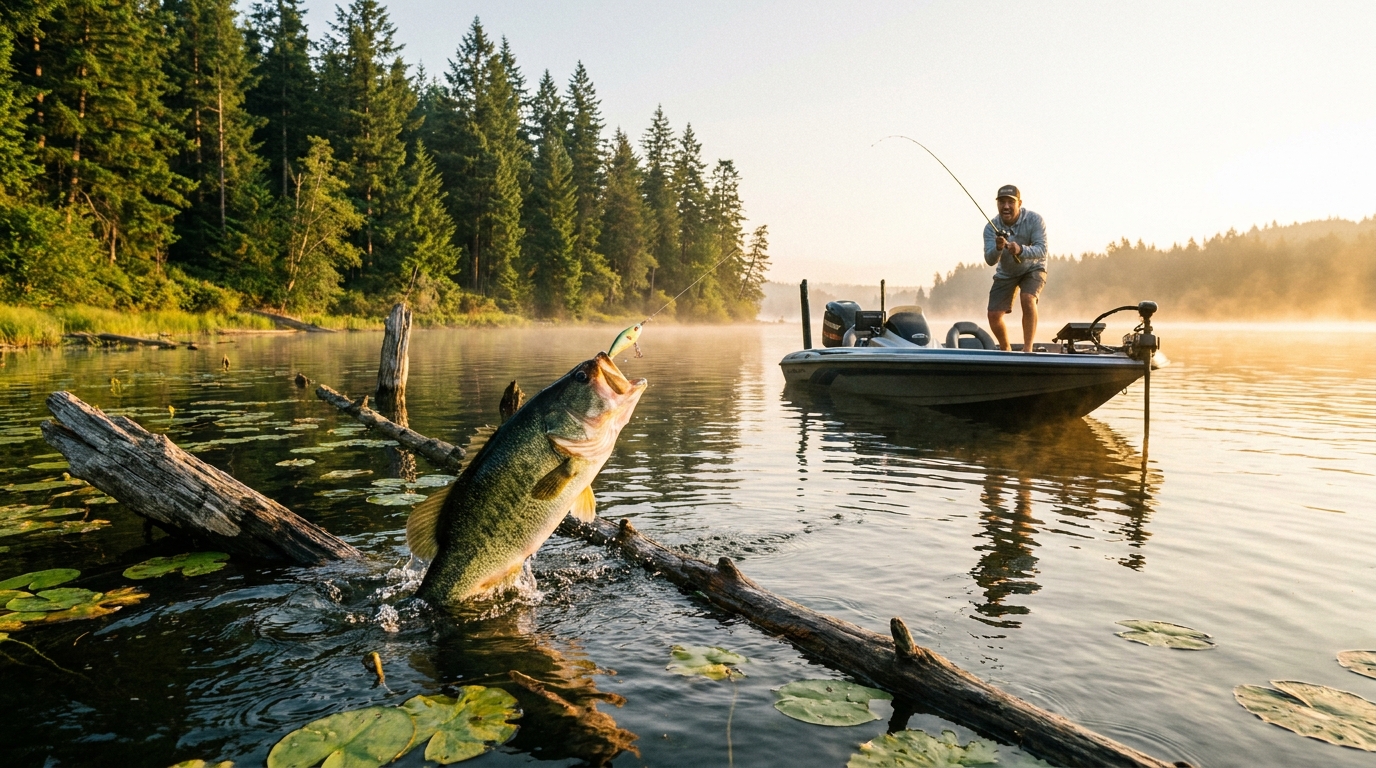
There is nothing like a walking topwater bait working across a flat at Cottage Grove on a July morning. Zara Spooks, Heddon Super Spooks, and Whopper Ploppers all produce. Work parallel to the brush line at the north shore and pay close attention to any transition between open water and submerged wood. Bass will stack on these edges and crush topwater presentations from first light through about 8:30 a.m.
Texas-Rigged Plastics for Timber Fields
Once the topwater bite winds down, drop down into the submerged timber with a Texas-rigged creature bait or beaver-style plastic on a 3/8- to 1/2-ounce tungsten weight. Green pumpkin, black-and-blue, and watermelon red are consistent colors in the stained water. Fish the bait vertically through the standing timber, letting it hit the bottom and then crawl up over limbs. The takes are subtle—feel for a tick or sudden weightlessness and set the hook immediately.
Crankbaits Along the Creek Channel
The submerged Row River channel provides a depth transition that aggregates summer bass in the 8- to 15-foot zone. A medium-diving squarebill or shad-profile crankbait deflected off submerged wood and rock along the channel edge triggers reaction strikes from fish that won't chase more subtle presentations. Chrome-and-blue, sexy shad, and chartreuse-white all work depending on light conditions.
Evening Frogs and Punch Rigs
The lily pads and dense vegetation mats that develop along the shallow eastern flats by midsummer respond best to hollow-body frogs and punch rigs. Use a 1- to 1.5-ounce tungsten weight to punch through the canopy and present a compact plastic underneath. This technique produces the biggest bass in the reservoir—fish that have been feeding in the mats all day and are fat and aggressive by evening.
Access and Launch Information
The primary boat ramp is located at the Schwarz Park day-use area off Reservoir Road, roughly 6 miles east of Cottage Grove. The ramp is paved with a courtesy dock and can handle boats up to about 20 feet. Parking is adequate for weekday fishing; arrive early on summer weekends when the recreation traffic builds. There is also limited shore access along the south bank road, making this lake accessible for bank anglers working soft plastics and spinners through the brush lines.
Gear Recommendations
- Medium-heavy baitcasting rod (7'–7'4') with 50-pound braided line for topwater and heavy cover
- Medium-action spinning rod with 10-pound fluorocarbon for finesse applications
- Tungsten weights (3/8 to 1 oz) for punching mats
- Hollow-body frogs in black and natural green for the vegetation
- Paddle-tail swimbaits in shad colors for channel bass
- Polarized sunglasses—essential for reading structure on clear mornings
What to Expect
Cottage Grove won't produce the sheer numbers you'd find at Siltcoos or the trophy potential of Henry Hagg Lake's tiger muskies, but it delivers a consistent and underappreciated summer bass fishery within easy driving distance of the Eugene-Springfield metro. The combination of light pressure, productive structure, and an aggressive midsummer bite makes it worth building into your rotation. On a good morning, expect five to ten quality fish, with the realistic chance of a four-plus-pound largemouth if you're working the timber fields or mats right.
Keep the big ones wet, take a measurement, and release them to grow. This fishery stays good because anglers treat it that way.