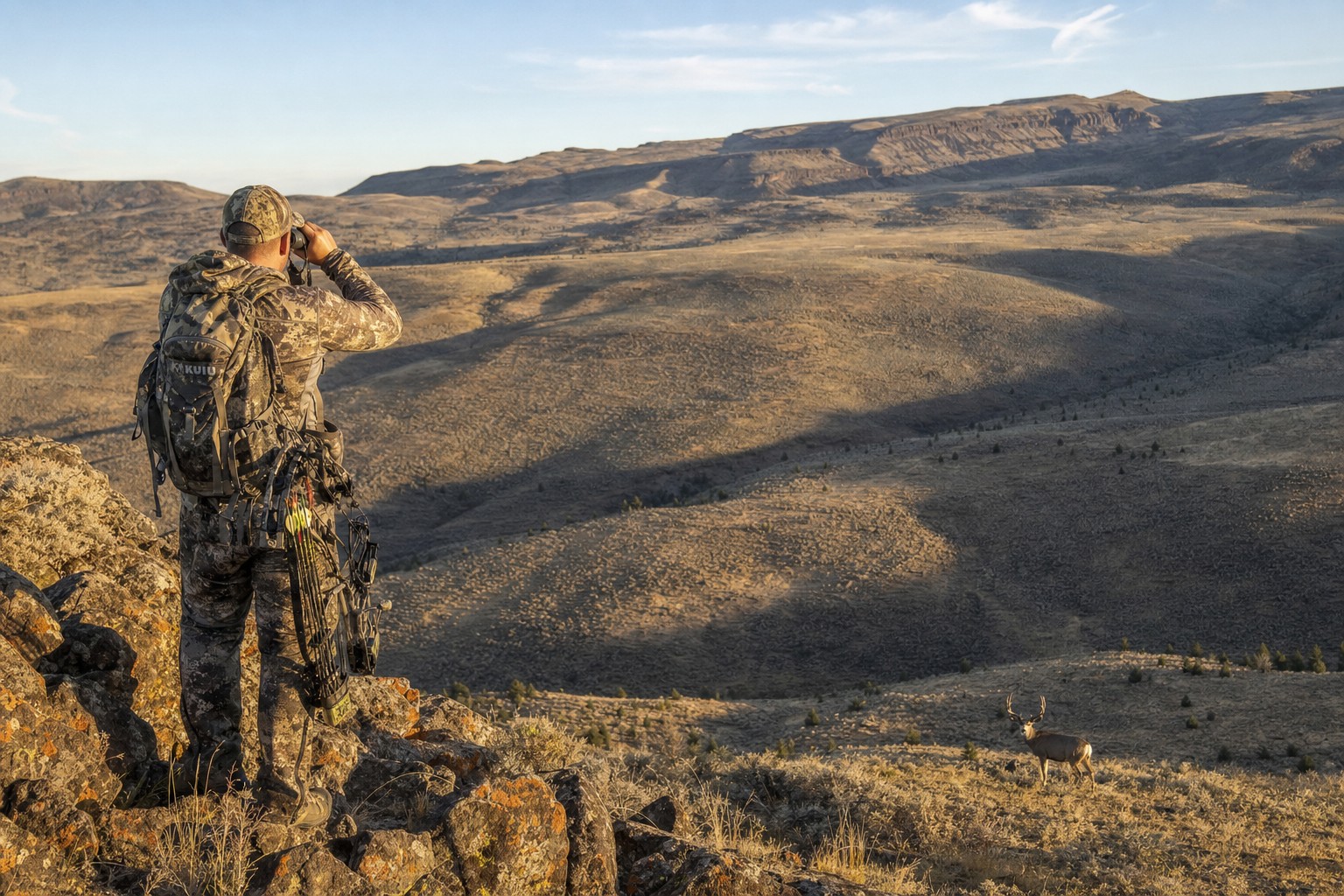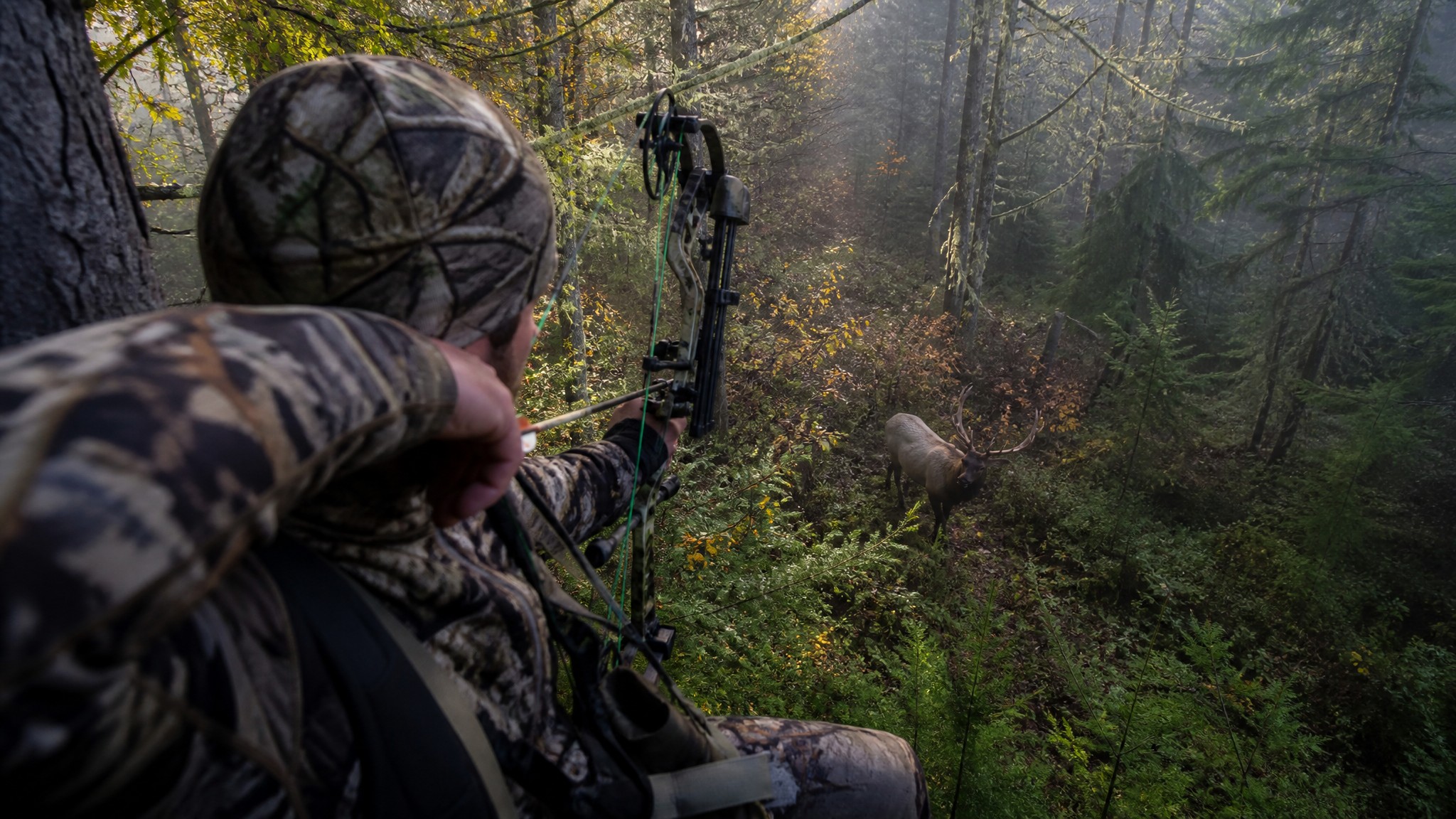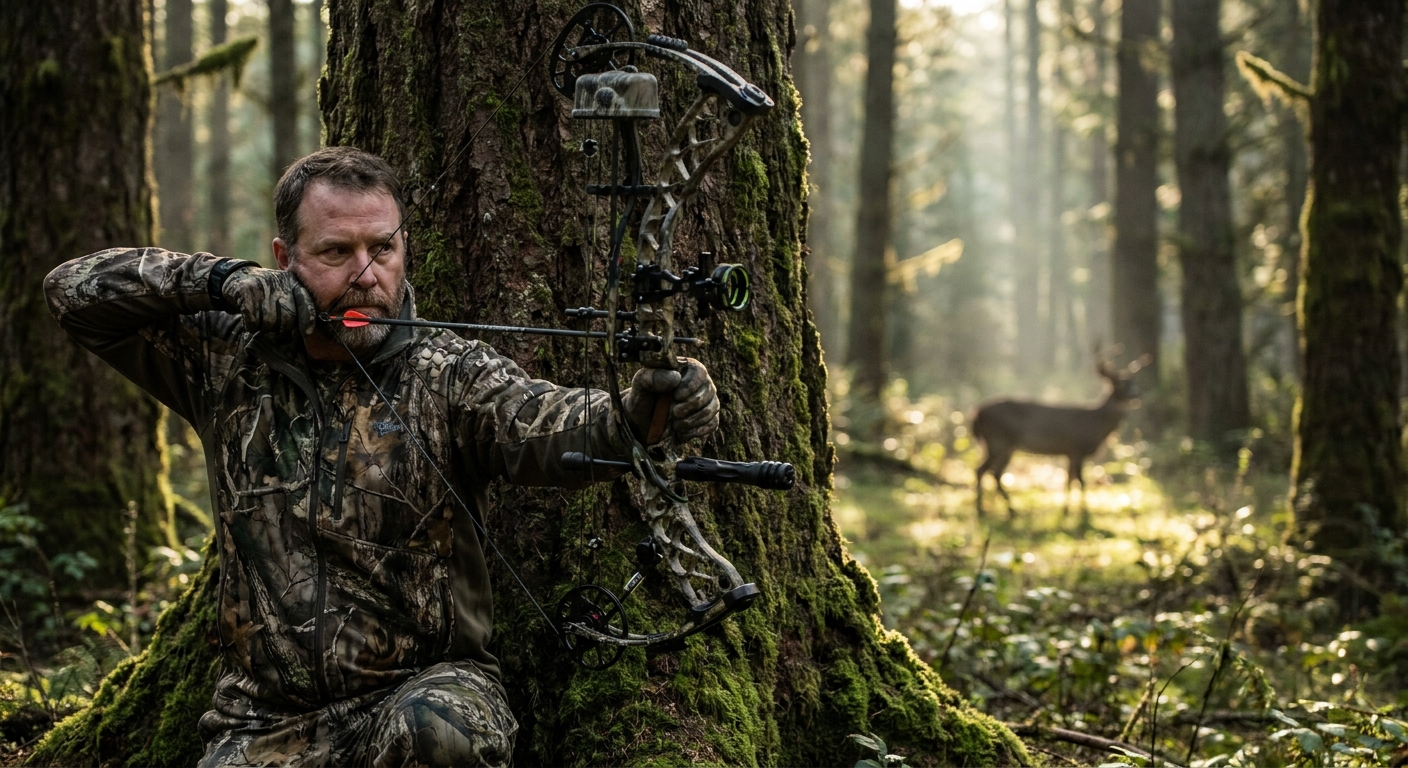
You've done everything right. You scouted all summer, shot your bow consistently at 40 yards, tuned your broadheads, and positioned yourself perfectly. The bull walks in at 28 yards, steam rising off his back in the September morning air, and then—the familiar cascade begins. Heart rate spikes. Vision tunnels. Hands tremble. The 28-yard shot that was automatic on the range suddenly feels like an impossible task.
Buck fever—more accurately described as sympathetic nervous system activation—is a real physiological response, not a character flaw. But it is also manageable. Bowhunters who understand what's happening and train for it will shoot better in the moment that counts. Here's how to build that mental framework before Oregon's archery opener.
What's Actually Happening in Your Body
When a shooter experiences buck fever, the sympathetic nervous system dumps adrenaline and cortisol into the bloodstream in response to a high-stakes perceived event. Heart rate climbs from a resting 60 BPM to well over 150 in seconds. Fine motor skills degrade significantly above 115 BPM. Peripheral vision narrows as the brain prioritizes the threat or opportunity. Blood is shunted from the extremities to the large muscle groups—which is why your hands shake but your legs want to run.
This response evolved for survival and cannot be fully suppressed in the moment. The goal is not to eliminate it but to operate your equipment effectively within it. That requires both systematic desensitization through realistic practice and specific in-the-moment execution techniques.
Training for the Adrenaline State
Simulate Elevated Heart Rate During Practice
The single most effective thing you can do before the season is practice shooting immediately after physical exertion. Do 20 jumping jacks or sprint to your target and back, then immediately nock an arrow and shoot. This puts your cardiovascular system into a state that approximates—though doesn't fully replicate—the adrenaline dump of a buck or bull appearing. Your groups will open up initially. That's the point. Keep practicing in this state and you'll develop the motor pattern resilience to shoot through it.
3D Archery Under Social Pressure
The Pacific Northwest 3D circuit runs through summer and is the best accessible simulator for hunting-season pressure. Shooting in front of other people, competing against a score, and walking up to unknown distances on unfamiliar terrain all activate mild performance anxiety that shares neurological overlap with the real thing. If you've never missed a shot on your home range but fold on the 3D course, you've identified a gap that will cost you in the field.
Visualization and Mental Rehearsal
Elite athletes across all disciplines use visualization as a performance tool. The technique is straightforward: sit quietly each night and mentally rehearse the sequence of your shot in complete sensory detail. Hear the elk bugle. Feel the arrow being nocked. See the animal walk into range. Run through your anchor point, your draw, your sight picture, your release, and then the sound of the arrow hitting behind the shoulder. Your nervous system cannot fully distinguish between vividly imagined practice and physical repetition—mental rehearsal builds neural pathways the same way range time does.
In-the-Moment Execution Strategies
The Pre-Shot Routine as an Anchor
A rigid, practiced pre-shot routine is your most powerful tool in the field. When adrenaline narrows your thinking to a tunnel of animal awareness, the pre-shot routine gives your conscious mind a specific sequence to execute rather than a performance outcome to obsess over. Build a routine—grip check, stance, draw, anchor, settle, squeeze—and make it identical on every arrow you shoot, on the range and in the field. When the moment comes, you don't think about the shot. You think about Step 1, then Step 2, then Step 3.
Controlled Breathing Before the Draw
Box breathing or tactical breathing—inhale for four counts, hold for four, exhale for four—activates the parasympathetic nervous system and measurably reduces heart rate within two breath cycles. When you see an animal entering your range, take a slow deliberate breath before you do anything else. This one habit has more impact on first-shot execution than most mechanical adjustments.
Pick a Spot, Not an Animal
One of the most common mistakes under pressure is anchoring on the whole animal rather than a specific hair or point behind the shoulder. The brain wants to process the entire visual spectacle—the rack, the size, the muscle—and in doing so it prevents you from settling into the precise aiming point needed for a lethal shot. Consciously force yourself to identify a single small spot on the hide, roughly four inches behind the crease of the front leg and one-third of the way up the body. Shoot at that spot, not the elk.
The Shot Clock Mental Override
Some bowhunters experience shot paralysis—inability to execute a shot despite perfect opportunity—rather than a shaky miss. This is also adrenaline-driven, often manifesting as doubt: Is this close enough? Is the angle right? Should I wait? If you have done your range work and know your abilities, trust your preparation. You built the shot capability for a reason. Execute it.
Post-Shot Protocol
The period immediately after the shot is also affected by adrenaline. Most hunters experience intense shaking, emotional flooding, and difficulty thinking clearly for two to ten minutes. This is normal and passes. Your protocol after the shot should be automated: watch the arrow impact point, listen for sounds, watch where the animal goes, sit quietly for 30 minutes before moving to the hit site. Do not let adrenaline push you to immediately crash into the brush after a wounded animal—it is the most common mistake that turns a lethal hit into a lost deer or elk.
Building the Complete Package
Buck fever management is not a single technique—it's the product of physical practice under simulated stress, mental rehearsal before the season, a rigid pre-shot routine, and an honest understanding of your own physiology. Work all of those elements between now and Oregon's August 24 archery opener and you'll be significantly better prepared to execute when a mature animal gives you the 30-yard opportunity you've been working toward all year.
The physical shot is the easiest part. Everything else is the work.