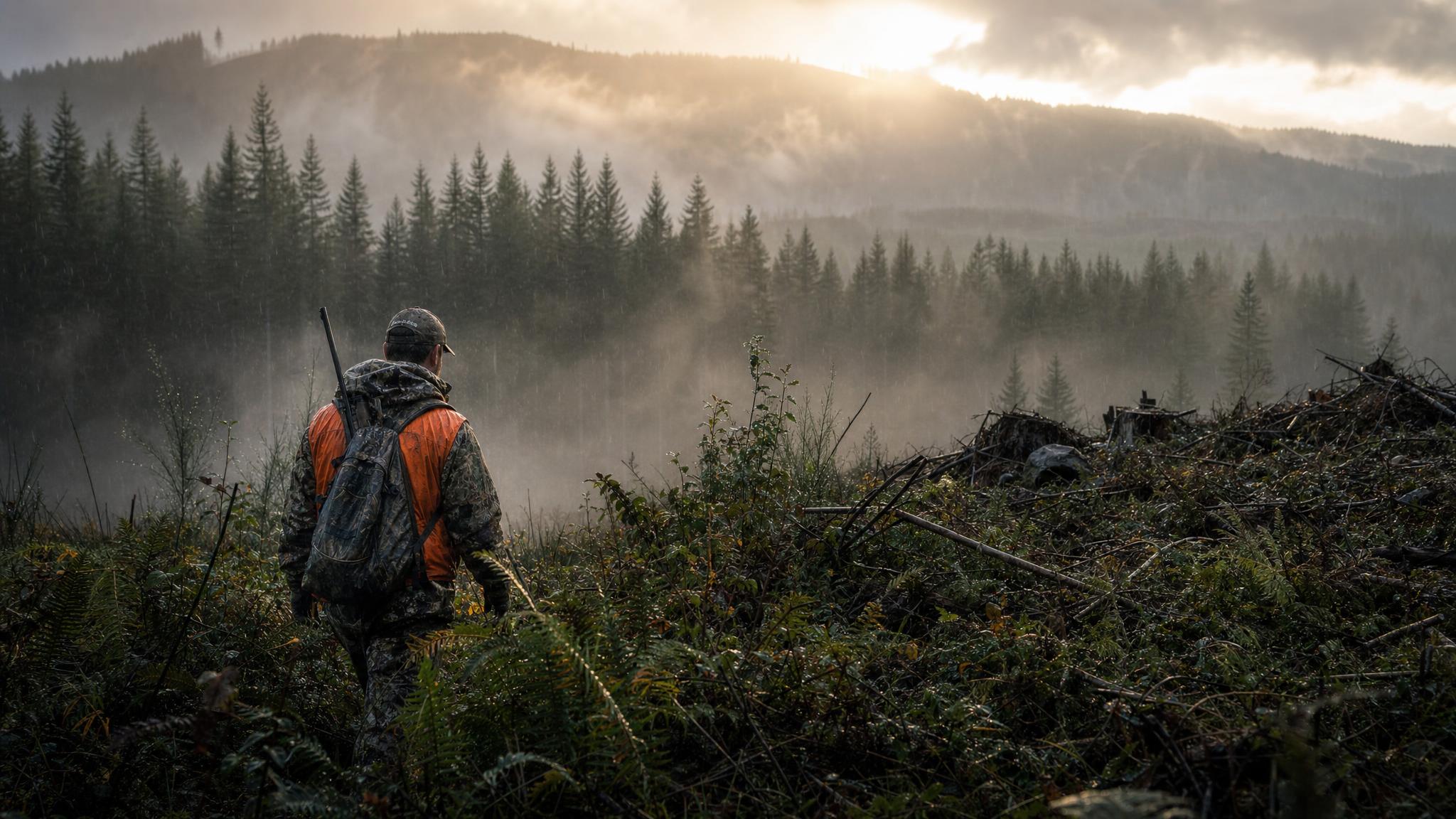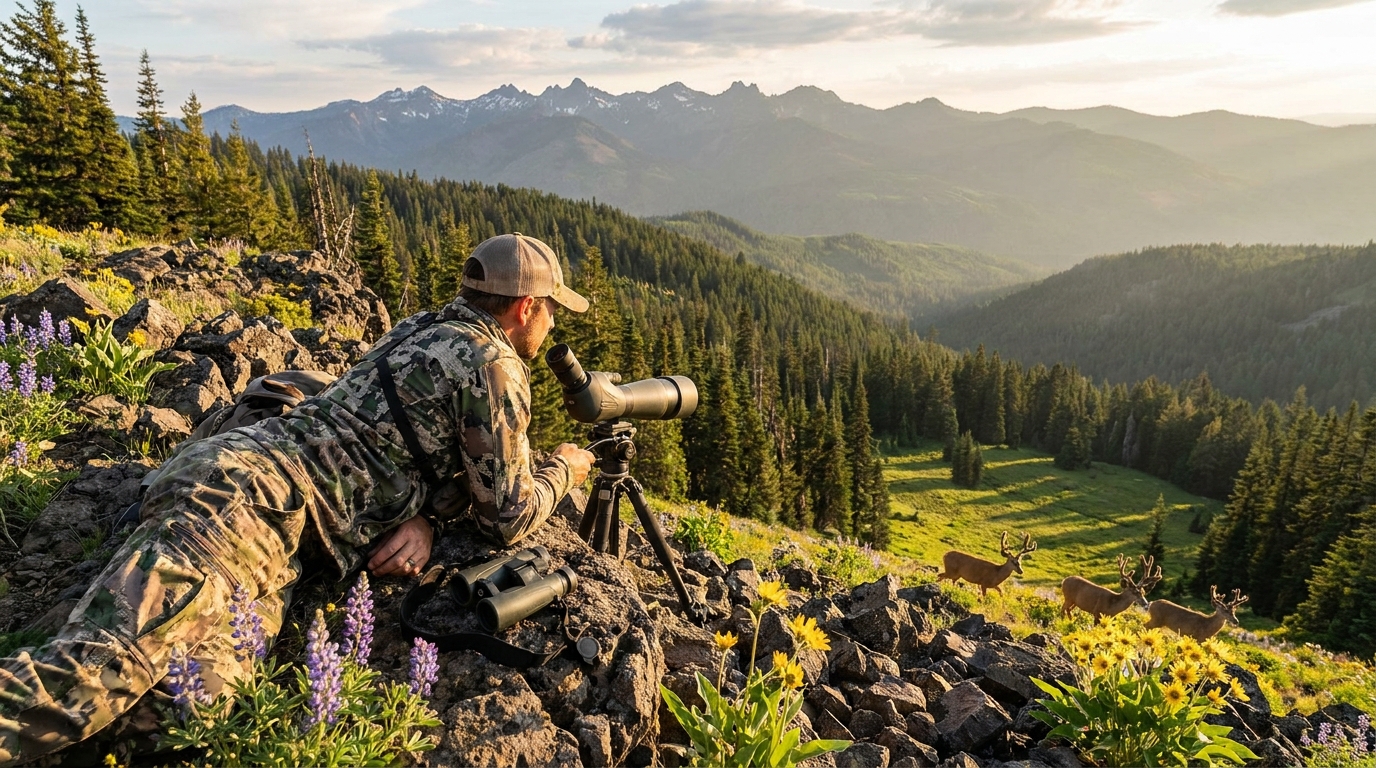
There's a short, glorious window each July when blacktail deer hunting becomes almost straightforward. Bucks are in full velvet, antlers still soft and growing, and their behavior is predictable in a way that disappears the moment velvet strips and testosterone spikes. They eat, they sleep, they eat again. Their patterns are tight. They return to the same benches, the same meadow edges, the same wallows day after day. If you put in the time on the glass right now, in mid-July, you can bank enough intelligence on individual bucks to carry a real advantage into Oregon's archery deer opener on August 1st.
Why July Glassing Matters More Than August Scouting
Most hunters don't start thinking seriously about blacktail until late July at the earliest. By then, early-access archers are already in the field and velvet bucks are shifting their patterns as daylight hours shorten and social hierarchies begin to reassert themselves. The hunters who consistently tag quality Cascade blacktails are in the field in early-to-mid July, logging hours behind glass, building buck files before the competition arrives.
The other reason July matters: blacktail bucks in velvet use high-country feeding areas and open terrain that they abandon almost entirely by October. Subalpine meadows, north-facing clearcut edges, alpine parks above 4,500 feet — these are summer staging areas. Find a buck in a mountain meadow in July and you have a starting point. He may not be there when you return with a bow in August, but you'll know his home range, and that knowledge narrows the search dramatically.
Where to Look in the Oregon Cascades
Columbia blacktail deer in the Cascades use a classic elevational migration pattern. In winter, they're in the valley floors and lower foothills — often on private land or in units with limited public access. As snowpack recedes in spring, bucks push upslope following the green-up. By late June and July, mature bucks can be found well above 4,000 feet in the central and southern Cascades, using a mix of old clearcuts, natural meadows, logged units with early successional growth, and the edges of subalpine parks.
- South-facing clearcuts with northern edge timber: These produce warm early-morning feeding in the fresh growth with quick escape cover behind them. Look for cuts logged within the last 5–10 years — older slash is too thick and the browse is past peak nutritional value.
- Subalpine meadows and lake basins: Areas like the Jefferson Wilderness periphery, the Waldo Lake plateau, and the upper McKenzie drainage hold bucks in July that most hunters never see because they don't go that high.
- North aspects below ridgelines: In hot years, bucks feed heavily on north-facing slopes through mid-morning before bedding in dense timber. Thermal patterns pull cool air down these drainages at night — bucks follow the thermals back up as morning temperatures rise.
Glass Hard, Move Slow
Cascade country doesn't offer the long-range glassing conditions of eastern Oregon's open desert. You're working in timber and terrain, and your effective glassing distance in most units maxes out at 600–800 yards before the landscape closes. That means you need more glassing stations, more patience, and a systematic approach to covering the broken terrain.
Set up on high points that give you sight lines into clearcut openings, meadow edges, and the benches below ridgelines. Use your spotting scope at 40–60x for anything beyond 300 yards. Glass in a grid pattern — left to right, near to far — and spend at least 20–30 minutes on each setup before moving. You're looking for movement first, color second. A blacktail's brown-gray summer coat blends exceptionally well into the dry grass and brush of July clearcuts. The movement of feeding is often what tips you off before you can resolve the actual deer.
First light is non-negotiable. Bucks are on their feet feeding from first gray until roughly 9 AM, then they'll ghost into the timber. You need to be glassing before shooting light. That means predawn hikes to your glassing positions — sometimes several miles — and the willingness to sit still and patient while the world brightens around you.
Documenting What You Find
A buck you see once in July is a data point. A buck you see three mornings in the same drainage, feeding the same clearcut edge, is a target. Keep a log — date, time, location (GPS coordinates or specific map reference), direction of travel, estimated size. Photograph everything you can. Use OnX Hunt to drop pins and annotate observations. By late July, you should have a short list of specific animals and specific locations.
Pay attention to entry and exit routes. Where does he come from? Where does he disappear to? That timber edge at the northeast corner of the clearcut where he walks in every morning at 5:45 AM — that's your archery ambush point. You're not just finding deer; you're building a hunting plan.
Trail Cameras as a Supplement
Cameras don't replace glassing time in Cascade blacktail country, but they extend your intelligence-gathering when you can't be there in person. Deploy cameras on established trails leading from timber into feeding areas, on scrapes and licks if you find them, and on pinch points between drainages. Check them every 10–14 days. In July, you'll get daylight photos of velvet bucks that confirm whether the animals you're glassing are using those corridors at night as well.
Keep your camera presence light — one or two cameras in the core area rather than a grid of 10. Every camera check is a human intrusion that puts pressure on the drainage. Be strategic.
Five Weeks Out — What to Do Right Now
If the opener is August 1st and you're reading this in mid-July, here's your plan:
- Week 1 (now): Digital scouting — OnX, Google Earth historical imagery, topo maps. Identify three or four candidate drainages with the right terrain mix. Plan your glassing routes.
- Week 2: Boot-on-ground glassing. Two or three predawn sessions in your top locations. Log everything.
- Week 3: Focused follow-up on the best locations. Deploy cameras. Confirm buck locations.
- Week 4 (final week before opener): Back off the area entirely. Let it rest. Check cameras remotely if you have cellular units. Fine-tune your entry route for opening day.
The hunters who consistently kill quality Cascade blacktail bucks in August aren't lucky. They're thorough. The work happens right now, in July, behind the glass on predawn mornings when the bucks are still predictable and the timber is still quiet.