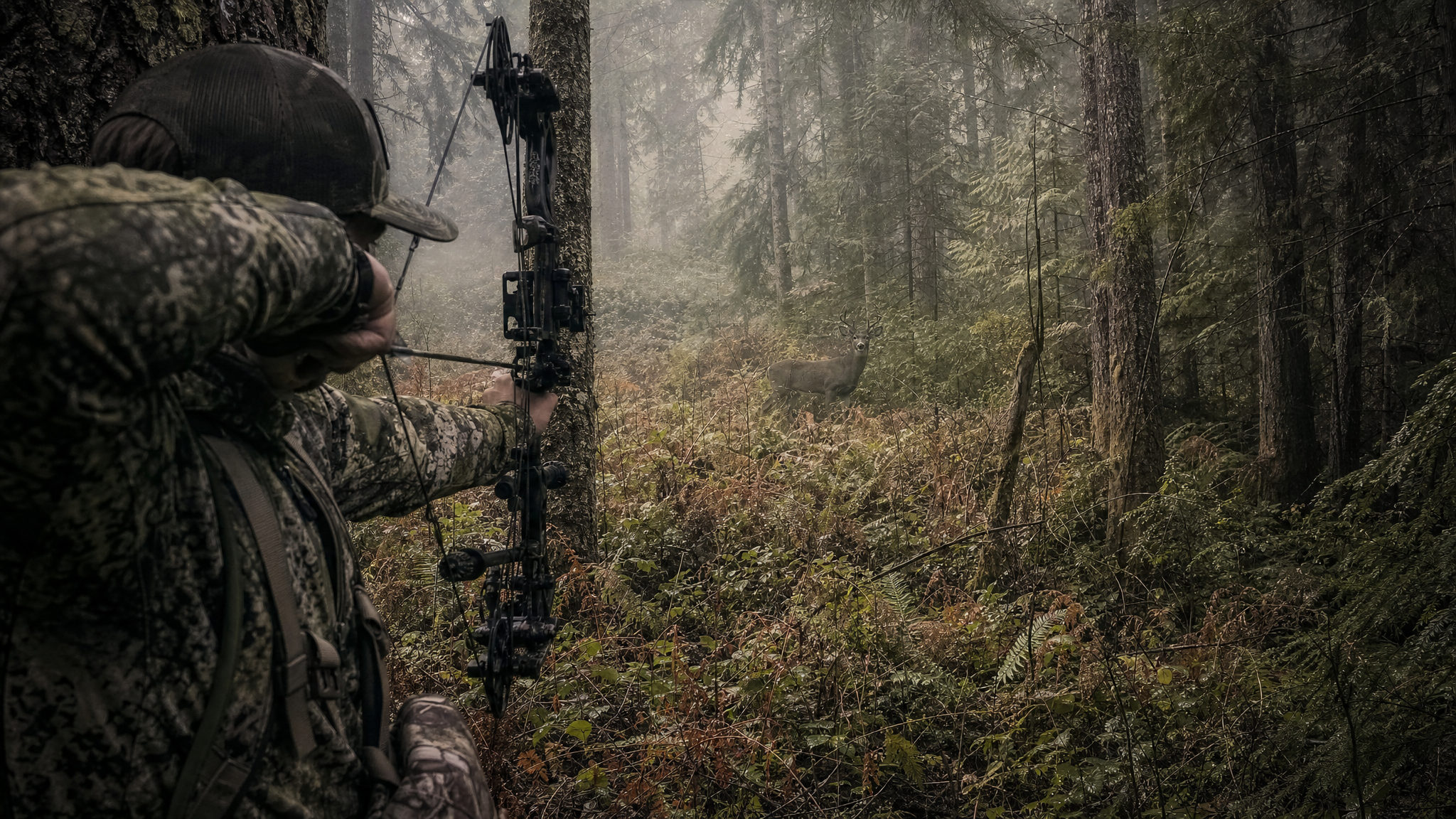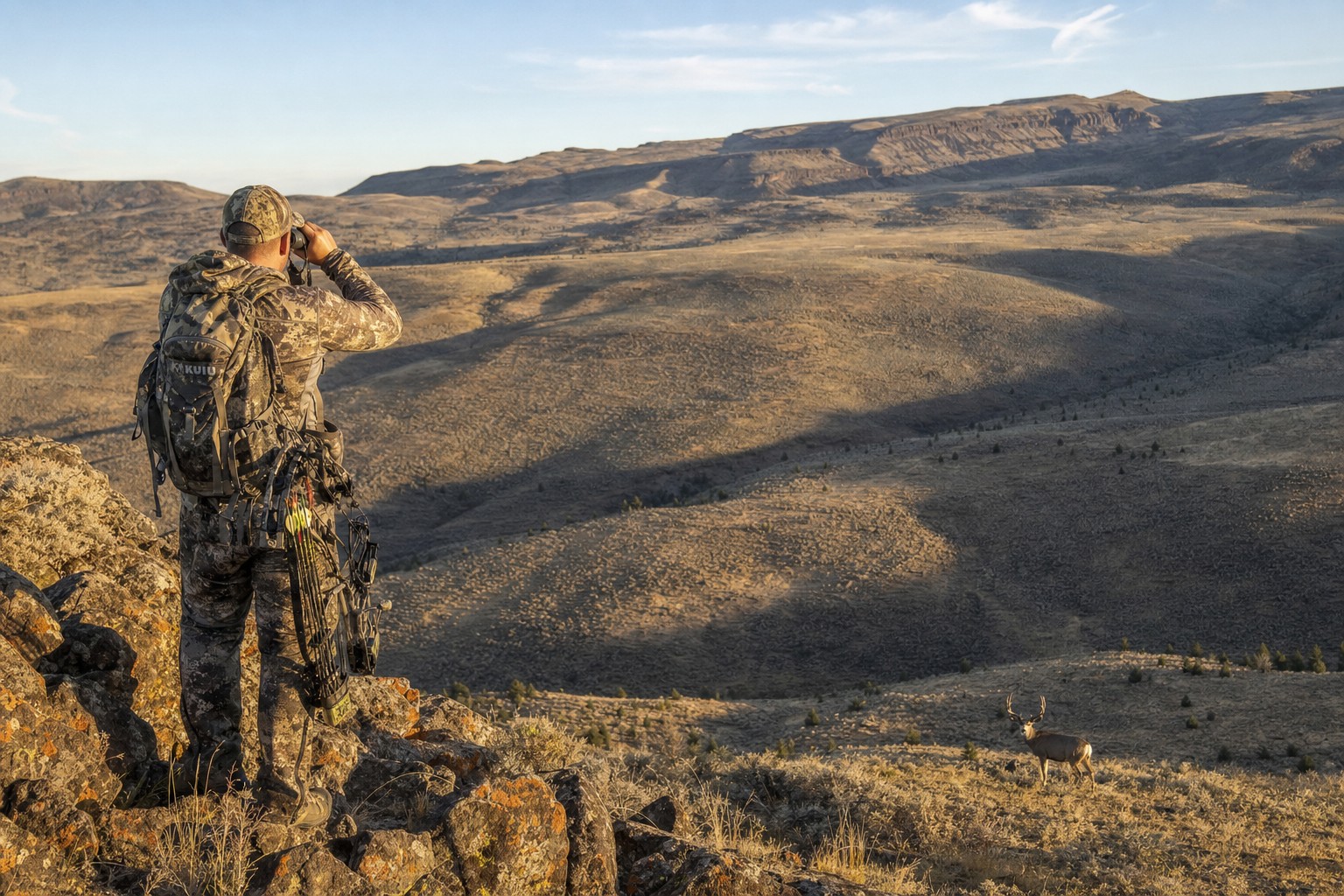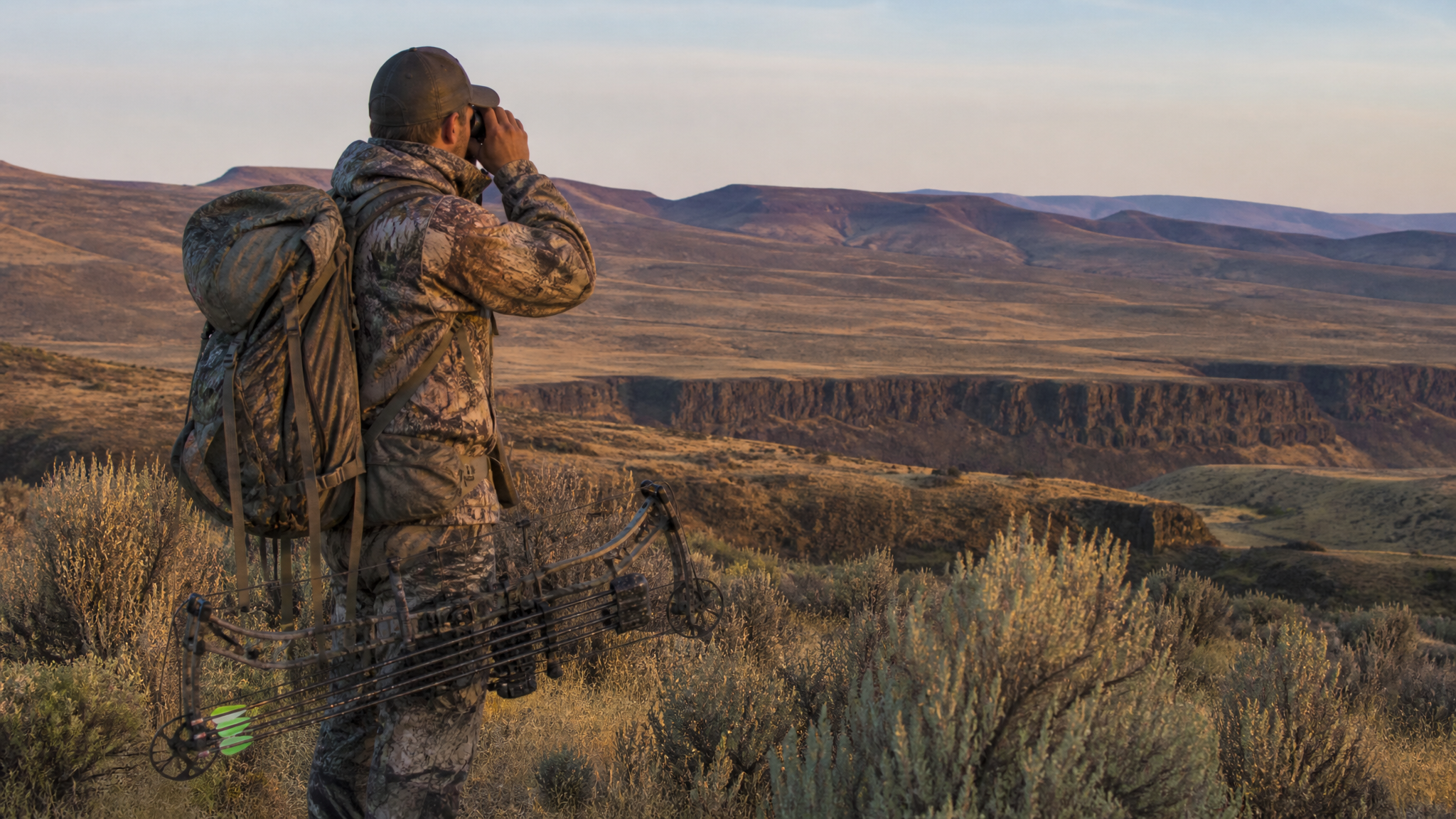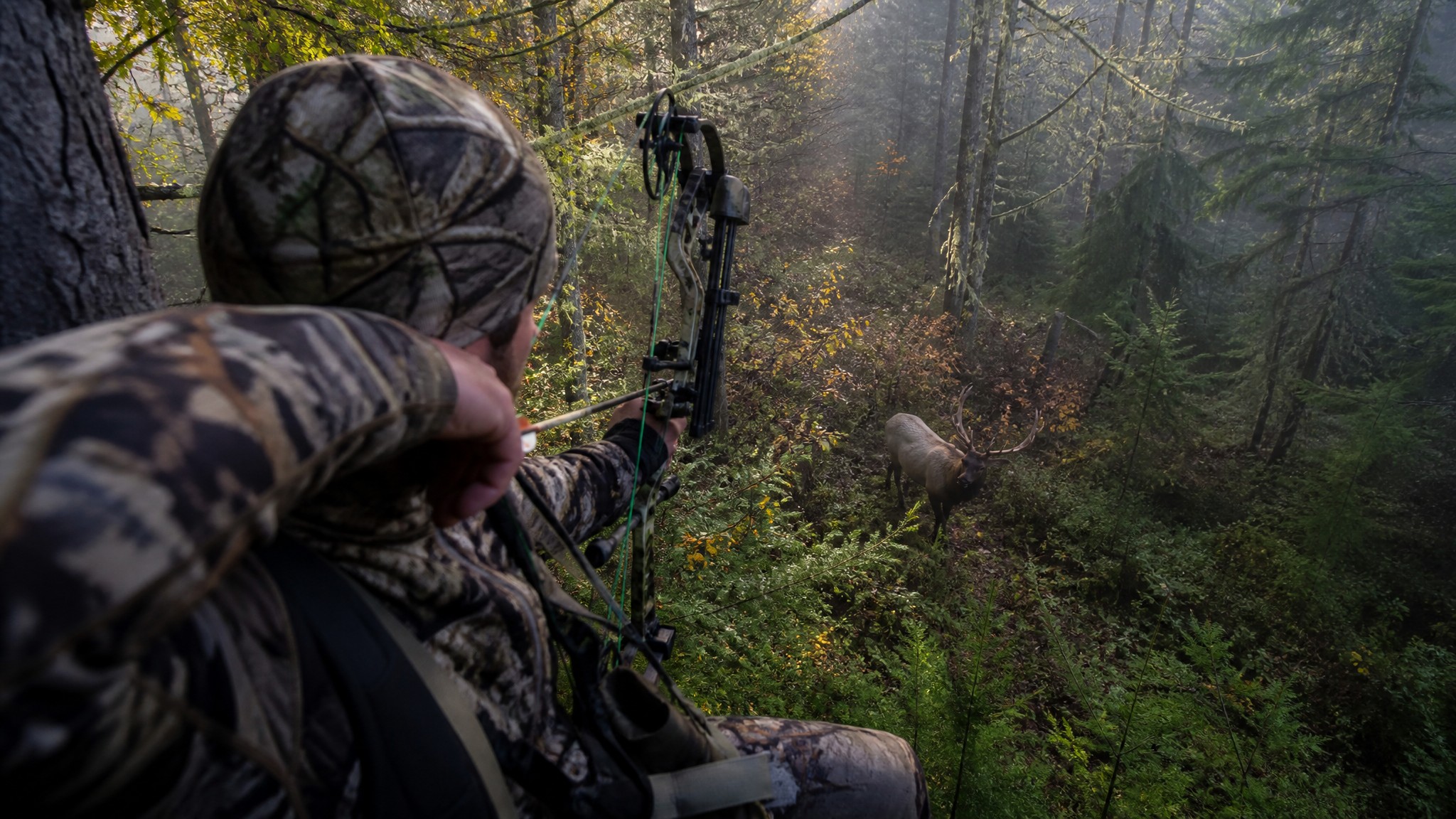
When most Oregon hunters think about elk, they think about the ground. Calling in timber, setting up in saddles, still-hunting the draws. Treestands and elk feel like they belong in different conversations — one for whitetail country, the other for the West. But in the Cascade foothills, where elk behavior funnels through predictable terrain features and the rut concentrates movement, a well-placed hang-on treestand is one of the most effective archery elk tools in your arsenal. Here's how to make it work.
Why Treestands Work for Oregon Archery Elk
The objections are real: elk move a lot, range widely, and seem unpredictable compared to whitetail. But in the lower-elevation Cascade foothills — the zone from roughly 1,500 to 4,000 feet in units like Santiam, Metolius, White River, and the western slopes of the Blues — elk patterns become more predictable than hunters realize, especially during the rut.
A treestand offers three critical advantages for archery elk:
- Scent control: Elk have exceptional noses. Getting your scent above their primary scent plane — even 15 to 18 feet up a Douglas fir — dramatically reduces detection rates on approaching animals.
- Visibility: Cascade foothill timber is mixed fir, alder, and vine maple with broken understory. From the ground, you often can't see an approaching elk until it's inside 30 yards. From 16 feet up, you gain 60 to 100 yards of visual range in many setups — enough to prepare, draw, and settle before the animal arrives.
- Sound: Elk calling from a treestand produces a more natural sound projection. Your calls don't project from knee height, which can sound wrong to a responding bull who expects to hear a rival at his own level.
Reading Terrain for Elk Treestand Locations
Saddles and Ridge Crossings
Elk, like all ungulates, use saddles and low points on ridges to cross between drainages. In the Cascade foothills, these crossings are often funneled further by blowdown, cliffs, or dense brush on either side of the saddle. Identify saddles on a topo map — OnX Hunt makes this easy — and look for those where the low point is particularly defined and the elk have limited alternative crossing options. A treestand set downwind of the saddle center, 15 to 20 feet in a straight fir or big alder, covers approaching elk from either direction.
Wallows and Wallow Trails
Rutting bull elk use wallows obsessively in late August and early September. A bull will visit his primary wallow multiple times per day. The trails leading to and from a wallow — particularly the trail from the wallow toward evening timber bedding areas — are prime treestand locations. Set the stand on the downwind side of the approach trail, not directly over the wallow. Bulls use their nose checking the wallow before approaching; you want to intercept them on the trail before they hit that scent-check point.
Clearcut-Timber Edges
Cascade foothills in western Oregon have extensive clearcut history at various stages of regrowth. Elk feed in regenerating 5 to 15-year clearcuts during early morning and evening, then retreat to timber for midday bedding. The precise edge where that transition happens — where old fir or mature alder meets the regrowth edge — is where elk spend significant time. A treestand set in the timber edge 10 to 15 yards back from the opening, with shooting lanes cut into the edge zone, is textbook setup for Cascade blacktail and elk alike.
Creek Crossings
Stream drainages concentrate elk movement. Where a creek channel narrows, where stepping stones or a gravel bar create a natural crossing point, elk will use the same ford repeatedly over days and weeks. In steep Cascade terrain, creek crossings often occur in the only flat or accessible spot for hundreds of yards — making them extremely reliable for stand placement. Set downwind of the crossing, in a tree that doesn't skyline you from the approach direction.
Tree Selection and Stand Hanging
Douglas fir is the workhorse tree for Cascade foothill elk stands. Straight, with regular bark texture for climbing sticks, and dense enough foliage in the mid-canopy to break your outline. Look for trees 12 to 20 inches in diameter — enough to hold a stand securely without being so large that your stand platform sits far from the trunk.
Hang at 16 to 20 feet. This is the sweet spot for most Cascade foothill setups: high enough to get scent above the average elk's nose height, but not so high that shot angles become steep and difficult. A steep downward shot on an elk can result in the arrow hitting only one lung — never acceptable at this level of hunting.
Clear your shooting lanes before the season with hand pruners. You need clean shooting windows of at least 8 to 10 yards wide in 3 to 4 directions from your stand. Do this well before the season to allow cut limbs to dry and fresh scent to dissipate. Elk that smell fresh-cut vegetation in an area they're using will often move around it.
Timing Your Treestand Hunts
Treestand hunting for Oregon archery elk is most productive during two windows:
- September rut peak: Roughly September 10 through September 25 in most Cascade units. Bulls are on their feet at all hours. Morning and evening stands near wallows and saddles produce the most encounters.
- Post-rut recovery (late September–October): After the peak, bulls begin moving back to feeding patterns. Stands near clearcut edges and food sources pick back up as the rut intensity drops.
Mid-morning to early afternoon stands near wallows during the peak rut can be more productive than you'd expect — rutting bulls don't follow a clock, and midday encounters at wallows are common during the September heat.
Calling from the Stand
One of the underrated advantages of treestand elk hunting is the ability to call without being seen. A cow call sequence — soft mews and estrus chirps — projected from an elevated position near a wallow or saddle can bring a bull in without him knowing your exact location. Don't call aggressively from the stand; let him work toward you. If he hangs up at 80 or 100 yards, add a few light raking sounds with a branch against your tree to simulate another elk in the area. Often that's enough to pull him those final 20 yards into range.
Get Up in the Trees
Oregon's archery elk success rates hover around 15 to 20% statewide. Hunters willing to adapt their approach — to scout terrain carefully, identify the funnels and wallows, and put in the effort to hang a stand in exactly the right place — run considerably better odds than average. The treestand isn't a whitetail tool. It's a tool that works wherever predictable terrain funnels animals past a fixed point. In the Cascade foothills, those points are everywhere. You just have to find them.