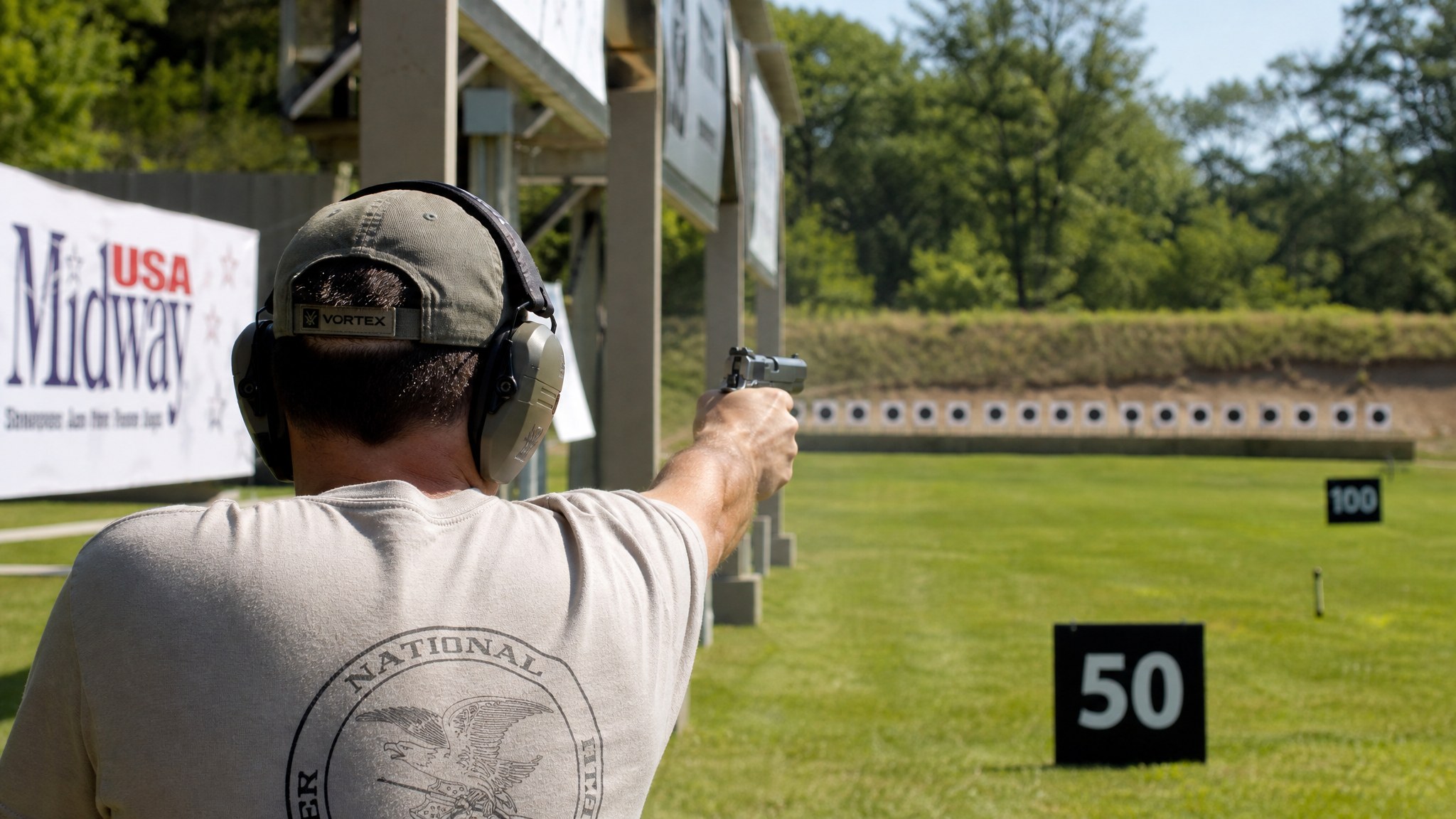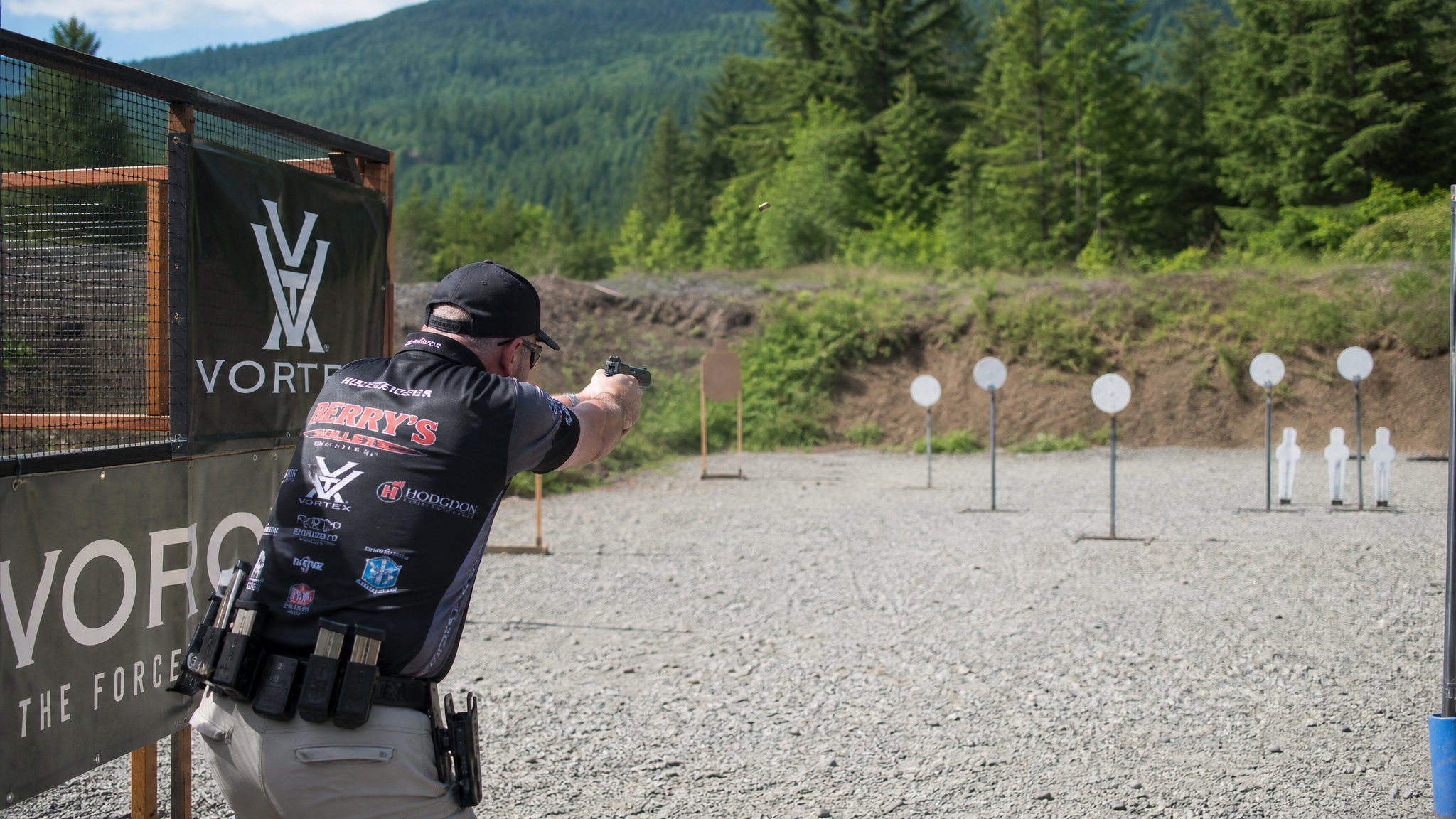
If you've ever watched a USPSA match and thought the competitors were running exotic race guns with $5,000 worth of custom work — you're half right about Open division, but completely wrong about Production. Production is the category where your Glock 17, Sig P320, or CZ P-10C is not only legal but competitive. There are no compensators, no optics, no extended magazine wells that would look out of place in a tactical catalog. Just a box-stock pistol, quality ammunition, and whatever skill you've built at the range.
In Oregon, practical shooting is thriving. Active USPSA clubs are running monthly matches year-round across the Willamette Valley, the Portland metro area, and Central Oregon. If you own a defensive handgun and can shoot it reasonably well, you're closer to competing than you probably think.
What Is USPSA Production Division?
United States Practical Shooting Association (USPSA) is a sport built around engaging multiple targets at speed from various positions, shooting around barriers, and solving stage-specific challenges under the timer. Competitors are scored on a combination of accuracy (points) and time, creating a Hits Factor score that rewards fast, accurate shooting.
Production division was created to give competitors a level playing field with factory-condition or near-factory pistols. Key rules include:
- Magazine capacity limited to 10 rounds regardless of what the magazine actually holds. You start with 10 in the gun.
- No optics. Iron sights only.
- Limited modifications: You can replace grips, trigger springs, and sights within spec, but you can't add a compensator, flared magwell, or thumb rest.
- Power factor: Major power factor (160 PF+) is not allowed in Production — all competitors shoot Minor power factor. This standardizes the scoring so a 9mm and a .45 ACP compete on the same footing.
- Holster carry: You draw from an outside-the-waistband holster on the strong side, no retention level required beyond a basic friction fit.
The top Production guns — the CZ Shadow 2, Shadow 2 Optics Ready, Tanfoglio Stock pistols, and various tuned S&W M&P variants — are still factory-catalog firearms with approved modifications. A bone-stock Glock 34 is completely legal and will win matches in the right hands.
Oregon USPSA Clubs to Know
Oregon has an active USPSA community centered around several affiliates:
- Tri-County Gun Club (Sherwood): One of the most active USPSA clubs in Oregon, running Level I matches monthly with multiple stages. Excellent beginner-friendly environment.
- ARPC (Albany Rifle and Pistol Club): Willamette Valley club running regular USPSA matches with good range infrastructure and an active membership base.
- Cascade Practical Shooters (Bend/Central Oregon): Serving the high desert shooting community with USPSA matches at the Bend area ranges.
- Sportsman's Warehouse Indoor/Outdoor Partnerships: Several Sportsman's Warehouse locations in Oregon partner with local clubs for beginner USPSA clinics and introductory match days.
Find your nearest affiliated club at the USPSA website under Club Finder. Oregon clubs typically run matches year-round — Pacific Northwest rain doesn't stop practical shooters.
What You Need to Start
Gear Essentials
- Pistol: Any Production-legal handgun. 9mm is the dominant cartridge. Glock 17/34, S&W M&P 9 Pro, CZ P-10C, Sig P320 X-Five are all excellent choices. If you already own a defensive 9mm, bring it.
- Holster: Kydex OWB holster at or behind the strong-side hip. Safariland, Blade-Tech, and Comptac make Production-legal holsters for most popular guns.
- Magazines and pouches: A minimum of 4–5 magazines is recommended. You need to load 10 rounds per mag (the max per Production rules). Magazine pouches should carry at least 3 spare mags on your belt.
- Eye and ear protection: Mandatory. Electronic ear pro is highly recommended — you'll want to hear the Range Officer's commands clearly under muffs.
- Ammunition: 9mm factory ammunition at Minor power factor (125 PF minimum). Most 115 gr and 124 gr 9mm commercial loads meet this easily. Bring at least 200 rounds for a club match.
Your First Match
Show up before the briefing and introduce yourself as a new shooter. USPSA clubs universally welcome newcomers and most will assign an experienced shooter to walk you through your first few stages. Don't worry about being competitive on day one — your goal is to understand the flow: load and make ready, engage targets in whatever order makes sense, reload efficiently, and finish safely with the gun holstered.
A few universal rules that apply at every match:
- Finger off the trigger unless sights are on target and you've made the decision to shoot.
- Muzzle direction: Downrange always. A 180-degree violation (muzzle points behind the shooting line) is an immediate disqualification.
- Gun handling: Only draw and holster when commanded by the Range Officer. Never handle your firearm in a safe area.
Getting Better Fast
The fastest skill improvement in Production comes from three things: dry fire at home, video review of your own stages, and learning to move with purpose. Watching top Production shooters, you'll notice they're not sprinting — they're moving economically to positions that maximize their shooting efficiency. Every step should be deliberate. Dry fire with a shot timer at home for 15 minutes daily and you'll improve faster than most range-time-only competitors.
Consider a Production-specific training resource like Ben Stoeger's Practical Shooting Training Group materials or Steve Anderson's Refinement and Repetition — both are heavily Production-focused and widely used in the Oregon club shooting community.
Final Thoughts
USPSA Production is where serious defensive handgun skills get tested under the clock against real competition. It's humbling, addictive, and one of the best environments for rapid skill development you'll find in any shooting sport. Your carry gun is already qualified. Get to a match, introduce yourself, and find out how fast your fundamentals actually are when the timer starts.