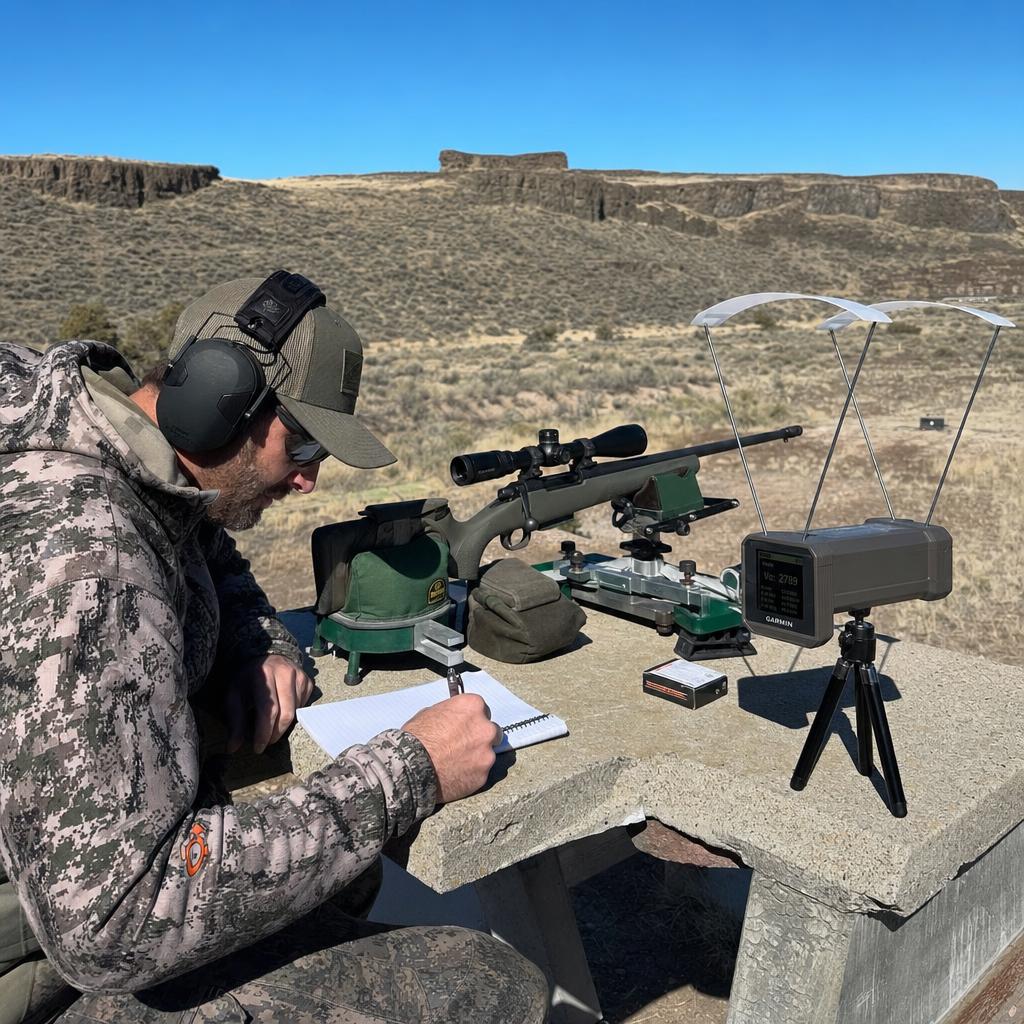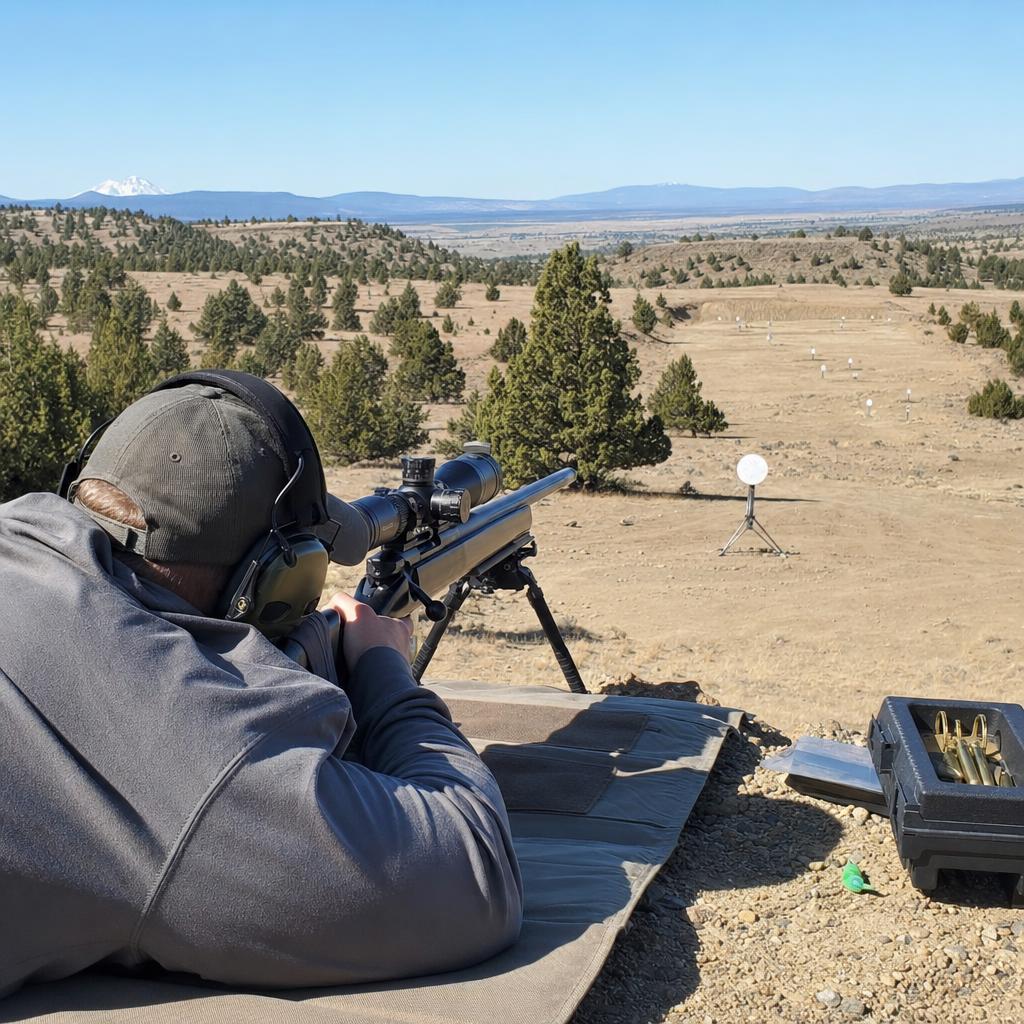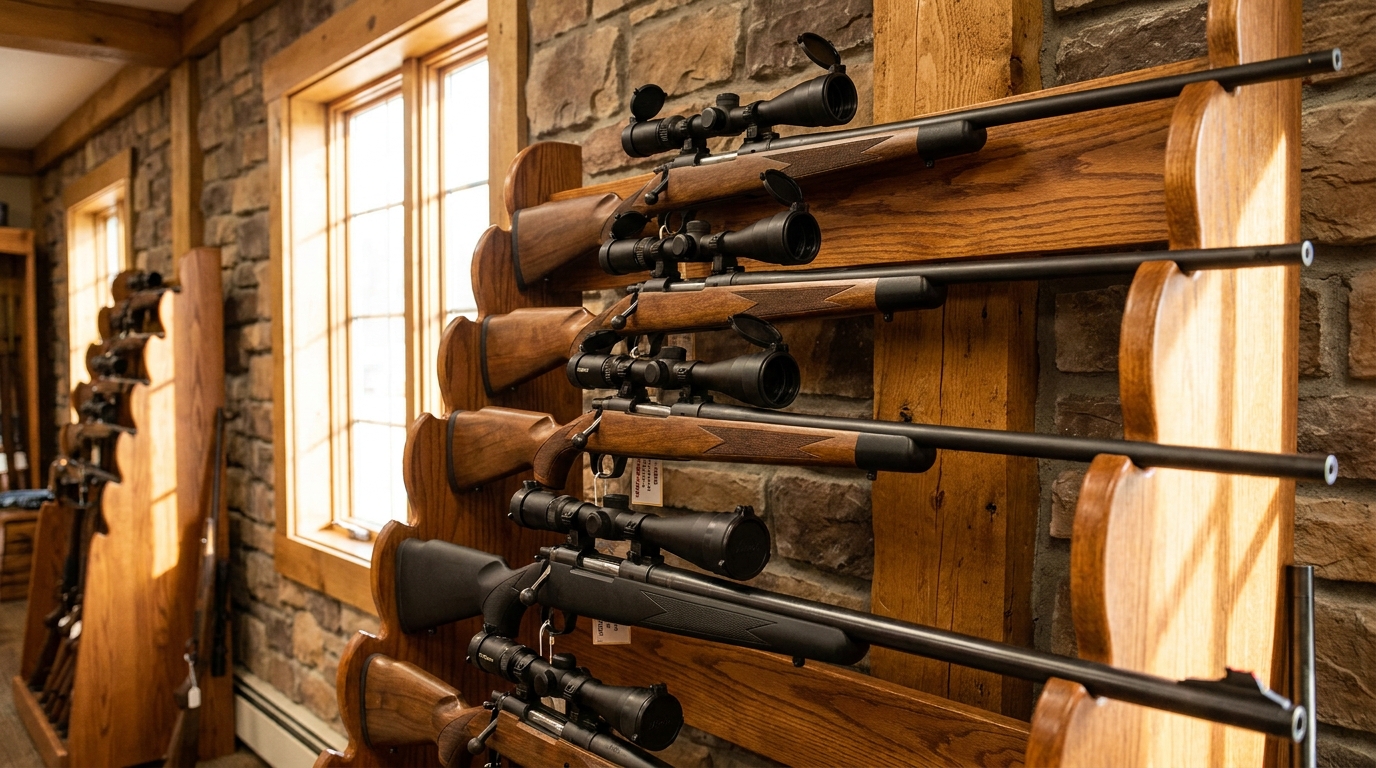
The first hunting rifle is a rite of passage — and it's also one of the most confusing purchases a new hunter will make. Gun counter staff have their favorites, online forums are full of conflicting opinions, and rifle manufacturers market everything from budget bolt guns to custom precision rifles using the same buzzwords. Here's a practical guide built around what Oregon hunters actually encounter in the field.
Start with Action Type
For most hunters, the choice is simple: buy a bolt-action rifle. Bolt actions dominate big game hunting because they're mechanically reliable, inherently accurate, handle the widest range of cartridges, and are easy to maintain and troubleshoot. Every major manufacturer makes excellent bolt-action rifles, and the market is competitive — which means value is genuinely good right now.
Semi-automatic rifles have their place — the AR platform in calibers like 6mm ARC or .308 Winchester offers fast follow-up shots and familiar controls for those with a military or competitive shooting background. But for a first hunting rifle, the bolt action's simplicity, accuracy, and broad cartridge availability make it the clear starting point.
Caliber: Match It to Your Hunt
Oregon hunting covers an enormous range of scenarios: blacktail deer in coastal timber where shots rarely exceed 100 yards, pronghorn in the high desert at 400+, elk in the Cascades at any distance, and everything in between. No single caliber is perfect for all of it, but a few come close:
Best All-Around Choices for Oregon
- .308 Winchester: The baseline. Widely available, affordable to feed and reload, effective on deer and elk to 400 yards, and chambered in more rifles than any other centerfire cartridge. Recoil is manageable. If you're only buying one rifle and you'll hunt everything from Cascades elk to Willamette Valley deer, the .308 is still a legitimate answer in 2026
- 6.5 Creedmoor: The modern workhorse. Better ballistics than .308 beyond 400 yards, lighter recoil, excellent factory ammunition availability, and tremendous handloading potential. For open-country hunting — eastern Oregon mule deer, pronghorn, long-range elk — the 6.5 Creedmoor is genuinely superior to .308. This is the caliber we'd recommend to most new Oregon hunters today
- .30-06 Springfield: The classic that refuses to become obsolete. More energy than .308 at all distances, handles the full range of bullet weights from 110 to 220 grains, and is available literally everywhere ammunition is sold. Slightly more recoil than 6.5 CM but very manageable. Excellent for hunters who also want to use the rifle as a black bear or elk gun
- 7mm Remington Magnum: If your primary goal is open-country elk at long range, the 7mm Rem Mag steps up with more velocity and a flatter trajectory than the non-magnum cartridges. More recoil, more expense, harder to find in rural areas — but genuinely excellent ballistics to 600+ yards
What to Avoid as a First Rifle
Skip ultra-magnum cartridges (.300 RUM, .338 Lapua, etc.) for a first rifle — their recoil and expense make developing good shooting fundamentals harder. Also avoid overly short-range brush cartridges like .30-30 unless you're specifically hunting close-cover blacktail and already own a deer rifle. And resist the temptation of obscure, boutique calibers — when you need ammunition at a rural Oregon gas station at 6 AM the morning before your hunt, .308 and 6.5 Creedmoor will be there. The 6.5 Weatherby RPM will not.
Budget and Brand
The good news: the entry-level hunting rifle market has never been better. You don't need to spend $1,500 to get a rifle that shoots under an inch at 100 yards.
- $400–$600: Ruger American, Mossberg Patriot, Savage Axis II. These rifles routinely shoot 1 MOA or better out of the box. The Savage Axis II in particular has a superb factory AccuTrigger and outstanding barrel quality for the price
- $600–$900: Tikka T3x Lite, Browning X-Bolt Hunter, Ruger Hawkeye. Step up in fit, finish, and trigger quality. The Tikka T3x Lite is arguably the best value rifle in this range — smooth action, excellent accuracy, and very light at under 6 lbs
- $900–$1,500: Winchester Model 70, Weatherby Vanguard Series 2, Bergara B-14. Premium quality without custom pricing. The Bergara B-14 in particular is a revelation — sub-MOA guaranteed, exceptional trigger, and a chassis designed for scope mounting
A $500 rifle with a $400 scope will outperform a $900 rifle with a $100 scope every single time. Budget accordingly.
Scope: The Most Important Purchase
Your scope matters more than your rifle. A mediocre rifle with a quality scope is a better shooting system than a quality rifle with a cheap scope. For a first hunting rifle, budget at least $300–$400 for the optic:
- Vortex Crossfire II 3-9x40: ~$180. The best entry-level hunting scope on the market. Lifetime warranty, excellent glass for the price, and a dead-simple reticle that works for most hunting distances
- Vortex Diamondback 4-12x40: ~$250. Step up in magnification and clarity. Good choice if you anticipate longer shots in open country
- Leupold VX-3HD 3.5-10x40: ~$500. Quality glass, proven reliability in Oregon's wet conditions, and resale value that holds. A scope you'll never need to replace
Fitting the Rifle
A rifle that doesn't fit is a rifle you won't shoot well. Before buying, shoulder the rifle in the store. Your eye should naturally align with the scope when you mount the rifle to your cheek. If you're stacking cheek pads or straining to see through the scope, the stock dimensions aren't right for you. Most hunters shoot better from stocks with a shorter length of pull than factory spec — don't be afraid to try several rifles before committing.
What to Buy: Our Recommendation
For most first-time Oregon big game hunters, we'd spec out: Tikka T3x Lite in 6.5 Creedmoor with a Vortex Diamondback 4-12x40 scope. The package runs around $750–$850 all in with rings, and it will shoot everything from Columbia blacktail at 50 yards to eastern Oregon mule deer at 350 yards with factory Hornady Precision Hunter ammunition. When you're ready to reload, 6.5 Creedmoor has one of the best component ecosystems available. And at 6 pounds, the T3x Lite won't feel like ballast on a long pack-out.
Get out and shoot it. A rifle you've put 200 rounds through before the season — in field positions, at realistic distances — is the rifle that'll put meat in the freezer come fall.