The Columbia River is home to one of North America's most impressive freshwater fisheries — white sturgeon (Acipenser transmontanus) that can top 10 feet in length and weigh hundreds of pounds. Oregon and Washington anglers have chased these prehistoric giants for generations, and despite tighter regulations in recent decades, sturgeon season remains one of the most anticipated events on the Northwest fishing calendar.
This guide covers what you need to know before you launch a boat or drag a cooler to the bank.
Understanding ODFW Sturgeon Regulations
Oregon Department of Fish & Wildlife (ODFW) manages white sturgeon through a quota-based season. Retention fishing typically opens in spring, with ODFW monitoring harvest closely and closing seasons once quotas are met — sometimes within days of opening.
Key rules for Oregon:
- Legal retention size: 38–54 inches fork length (measure from the nose to the fork of the tail)
- Bag and possession limit: One fish per day, two in possession
- Barbless hooks required on nearly all mainstem Columbia zones
- Season updates: Always check ODFW's weekly regulation updates — closures can happen mid-week
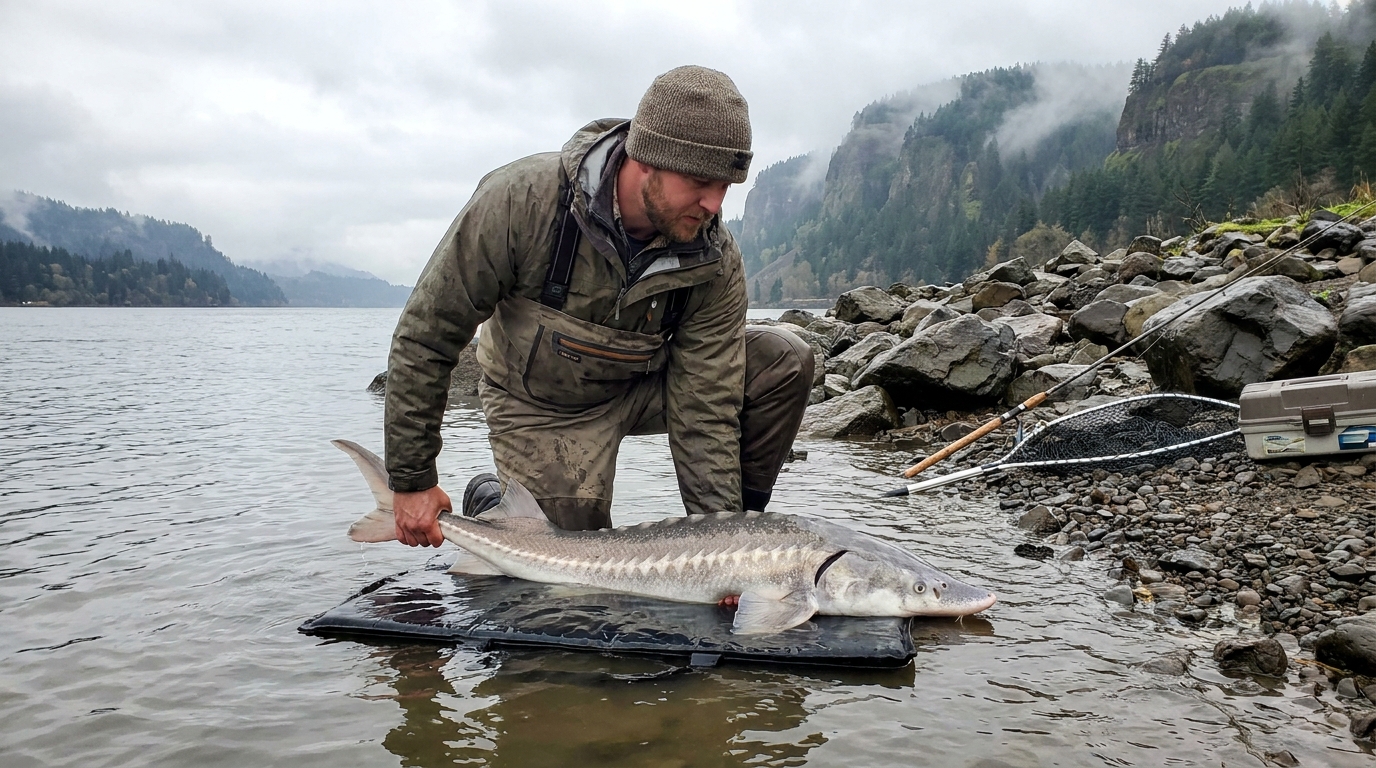
Sub-legal and oversized sturgeon (above 54 inches) must be released immediately and carefully. Use a lip grip on large fish when possible, keep them in the water, and avoid lifting by the tail — a sturgeon's internal organs can shift under its own weight.
When to Fish: Peak Windows
Spring (March–June) is prime time on the lower Columbia between Bonneville Dam and Astoria. Flows stabilize after the first big runoff, water clarity improves, and sturgeon stack up in feeding lanes ahead of salmon smolt runs. The stretch from Bonneville Pool through the Gorge consistently produces fish in spring.
Summer fishing shifts upstream toward The Dalles and Biggs Junction as fish follow cooler water and baitfish. Fall brings another push of mature fish into the lower river. Winter is cold but often productive — sturgeon are cold-blooded and active year-round.
Productive Bank Access Spots
You don't need a boat to catch keeper sturgeon on the Columbia. Several bank spots consistently produce:
- Rooster Rock State Park (MP 22): Wide gravel bar with multiple lines of current. Good holding water just off the main channel edge.
- Bonneville Dam Tailwaters: Below the powerhouse on the Oregon side. Sturgeon hold here year-round. Can be crowded on weekends.
- Dalton Point (near Multnomah Falls exit): Steep bank with access to the main channel. Best on a slack tide or slow outgoing flow.
- The Dalles riverfront: City park access with surprisingly good sturgeon action in summer. Rocky bottom holds smelt and crawdads — prime sturgeon food.
- John Day Dam tailwaters: Excellent late spring and summer fishing. Fewer crowds than the lower river. Check for boat-only restrictions in some areas.
Rigging Up for Sturgeon
The classic Columbia River sturgeon rig is simple and proven:
- Main line: 50–80 lb monofilament or braid (braid with a mono leader)
- Sliding sinker: 8–24 oz depending on current, with a sinker slider to prevent line twist
- Leader: 60–80 lb fluorocarbon, 18–24 inches
- Hook: Size 6/0–8/0 circle hook, single barbless
- Bait: Pile worms, sand shrimp, eel sections, smelt, or lamprey chunks
For heavy current at Bonneville or below dams, go heavier on the weight — 16–24 oz will keep your bait pinned in the strike zone rather than tumbling downstream. In slower reaches, 8–12 oz is plenty.
The key is presenting bait on or very near the bottom. Sturgeon are bottom feeders. If your sinker isn't occasionally ticking gravel, you're likely fishing too high.
Reading the Water
Sturgeon love soft edges — the seam between fast current and slack water, the downstream edge of a gravel bar, or a deep hole on the inside of a bend. On the Columbia, look for depths of 20–60 feet in spring and early summer. Fish staging ahead of upstream migration often concentrate just downstream of dam tailwaters.
A sonar unit is invaluable for finding holding fish, but from the bank, focus on casting to structure breaks: submerged rock piles, channel edges, and spots where shallower gravel transitions to deeper soft-bottom holding water.
Gear and Licensing
You'll need a valid Oregon fishing license plus a Combined Angling Tag (CAT). If fishing for retention during an open quota season, verify the season is still open at ODFW's website or by calling the ODFW sturgeon hotline before you go — they update it frequently.
A heavy-action rod (8–10 feet, rated for 4–8 oz or heavier) and a conventional reel with at least 200 yards of 65 lb braid is standard. Berkley Big Game monofilament has been a staple Columbia River sturgeon setup for decades. Don't overlook a good rod holder spiked into gravel — you may be soaking bait for hours.
White sturgeon are a magnificent, long-lived species that deserves careful handling regardless of size. They've been swimming Pacific Northwest rivers since before the Cascade volcanoes formed. Catch one, feel the prehistoric weight of it, photograph it, and send it back healthy. The fish you release today is the fishery your kids will enjoy tomorrow.