The trigger is the one mechanical interface between your decision to fire and the shot itself. A poor trigger — heavy, gritty, or with excessive creep — makes precision shooting harder than it needs to be. A great trigger makes everything easier. Yet it's one of the most overlooked upgrades on hunting rifles, overshadowed by scopes, stocks, and barrels that cost far more.
Trigger Terminology: What Actually Matters
- Pull weight: The total force required to fire the rifle. Measured in pounds or ounces. A 3-pound trigger breaks at 3 lbs of applied force.
- Creep (or travel): Any perceptible movement of the trigger shoe before the sear releases. Clean triggers have zero creep. Creep makes it hard to feel exactly where the shot will break.
- Stack: Increasing resistance as the trigger moves through its travel. Some shooters prefer slight stack as a tactile warning; most find it annoying.
- Overtravel: Trigger movement after the sear breaks. A small amount is necessary for reliable function; excessive overtravel lets the rifle move before the bullet exits the barrel.
- Reset: How far forward the trigger must travel before it resets for the next shot. Relevant for rapid follow-up shots.
What Pull Weight is Right for Hunting?
This is the most common question — and the most misunderstood. The answer depends on application:
- Bench/long-range/precision hunting: 2–2.5 lbs. Allows a deliberate, minimal-disturbance break. Safe for disciplined shooters.
- General hunting (bolt gun): 2.5–3.5 lbs. The practical sweet spot. Light enough to shoot well, heavy enough to be safe with cold hands and gloves.
- Dangerous game or close-quarters: 3–4 lbs minimum. You want something that won't break accidentally when everything goes sideways.
- AR-platform semi-autos: 4–6 lbs is common and appropriate. Sub-4 lb triggers on semi-autos are fine for target work but carry more risk in field carry.
Factory Triggers Worth Knowing
Before spending on aftermarket, know what's standard:
- Remington Model 700: Factory X-Mark Pro pulls run 3–5 lbs out of the box. A competent gunsmith can clean up sear geometry for $60–80 — often the best first step.
- Ruger American: The two-stage factory trigger is actually decent. Most break around 3–3.5 lbs with manageable creep.
- Savage AccuTrigger: One of the best factory triggers on any production rifle. Adjustable from 1.5–6 lbs with an integrated safety lug. Often needs no upgrade.
- Tikka T3: European-style two-stage with excellent feel. Most break around 2–3 lbs and rarely require improvement.
- Winchester Model 70: The Feather-Touch trigger is adjustable but often benefits from a gunsmith once it's worn in.
Top Aftermarket Trigger Options
For Remington 700 (and clones):
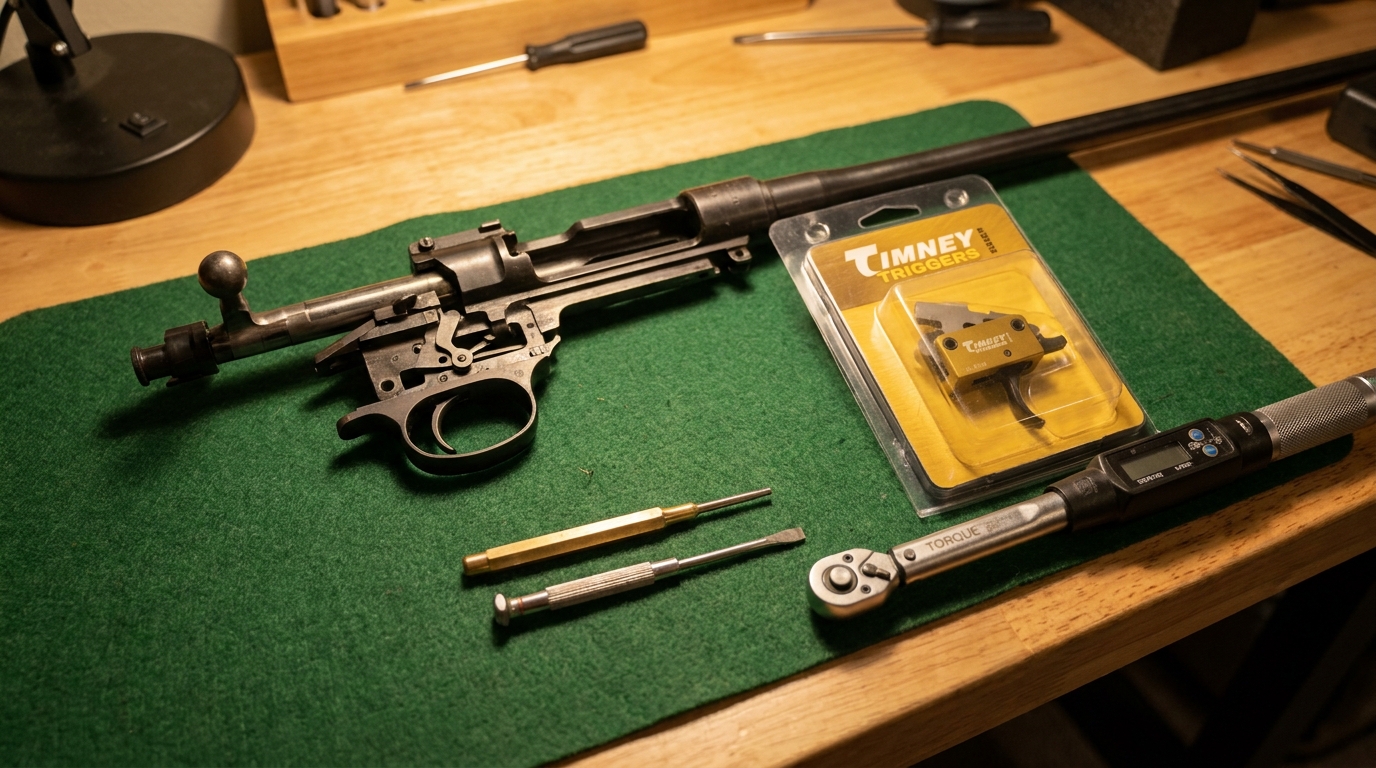
- Timney Calvin Elite (~$230): Drop-in unit, available in pull weights from 8 oz to 4 lbs. Zero creep, adjustable overtravel. The gold standard for 700 trigger replacement.
- TriggerTech Remington 700 (~$200–240): Uses frictionless roller trigger technology. Incredibly clean break. Available in single-stage (1–4 lb) and two-stage. An excellent field trigger.
- Jewell HVR (~$200): Benchrest-grade precision. Best for dedicated accuracy rifles. Requires adjustment knowledge.
For AR-15:
- Geissele SSA (~$240): Military-grade two-stage. First stage is light and smooth, second stage breaks clean at about 2 lbs cumulative. The benchmark mil-spec AR trigger upgrade.
- LaRue MBT-2S (~$90): Two-stage flat bow. Comparable to Geissele at about half the price. Exceptional value for the performance delivered.
- CMC Drop-In Triggers (~$150–180): Single-stage cassette designs, available 2.5–4.5 lbs. Easy install, reliable for general use.
For Ruger American:
- Timney Ruger American (~$140): Drop-in, ships at 2.5 lbs. Clean single-stage break. Significant improvement over factory.
Installation: DIY or Gunsmith?
Drop-in triggers like Timney cassettes and LaRue MBT-2S installs are genuinely straightforward — often two pins and 15 minutes. More complex trigger jobs on older platforms requiring sear geometry work should go to a gunsmith.
After any trigger installation:
- Function test with snap caps — cock and dry-fire 10+ times at various angles
- Drop test — hold the rifle at various angles and tap the buttstock firmly; the trigger should not fire
- Verify safety engagement on every pull weight setting you test
A trigger upgrade done right is a permanent accuracy and consistency improvement. Done wrong, it's a dangerous liability. When in doubt, pay a qualified gunsmith the $50–80 for installation. It's cheap insurance on an expensive rifle.
Final Thought
The rifle you already own shoots better than you think it does. Before spending $200 on a trigger, spend a session dry-firing with a snap cap and learn your existing trigger's characteristics. Many factory triggers improve noticeably with practice and familiarity. But when you've done that work and the trigger is genuinely your limiting factor, the right aftermarket unit makes an immediate, measurable difference. Some shooters describe a quality trigger upgrade as the moment their rifle finally made sense.