Spring turkey gets all the glory — the busting strut, the shock gobble at sunrise, the tom that finally commits after forty-five minutes of calling. But Oregon's fall turkey season offers a different kind of hunting that many upland enthusiasts are sleeping on entirely. The Willamette Valley is thick with Rio Grande and Eastern hybrid turkeys, tags are widely available, and the October season opens up hunting opportunities on public land that doesn't require a once-in-a-lifetime draw.
If you've only chased gobblers in spring, fall turkey will feel like starting over. That's part of the appeal.
Oregon Fall Turkey Season: What You Need to Know
Oregon's fall turkey season typically runs from late September through late November depending on the zone, with the Willamette Zone opening in early October. ODFW offers both resident and nonresident fall turkey tags over the counter — no draw required. You can purchase a fall turkey tag through ODFW's website or at any licensing agent. As of the current season, tags run roughly $24.50 for residents and $101.75 for nonresidents.
Both hens and gobblers are legal in the fall season. The bag limit is one bird per tag and you can purchase up to three fall turkey tags statewide. If you've been looking for a reason to run multiple stands or scout multiple drainages in the same week, the multi-tag option is your justification.
Why the Willamette Valley for Fall Birds
The valley floor between Eugene and Portland holds some of the densest turkey populations in Oregon. Agricultural fields — particularly harvested corn, wheat stubble, and pasture edges — concentrate birds through fall as they shift from summer range to lower-elevation wintering areas. The patchwork of farm ground, oak woodlands, and riparian corridors along the valley's edge provides everything turkeys need: food, roost timber, and escape cover.
Public land access in the Willamette Valley is tighter than eastern Oregon, but BLM parcels in the Chehalem Mountains, the Coast Range foothills south of McMinnville, and the Mary's Peak area near Corvallis all hold birds. The Cascade foothills east of Salem and Eugene — particularly the lower-elevation timber zones below 2,000 feet — hold strong populations as birds move down from summer high country.
Don't overlook private land access programs. ODFW's Hunting Access Program (HAP) enrolls thousands of acres of private farmland in the valley, and many cooperators specifically welcome turkey hunters in fall when the crop is already off the field.
Fall Turkey Tactics: Forget the Breeding Mindset
The single biggest mistake spring hunters make when switching to fall is applying spring tactics. In fall, turkeys aren't breeding — they're eating, roosting, and socializing in family groups and bachelor flocks. That changes everything about how you call, where you set up, and what you're looking for.
Find the Food First
Fall turkey hunting starts with identifying food sources. Fresh-cut corn and soybean fields are obvious magnets, but the Willamette Valley's turkeys are also hitting acorn-producing white oaks hard in October. Find a white oak flat with fresh scratching and droppings and you've found your setup location. Birds will work the same oak stand day after day until the mast is exhausted.
Scatter and Regroup Calling
The most effective fall tactic is to find a flock, scatter them hard — run at them, throw rocks, make noise — and then set up immediately on the scatter point. Turkeys are strongly motivated to regroup after a scatter, and they'll respond aggressively to kee-kee calls (the lost call of young-of-year birds) and assembly yelps from a dominant hen. The regroup typically happens within 20–45 minutes if you've done a thorough scatter.
This works best on family groups with poults — now full-grown young birds — who are still tightly bonded to their hen. Bachelor gobbler groups scatter and regroup more slowly and with less urgency, but they'll still work back to the scatter point by late afternoon.
Run-and-Gun vs. Sit-and-Wait
Fall turkey hunting rewards aggressive hunters who cover ground. Unlike spring, when you plant yourself near a roost tree and wait, fall birds are moving constantly along feeding routes. Use a locator call (crow call, owl hoot, or loud cluck) while walking logging roads and field edges to locate birds. When you get a response or spot a flock, shift into predator mode: close the distance, scatter the birds, and get set up before they start regrouping.
Sitting on a food source — particularly a white oak flat or a field edge birds have been hitting in the afternoon — also produces consistently. Glass field edges at first and last light to pattern flocks before your hunt day.
Gear for Fall Willamette Valley Turkeys
- Shotgun: 12 or 20 gauge with a tight turkey choke. Winchester Longbeard XR or Federal Heavyweight TSS in #7 shot will cleanly kill birds out to 50 yards. No need to go heavier — fall turkeys aren't wearing the armor plating of a December bird.
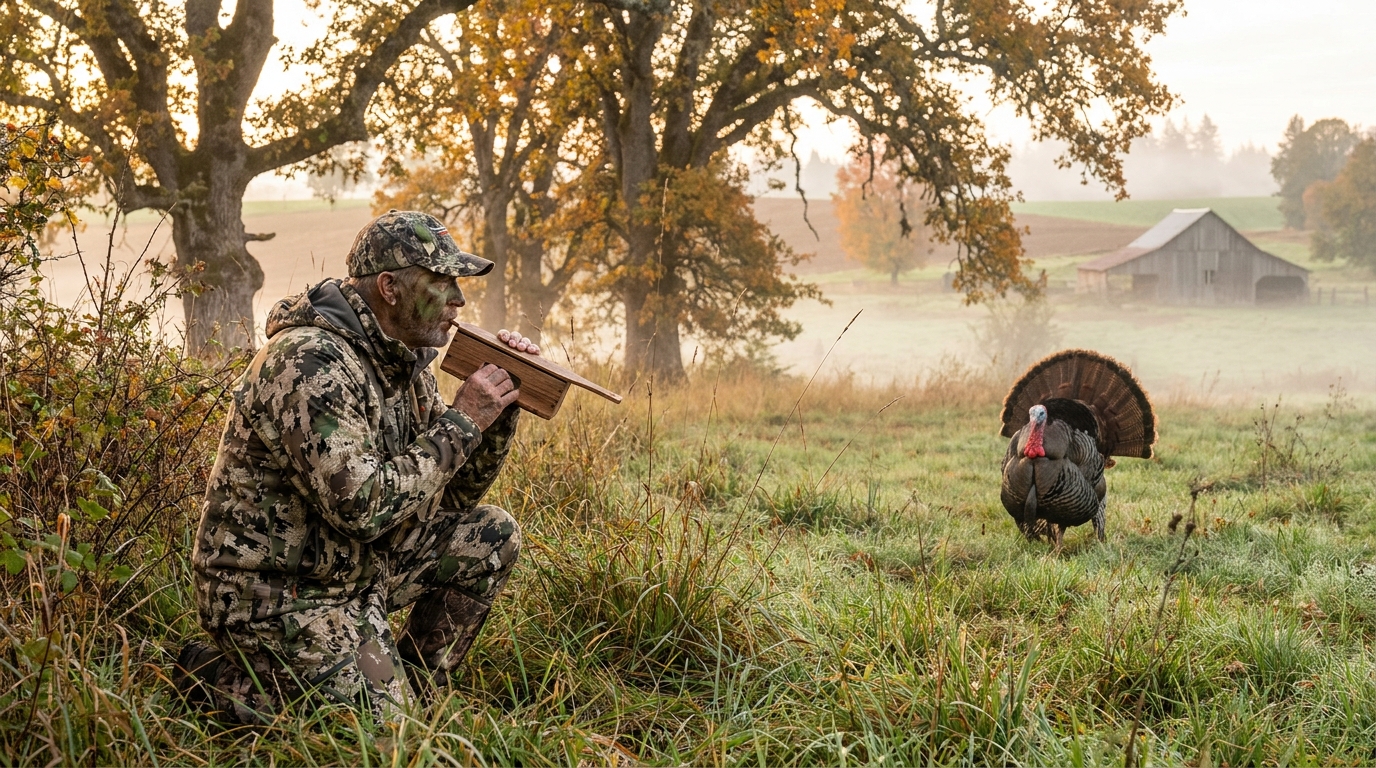
- Calls: A good box call and a slate call are your workhorses. Practice kee-kees and assembly yelps specifically — these are the fall money calls. Box calls carry on windy days; slate calls produce more subtle, realistic sound in calm timber.
- Camo: The Willamette Valley in October is still fairly green, with Oregon grape, ferns, and late-turning hardwoods. A camo pattern with green and brown works well. Face mask and gloves are non-negotiable — turkeys see movement and skin tones at distance.
- Boots: Expect wet grass, mud, and creek crossings. Waterproof boots are worth it. A 4-mile loop through Coast Range foothills in soaking wet feet gets old fast.
Processing Your Fall Bird
Fall turkeys — especially young-of-year birds — eat as well as any wild game you can put on the table. Young jakes and jennies are tender enough to roast whole. An older fall gobbler benefits from brining and low-and-slow cooking, but the flavor of a wild Oregon turkey that's been living on acorns and grain is something supermarket birds can't touch.
The fall season overlaps with mule deer, elk, and upland bird seasons across much of Oregon, making it a natural add-on tag for hunters already in the field. If you're spending time in the Willamette Valley foothills this October and haven't picked up a fall turkey tag, you're leaving opportunity on the table.