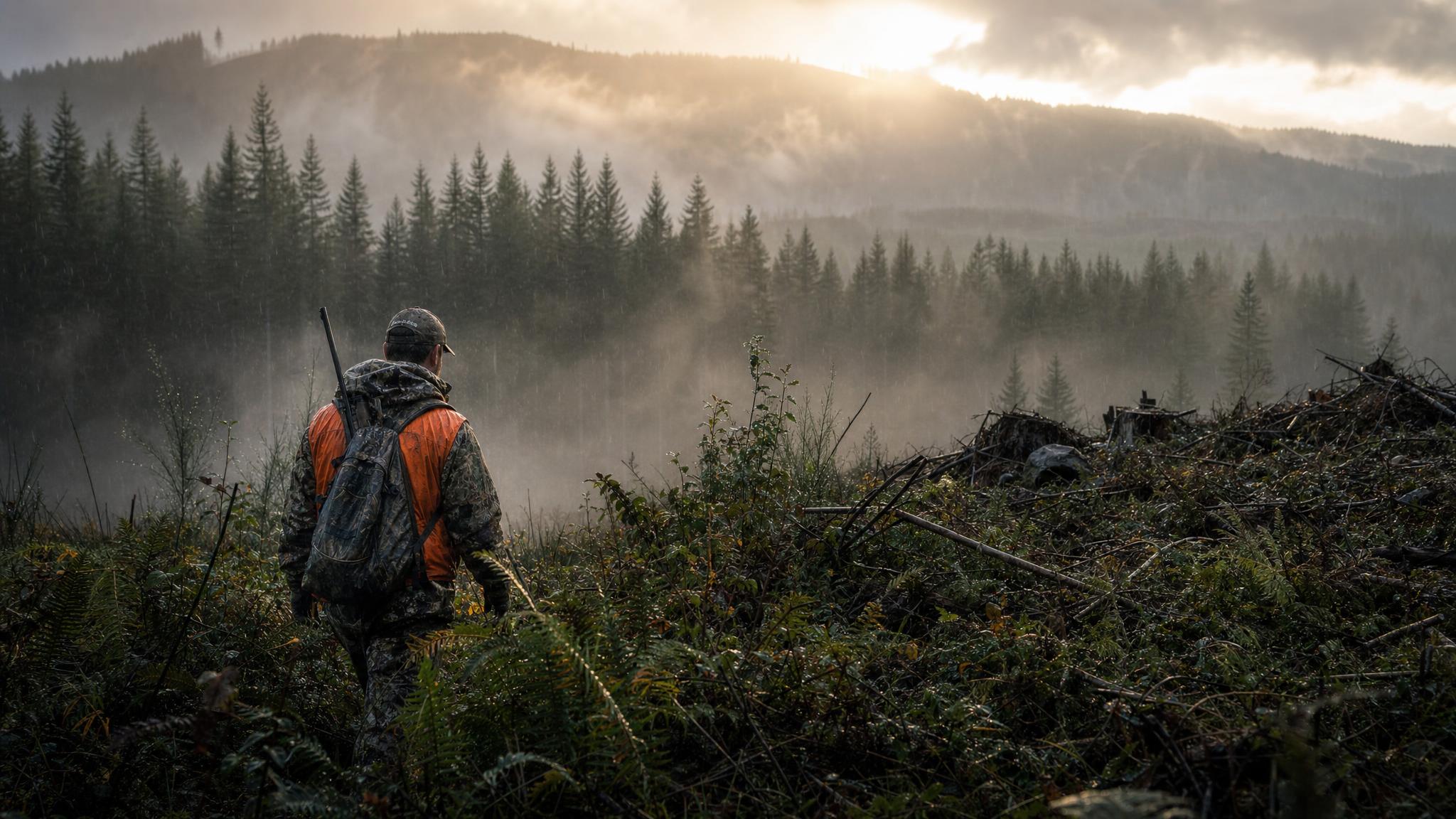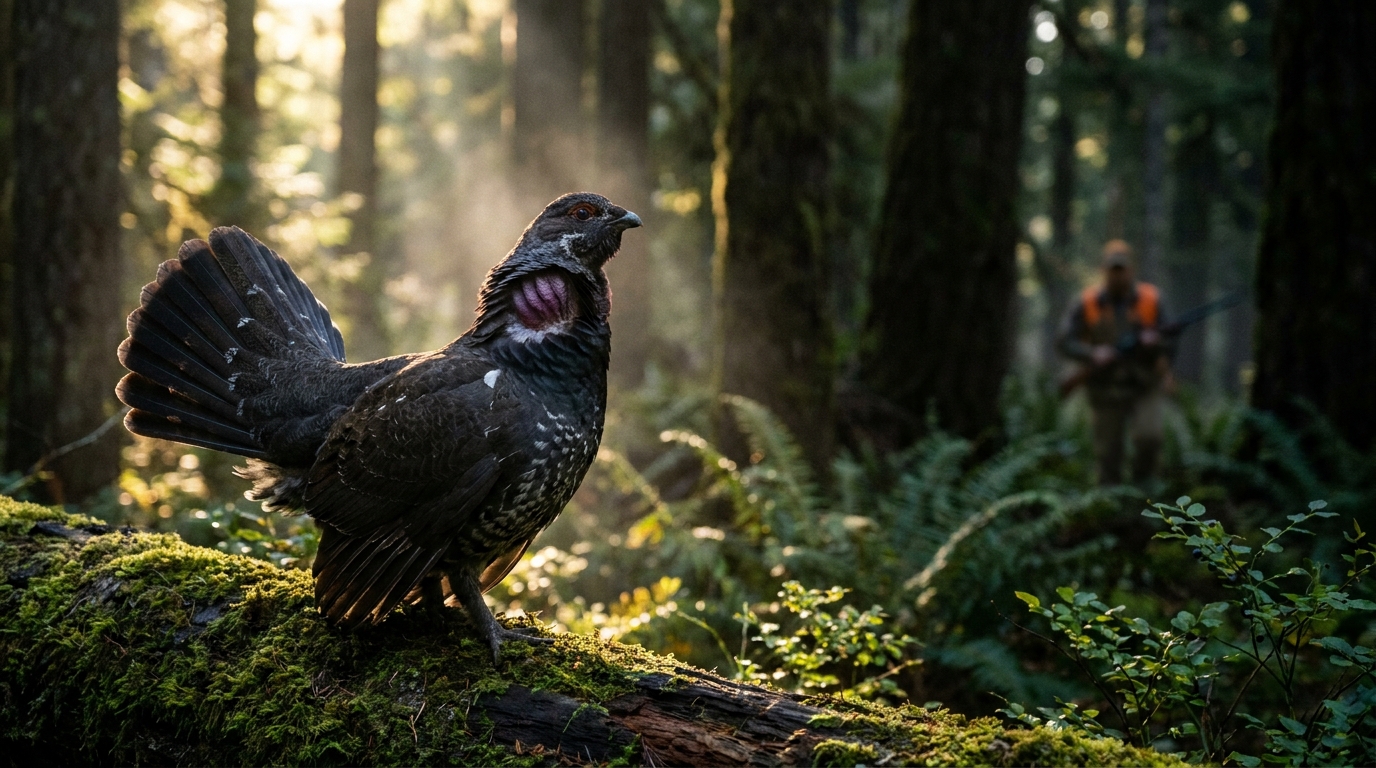
Ask most Oregon hunters about grouse and they'll mention ruffed grouse in the brushy draws of Western Oregon or blue grouse in the mountains. What they often miss is the distinction: the bird commonly called blue grouse east of the Cascades is now classified as dusky grouse (Dendragapus obscurus) following a 2006 taxonomic split. Dusky grouse inhabit the eastern slope of the Cascades and the mountains of Northeastern Oregon, and they're one of the more unusual upland birds you can hunt in the state. They live at high elevation, often in dense timber, and they behave differently from most upland birds in ways that make them both accessible and challenging.
Biology and Behavior
Dusky grouse are large birds—a mature male can top 3.5 pounds, making them one of the biggest grouse species in North America. They're year-round residents that move up in elevation as summer progresses, reaching subalpine parkland and cliff-edge timber by late summer. Come fall, they transition down slightly and concentrate in areas where Douglas fir, white fir, and mountain hemlock provide both cover and food. In September and October, they feed heavily on conifer needles, berries, and seeds. They're birds of the timber, not the fields.
Unlike pheasants or chukars, dusky grouse often hold tight to pressure and are reluctant fliers. When flushed, they typically fly into the nearest large tree and sit. This means a pointed dog is useful but not essential—the real skill is knowing where to look and reading the terrain for likely holding areas.
Oregon Season and Regulations
The Oregon Department of Fish and Wildlife typically opens the dusky grouse season in early September, running through December 31. Daily bag limit is 5 birds; possession limit is 10. A valid Oregon hunting license and upland bird license are required. Dusky grouse are not subject to a separate tag. Check the current ODFW Upland Bird Regulations for exact season dates and any zone-specific restrictions—they can vary by management zone.
Where to Hunt in the Cascades
The eastern slope of the central and southern Cascades is prime dusky grouse country. Focus on elevation bands from 4,500 to 7,500 feet, particularly:
- Winema National Forest (Klamath/Lake county): The timber country east of Crater Lake holds good populations. Look for birds in old-growth mixed conifer near berry patches and meadow edges.
- Deschutes National Forest (Sisters/Bend area): The high-elevation timber above Three Creek Lake and in the Horse Ridge/Paulina area. Public roads provide access to large tracts of huntable timber.
- Ochoco National Forest: While better known for elk, the Ochocos have underutilized dusky grouse populations. The higher ridges above 5,500 feet, particularly in the Black Canyon and Lookout Mountain areas, are worth exploring.
- Wallowa-Whitman National Forest: The Wallowas hold dusky grouse in the high country. Access via Hwy 82 and the many Forest Service roads into the Eagle Cap Wilderness boundary areas.
Hunting Tactics
Start high. Most hunters make the mistake of hunting the same elevation bands they'd target for elk or deer. Dusky grouse in September are often well above 6,000 feet. Look for them on sun-facing slopes in the morning—they like to warm up on open rocky areas or logging road edges before moving into timber. By midday, they're deep in the fir and hemlock.
Walk slowly through mixed timber and meadow edges. Listen for the quiet, clucking contact calls the birds make when feeding. When you spot one, stop—there are usually more. Dusky grouse are often found in loose family groups in early season (September birds are young-of-year with the hen), and a group of 4-8 birds is not unusual.
When flushed into a tree, the birds will often lean around the trunk to watch you. Circle the tree slowly and get a clear shot. This sounds almost unsporting, but the reality is that targeting birds in timber at 15-20 yards through branches requires calm shooting and a willingness to let a marginal shot pass.
Guns and Loads
A 20-gauge is ideal—light enough for all-day carry in steep terrain, with plenty of pattern density for close shots in timber. Modified choke with #6 shot handles the range and penetration needed for these big birds. If you're bringing a 12-gauge, stick with 1 oz of #6 or #7.5 to avoid over-penetration. Avoid full choke in dense timber—the tight pattern increases your miss margin at 12 yards when birds bust at close range.
Dogs and Solo Hunting
A pointing dog makes the hunt more efficient—a flushing dog less so, given how tight these birds hold. Labs and spaniels can work but expect them to bump birds before you get a shot. Brittanys and setters are naturals for this type of hunting. That said, solo hunting without a dog is productive if you're willing to work slowly through likely cover. These aren't birds you need to run down.
The Payoff
Dusky grouse are excellent table fare—rich, dark meat that holds up to a cast-iron pan and butter better than almost any upland bird. They're also an excuse to spend a September day at 7,000 feet in Oregon's high Cascades, where the huckleberries are turning red and the elk are starting to bugle in the timber below you. That's a trade worth making.