Oregon's high desert east of the Cascades doesn't get the attention it deserves from small game hunters. While everyone's chasing elk tags and steelhead, millions of acres of BLM and state land sit largely unhunted, holding populations of black-tailed jackrabbits and mountain cottontails that can make for exceptional shooting year-round.
For hunters looking to sharpen their shooting skills, test gear, break in a new dog, or simply put some miles on their boots between big game seasons, jackrabbits and cottontails are the answer. No draw tag required. No waiting list. Just a standard Oregon hunting license and a willingness to cover ground.
Know Your Quarry
Black-Tailed Jackrabbit
The black-tailed jackrabbit (Lepus californicus) is the dominant lagomorph across Oregon's high desert basins. These are large animals — adults reach 4–6 pounds with ears nearly a foot long. They don't hole up like cottontails; instead, they rely on speed (up to 35 mph) and a broken, zigzagging run to escape predators. Population cycles are dramatic — some years the desert seems full of them, other years they're nearly absent. When jackrabbit numbers peak, it's spectacular shooting.
Look for jackrabbits in open sagebrush flats, alkali basins, and the margins between sage and agricultural land. Harney County around Burns, the Fort Rock Valley in Lake County, the Malheur Valley, and the northern reaches of the Great Basin near Lakeview are all productive areas.
Mountain Cottontail
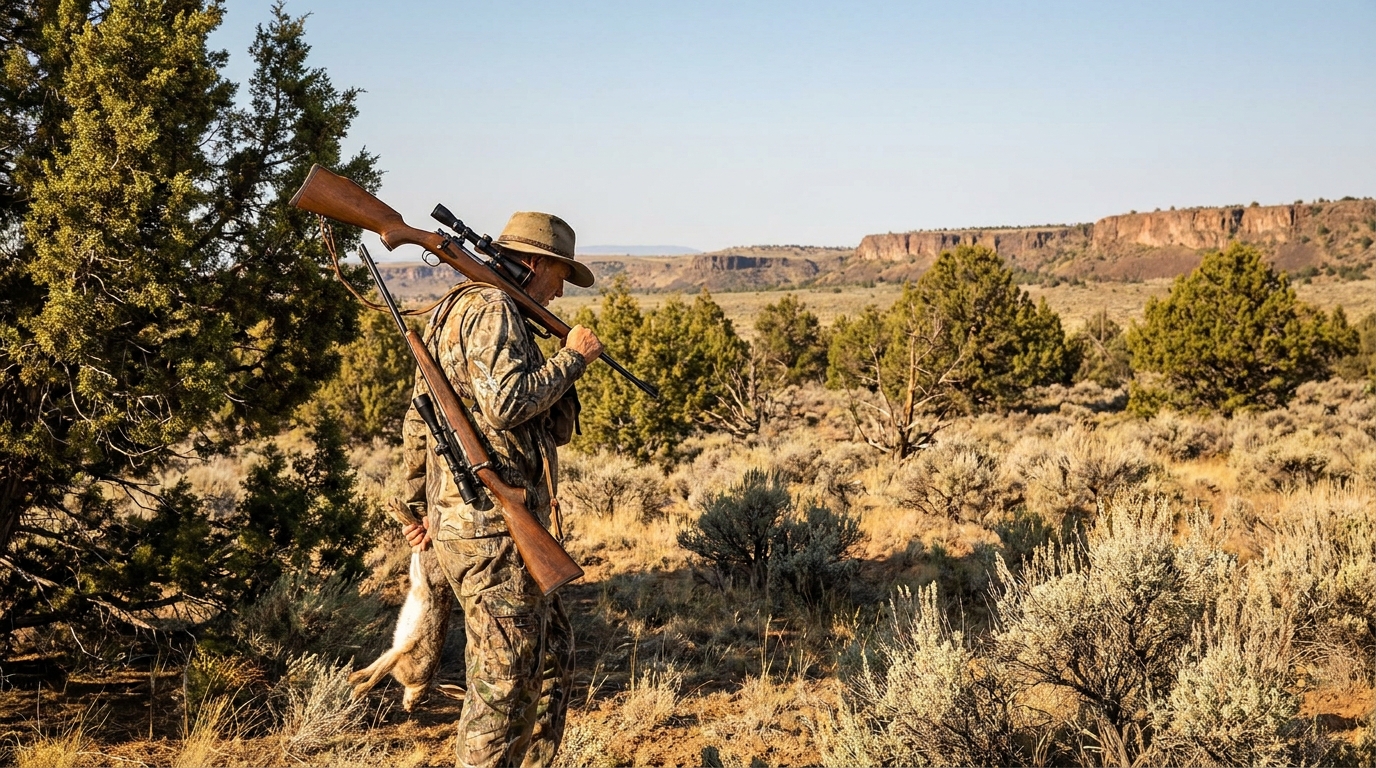
The mountain cottontail (Sylvilagus nuttallii) occupies the more broken terrain — rocky rimrock edges, juniper draws, creek bottoms with willow and brush, and sagebrush-covered hillsides with enough structure for escape cover. They're smaller than jackrabbits (2–3 lbs) and behave more like the eastern cottontail most hunters are familiar with — hold tight and bolt for the nearest brush pile.
Cottontails are excellent table fare and the more challenging quarry to hunt well. A good flushing dog — Lab, Springer, Beagle — is a significant advantage in thick cover.
Seasons and Regulations
In Oregon, jackrabbits have no closed season and no bag limit — they're classified as unprotected mammals. You can hunt them year-round with any legal firearm, bow, or even air rifle, as long as you're on land where hunting is permitted.
Cottontails are a game animal with a season that typically runs from September 1 through March 31, with a daily bag limit of 5 and a possession limit of 10. Check the current ODFW regulations for any year-to-year changes.
Rifles and Shotguns
The right tool depends on the terrain and target:
- .22 LR: The classic jackrabbit round for shots inside 75 yards. Cheap to shoot, available everywhere, and effective with proper shot placement (head or shoulder). A scoped 10/22 or bolt-action .22 gets the job done on 90% of high-desert jackrabbit shooting.
- .17 HMR: A major upgrade over .22 LR for jackrabbits. Flat-shooting to 150 yards with enough energy to anchor a 5-pound jackrabbit cleanly. The go-to caliber for serious high-desert varmint hunters.
- .22-250 / .223 Remington: When you want to shoot across flat alkali basins at running jackrabbits at 200+ yards, step up to a centerfires. A .223 with 50-grain varmint bullets is ideal — minimal meat damage on cottontails if you're eating them, and plenty of energy on jackrabbits.
- Shotgun: A 12 or 20 gauge with #4 or #6 shot is the right choice for cottontails in brush, especially with a dog. Works on jackrabbits inside 35 yards too.
Where to Hunt: Public Land Access
Oregon is exceptionally well-endowed with accessible public land in the high desert. Key areas include:
- BLM Burns District: Millions of acres surrounding Harney County with minimal road closures and consistent jackrabbit populations. The Steens Mountain area, Diamond Valley, and the Alvord Desert edges all produce.
- BLM Lakeview District: Lake County offers a similar landscape — vast sagebrush flats, rimrock country, and isolated juniper stands. The Fort Rock area and Silver Lake country are worth a day trip.
- Malheur National Forest edges: The transition zones where forest meets high desert in Grant and Harney counties hold good cottontail numbers in rocky, brushy draws.
- ODFW Wildlife Areas: Several state wildlife areas in eastern Oregon — including Murderers Creek, Malheur, and Bully Creek — allow small game hunting and can hold excellent rabbit populations.
Use OnX Hunt or the BLM's online mapping tools to confirm land ownership before you park and start hiking. The patchwork of public and private land in eastern Oregon means it pays to check your map.
Hunting Tactics
For jackrabbits: Glass open country from elevated vantage points or road edges during morning and evening when animals are most active. Midday jackrabbits are often bedded in the shade of sagebrush and hard to find. Walk-up hunting works — keep moving through sage flats and watch for movement. Jackrabbits often hold until you're within 30–50 feet before bolting, which makes for exciting snap shooting.
For cottontails: Work the edges — rocky rimrock faces, brushy creek drainages, and willow thickets. Move slow, stop frequently, and let the cover do the work. A beagle or flushing dog is ideal; trained dogs will push cottontails in circles back to the gun.
Field Care and Eating
Cottontails are excellent eating — mild, white-fleshed, and versatile. Field dress them immediately and get them into a cooler. Jackrabbits are edible but stronger-flavored; they benefit from marinating and braising rather than a quick pan-fry. Be aware of tularemia — wear rubber gloves when field dressing rabbits and avoid animals that appear lethargic or are found dead. Properly cooked rabbit meat (165°F internal) is safe.
Oregon's high desert is big, empty, and full of rabbits. It's the kind of hunting you can do on a Tuesday afternoon with nothing but a rifle, a thermos of coffee, and a few hours to spare. Start there.