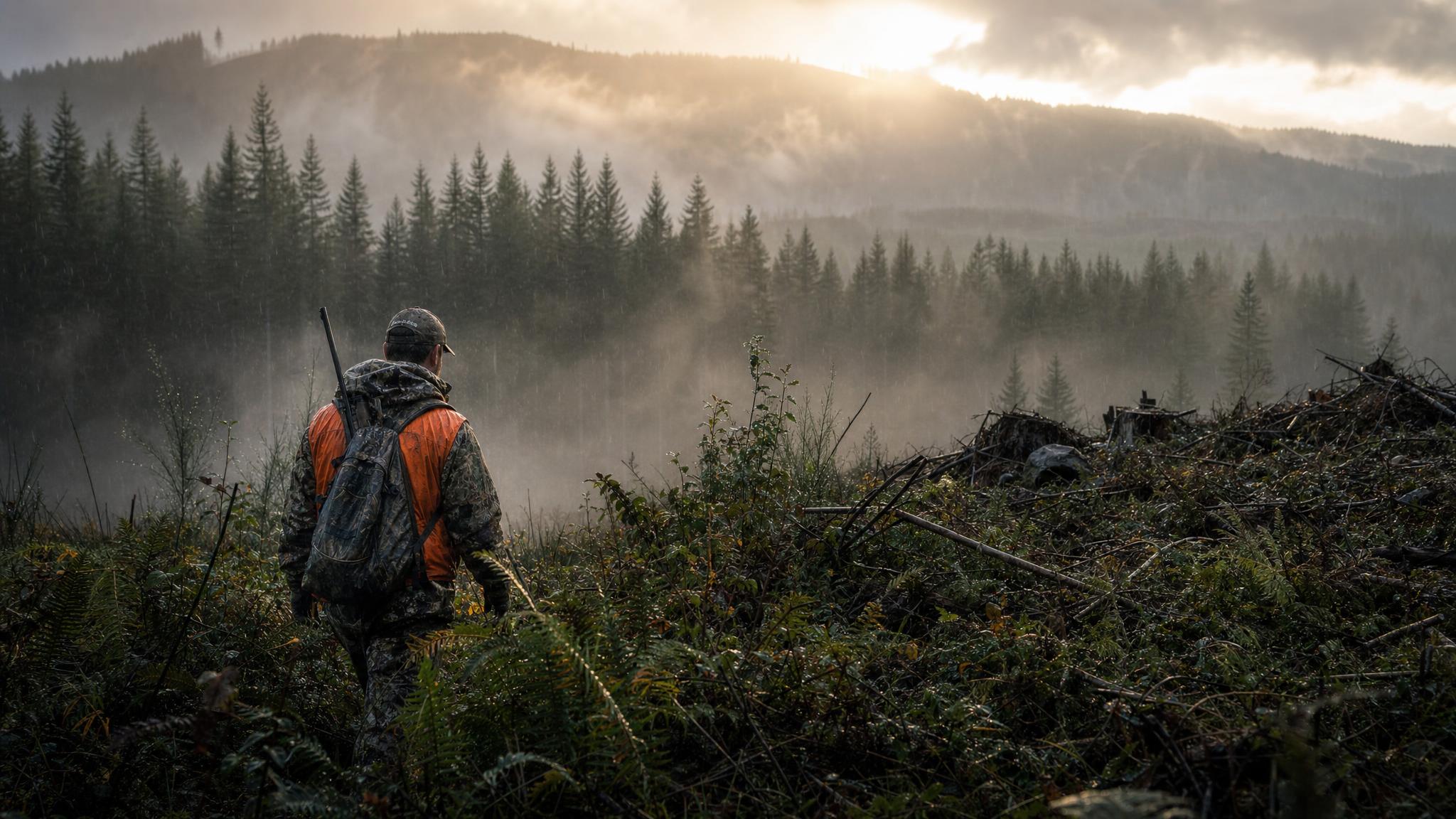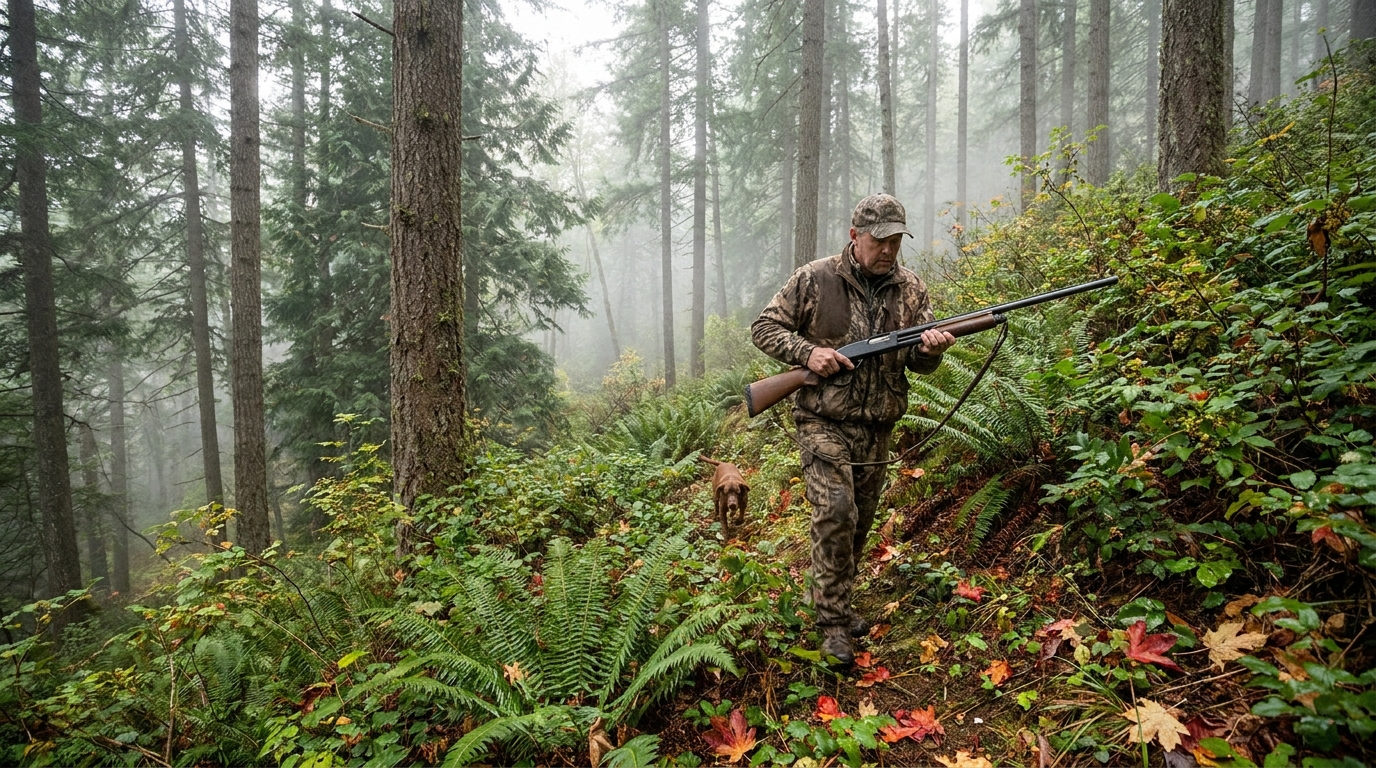
Mountain quail don't make it easy. Unlike valley quail that run along roadsides or hold tight in irrigated hedgerows, mountain quail live in some of the steepest, nastiest brush you'll find in the western Cascades — dense Oregon grape, ceanothus thickets, manzanita, and sword fern tangles on 40-degree slopes. They run uphill when pressed, rarely flush wild, and disappear into cover that a pointing dog struggles to penetrate. They're also the largest native quail in North America, hit hard when you center them, and taste exceptional on the table. That combination makes them worth every bruise.
Oregon Regulations Overview
Mountain quail are managed under Oregon's general upland game bird regulations. The season typically runs from late September through late January in western Oregon zones, with a daily bag limit of 10 birds and a possession limit of 20. Always confirm current ODFW regulations before you go — limits and zone boundaries do get adjusted.
A valid Oregon hunting license and upland bird validation are required. If you're hunting with a dog, make sure your dog is properly registered if required in the area, and be aware of any leash requirements in wilderness or sensitive habitat zones.
Where to Find Mountain Quail
Mountain quail range throughout the Cascades and Coast Range, but they're most concentrated in the transitional zone between valley agriculture and mid-elevation conifer forest — roughly 1,000 to 4,500 feet elevation. In western Oregon, prime habitat exists in the foothills of the Willamette Valley east side, the Umpqua watershed drainages, and the Rogue-Siskiyou transition country.
Look for south-facing slopes with dense shrubby cover adjacent to springs, seeps, or small stream drainages. Mountain quail need water daily, especially in September before fall rains arrive. Coveys often travel predictable routes between roosting cover, water, and food sources — berry patches, weed seed areas, and chaparral openings.
- Southern Willamette Valley foothills: The eastside drainages of Benton and Linn counties hold good populations in brushy clearcuts and oak savanna edges.
- North Umpqua corridor: South-facing canyon walls with mixed chaparral hold quail from the valley floor up into the national forest.
- Siskiyou foothills near Grants Pass and Medford: Some of the highest mountain quail densities in the state occur in the brushy transition habitat here.
- Coast Range clear-cuts: 5- to 15-year-old timber harvest units with heavy brush regrowth can be excellent, especially when adjacent to older forest.
Hunting Tactics That Work
The classic mountain quail approach is to park at the top of a ridge, hunt down into the drainages, and let the birds do what they do — run uphill ahead of you. When you hunt into a slope, birds feel cut off and are more likely to hold or flush rather than run endlessly up and away. A dog is a significant advantage for finding dead birds in heavy brush, but even the best pointing breeds will lose birds in thick ceanothus.
Coveys early in the season can be large — 20 to 30 birds — and the sound of a big group scattering through dry brush is unmistakable. Once you flush a covey, mark where birds land and work singles. Mountain quail singles hold much better than the covey and give you your best shooting opportunities.
Be physically prepared. Hunting this terrain for four hours is a real workout. Sturdy ankle-supporting boots, thorn-resistant chaps or pants, and a hydration pack are not optional — they're necessities. Ticks are also present in this habitat from early season through November; check yourself thoroughly after each hunt.
Dogs for Mountain Quail
Pointing breeds — English setters, Brittanys, German shorthairs — work best in mountain quail country if you're hunting open enough terrain. In truly thick brush, a flushing breed like a Springer or Boykin may be more practical because they're lower to the ground and can push through cover a pointer can't penetrate.
Regardless of breed, your dog needs to be in top physical condition before mountain quail season. These hunts cover serious vertical and the footing is rough. Check paws frequently for cuts and abrasions from rocky terrain.
Shotgun and Shell Selection
Mountain quail are bigger than valley quail but still a relatively small target in dense cover. Most shots are short — under 25 yards — in brushy conditions. A 12 or 20 gauge with improved cylinder or modified choke is appropriate for 95% of the shooting you'll do. Load with 7½ or 8 shot in 1 or 1⅛ ounce loads. Don't overthink it. Fast target acquisition in tight cover matters far more than pattern density at 40 yards.
If you're hunting more open south-facing chaparral where longer shots are possible, step up to 6 shot and a modified choke. But expect the birds to teach you humility either way — mountain quail are quick through cover, and clearing a shooting lane in a ceanothus thicket is its own skill.
Table Quality
Mountain quail are exceptional table birds. The breast meat is dark, rich, and full-flavored — closer to dove or woodcock than to the milder valley quail. They take well to simple preparations: split and grilled over hardwood, pan-seared in butter with fresh herbs, or slow-braised in wine. The legs are worth eating too if you cook them low and slow. Don't waste these birds. They're worth the effort it took to find them.