The mountain lion — variously called cougar, puma, or simply lion — is Oregon's apex predator, and the state holds a healthy and growing population estimated at over 6,000 animals. Despite this, cougar hunting remains one of the least-pursued and most misunderstood big game opportunities in the state. If you're willing to put in the work, it can also be one of the most rewarding.
Oregon Cougar Tags: How the System Works
Oregon manages cougars through a combination of general season tags and quota-based hunting zones. ODFW divides the state into cougar management zones, each with an annual harvest quota. Once the quota is filled, ODFW may close that zone for the remainder of the season. Tags are sold over-the-counter at ODFW license agents and online — no draw required. You can purchase one cougar tag per license year, and the tag is statewide, but zone closures may restrict where you can harvest.
The general season runs year-round in most of Oregon, with specific regulations varying by zone. Always check the current ODFW Big Game Regulations for quota status and any closures before hunting. Hunters must report a harvested cougar to ODFW within 10 days, and the animal must be presented to an ODFW office for tooth and biological sampling.
Where Oregon's Cougars Live
Lions are found in nearly every Oregon county but concentrate wherever deer and elk are abundant. Prime cougar country includes:
- The Blue Mountains and Wallowa Range — High deer and elk densities make this northeastern Oregon country prime lion habitat.
- The Oregon Cascades — From the Columbia River Gorge all the way to Crater Lake, the Cascades hold good lion numbers year-round.
- Southwest Oregon — The Siskiyou and Rogue River country hold lions, particularly in the rugged terrain of the Kalmiopsis region.
- The Coast Range — Roosevelt elk country means cougar country; the Coast Range is underrated for lion hunting.
- Central Oregon High Desert — Surprisingly good lion habitat around rimrock country where mule deer winter.
Hunting with Hounds: The Traditional Method
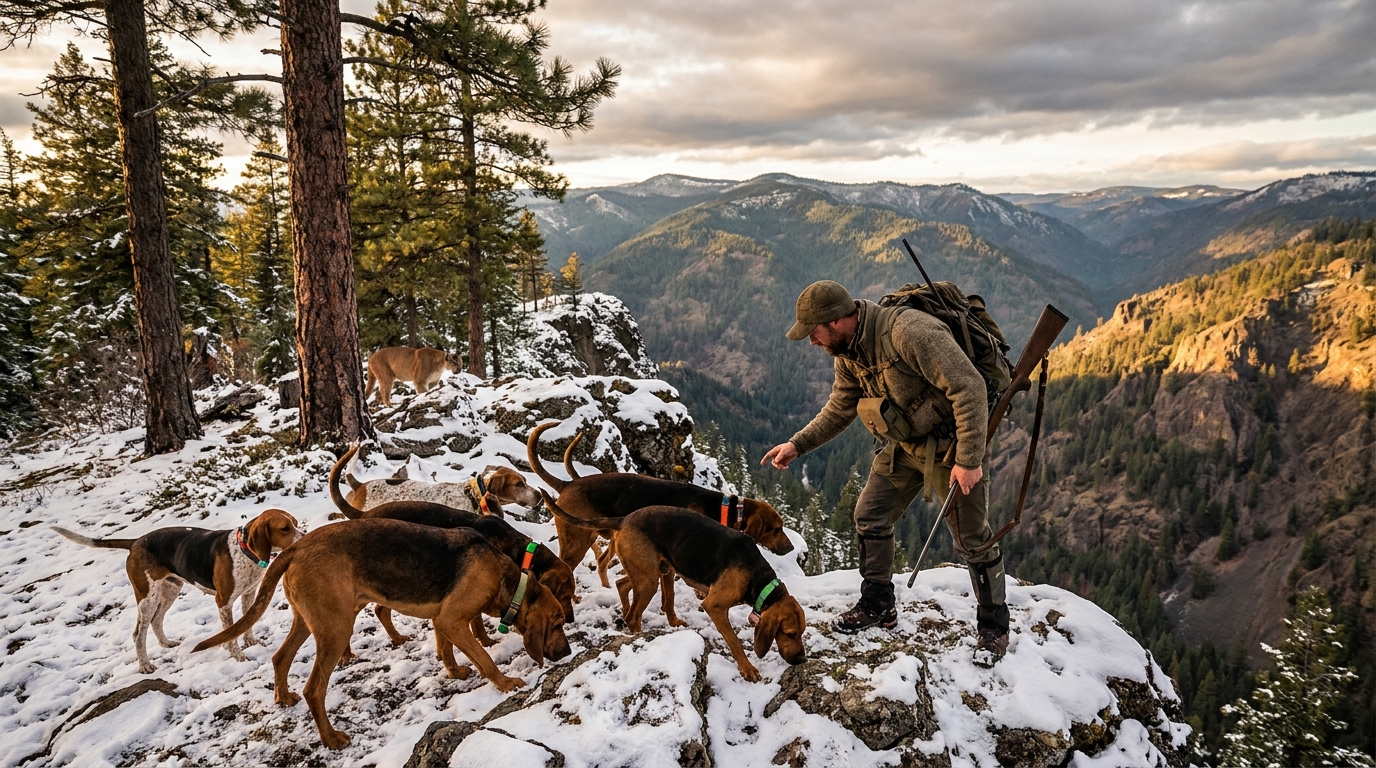
Historically, the vast majority of legally harvested cougars in the West were taken with the aid of trained hounds. Dogs — typically Walkers, Redbones, Blue Ticks, or Plotts — strike a track, run the lion, and eventually tree the animal, at which point the hunter can make a clean, ethical shot. Oregon permits hound hunting for cougars with a properly licensed handler.
Running a good set of lion dogs is a lifestyle, not a weekend hobby. If you're serious about hound hunting, your best entry point is connecting with an experienced outfitter or established houndsman. Many outfitters in eastern and southern Oregon offer guided lion hunts with trained dogs. Expect to pay $2,000–$5,000 for a guided hound hunt, which often includes multiple days of treeing opportunities.
Key equipment for hound hunters includes GPS tracking collars (Garmin Alpha or Astro systems are standard), UHF radios, and terrain-appropriate vehicles — lions and dogs don't respect road access.
DIY Spot-and-Stalk: The Hard Way
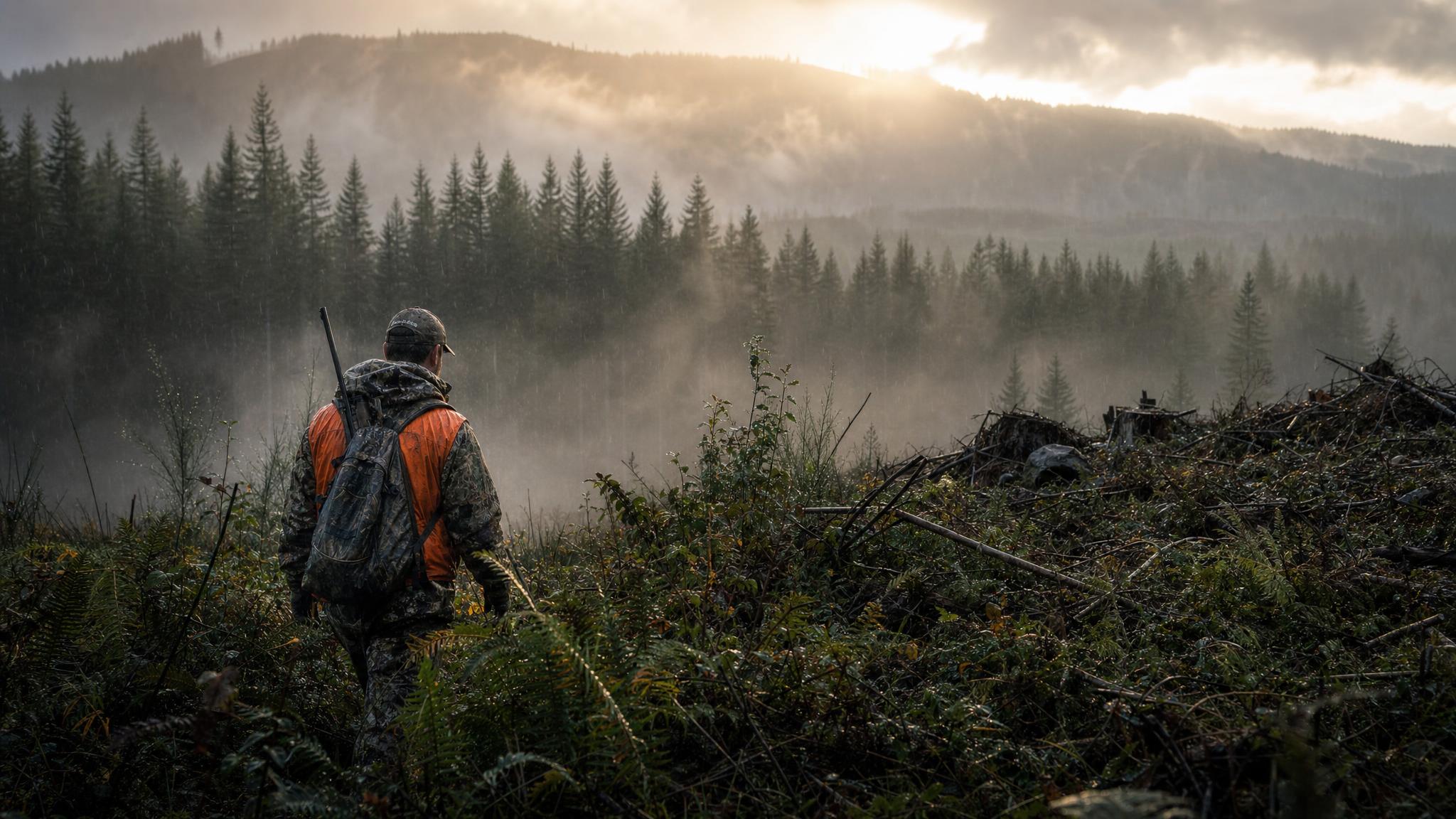
Hunting cougars without dogs is genuinely difficult. Lions are crepuscular, secretive, and cover vast home ranges — adult males may roam 150 square miles. That said, it is done, and hunters who combine serious scouting with a deep knowledge of lion behavior occasionally connect. Here's how to approach it:
Find Fresh Sign
Lion tracks in snow or soft soil near deer or elk winter range are your starting point. Scrapes — piles of leaves, dirt, and debris marked with urine — are territorial signposts left by adult males along ridge trails and creek bottoms. A fresh scrape means a lion is working the area.
Focus on Deer and Elk
Cougars are ambush predators; they go where the prey goes. Find concentrations of wintering deer in February and March — rimrock, south-facing slopes, river bottoms — and you're in cougar country. Look for lion tracks around known deer crossings, on ridgelines above bedding areas, and along creek drainages.
Work Kill Sites
A cougar that makes a deer kill will typically cache the carcass and return over several days. If you find a kill covered with branches and debris, set up a glassing position downwind and wait. The lion will often return within 24–48 hours, typically at dawn or dusk.
Use a Call
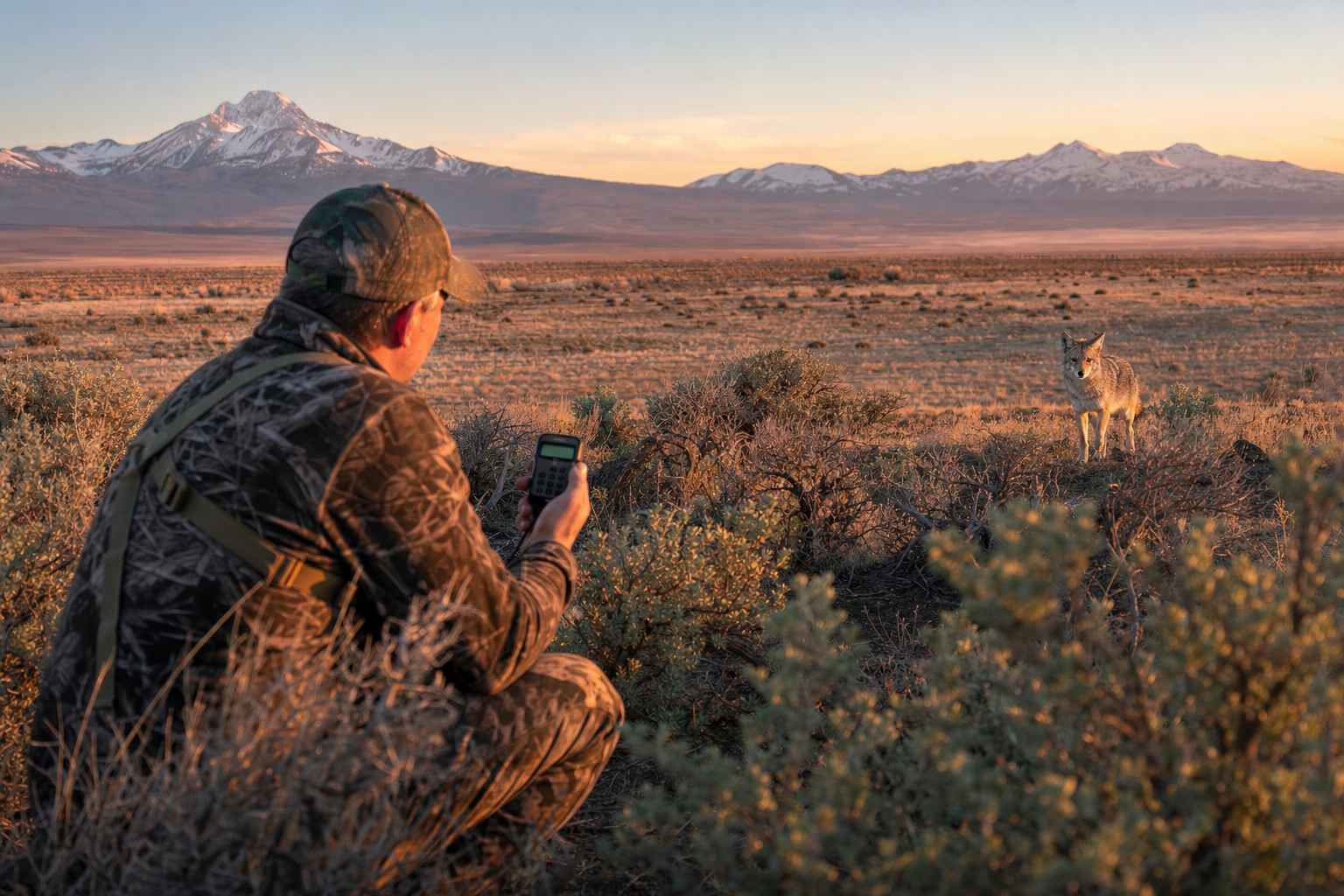
Electronic predator callers with distressed deer or fawn sounds can attract curious lions, though results are inconsistent compared to calling coyotes. Dawn and dusk calling sessions near fresh sign have produced results for persistent hunters.
Shot Placement and Field Care
A cougar is roughly the size of a mule deer — a mature tom will weigh 130–180 lbs. Broadside shots behind the shoulder are ideal. A good centerfire rifle cartridge in .243 or larger is adequate; most hunters use their deer rifle. At close range with hounds, a pistol or .22 Magnum to the head is traditionally used for a clean finish.
Field care is straightforward: skin the animal promptly, cape if you're mounting it, and cool the meat quickly. Cougar is edible and actually quite good — the backstraps and hindquarters compare favorably to pork. Don't waste it.
A Final Word on the Challenge
Most Oregon cougar hunters go years without even seeing a lion in the field. That's part of what makes a successful hunt so meaningful. These are intelligent, powerful animals that have evolved over millennia to remain invisible. When you do connect — whether behind a pack of singing hounds or after a patient stalk through fresh snow — it's the kind of hunt you'll carry with you the rest of your life.
Check your quota status at myodfw.com, pick up your OTC tag, and start studying the ridge lines in your unit. The ghost cat is out there.