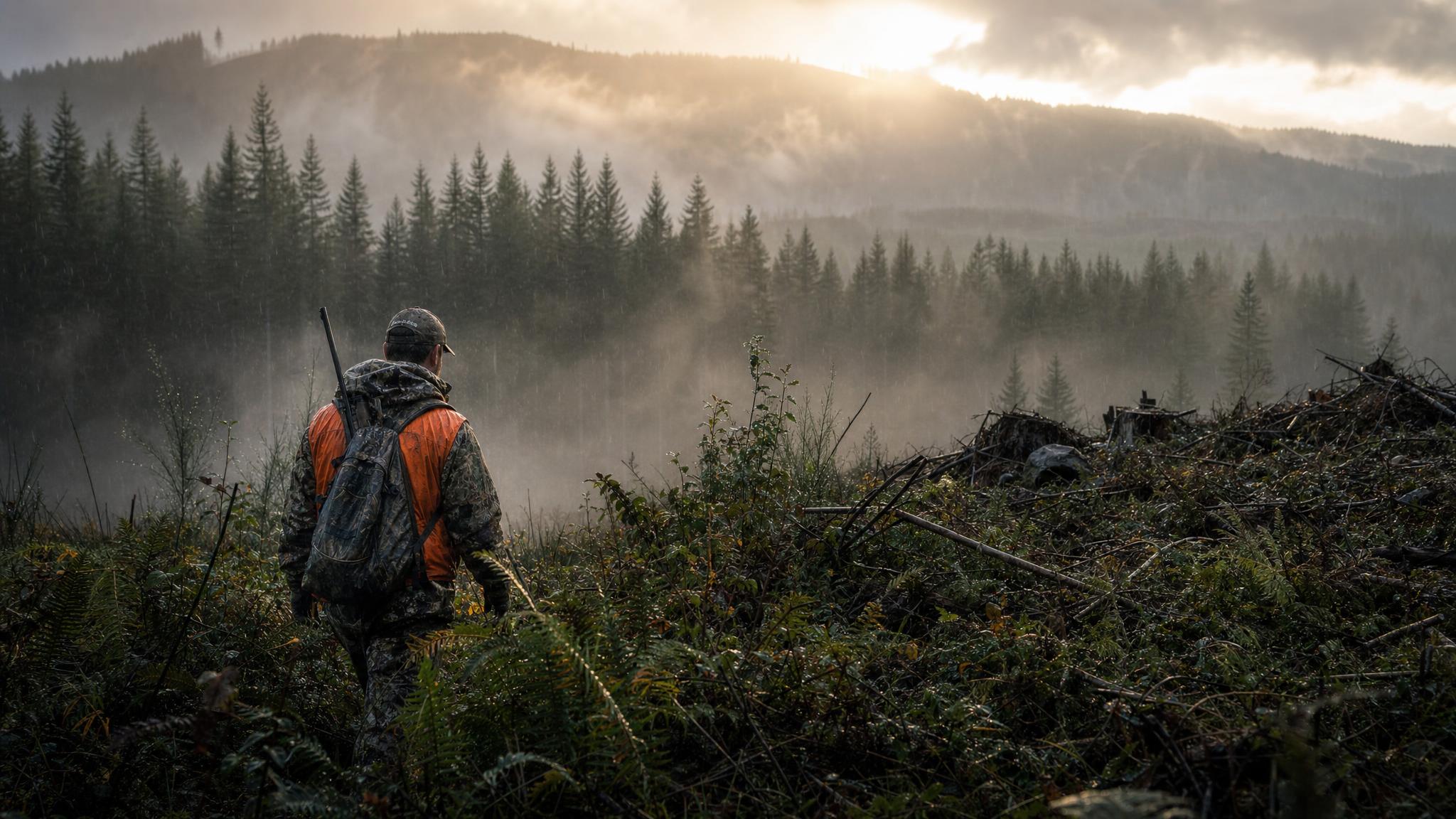
Oregon's general rifle deer season is one of the most anticipated hunting events in the state, and for good reason — it puts hunters into big, open country with legitimate shots at mature mule deer bucks. But the general season is also one of the most misunderstood. Most hunters draw a tag, drive to a familiar road, and hunt the same broken-down sagebrush flat they've hit for a decade. The bucks that survive multiple seasons do so because they've patterned human behavior. To kill a mature muley in Oregon's Zone A or Zone B, you need a different approach.
Understanding the Zones
Zone A: High Desert East of the Cascades
Zone A covers most of eastern Oregon — Lake, Harney, Malheur, and portions of Grant, Deschutes, and Crook counties. This is classic Great Basin mule deer country: juniper ridges, rimrock, sagebrush flats, and the occasional spring-fed canyon. The general rifle season typically opens in mid-October and runs through the end of the month. Zone A deer are migratory — the bucks you find on summer range in September may be 20 miles away by opening day. Understanding this migration is the foundation of a successful Zone A hunt.
Zone B: Blue Mountains and Wallowas
Zone B covers much of northeast Oregon — Union, Wallowa, Baker, and parts of Umatilla and Grant counties. This is transition habitat: ponderosa pine ridges, mountain mahogany draws, wheat field edges, and high-elevation basins. Zone B bucks tend to be less migratory than Zone A deer but are often found at higher elevations early in the season, dropping into lower timbered country as temperatures fall. The rut begins to show activity by late October in Zone B, which changes buck behavior dramatically.
Pre-Season Scouting Strategy
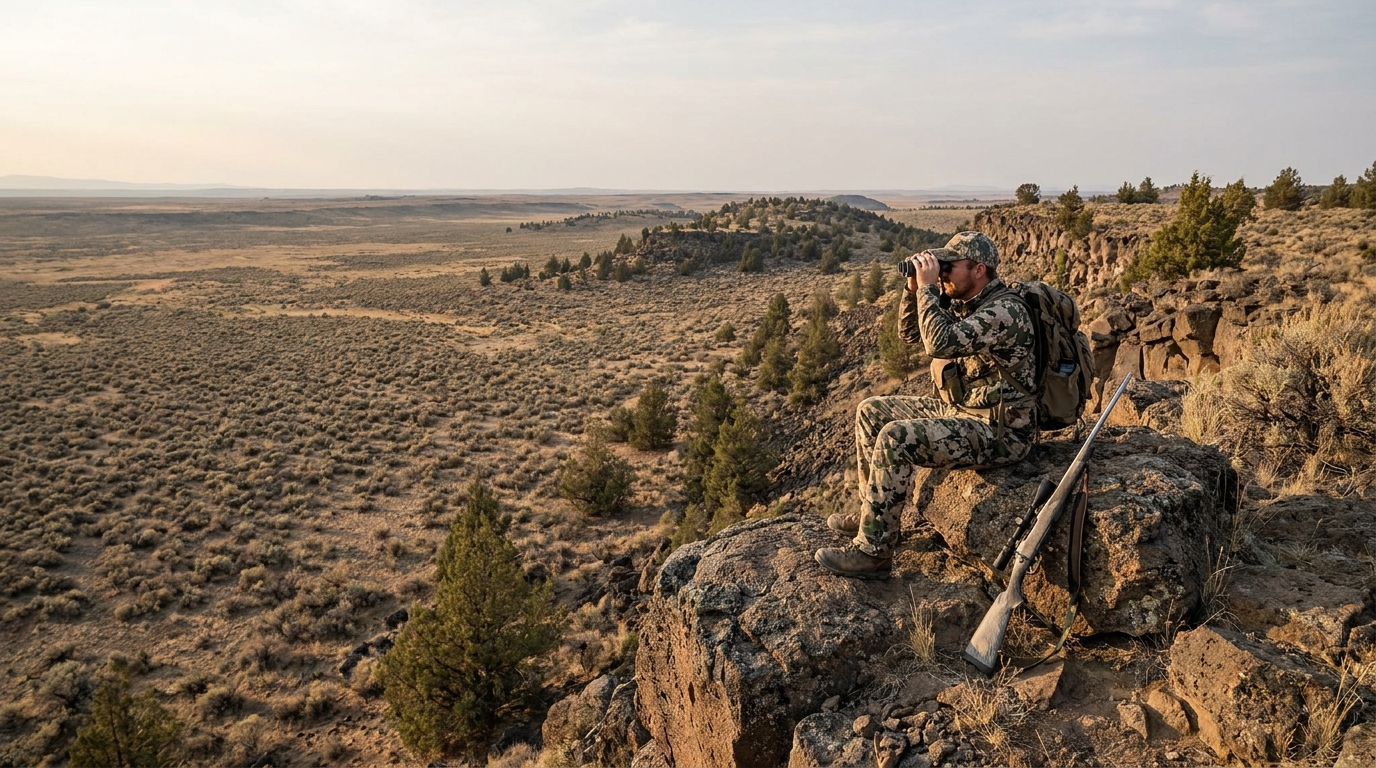
The hunters who consistently kill good bucks in Oregon's open zones put in miles behind a spotting scope well before season. Late August and September velvet bucks are easy to locate and pattern — they're predictable, feeding heavily, and often visible for hours at a time. The key is identifying which bucks are actually on your zone's tag unit, not just passing through. Bucks that bed in tight draws and feed on alfalfa pivots in late summer may be 20+ miles north by October.
Use OnX Hunt to mark terrain features, water sources, and glassing points. In Zone A, look for bucks traveling between rimrock bedding and lower sagebrush feeding. In Zone B, glassing large south-facing slopes and mahogany ridges at first and last light is the most reliable method.
Opening Day: Beat the Crowds
General deer season in Oregon draws significant pressure, particularly on accessible BLM land near paved roads. On opening day, the vast majority of hunters park within 500 yards of a road. The simple solution: go further. A 2-mile pack-in to a ridge that requires a 1,000-foot climb will cut your hunting competition by 90%. Mature bucks pattern road hunters within the first morning and disappear into country that requires real effort to reach.
In Zone A, this means targeting BLM checkerboard lands away from county roads, or seeking access through ranch gate permits (many landowners in Harney County are receptive to hunters who ask politely in person). In Zone B, the Wallowa-Whitman and Umatilla national forests hold enormous amounts of public land that sees very little pressure beyond established trails.
Rifle Selection and Shot Opportunities
Eastern Oregon is not the place for a short-range timber rifle. The average shot on a mule deer buck in Zone A open country runs 200 to 400 yards, and 500-yard shots are not uncommon on flat sage flats where deer can see you as well as you can see them. Your rifle needs to be zeroed and field-tested to at least 400 yards before season.
Proven calibers for Oregon mule deer:
- 6.5 Creedmoor — flat-shooting, manageable recoil, excellent bullet selection for 200–500 yards
- .280 Remington / .280 AI — excellent deer and elk dual-purpose option for Zone B
- 7mm Remington Magnum — proven open-country performer with premium 160–175 grain bullets
- .300 Winchester Magnum — for hunters who want extra margin at extended ranges
- 6.5 PRC — newer option gaining serious traction in Zone A for its flat trajectory and terminal performance
Reading the Rut in Zone B
By late October in Zone B, bucks begin pushing does and expanding their range. This is both an opportunity and a challenge. A buck that was bedded on one ridge for three weeks may cover five miles overnight chasing a doe. The rut disrupts patterns but creates vulnerability — big bucks that wouldn't cross open ground in daylight will walk out into an alfalfa field at noon when they're locked on a doe.
Watch for doe groups and work upwind of them. A responsive buck won't be far. In the Blue Mountains, bucks often push does into open saddles and basins that allow long-range surveillance — glass these areas at midday during the late season, not just at dawn and dusk.
Field Judging Zone Mule Deer
A mature 4x4 (8-point Western count) Zone A or B buck is a trophy worth celebrating. Field judging these deer under pressure is a skill that takes time to develop:
- Body size: A mature buck (4.5+ years) has a deep, thick chest, a heavy neck, and a blocky rear. Young 3-year bucks look "greyhound" lean by comparison
- Main beam: On a wide buck, tips should extend clearly beyond the ears (roughly 20-21 inches ear-to-tip on a mature deer)
- Mass: Look for heavy bases that taper slowly — young bucks look almost spindly at the base
- Points: Count both sides before pulling the trigger. What looks like a 4x4 from a distance is sometimes a 3x4 or 4x3
Meat Care in October Heat
October temperatures in Zone A can hit the 70s during the day. Getting a deer skinned, cooled, and in game bags within 45 minutes of the kill is essential. Carry a frame pack capable of hauling 80+ pounds in two trips, game bags rated for the weight, and a source of shade or a cooler with ice in the truck. A deer left intact in the sun for two hours in 70-degree heat is a spoiled deer — don't let that be your animal.
Oregon's general rifle mule deer season is one of the best opportunities on the West Coast for a do-it-yourself public land buck. The combination of accessible BLM land, mature deer populations, and a season that overlaps with early rut activity makes it a hunt worth doing right. Put in the miles, glass before you walk, and go further than everyone else. The bucks are out there.