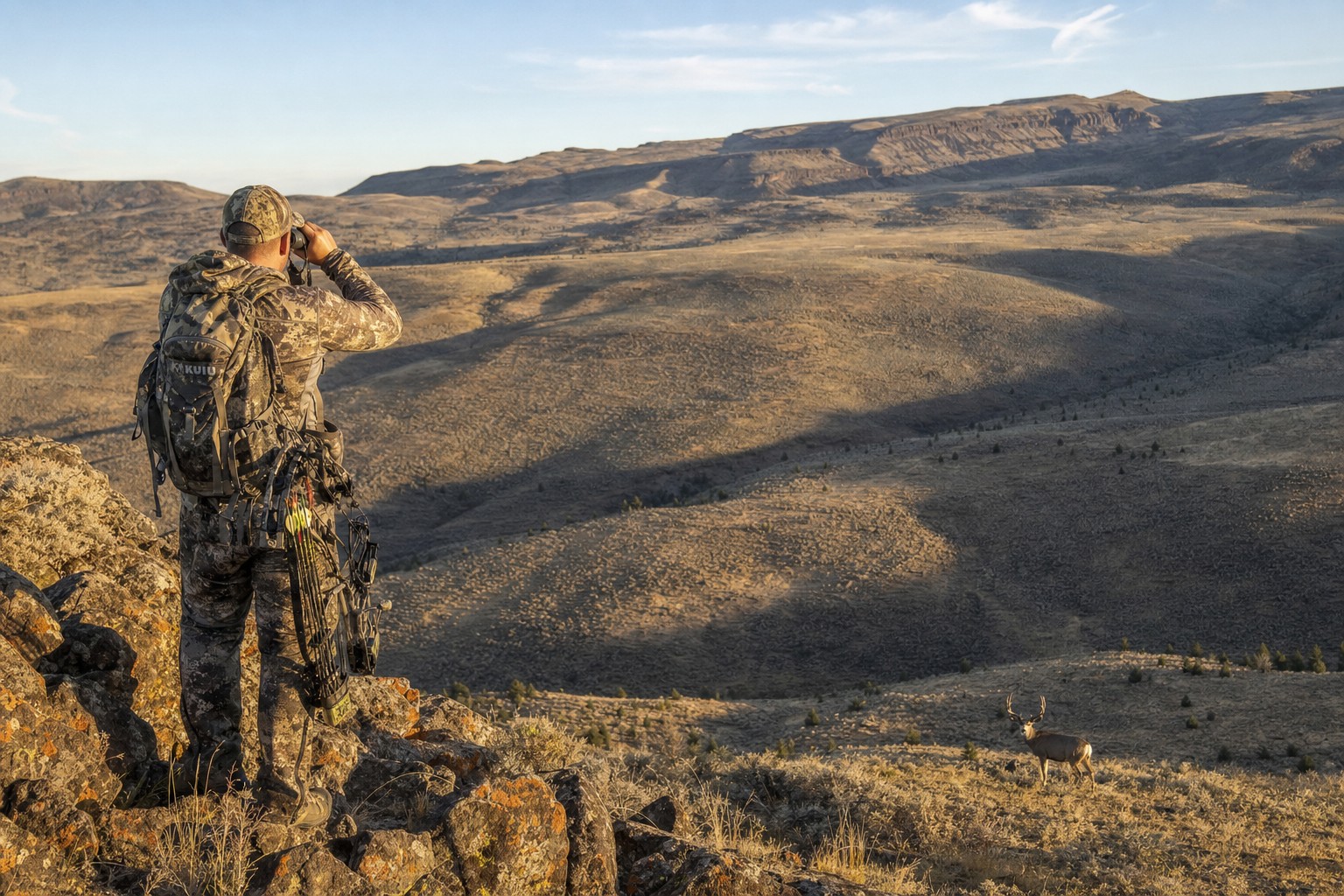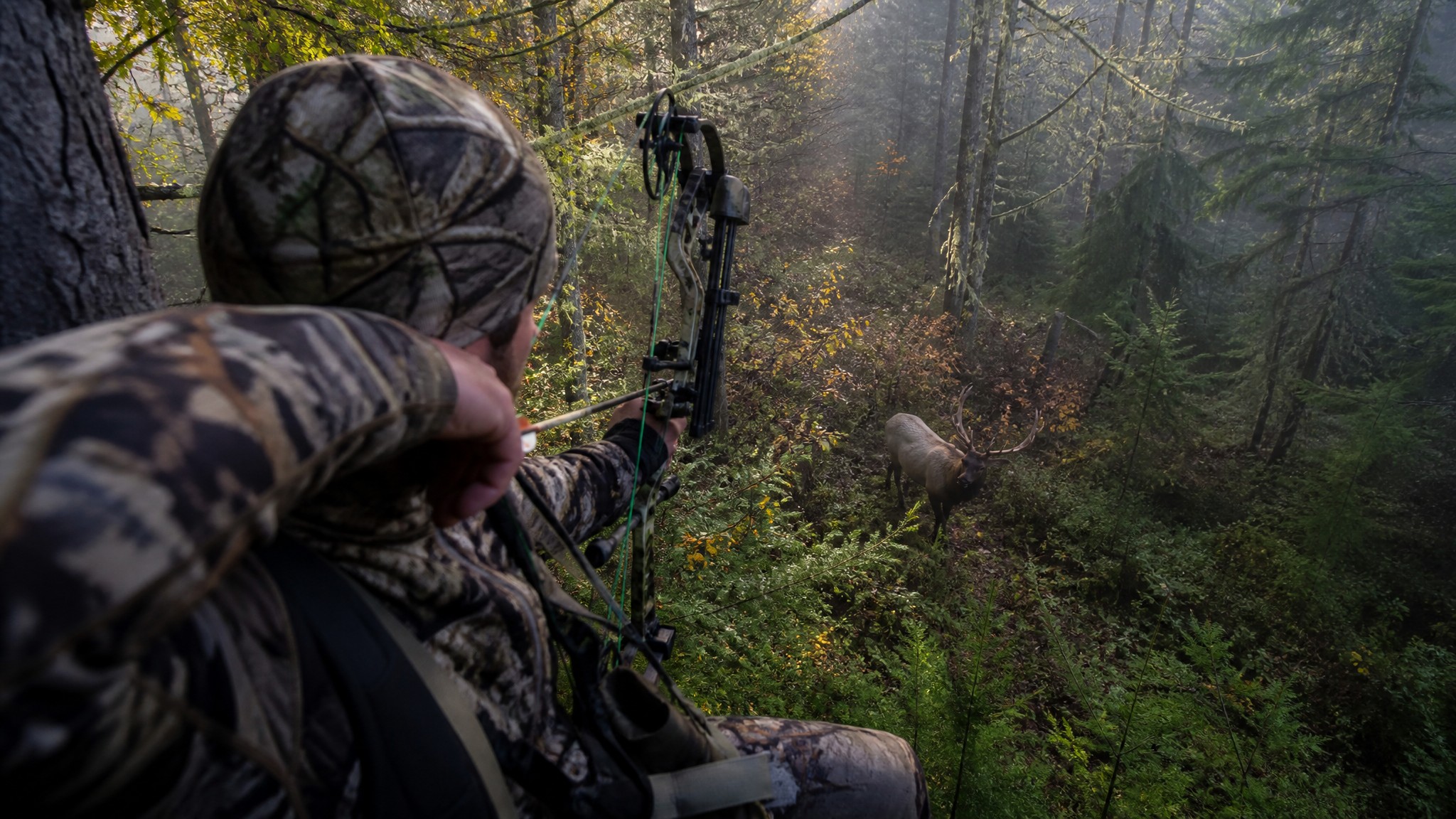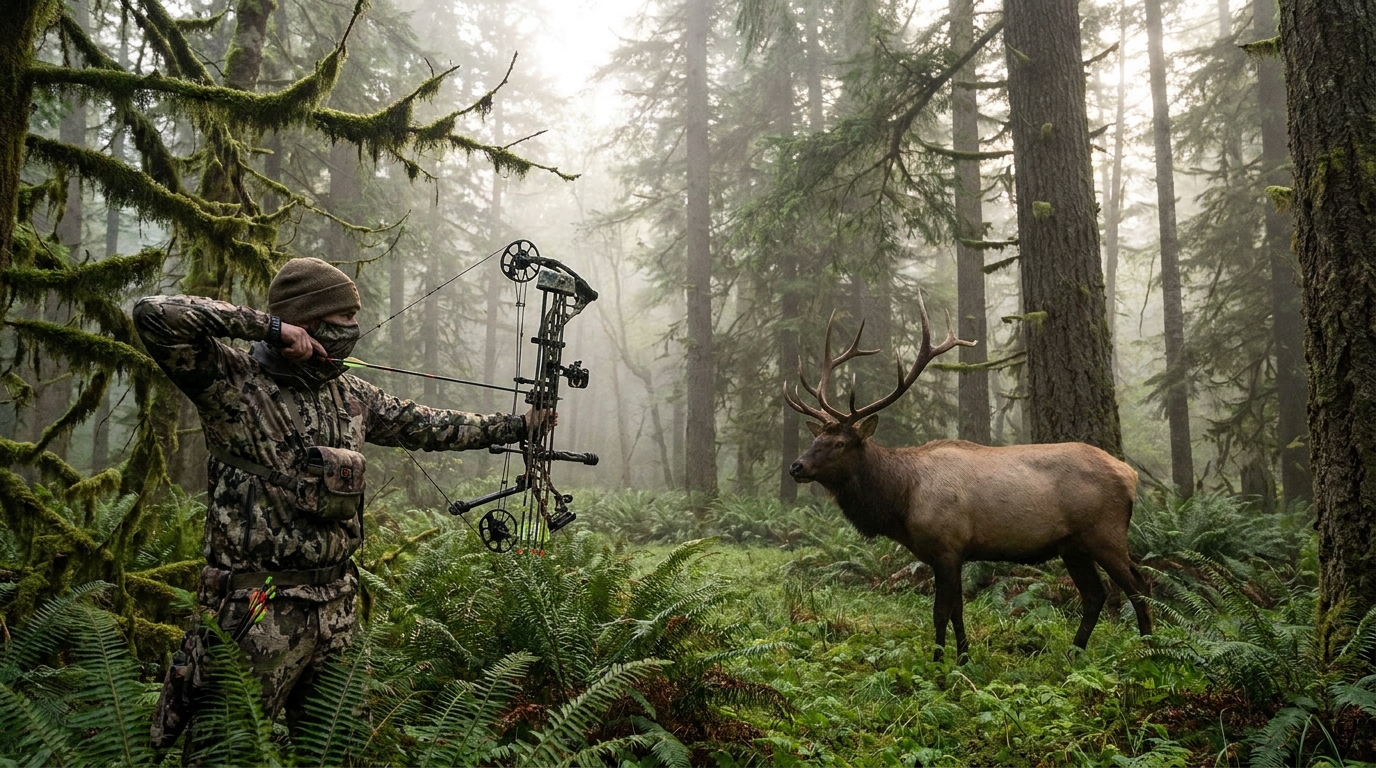
Bowhunting demands a higher standard of shot placement than rifle hunting. At archery distances, the margin for error is narrow — a broadhead that hits four inches off target on a mule deer can mean the difference between a clean pass-through and a marginally hit animal that runs for miles. Understanding exactly where to aim on elk, mule deer, and blacktail deer in every presentation angle is the single most important skill a bowhunter can develop. It matters more than your draw weight, your broadhead choice, or your shooting form.
The Bowhunter's Ethical Standard
Before we get into angles, let's establish the standard: a bowhunting kill shot should sever or pass through the heart and/or both lungs. The heart sits in the lower third of the chest cavity, slightly left of center. The lungs are large, low-density organs that fill the chest from roughly the third rib to the diaphragm. A broadhead that passes through both lungs creates catastrophic hemorrhage — most animals are dead within 75 yards, often within 30.
The goal is always a double-lung hit. The heart is a bonus. A single-lung hit is survivable for many animals, which is why understanding shot angle matters so much — the wrong angle can cause you to hit only one lung, or worse, punch through the gut.
Broadside: The Ideal Shot
A perfectly broadside animal presents the largest target window. For elk, deer, and most big game, the aiming point is simple: one-third up the body from the bottom of the chest, directly behind the shoulder crease. This places your broadhead in the lower lung/heart zone.
Common mistake: aiming too high. Many bowhunters aim center-body out of instinct. On a broadside elk, center-body is spine level — you'll hit above the lungs and spine-shoot the animal or miss entirely. Aim low and behind the leg. If you're thinking "that seems like a low shot," you're probably aimed correctly.
- Elk: Aim for the crease of the front leg, one-third up from the belly line. The vitals on a bull elk are roughly 18–20 inches tall and 16–18 inches front-to-back — it's a large target at 30 yards.
- Mule deer: Same reference point — one-third up, behind the crease. The vitals are proportionally smaller, roughly 8–10 inches in diameter. Precise anchor and follow-through matter more.
- Blacktail: The smallest target of the three. A blacktail's heart-lung zone is about 7–8 inches front-to-back. Aim tight behind the leg crease and commit to a clean release.
Quartering Away: The Bowhunter's Best Angle
A quartering-away animal is arguably the best shot presentation for a bowhunter. The entry point is off the near-side hip, and the broadhead angles forward through the body, exiting through the off-side shoulder — maximizing tissue damage and almost guaranteeing a pass-through with proper penetration.
The formula: Imagine where you want the broadhead to exit (the off-side shoulder crease) and aim for a point on the entry side that creates a straight line between entry and that exit point. On a steeply quartering-away elk, this often means aiming at the ham — which looks wrong but sends the arrow exactly where you want it.
For less severe quartering-away angles (30–45 degrees off broadside), aim 3 to 5 inches behind the crease on the near side. This gives the arrow room to angle through both lungs before hitting the off-side ribs or shoulder.
Quartering Toward: Proceed with Caution
Quartering-toward shots are risky and should be declined when possible. The shoulder blade covers a significant portion of the target window, and the chest cavity is compressed in profile. If you take this shot:
- Wait for a steep enough angle — at least 45 degrees toward you
- Aim for the point of the near-side shoulder, slightly inside — this sends the arrow through the brisket and into the chest cavity
- A high hit here clips the top of the lungs and trachea — survivable. A low hit enters the sternum and chest — lethal but a harder recovery on some animals
- If the angle is less than 45 degrees, wait. The shoulder is too much of an obstacle.
Many experienced bowhunters pass on all quartering-toward shots from ground blinds, where arrow trajectory is nearly horizontal and the shoulder blocks too much of the vital zone.
Head-On: Pass
Decline head-on shots. The chest cavity is a narrow target from the front, the brisket bone will deflect or stop most arrows, and a slight miss forward clips the leg. There is no reliable path to the vitals from a straight-on presentation at archery distances. If an animal is walking directly toward you, hold your draw and wait for it to pass or turn.
Straight Down (Treestand Shots at Close Range)
This shot is common from treestands at 15 yards or less when a deer walks directly under you. The target window is the top of the shoulder blades, aiming straight down between them. A proper hit drops the arrow through the top of both lungs — it's a lethal shot but requires an extremely steep downward angle (typically a treestand at 18+ feet, deer at 5–8 yards). The recovery is usually fast and close. The challenge is committing to the shot with the deer directly below — many hunters freeze up or wait and lose the opportunity.
High Shoulder vs. Boiler Room: The Debate
Some rifle hunters advocate for high shoulder shots to anchor animals immediately. Bowhunters should generally reject this approach. A broadhead through the top of the shoulder can break bone and immobilize an elk, but it typically misses the lungs entirely — leaving you with an injured animal you may recover or may not, depending on tracking conditions. The consistent money shot for bowhunting is always the lower two-thirds of the chest, behind the leg crease. Let the lungs do the work.
Post-Shot Protocol
No matter how good the shot looks, mark the hit location with a physical marker, wait a minimum of 30 minutes before tracking (45–60 minutes for a suspected single-lung hit), and begin tracking only when you're confident in the hit. A double-lung hit on elk often produces bright red, frothy blood within 30 yards — follow it confidently. A liver hit (dark red, no bubbles) requires a 4–6 hour wait before tracking. Gut hits smell like stomach contents and require waiting overnight.
If in doubt, back out. A bumped, marginally-hit animal runs much farther and becomes much harder to recover than one left alone for several hours. Patience after the shot is part of ethical bowhunting.
Understanding shot placement isn't just a technical exercise — it's the foundation of ethical bowhunting. Every hour you spend studying anatomy, practicing from your treestand or blind, and learning to read animal body angle pays off in the moment of truth. When a mature bull steps into range at 38 yards and quarters slightly away, you want your decision-making to be automatic. Make it so before you ever step into the field.