Oregon's bays and estuaries are famous for Dungeness crab, but the same tidal waterways that produce those iconic crustaceans are also loaded with bay shrimp — and most anglers drive right past them. Coos Bay, Yaquina Bay, and Tillamook Bay host productive shrimping from late winter through spring, and if you know where to drop your pots, you can fill a cooler before the crab crowd even gets their lines wet.
Oregon Bay Shrimp: Species and Seasons
The primary target in Oregon estuaries is the bay shrimp (also called sand shrimp or grass shrimp, Crangon franciscorum and related species). These small, transparent crustaceans run 1.5 to 3 inches and are typically scooped or trapped rather than caught individually. Oregon Department of Fish and Wildlife (ODFW) manages bay shrimp separately from ocean pink shrimp — no license is required for bay shrimp in most areas, but always check current regulations on the ODFW website before you go, as rules can vary by bay and season.
The best shrimping typically peaks from February through May, when cooler water temperatures push shrimp into shallow channels. By summer, shrimp scatter into deeper water and production drops. That said, Yaquina Bay at Newport offers solid shrimping well into June in some years.
Top Oregon Shrimping Bays
Coos Bay
Oregon's largest estuary, Coos Bay offers miles of productive shrimping habitat. Focus on the South Slough National Estuarine Research Reserve area and the tidal channels around Charleston. The flats near the Charleston Marina are particularly productive during incoming tides. Access is excellent — you can shrimp from shore along Empire Boulevard or launch a small boat or kayak from the public ramp at Charleston Marina. Water depth in the productive zones runs 4 to 12 feet at mid-tide.
Yaquina Bay (Newport)
Yaquina Bay may be the most accessible shrimping destination on the coast. The bayfront in Newport is lined with docks and public access, and the tidal channels near the Yaquina Bay Bridge produce shrimp reliably from February through April. The east bay near Toledo also holds shrimp, particularly in the quieter side channels away from boat traffic. Combine a shrimping trip here with crab — the regulations and seasons often overlap.
Tillamook Bay
Tillamook Bay is often overlooked for shrimping, but the Hobsonville Point area and the channels near Garibaldi produce well in March and April. The bay is shallow overall, which means shrimp concentrate in the main channels — find those channels and you'll find shrimp. Access from the public docks at Garibaldi is straightforward.
Gear for Bay Shrimping
Shrimp Pots
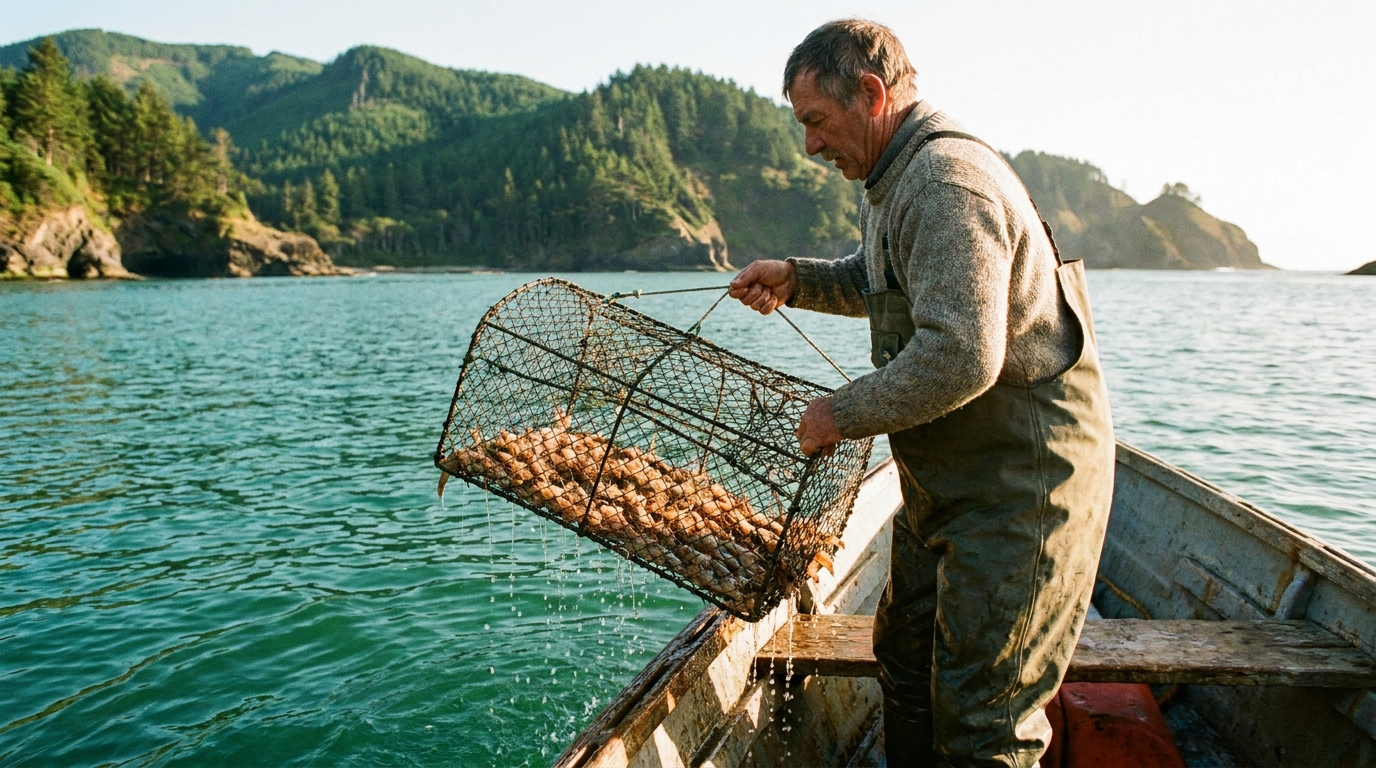
Collapsible wire shrimp pots (sometimes called "umbrella" or "hoop" traps) are the standard tool. They're inexpensive — typically $15 to $30 — and pack flat for easy transport. Bait the pot with a mesh bait bag filled with cat food, sardines, or oily fish scraps. Bay shrimp are scavengers and will find the bait quickly. Drop the pot, wait 20 to 30 minutes, and pull. Most regulations allow multiple pots per person (check ODFW for current limits).
Shrimp Scoop Nets
A shrimp scoop or fine-mesh dip net works well in shallow, clear water — particularly around dock pilings and rocky substrates where shrimp hide during low tide. Wade slowly and sweep methodically along the bottom. This method is more work than pots but requires zero gear beyond the net.
Bait
- Canned cat food (tuna flavor) in a mesh bag — cheap, effective, universally available
- Fresh or frozen sardines
- Fish scraps from the previous day's catch
- Commercial shrimp bait blocks (available at coastal bait shops)
Tides and Timing
Tide timing matters more than almost anything else. Bay shrimp concentrate and feed most actively during the incoming tide through high tide. A two-hour window starting 45 minutes before high tide and running 75 minutes after is typically the most productive. Avoid dead low tide — shrimp scatter or bury in the mud and pots come up empty.
Download a tide chart app (Tides Near Me, MyTides, or similar) and plan your launch time so your pots are soaking during the productive window. On a strong incoming tide in Coos Bay, you can limit out in a single pull.
Processing Bay Shrimp
Bay shrimp are small enough to cook and eat whole, or peel if you prefer. Bring a large pot and a propane burner to the beach — boiling shrimp fresh is a coastal tradition. Two minutes in boiling salted water is all they need. Drain, toss with Old Bay or garlic butter, and eat them right there on the tailgate.
For a larger haul, freeze raw shrimp in zip-lock bags with a bit of water. They keep well for months and make outstanding shrimp tacos, gumbo, and chowder. Bay shrimp are sweeter and more delicate than ocean pink shrimp — they're worth the effort.
A Few Practical Notes
- Always check ODFW regulations at myodfw.com before your trip — bag limits, gear rules, and seasons can change
- A small boat or kayak opens up far more water than shore access alone
- Mark your pot locations with a float flag — Oregon bay traffic gets busy on weekends
- Pair shrimping with crabbing for a full cooler — the gear, tides, and locations overlap almost perfectly
- Early spring weekdays are the best combination of high shrimp activity and low boat traffic
Bay shrimping is one of Oregon's most underrated coastal activities. The investment is low, the learning curve is short, and the reward — a pile of sweet, fresh shrimp on a spring evening — is hard to beat. Pick a bay, watch the tides, and drop some pots. You'll wonder why you didn't start years ago.