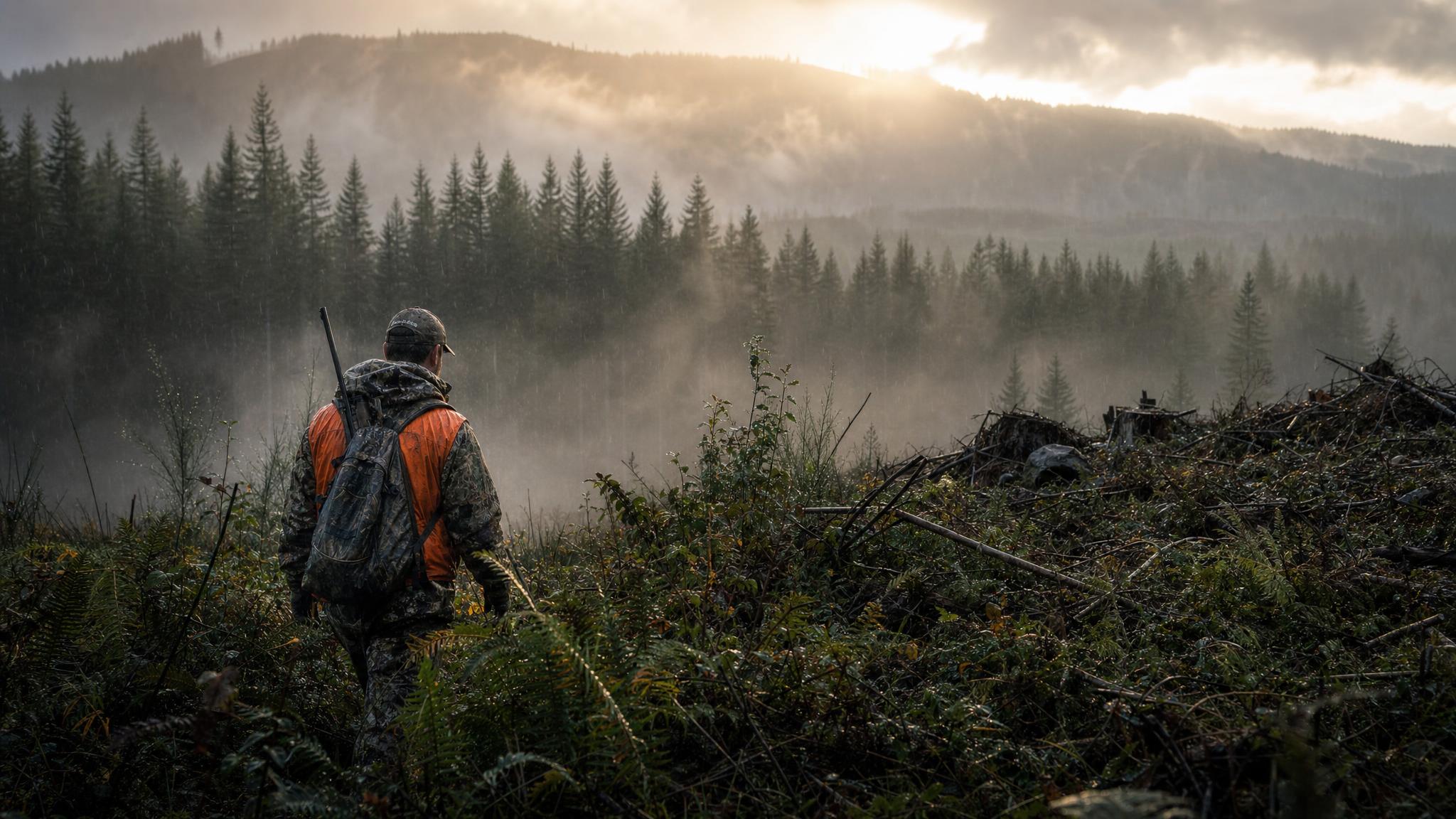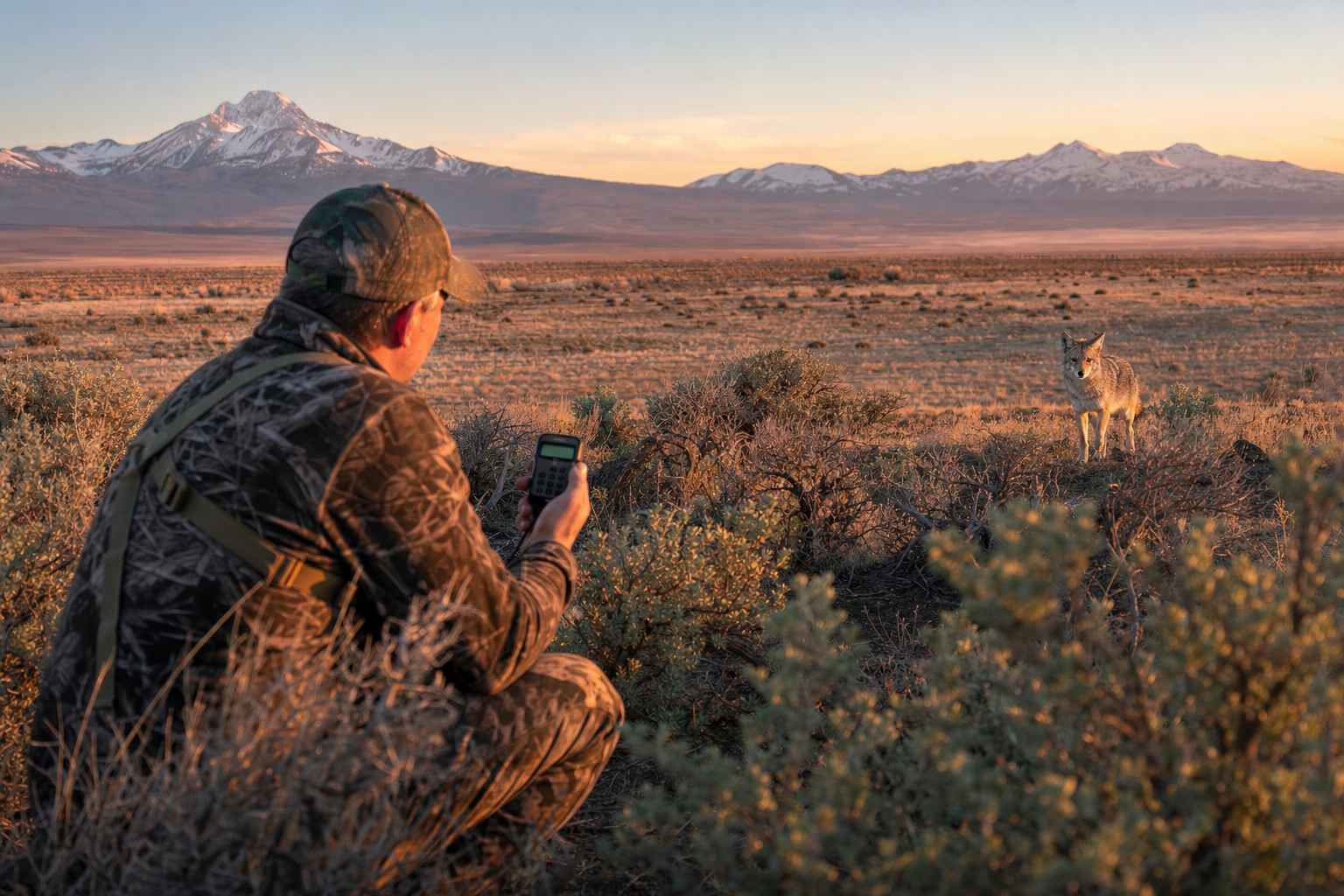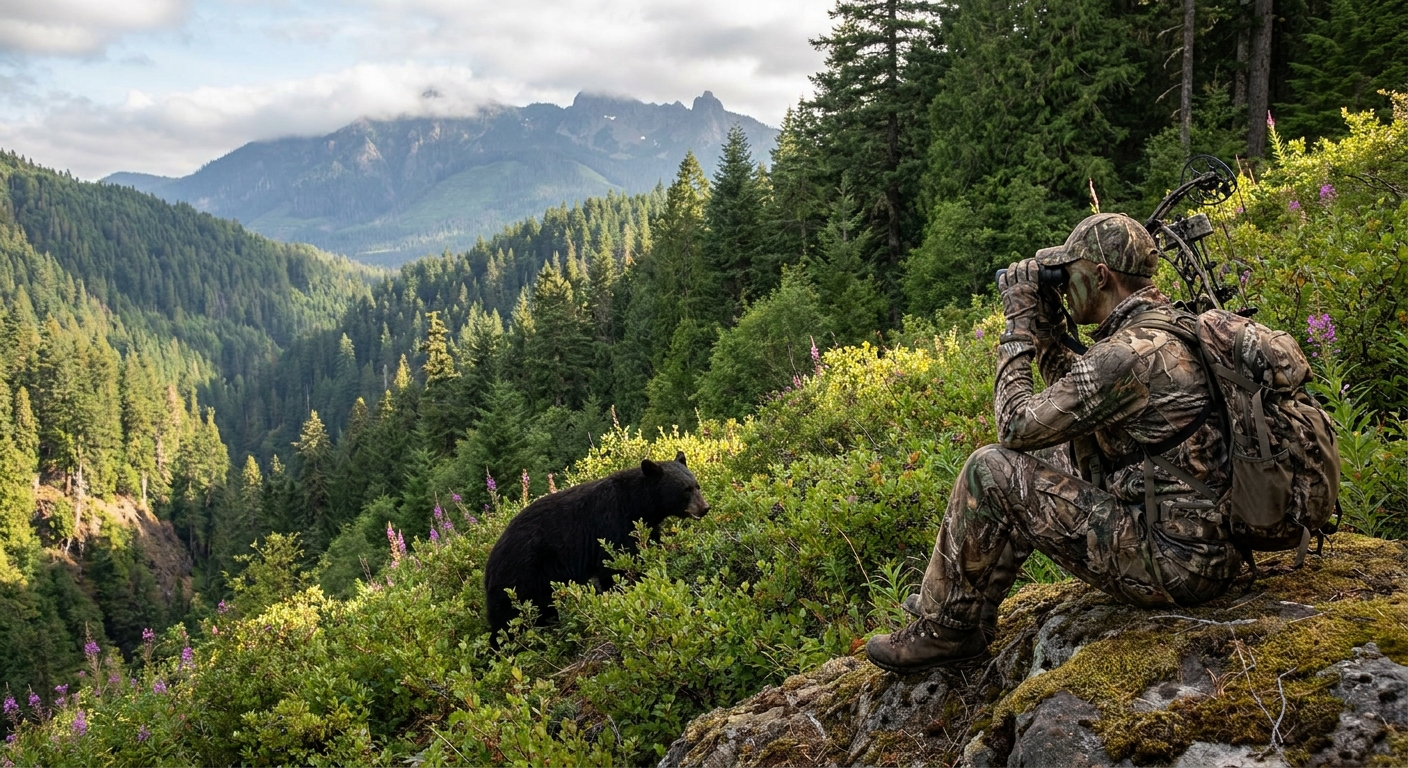
Oregon's archery black bear season is one of the most generous in the West. It opens in late April and, depending on the unit, runs well into August—giving bowhunters months of legitimate opportunity before deer and elk seasons steal all the attention. June is particularly productive. Bears are actively feeding, predictable in their movements, and the long days give you maximum glassing time. If you've been sitting on an unfilled bear tag, here's how to make June work for you in the western Cascades.
Why June Is Prime Time
By early June, Cascade black bears have shed their winter torpor and are making up for months without real food. They concentrate on fresh green-up, turning over rocks and logs for beetles and grubs, and hitting early berry patches along south-facing slopes. This predictable feeding behavior—move, eat, move, eat—makes them far easier to locate than when they're dispersed through mature timber in August. Combine that with 16-hour days and you have an ideal window for the spot-and-stalk bowhunter.
Where to Look: Oregon Unit Selection
The western Cascades units—Indigo, McKenzie, Santiam, and Alsea—all carry strong bear populations and are accessible by mid-June once lower elevations green up. The Indigo Unit in particular, covering the upper Willamette drainage south of Eugene, produces consistent bear sightings in open clearcuts and brushy south aspects from 1,500 to 4,000 feet elevation.
- Clearcuts aged 3–8 years: The sweet spot. Old enough to have blackberry cane, vine maple, and soft mast established, young enough to be open for glassing. Bears use these heavily in morning and evening.
- Skunk cabbage and sedge meadows: Lower-elevation wet meadows along drainages hold bears that come to graze early green-up vegetation, similar to elk grazing behavior.
- South-facing logged slopes: These warm earliest and green up first. Glass into them at first light from the opposite ridge or a high road cut.
Glassing Strategy for the Cascades
The western Cascades are not like glassing eastern Oregon desert country—visibility is limited and terrain is broken. Your strategy needs to account for that. Rather than trying to glass into miles of timber, focus your optics on edges: the boundary between mature timber and open cuts, the edge of a meadow, or the band of brush along a creek bottom where it meets a road cut.
Good glass matters more than many hunters realize for bear hunting. A 10x42 binocular and a 65mm spotting scope set up on a tripod will help you pick apart a clearcut systematically. Bears blend into shadows and brush better than you'd expect—look for movement, the sheen of black fur in morning light, or the out-of-place dark lump that shifts when you're not quite looking at it.
Closing the Distance: Stalk Execution
Once you've located a feeding bear, the clock starts. Bears in clearcuts are moving constantly, and the window to execute a successful stalk is often 20–45 minutes before the animal either beds in timber or moves over a ridge.
Key Stalk Principles
- Wind is everything. Bears have an extraordinary nose—better than elk, arguably better than whitetail deer. Thermal currents in Cascade canyons are complex. In the morning they drain downhill; as the day warms they rise. Plan your approach around the thermal, not the wind shown on your phone.
- Stay low and in shadow. Bears have adequate vision for movement. Skylining yourself on a ridge above a feeding bear is a mistake you'll only make once.
- Use terrain aggressively. Work around draws, use cut banks, crawl through brush if needed. You can get very close to a focused feeding bear if your wind is right.
- Close to 40 yards or less. For ethical archery shots on bears, plan your stalk to finish at 30–40 yards maximum. Bear anatomy requires precise shot placement—tight to the shoulder on a broadside or quartering-away shot, aiming for the near-side lung.
Shot Placement on Black Bears
This is where bear bowhunting separates from deer hunting. Bears have a heavy, dense shoulder structure and a thick hide. A marginal hit that recovers a deer will often result in a lost bear. Hit the boiler room cleanly or don't shoot.
The heart-lung kill zone on a black bear sits lower in the chest cavity than on a deer, tucked tight behind the crease of the front leg. On a broadside shot, aim for the center of the body at the point of the leg crease. On a quartering-away, drive the arrow forward through the body cavity toward the off-shoulder. Mechanical broadheads work, but fixed-blade heads in 100–125 grain weights with significant cutting diameter give you more margin on the entry and exit.
Gear Considerations for June Bear
- Boots: June in the Cascades means wet brush, morning dew, and the occasional rain shower. Waterproof boots in a mid-height hunting configuration keep you mobile without fatigue on all-day glassing efforts.
- Layers: Mornings at elevation can be in the 40s even in June. Pack a light merino base layer and a puffy you can strip as the day heats.
- Daypack: Bring meat bags and a game cart or packframe. Black bears dress out to 60–150 pounds of bone-in meat depending on size. Plan your pack-out before the stalk.
- Bear spray: Even when hunting, carry it. Close encounters with sows and cubs happen, and spray is faster than a bow when something goes sideways at 10 feet.
Regulations and Tag Info
Oregon black bear requires a valid hunting license and a bear tag. Tags are sold over the counter at ODFW offices and licensed dealers. There is no draw for black bear in Oregon. Check your unit-specific season dates in the current ODFW Big Game Regulations—archery season dates and legal weapon definitions vary slightly by unit. There is a two-bear annual bag limit in Oregon, but most hunters are chasing their first.
The Payoff
A spot-and-stalk archery bear in the Oregon Cascades is one of the most underrated solo hunting experiences in the Pacific Northwest. No camp to set up, no elaborate bait station to maintain, no waiting in a treestand. Just you, your optics, and the mountain. If you've got a tag and a bow and you're sitting on your hands between now and elk season, there's no excuse—the bears are out there right now, feeding in the open, and June is as good as it gets.