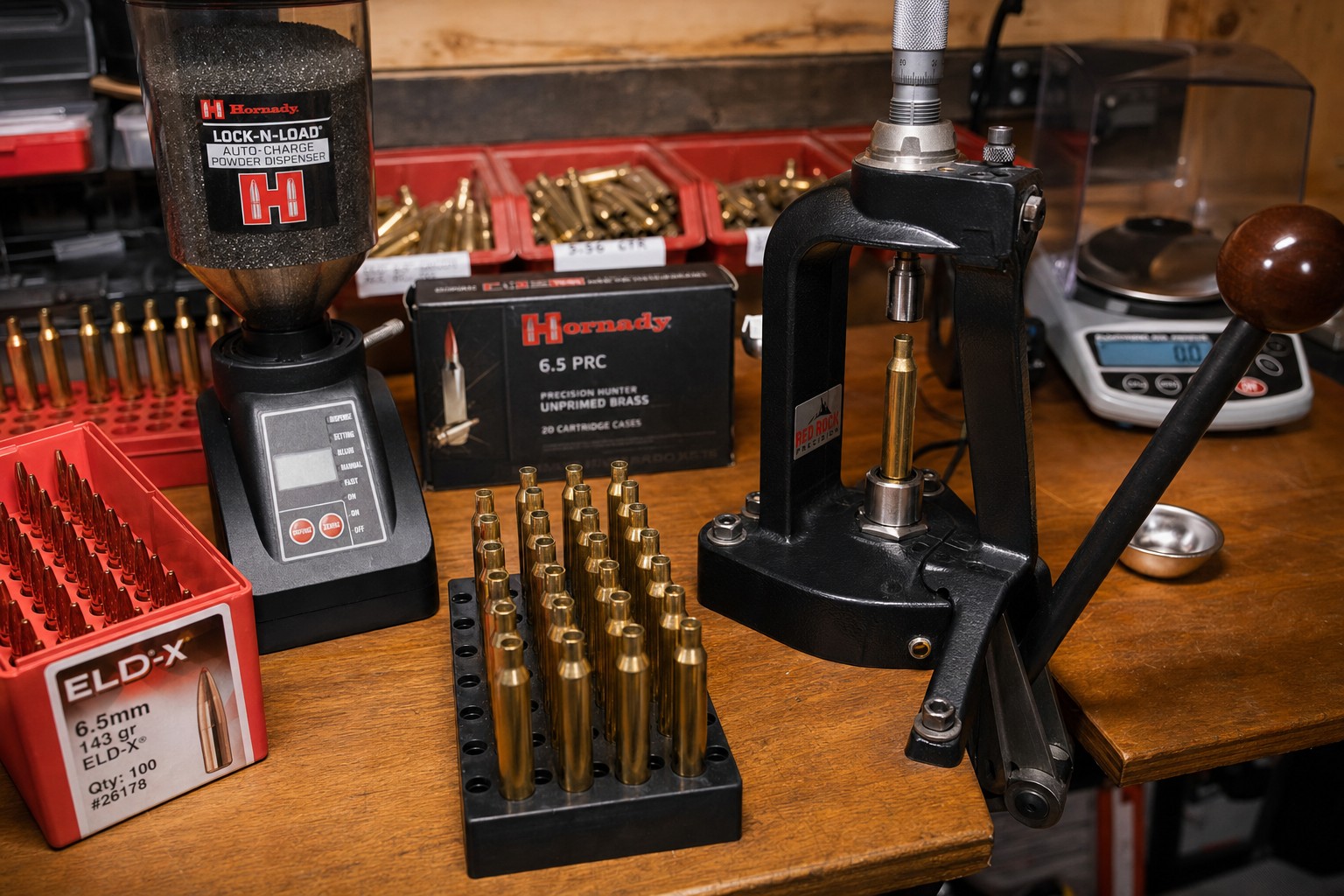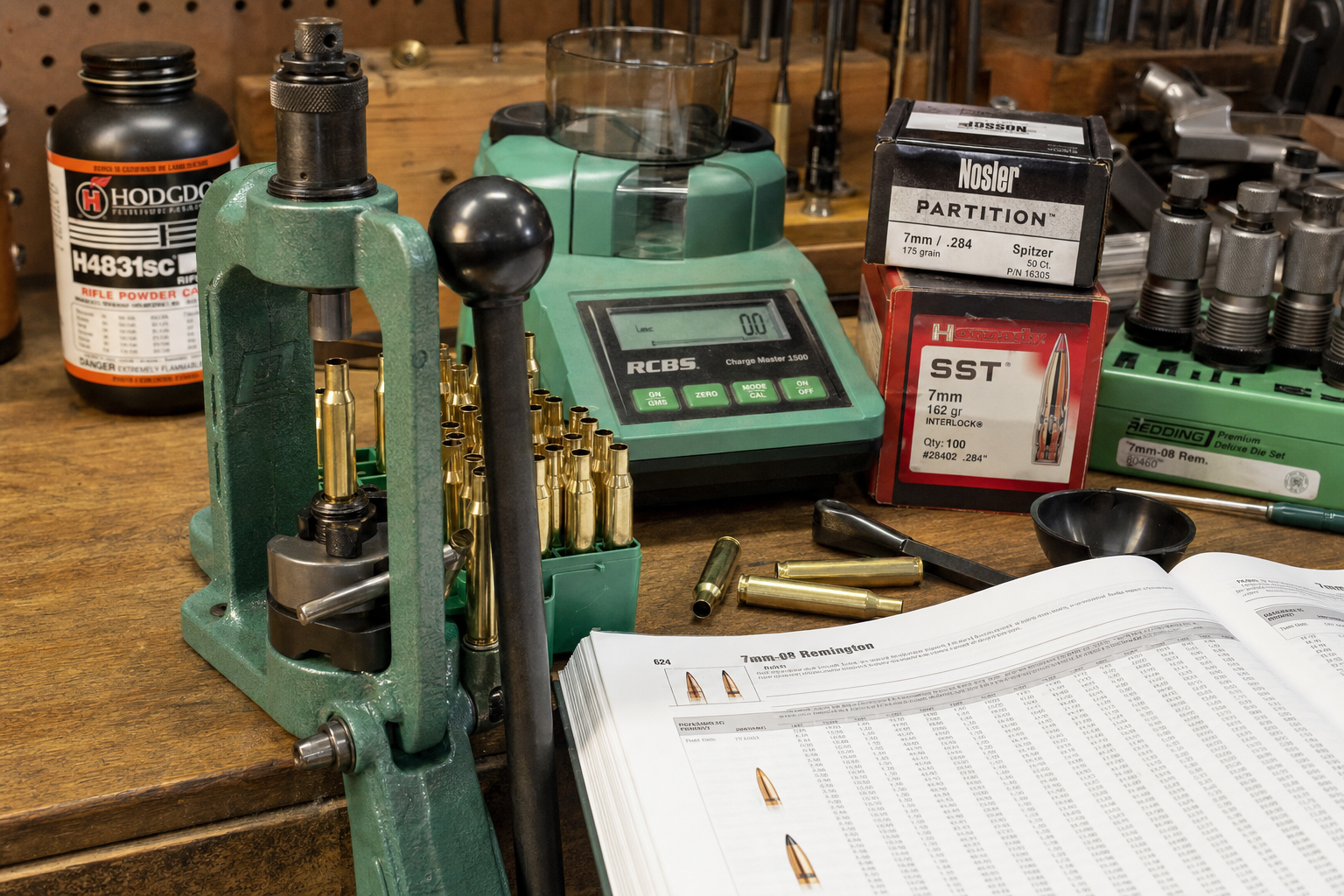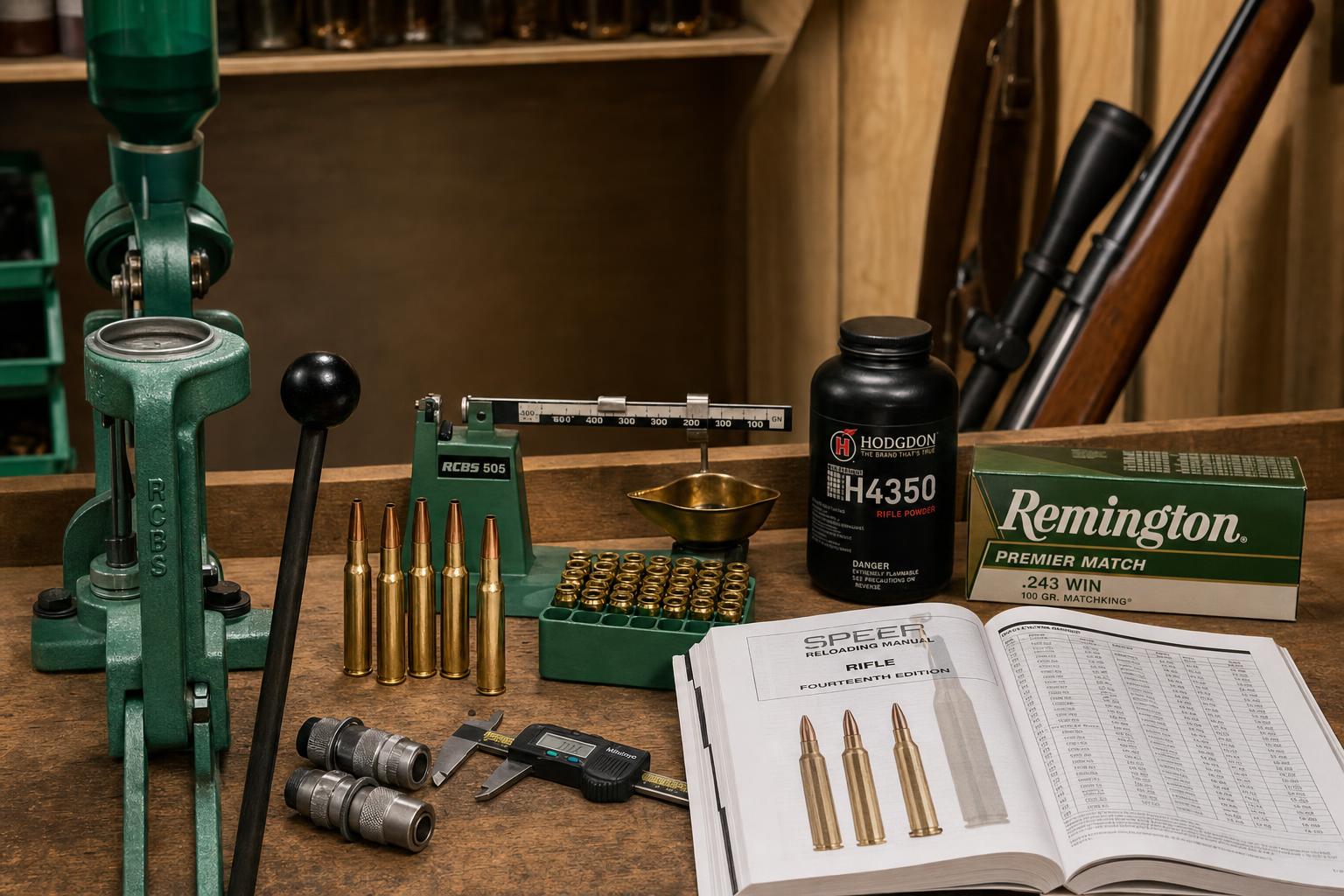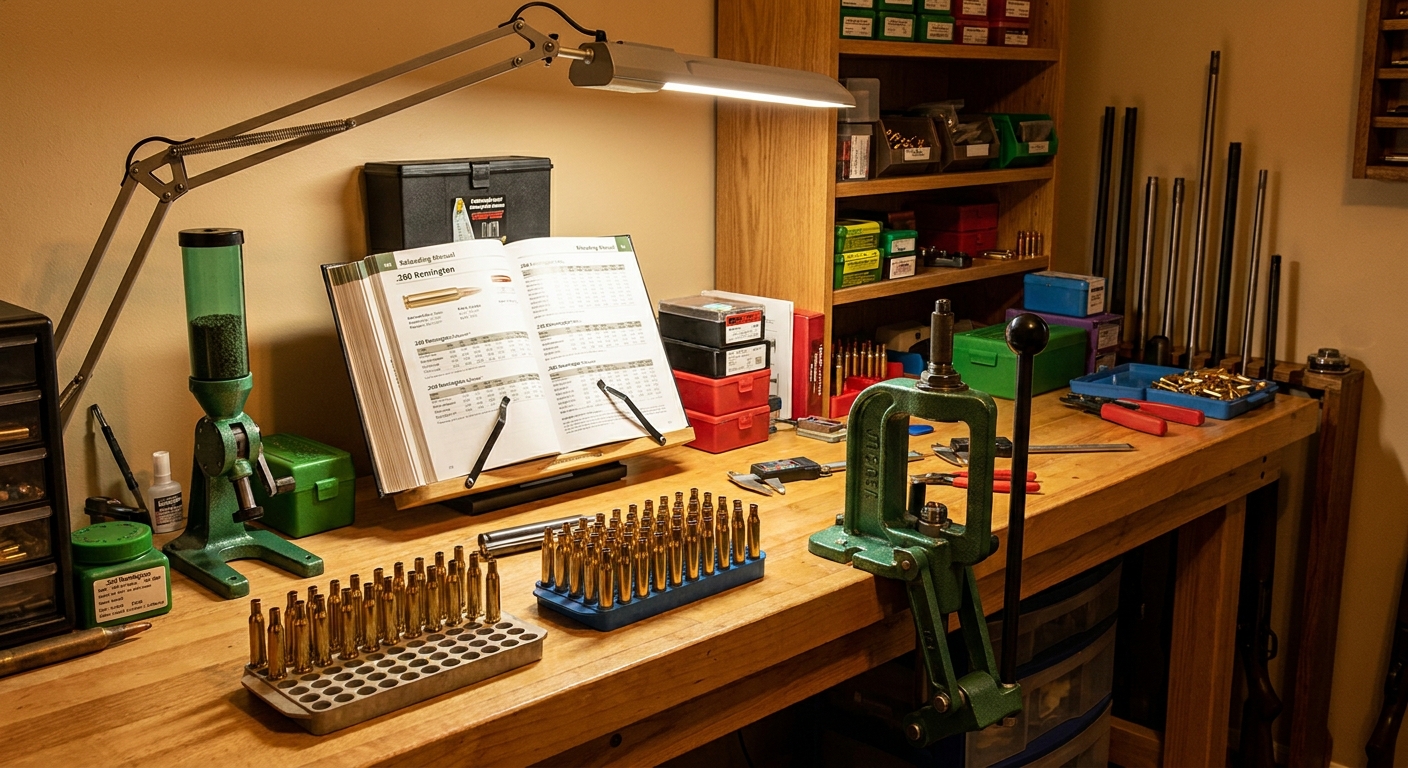
The .260 Remington never got the commercial fanfare it deserved. Introduced in 1997, it was quickly overshadowed by the proprietary 6.5mm offerings that followed and eventually by the 6.5 Creedmoor, which essentially clones its ballistics in a slightly shorter, more magazine-friendly package. But for handloaders, the .260 Remington has never lost its appeal. Factory brass is plentiful and inexpensive, the case is forgiving with a wide range of powders, and it feeds flawlessly from a standard short-action receiver. If you have one sitting in the safe, here is how to reload it well.
Why the .260 Remington Still Makes Sense
The .260 is essentially the .308 Winchester necked down to accept 6.5mm projectiles. That lineage matters: .308 Winchester brass can be converted to .260 with a simple sizing die pass and a trim, giving handloaders an essentially unlimited supply of quality parent brass. The 6.5mm bore diameter is one of the most efficient in rifle cartridge design, with a selection of high-BC bullets that outperform most 7mm and .30-caliber options at the same muzzle velocity.
For Oregon hunters, the .260 Remington handles everything from mule deer and blacktail to elk at reasonable ranges with light recoil and excellent accuracy. On the range, it is a legitimate 1,000-yard cartridge when loaded with match-grade 140-grain projectiles.
Brass Selection and Prep
Remington produces the parent brass, but Lapua, Hornady, and Nosler also offer .260 Remington brass in various quality tiers. For hunting loads, Remington or Hornady brass is perfectly adequate. For precision target work, Lapua .260 brass is the gold standard. Expect to pay for it, but those cases will last 10 to 15 loadings with proper care.
Standard prep applies: full-length size for semi-auto or hunting rifles, neck-size only for bolt guns shot from the same chamber. Trim to 2.030 inches. Deburr, primer pocket clean, and uniform primer pockets if you are shooting for precision. A mandrel expander die keeps neck tension consistent and reduces runout significantly compared to a standard expander ball.
Primer Selection
The .260 Remington uses a standard small rifle primer. Federal 210M Match primers are the go-to for precision loads and provide extremely consistent ignition with the slower powders that work best in this case. CCI 450 small rifle magnum primers can be useful with compressed charges of slower-burning powders in cold weather, but standard SRP is the right choice for most applications.
Powder Selection
The .260 Remington runs best with medium to medium-slow powders in the 4350 burn rate neighborhood. Here are the top performers:
- Hodgdon H4350: The single best all-around powder for the .260. Consistent across temperature extremes, excellent accuracy node, and fills the case well to minimize position sensitivity. Start at 40.0 grains with a 140-grain bullet and work up carefully toward 42.0 to 43.0 grains depending on your barrel and ambient temperature.
- IMR 4350: A slightly faster version of H4350 that can push velocities a touch higher. Useful in shorter barrels where you want to recover some lost velocity. Slightly more temperature sensitive than the Hodgdon variant.
- Reloder 17: Outstanding velocity potential with 140-grain bullets. Expect 2,800 to 2,850 fps in a 24-inch barrel. More temperature sensitive than H4350, so reserve it for consistent-temperature competition shooting rather than hunting loads that will see cold morning starts in November.
- Varget: A versatile choice for lighter bullets in the 120 to 130-grain range. Not ideal for full-weight 140s, but excellent for a lighter varmint-style load using 120-grain Nosler Ballistic Tips or similar.
- Hodgdon H4831SC: The short-cut version meters beautifully and works well with the heaviest 6.5mm bullets in the 140 to 147-grain range when you want to seat the bullet out to maximize powder space.
Bullet Selection
The 6.5mm bore diameter gives you access to some of the best long-range projectiles ever made. For hunting:
- Nosler AccuBond 130-grain: Excellent penetration and expansion on deer-sized game, with better BC than older cup-and-core designs. A solid all-around hunting bullet.
- Hornady ELD-X 143-grain: Heat Shield tip, high BC at .293 G7, and reliable expansion across a wide velocity range. The best choice for shots beyond 300 yards on game.
- Sierra GameKing 140-grain: A legendary hunting bullet that performs beautifully from the .260 at typical hunting velocities. Less expensive than bonded options and still very accurate.
For target and competition:
- Berger 140-grain Hybrid Target: One of the highest-BC offerings in the 6.5mm class. Works best seated to the lands or with 0.010 to 0.020 inch jump.
- Sierra MatchKing 142-grain HPBT: The classic PRS and F-Class bullet. Proven track record at every distance from 100 to 1,000 yards.
A Practical Starting Load
For an accurate all-around deer hunting load: Lapua or Hornady brass, Federal 210M primer, 41.5 grains of H4350, Hornady ELD-X 143-grain, seated to 2.800-inch COAL. This combination will produce 2,720 to 2,760 fps from a 22-inch barrel with sub-MOA accuracy in most quality rifles. Adjust COAL to your chamber freebore and work up in 0.3-grain increments, watching for pressure signs at each step.
Final Thoughts
The .260 Remington rewards patient handloaders with superb accuracy, manageable recoil, and real long-range capability from a compact short-action package. It never needed to be the most popular 6.5mm cartridge. It just needed to be good. And it is very good indeed.