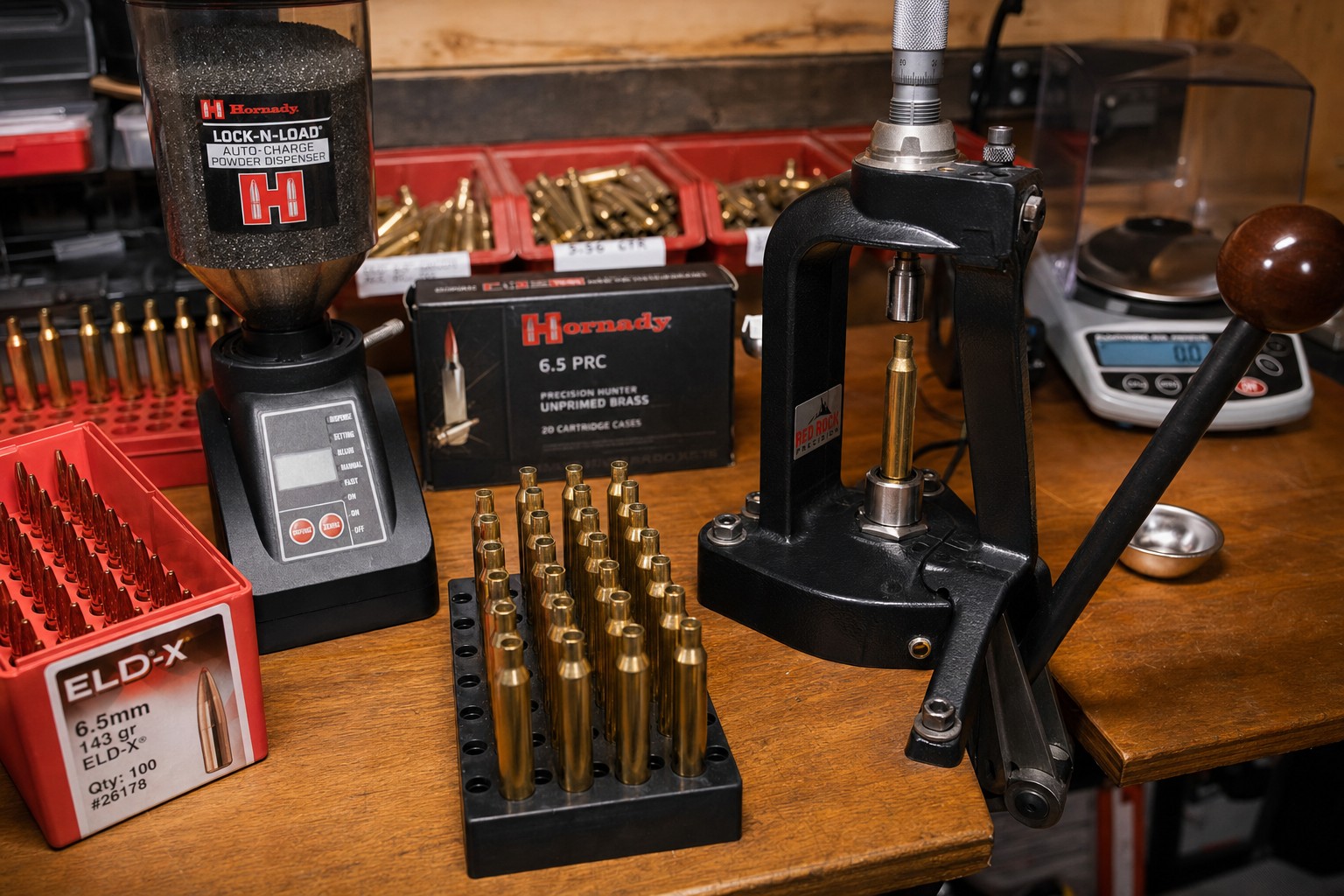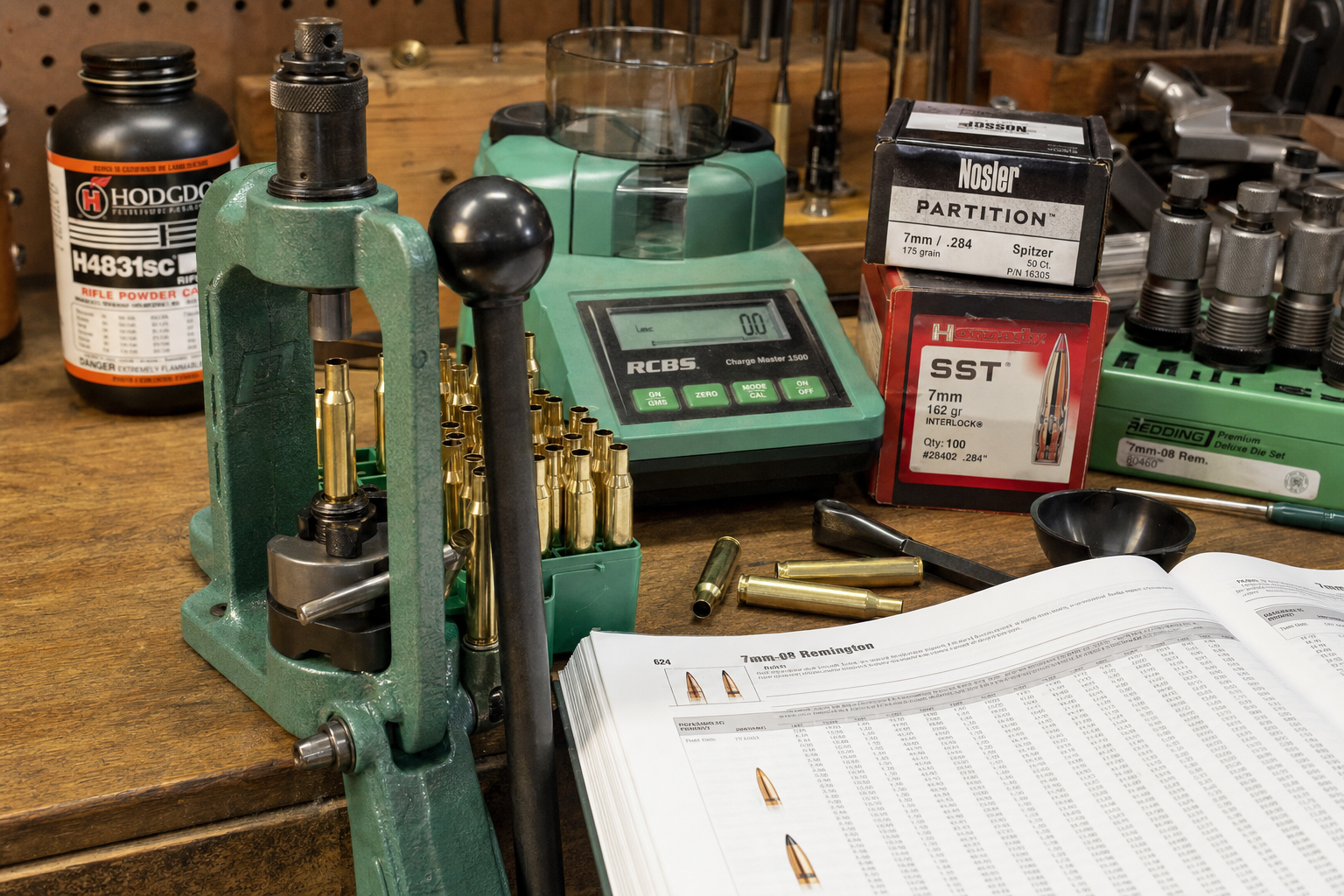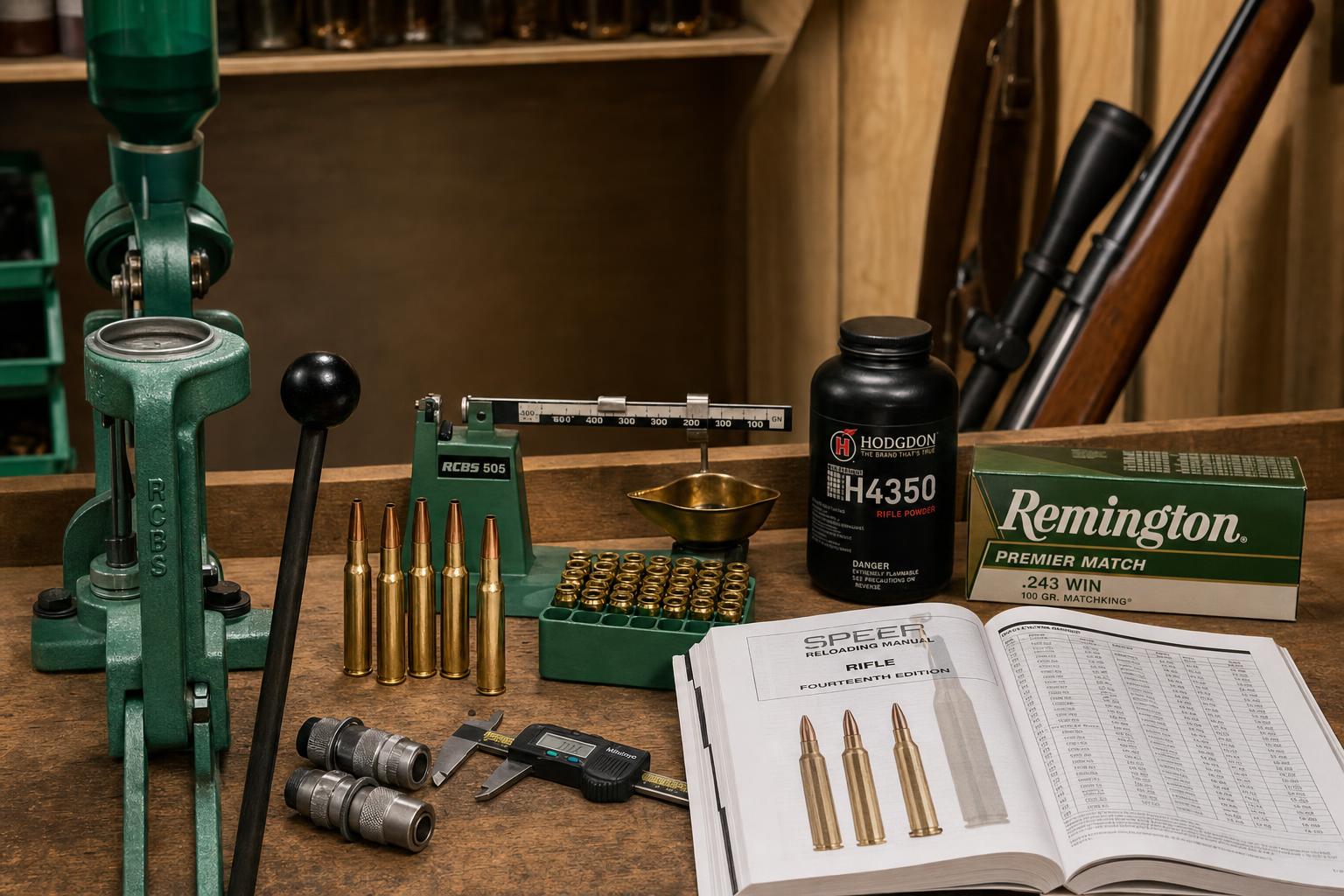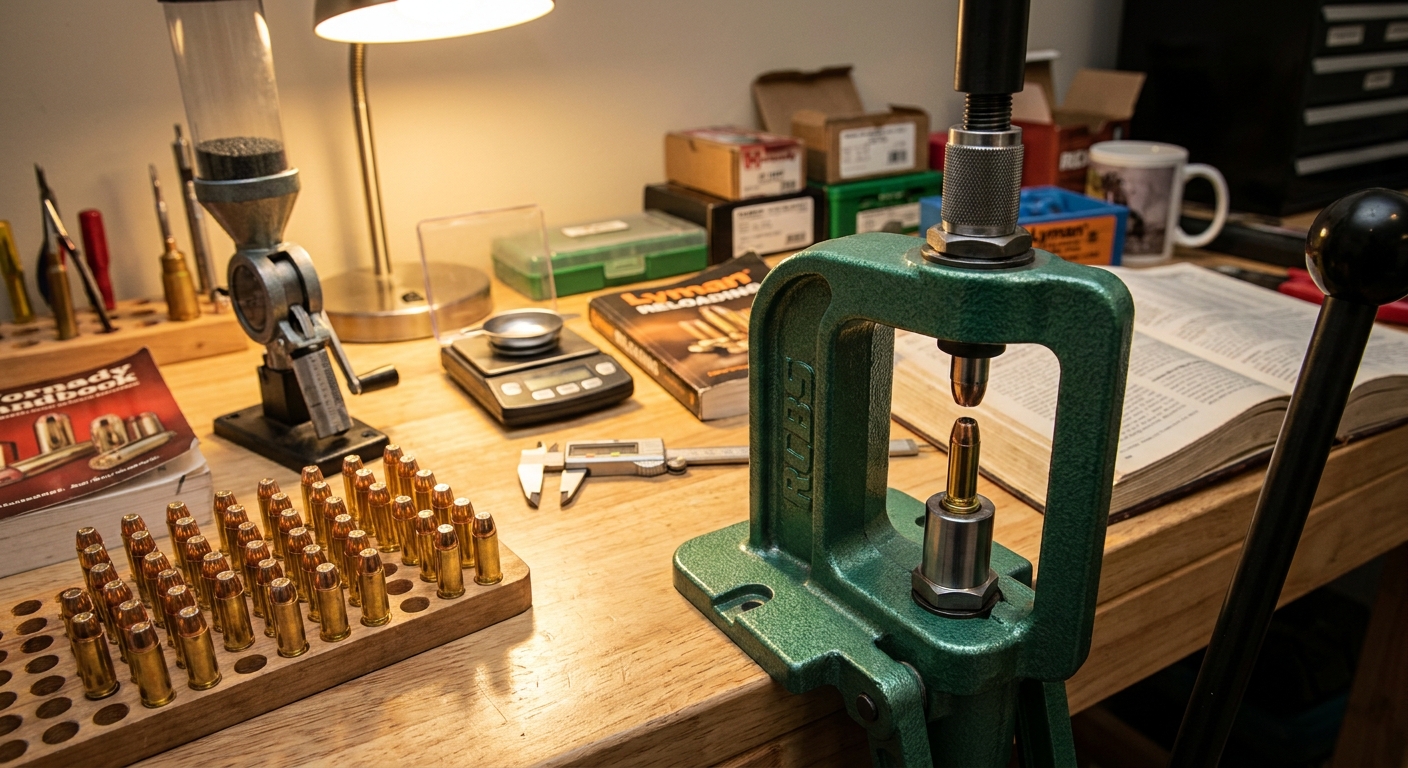
The .40 S&W does not get a lot of love in the current handgun landscape — 9mm has reclaimed its place at the top, and most new pistol buyers are skipping the .40 entirely. But among reloaders, the .40 S&W remains a thoroughly practical cartridge. Brass is cheap and plentiful, it accepts a wide range of bullet weights and powders, and for competitors shooting USPSA Major Power Factor, it is one of the more accessible paths to making Major without moving to a 1911 in .45 ACP.
Whether you are trying to build a competition load that meets the 165 Major Power Factor threshold or a stouter defensive load that approximates factory 180-grain hollow point performance, the .40 S&W rewards careful, disciplined reloading. This guide covers components, load data, and what works in the real world.
Brass: What to Know Before You Start
The .40 S&W operates at higher chamber pressures than most comparable pistol cartridges — SAAMI spec is 35,000 psi — and it fires from a partially unsupported chamber in most production pistols. This combination has earned the .40 a somewhat dramatic reputation for case head separations, particularly with reload brass that has been cycled many times through high-pressure loads or brass originally fired from a Glock (which features a notably unsupported chamber).
- Inspect every case: Look for bulging just above the extraction groove — this is a sign of unsupported-chamber stretching. Discard any bulged cases.
- Limit reload cycles on hot loads: For competition Minor loads this is less of an issue, but if you are loading near the top of the pressure curve for Major PF or defensive work, most experienced .40 reloaders cull brass after 5 to 7 reloads.
- Preferred brass: Starline .40 S&W brass is the gold standard for reloaders — consistent wall thickness, excellent annealing, and it holds up well through multiple reloading cycles. Federal and Winchester factory brass are also reliable choices.
Components and Load Data
The .40 S&W works with a wide range of propellants. The most important thing is matching your powder choice to your intended application.
Competition Loads (USPSA Minor and Major Power Factor)
For USPSA competition, power factor is calculated as bullet weight (grains) × velocity (fps) ÷ 1000. Minor PF is ≥125; Major PF is ≥165 for the .40 S&W.
Minor Power Factor Load — 165-grain FMJ:
- Bullet: 165-grain FMJ flat nose (Zero, Berry's, or Precision Delta)
- Powder: 4.8 grains of Hodgdon Titegroup
- Primer: CCI 500 Small Pistol
- OAL: 1.125 inches
- Estimated velocity: ~950 fps from a 4.5-inch barrel (~157 PF)
- Notes: Soft-shooting, low flash. Works in most .40 S&W pistols without modification.
Major Power Factor Load — 180-grain FMJ:
- Bullet: 180-grain FMJ flat nose
- Powder: 6.0 grains of Hodgdon CFE Pistol
- Primer: CCI 500 Small Pistol
- OAL: 1.125 inches
- Estimated velocity: ~940 fps (~169 PF)
- Notes: This is a solid, proven Major load. Work up from 5.5 grains and chronograph — individual guns can vary by 50+ fps.
Alternate powder choices for competition: Hodgdon HS-6, Alliant Power Pistol, and Ramshot True Blue are all popular among competitive shooters. HS-6 in particular meters exceptionally well through powder measures, which matters when you are loading 500+ rounds per session.
Defensive Loads (180-Grain JHP)
Duty-Weight Defense Load — 180-grain JHP:
- Bullet: 180-grain Hornady XTP or Sierra JHP
- Powder: 5.2 grains of Alliant Power Pistol
- Primer: CCI 500 Small Pistol
- OAL: 1.125 inches
- Estimated velocity: ~985 fps from a 4-inch barrel
- Notes: This approaches factory 180-grain hollow point performance. Reliable expansion from the XTP has been documented extensively. Do not exceed 5.5 grains of Power Pistol — this is an upper-range load.
All load data is for reference only. Always begin 10% below listed starting loads, work up carefully, and consult a current published reloading manual. Verify your specific components — bullet, primer, powder lot, and brass — against multiple sources before loading.
Seating and Crimping
The .40 S&W headspaces on the case mouth, which means your crimp must be a taper crimp, not a roll crimp. A roll crimp will remove the case mouth bevel and prevent the cartridge from headspacing correctly, leading to feeding failures and potentially dangerous pressure spikes. Apply just enough taper crimp to remove the case mouth flare — typically 0.001 to 0.002 inch — and confirm with a case gauge (the Dillon or LE Wilson .40 S&W case gauges are the standard). Every completed round should drop freely into the gauge and fall out under its own weight.
Equipment Notes
High-volume .40 S&W competition reloading is best done on a progressive press. The Dillon 650/750, RCBS Pro Chucker 5, and Hornady Lock-N-Load AP are all capable of producing several hundred rounds per hour with minimal setup. A good carbide sizing die set — Lee, Redding, or Dillon — will not require case lubrication, which speeds up production considerably and eliminates lube dents.
Why .40 S&W Still Makes Sense for Reloaders
The economics are simple: .40 S&W brass comes through ranges by the pound, component bullets are available in every weight and construction from every major manufacturer, and the cartridge's pressure-to-performance ratio makes it genuinely useful for both competition and practical shooting. If you already have .40 S&W pistols in the safe, investing in a solid reloading setup for this caliber will pay for itself quickly. Load smart, inspect your brass, and stay within published data — the .40 S&W will reward you with years of economical, accurate performance.