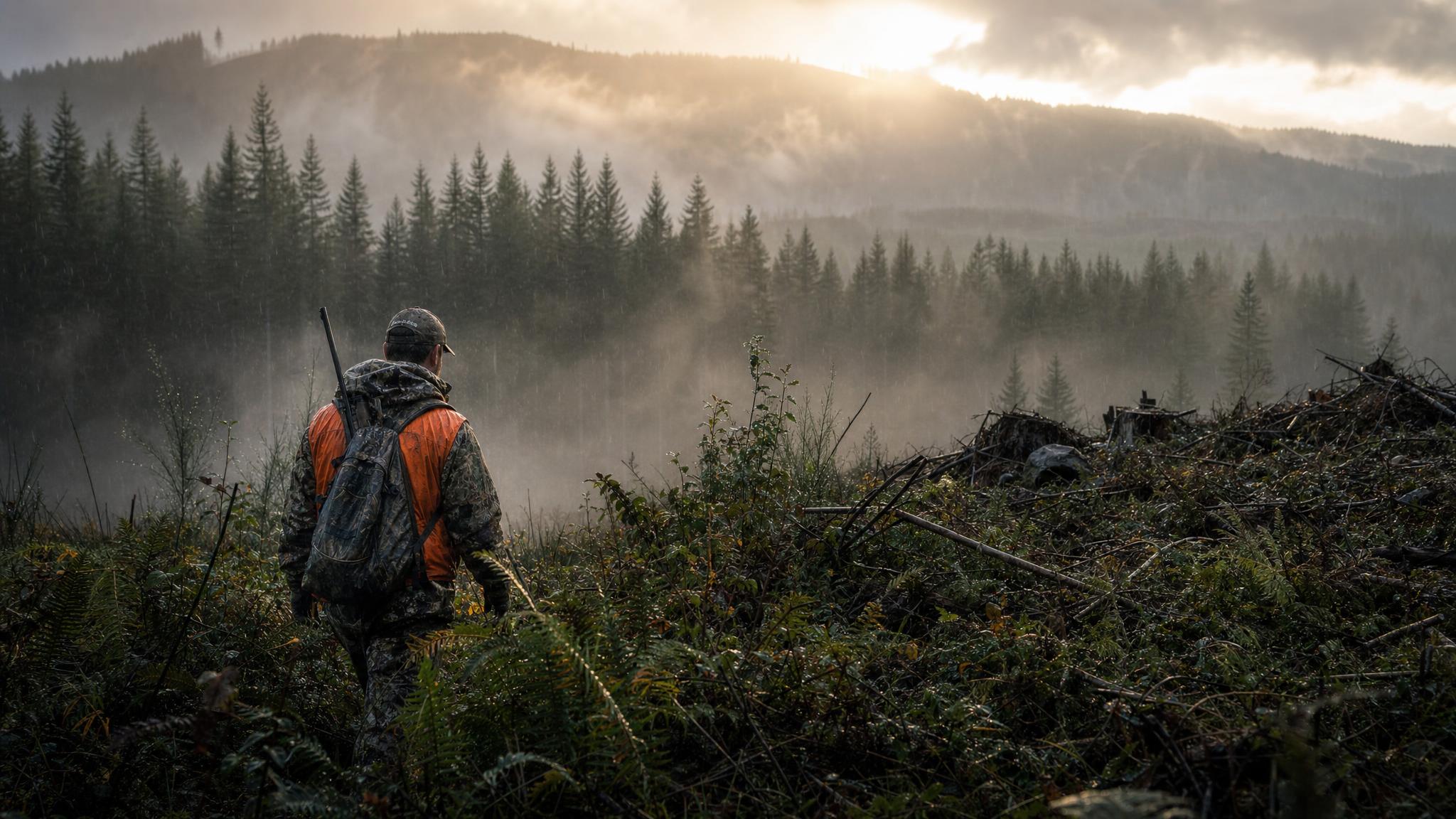
Ruffed grouse are the most underrated upland bird in Oregon. While hunters chase pheasants across eastern Oregon stubble fields and pursue chukar on impossibly steep rimrock, the ruffed grouse quietly lives out its days in the dense alder drainages, brushy creek bottoms, and young clear-cut regrowth of the Coast Range and western Cascade foothills — largely unpressured and largely ignored. That's your opportunity.
Range and Habitat in Oregon
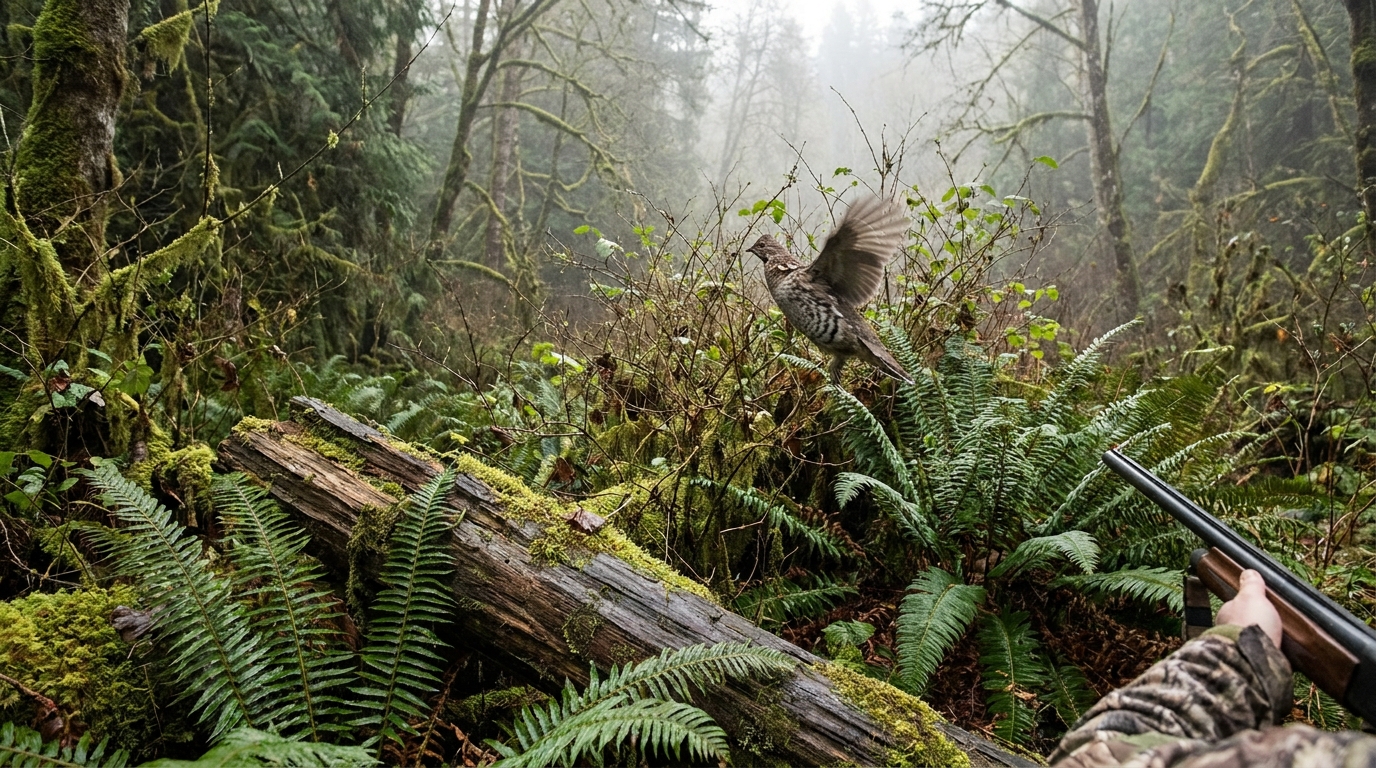
In Oregon, ruffed grouse (Bonasa umbellus) occupy a fairly defined habitat band on the wet west side of the state. Look for them in:
- Alder-lined creek drainages: The brushy, tangle-heavy bottoms of streams draining the Coast Range — from the Nehalem watershed in the north to the Umpqua drainages in the south — are prime ruffed grouse habitat. Alders, red elderberry, salmonberry, and sword fern create the dense canopy and understory these birds prefer
- Young clear-cuts (3–10 years old): Early-succession forest — thick with brush, alder, and young conifers — holds some of the highest grouse densities in Oregon. The regrowth provides food (buds, berries, insects) and overhead cover
- Aspen groves in the western Cascades: Ruffed grouse have a strong affiliation with trembling aspen, and the pockets of aspen found in the western Cascades between roughly 3,000 and 4,500 feet are worth targeting in October when birds move to higher elevations
- Mixed hardwood-conifer edges: The transition zones between mature conifer forest and younger brushy areas concentrate birds, especially in early morning and late afternoon
Season Dates and Regulations
Oregon's upland game bird season for ruffed grouse typically opens in mid-September and runs through the end of December on the west side of the Cascades. The daily bag limit is generally three birds, with a possession limit of six — check the current Oregon Sport Fishing and Hunting Regulations synopsis for exact dates and any zone-specific restrictions before heading out.
No special tag or permit is required beyond a valid Oregon hunting license with upland bird validation. Public land access is excellent throughout the Coast Range via BLM and Oregon State Forests lands — the Tillamook State Forest, Siuslaw National Forest, and Elliott State Research Forest all hold ruffed grouse populations.
Hunting Without a Dog
You don't need a pointing dog to hunt ruffed grouse effectively, though a flushing dog dramatically increases your odds. Without a dog, the key is slowing way down and working the habitat methodically.
Ruffed grouse hold tight. Unlike pheasants that run ahead of you or chukars that flush wild at 40 yards, a ruffed grouse will sit motionless in the ferns while you walk within five feet. The bird's camouflage is extraordinary. The trick is to pause frequently — stop every 10 to 20 steps and wait. The bird's instinct is to hold until it feels cornered, and an unexpected pause can trigger a flush when walking right past it wouldn't.
Work into the wind when possible, and pay attention to the escape routes: ruffed grouse almost always flush toward thick cover, then pitch into the canopy. Their initial flush is explosive and disorienting — the thundering wingbeat is startling even when you're expecting it. Take a breath, pick a spot just ahead of the bird, and pull through.
Hunting with a Dog
A flushing dog — Lab, springer spaniel, cocker spaniel — is highly effective in the dense alder and fern habitat ruffed grouse prefer. Pointing dogs work too, but the tight, nasty cover can make it hard for a pointer to hold staunch in the brush. Whatever breed you run, keep the dog close — within shotgun range at all times. This is not open-country pheasant hunting. Shots come fast and from every angle.
Shotgun and Load Selection
Ruffed grouse are relatively small birds, and most shots in the Coast Range are under 20 yards in heavy timber. An open-choked 20-gauge or even a .410 is genuinely effective. Most hunters carry a 12-gauge out of habit, and that's fine — just choke it Improved Cylinder or Skeet and use light loads.
- Load: 7.5 or 8 shot, 1 oz to 1-1/8 oz in 12 gauge; 7/8 oz in 20 gauge
- Choke: Improved Cylinder — you need a wide pattern for close, fast birds in the timber
- Gun: Light and short. A 6-pound, 26-inch over-under or side-by-side is perfect for this cover. Heavy guns get heavy fast when you're climbing drainage after drainage
The Drumming Log
In spring, male ruffed grouse drum from a log — beating their wings against the air to produce a deep, accelerating thumping sound used to attract hens and establish territory. Finding an active drumming log tells you where a dominant male lives. If you find one in spring or summer while scouting, mark it on your OnX map. That same male, or a new one, will likely be using the same log or a nearby one when season opens in fall.
Look for large, slightly elevated logs in semi-open hardwood or mixed forest. The log usually has clear sightlines in multiple directions — drumming males are wary of predators and need to see approaching threats.
Scouting Accessible Areas
The Tillamook State Forest (Tillamook and Washington counties), the BLM's Coast Range districts, and the lower-elevation drainages of the Umpqua National Forest are all accessible and hold consistent ruffed grouse populations. For access maps, the ODFW's Northwest Oregon hunting atlas and the BLM's Oregon state maps are invaluable — the state forests in particular have extensive road networks that make penetrating otherwise impenetrable alder country possible.
Start your hunt by glassing clear-cuts from the road early in the morning. Grouse feed on the edges of openings at first light before retreating into cover. Then work the creek drainages running into and out of those cuts.
Table Quality
If you've never eaten ruffed grouse, you're in for a treat. The breast meat is white and mild — similar to pheasant but arguably better, with a slightly nuttier flavor from the bird's diet of alder buds and berries. Sauté the breast halves in butter with garlic and thyme, or butterfly and grill them. Don't overcook — four minutes a side over high heat is plenty. A bird that lives in Oregon's lush wet-side habitat is a bird worth eating well.