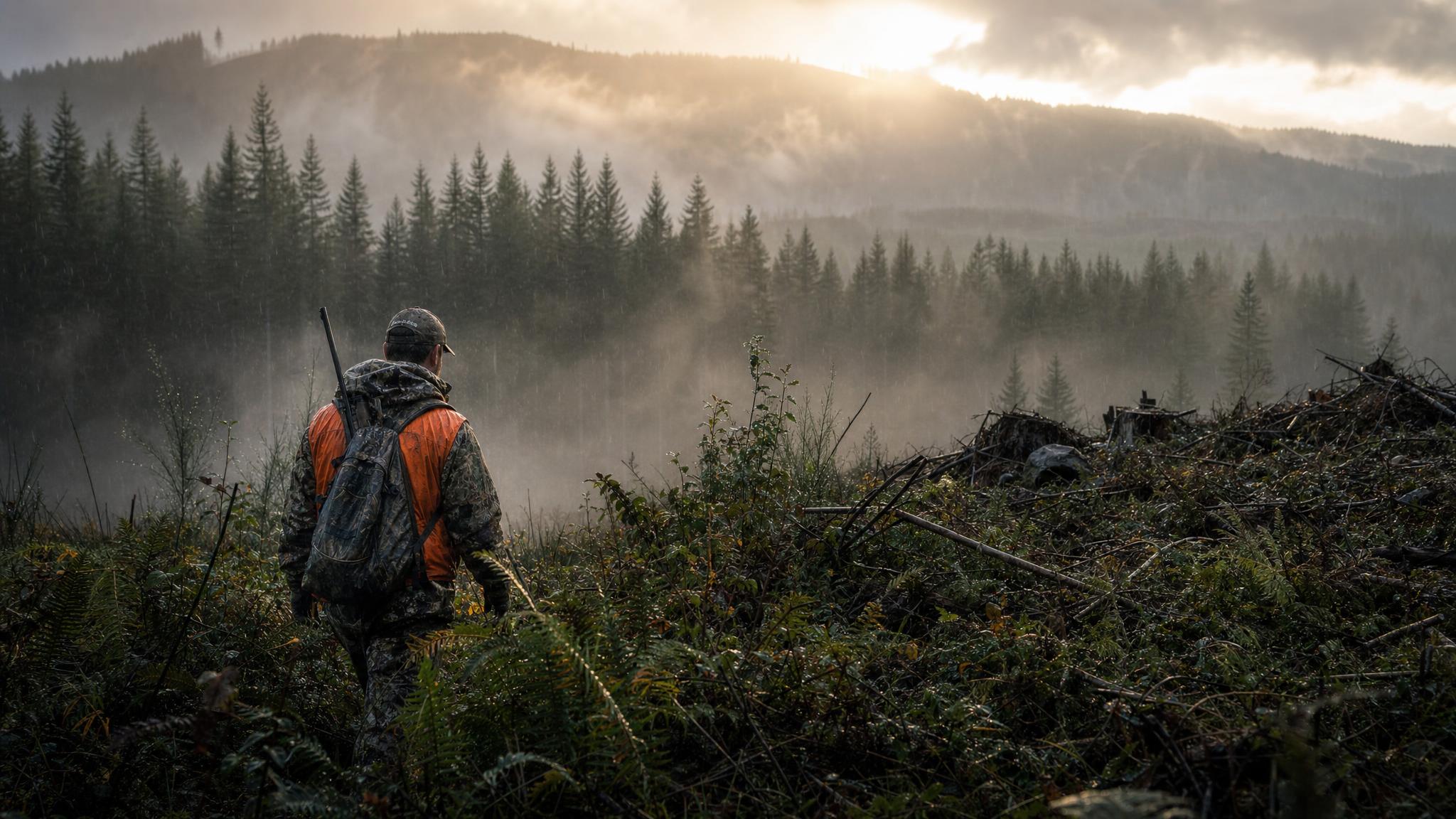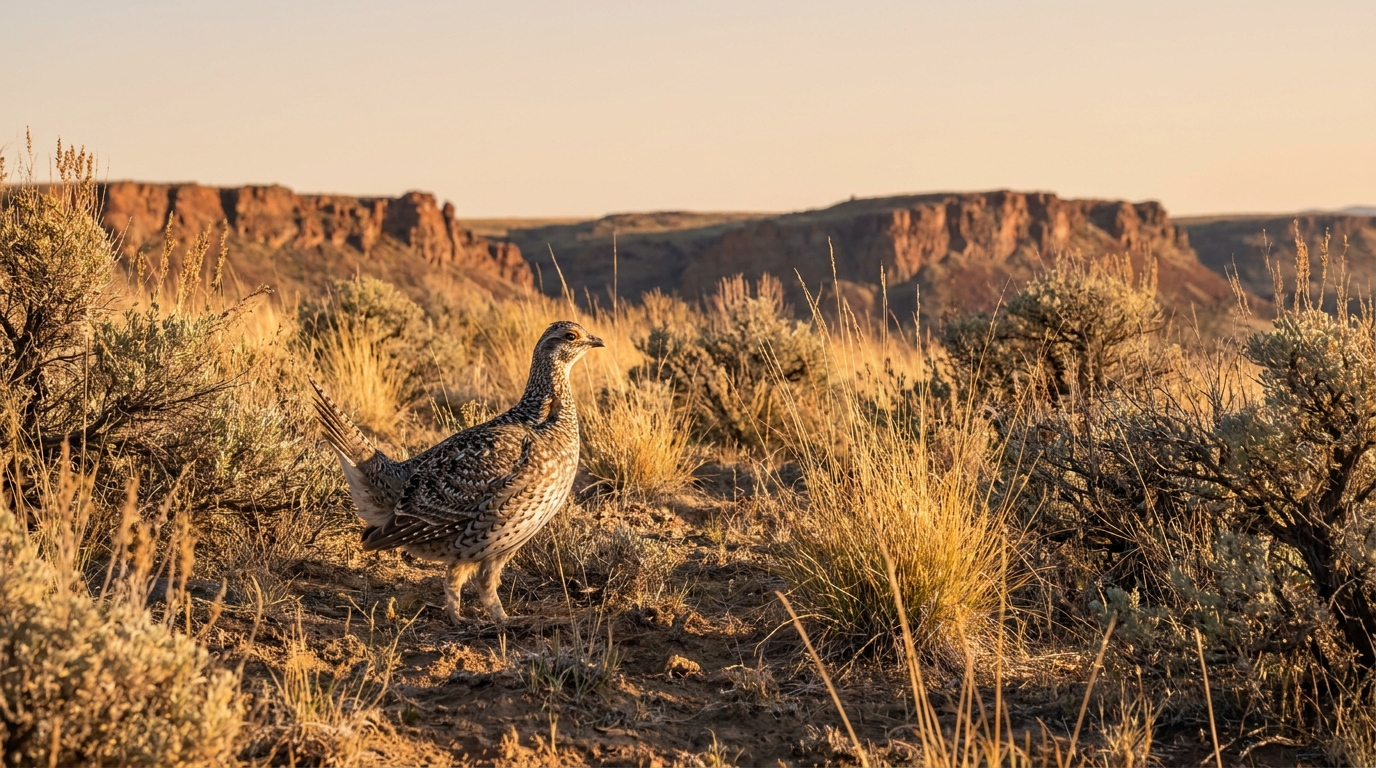
Most Oregon upland hunters are familiar with the chase for pheasant in the Willamette Valley, chukar along the Snake River canyon breaks, and Hungarian partridge in the Blue Mountains. Far fewer have pursued the sharp-tailed grouse — a native prairie bird that occupies a narrow and fragile habitat band across a handful of counties in northeastern Oregon. For the hunters who do draw the tag, it’s a deeply rewarding experience unlike anything else the state offers.
Distribution and Population Status
Oregon’s sharp-tailed grouse (Tympanuchus phasianellus columbianus) — specifically the Columbian subspecies — were once widespread across the bunchgrass prairies and shrub-steppe of eastern Oregon. Agricultural conversion, livestock grazing, and fire suppression dramatically reduced their range through the 20th century. Today, viable populations exist in only a few areas, primarily in Union, Wallowa, and Baker counties.
ODFW manages the season conservatively, with annual harvest surveys driving tag allocation. The season typically opens in early October and runs only a few weeks. Tag numbers are intentionally limited — expect a lottery draw process similar to upland turkey. Check current ODFW regulations for season dates and draw requirements, as they vary year to year based on population surveys and dancing ground (lek) counts conducted the previous spring.
Where to Find Them
Sharp-tailed grouse are birds of transition habitat — they thrive where native bunchgrass and shrub-steppe meets agricultural grain fields, hawthorn draws, or willow-lined creek drainages. In northeastern Oregon, this means the upland prairies of the Grande Ronde Valley fringe, the gentle rolling terrain north and east of La Grande, and the benchlands south of Enterprise in Wallowa County.
Key habitat features to look for:
- Native bunchgrass (bluebunch wheatgrass, Idaho fescue): The core of their range. Look for areas with 40–60% grass cover, not too dense and not overgrazed.
- Proximity to food sources: In fall, birds concentrate near residual grain fields, rose hip patches, and hawthorn thickets loaded with berries. Walk the edges where shrubs meet open grass.
- Leks as anchors: Dancing grounds used in spring are typically within a mile or two of fall and winter home ranges. ODFW biologists track lek locations; reaching out to your local ODFW district office before the season is worth the call.
- Water: In dry fall conditions, birds will be closer to stock ponds and seasonal creek drainages, especially midday.
Hunting Tactics
Sharp-tailed grouse are not chukar — they hold reasonably well for pointing dogs and flush with a distinctive cackle followed by fast, direct flight. Early season birds are often found in loose groups of 5–15 birds. Later in the season, coveys merge into larger winter flocks.
A few tactics that consistently put birds in the bag:
- Run a pointing dog. A wide-ranging dog that can cover ground is your greatest asset in sharp-tail country. Brittanys, German Shorthairs, and Vizslas all excel in this terrain. The birds hold tight enough for a solid point, and finding singles after a covey flush is much easier with a dog.
- Hunt mornings first. Birds are most active in the first two hours after sunrise, moving from roosting areas in heavier cover to feeding areas in shorter grass and field edges. Hunt the transition zones hard early.
- Glass before you walk. These birds are visible from a distance when they’re feeding in the open. A pair of binoculars can save you miles of walking by letting you locate coveys before you put your boots down.
- Mark your flush well. Sharp-tails often pitch into the next draw or ridgeline and hold tight after the initial flush. Note the direction of flight, get there quickly, and you’ll often find the covey scattered across a small area.
Shot Distances and Ammunition
In open terrain, sharp-tailed grouse can flush at 30–50 yards, and shots at 35–45 yards are common. These are sturdy birds with more mass than a typical Hungarian partridge. Most hunters use 20- or 12-gauge with improved cylinder or modified choke and 1 1/8 oz of No. 6 or No. 7.5 shot. If you’re hunting late season in cold conditions when birds are holding tighter, No. 6 is a better choice for clean kills at distance.
Private Land Access
Much of Oregon’s prime sharp-tail habitat sits on private agricultural land. Knock on doors before season — many eastern Oregon ranchers are approachable and respectful access requests go a long way. Oregon’s ODFW Hunting Access Program also facilitates access to some private lands; check the ODFW Access and Habitat program map for enrolled properties in Union and Wallowa counties.
Public land options do exist on BLM parcels in the benchlands north of the Grande Ronde Valley. OnX Hunt or a current BLM map will help you identify the patchwork of public sections in this area. The terrain is generally gentle — nothing like the brutal chukar canyon country — making it accessible for hunters of most fitness levels.
Closing Thoughts
Drawing a sharp-tailed grouse tag in Oregon puts you in a small and fortunate group. Treat the hunt with the care it deserves: practice leave-no-trace principles, respect private land boundaries, and pack out every bird you knock down. These birds need hunters as advocates just as much as they need habitat managers. A healthy sharp-tail population in northeast Oregon is worth protecting — and hunting.