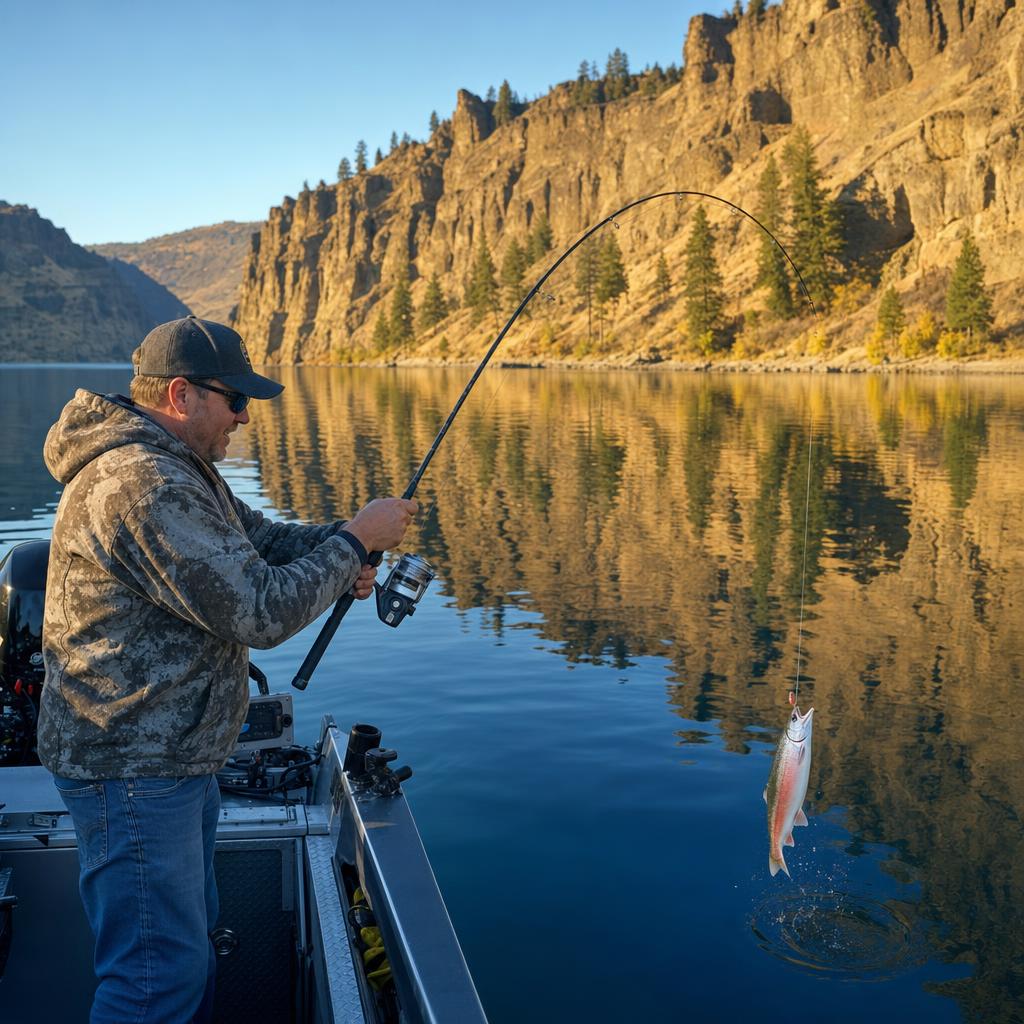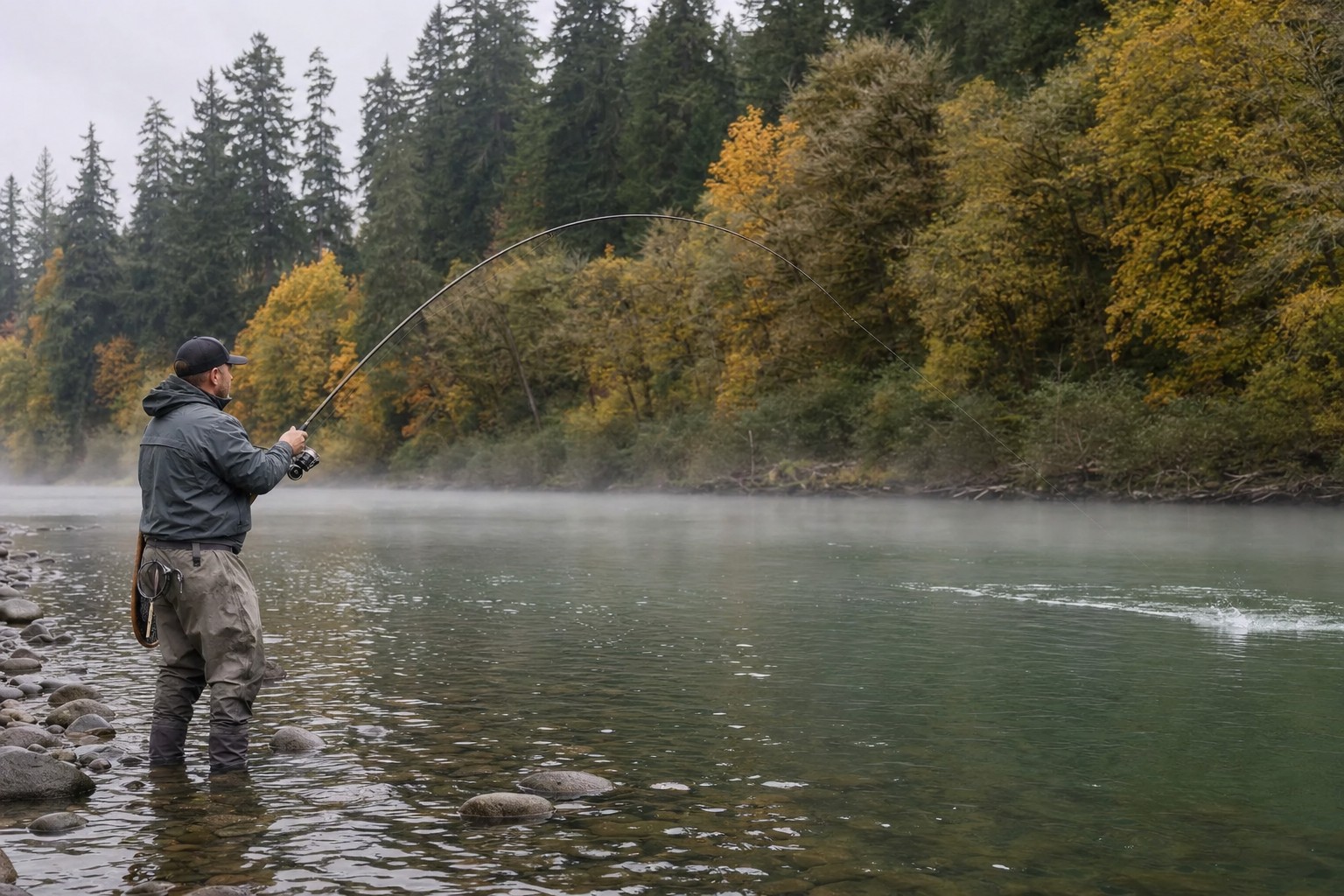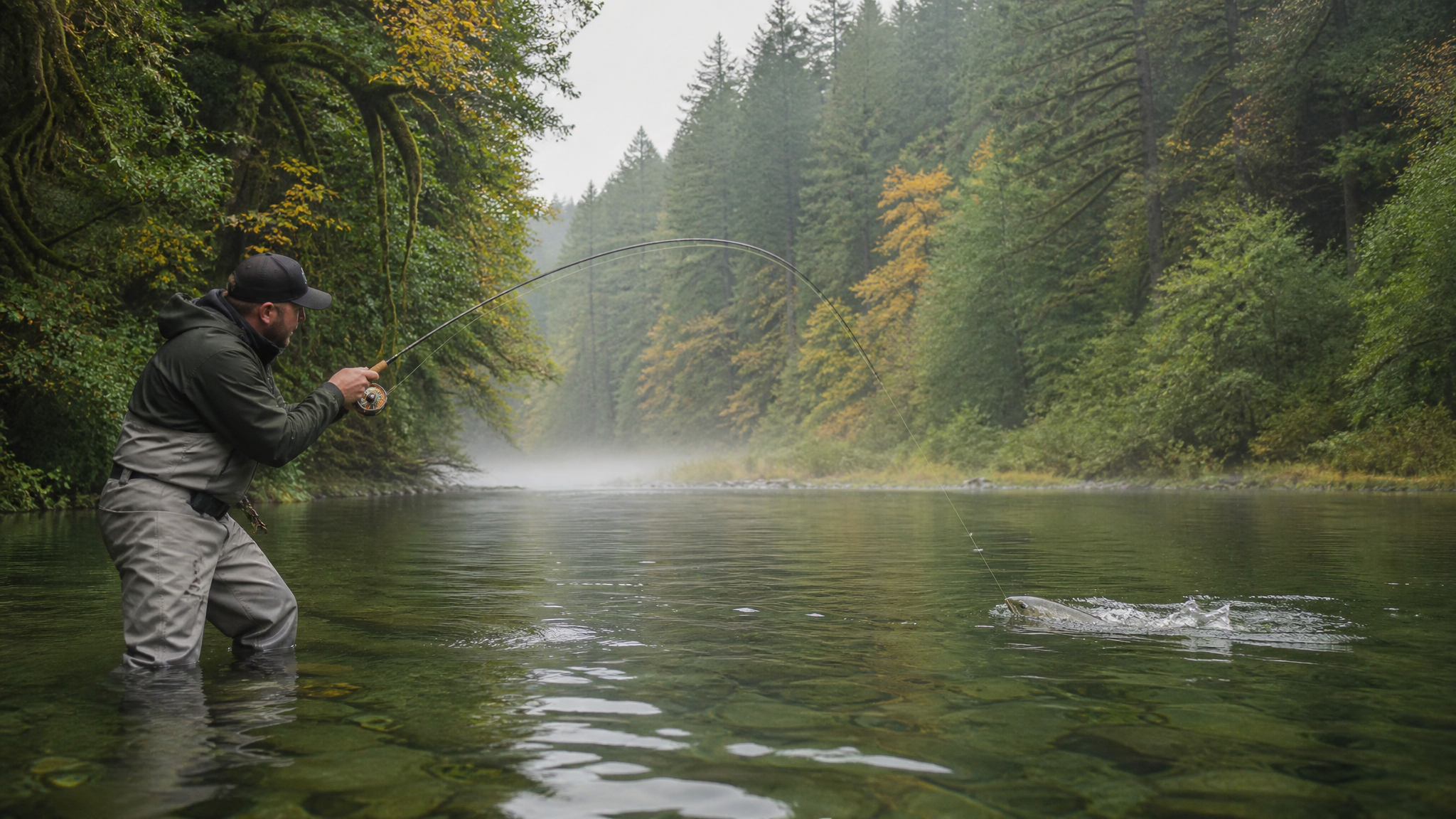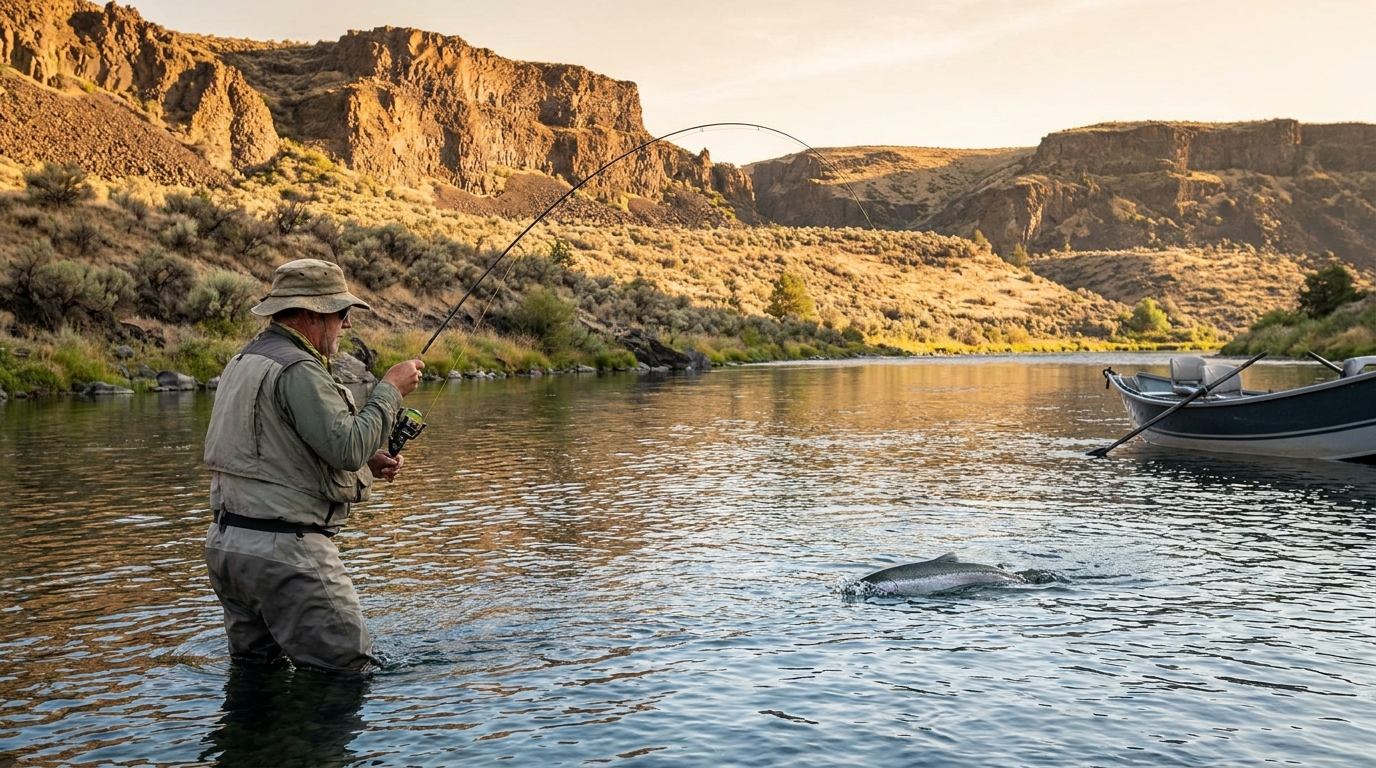
If you've never stood waist-deep in the Lower Deschutes on a hot July morning, watching a steelhead slash at your swung fly, you're missing one of Oregon's finest outdoor experiences. The lower canyon — roughly the 100-mile stretch from Maupin downstream to the Columbia — draws fly anglers from across the West every summer for good reason. Wild B-run fish push into the river starting in late June and keep arriving through October, offering a season that spans summer heat into the cool of fall.
Understanding the Run
Deschutes summer steelhead are B-run fish — hatchery-origin fish that spent two years in the ocean and wild fish with the same life history. Both are available to anglers, though wild fish must be released immediately. The hatchery fish are clipped (no adipose fin), and you're allowed to keep two hatchery steelhead per day, 10 per year. Fish push hardest after cool nights and during overcast days. Peak fishing generally runs mid-July through September, with the lower canyon below Macks Canyon seeing the heaviest pressure — and the most fish.
Reading the Water
The Deschutes is a powerful, high-gradient river with distinctive steelhead water. Learn to identify these key lies:
- Tailouts: The shallow, glassy section at the bottom of a pool. Steelhead stack here, especially in low light. This is prime swing water.
- Seams: Where fast water meets slow. Fish hold just on the slow side, using the seam as a current break.
- Ledge rock edges: Basalt ledges that drop into deeper water concentrate fish. Work the edge thoroughly.
- Deep slots: When temperatures spike above 68°F, fish push into the deepest, coldest water they can find. Back off and let them rest — fishing stressed fish does harm.
Tackle for the Lower Deschutes
The Deschutes is classic two-handed swing country. Most experienced anglers fish a 13–15 foot spey rod matched with a Skagit or Scandinavian shooting head. A 7 or 8 weight handles the river's flows and fish size (typically 4–12 lbs, with occasional 15+ pound fish). Single-handers work too, especially for nymphing, but the wide-open canyon gives you room to cast, and a spey rod lets you cover water efficiently.
Flies That Produce
The Deschutes has a rich tradition of steelhead patterns. A few proven options:
- Green-Butt Skunk: A Pacific Northwest classic that never stops working. Size 4–6 on a wet fly hook.
- Intruder-style patterns: Large articulated flies in purple/black or orange/black — especially effective on overcast days and in higher flows.
- Muddler Minnow variants: Surface or near-surface presentations excite aggressive fish. The Bomber-style dry fly swing is a Deschutes tradition — absolutely addicting when it works.
- Egg Sucking Leech: A go-to when fish are holding deep or water clarity drops after rain events upstream.
Where to Access
The Deschutes offers extensive public access. Key stretches:
- Maupin area (Mile 100): Easy road access, amenities in town, well-known runs like the Glory Hole and Oak Springs. Crowds are real in peak season.
- Beavertail to Macks Canyon (Miles 60–80): Primitive road access, fewer anglers, excellent wild steelhead water. Bring everything you need — no services.
- Macks Canyon to the Mouth (Miles 0–45): Trail-only access below Macks Canyon (the road ends there). Hiking or a drift boat are your options. Fish are less pressured here than anywhere above.
Regulations and Licensing
Oregon requires a valid fishing license plus a Combined Angling Tag (which covers steelhead). The Lower Deschutes is open year-round with some gear restrictions — single barbless hooks are required in certain sections. Always check the current ODFW Sport Fishing Regulations for the specific reach you're fishing, as rules can change between sections and seasons. A Two-Rod Validation allows fishing two rods simultaneously for bank anglers.
Tips for Summer Success
- Fish early and late: Summer heat drives fish deep mid-day. The best windows are first light until 10 AM and the last 2 hours before dark.
- Check water temperatures: ODFW posts real-time temps. When the Deschutes hits 70°F or above, stop fishing and let fish recover in the cool, deep water.
- Move efficiently: If a run doesn't produce in 20 minutes, keep moving. Covering water is more important than camping on one hole.
- Bring sun protection: The lower canyon is a desert canyon. Temps routinely exceed 100°F in July and August. Water, hat, SPF 50, and a willingness to rest mid-day are non-negotiable.
The Lower Deschutes demands commitment — it's not a fishery you master in a weekend. But for those willing to learn its rhythms, study its water, and put in the casts, it pays dividends in some of the most acrobatic, hard-fighting fish in the Pacific Northwest. Clear your schedule for a few days, load the truck, and go find your own canyon run to call home base.