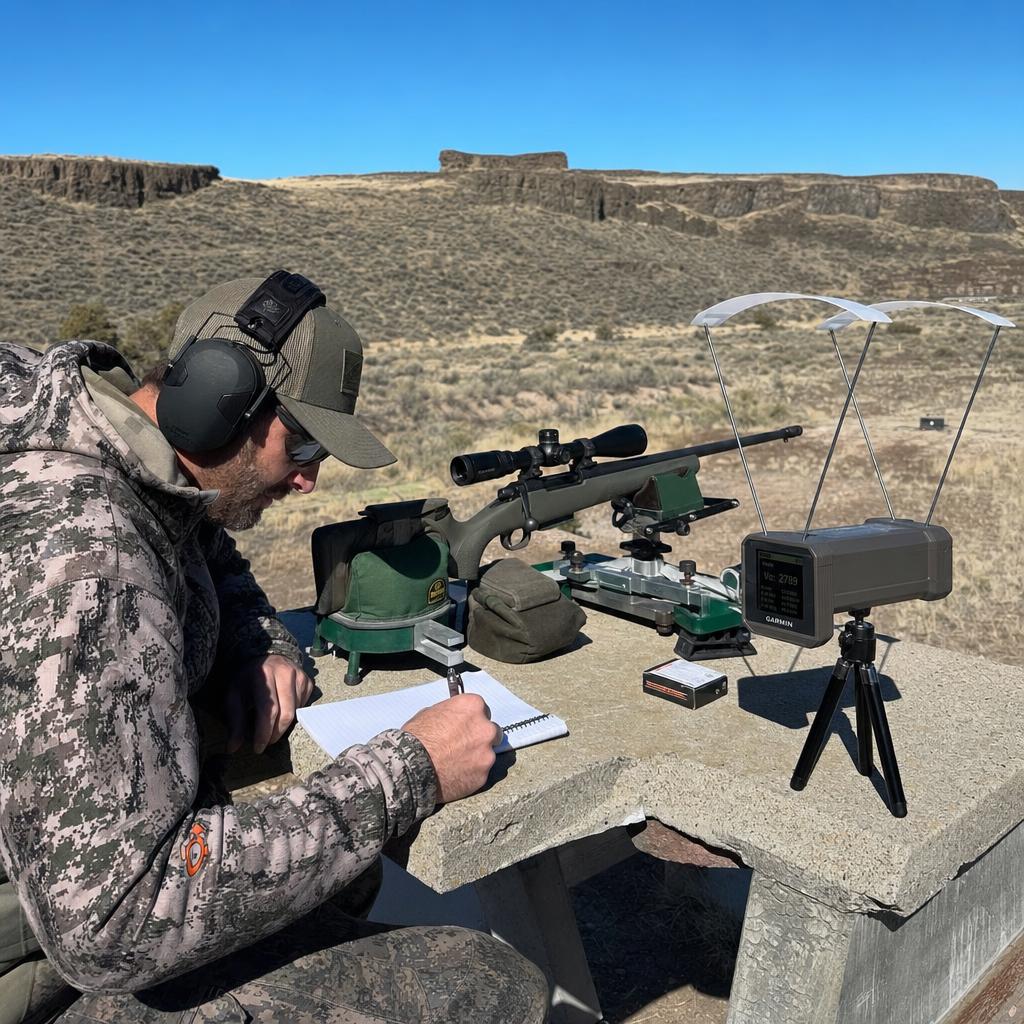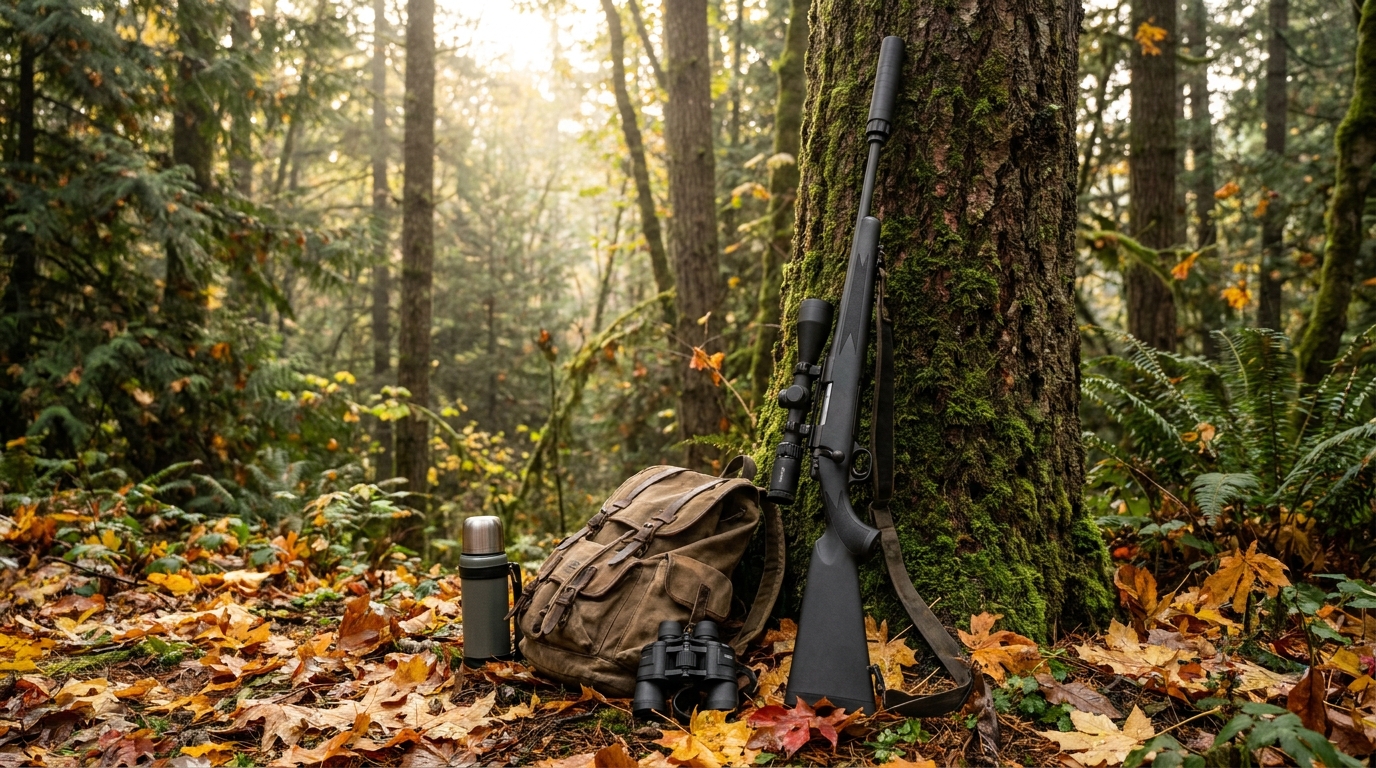
Suppressors — or "silencers" in ATF legal terminology, though nobody calls them that in the field — have moved from novelty to mainstream hunting tool over the past decade. More than 40 states now allow suppressor hunting, and Oregon has been on that list for years. If you've been curious about running a can on your hunting rifle or shotgun but weren't sure where to start, this guide covers the practical reality: what they actually do, how to buy one legally, what to expect in the field, and how to pick the right suppressor for your hunting setup.
What a Suppressor Actually Does
The Hollywood image of a suppressor turning a gunshot into a near-silent pew is fiction. In the real world, a suppressor reduces the report of a centerfire rifle by approximately 20–35 decibels depending on caliber, host firearm, and suppressor design. For context, an unsuppressed .308 Winchester produces about 160–163 dB at the shooter's ear. A quality suppressor brings that to roughly 130–138 dB — still above the 140 dB threshold for immediate hearing damage, but a significant reduction. The practical benefits:
- Hearing protection: Even with the reduction, double up with foam plugs or electronic hearing protection for range use. In the field on a single hunting shot, many hunters shoot suppressed without additional protection — always your call, but the reduction matters.
- Game disturbance: A suppressed shot is dramatically less likely to blow every animal out of the county. Deer and elk that would bolt at an unsuppressed shot sometimes only flinch or look around at a suppressed one. For follow-up shots, this is a genuine advantage.
- Communication: You can actually talk to your hunting partner after a suppressed shot without ringing ears and shouting.
- Muzzle blast and recoil: Most suppressors meaningfully reduce felt recoil and muzzle blast, making rifles more comfortable to shoot and follow-up faster.
Oregon Suppressor Laws
Oregon authorizes suppressor use for hunting under ORS 166.635. Key points for hunters:
- Suppressors are legal for taking game in Oregon when you're otherwise in compliance with hunting regulations.
- You must be the registered owner (or possess it legally under the NFA as a trust/entity beneficiary or as the owner of record).
- The suppressor itself must be registered through the NFA process — no unregistered suppressors, ever.
- Always carry your ATF approval paperwork (Form 4 tax stamp) in the field. Law enforcement can and will ask to see it, especially during out-of-state travel.
The NFA Purchase Process
Suppressors are regulated under the National Firearms Act of 1934 and require additional steps beyond a standard firearm purchase. Here's the current process:
Step 1: Find a Licensed Dealer (SOT/Class III)
You can only purchase a suppressor through a licensed NFA dealer (a Class III FFL with SOT — Special Occupational Taxpayer status). Most gun shops either have this license or can facilitate a transfer from one that does. Pick out your suppressor, pay for it upfront, and it stays at the dealer until your paperwork clears.
Step 2: Individual or Trust?
You can register the suppressor as an individual or as a gun trust (also called an NFA trust or revocable living trust). The trust approach has advantages: multiple people can be listed as trustees and legally use the suppressor, and if you own multiple NFA items, the trust simplifies estate management. Most suppressors today are registered to trusts. An attorney who specializes in NFA trusts can set one up for $150–$300.
Step 3: ATF Form 4 and the $200 Tax Stamp
Your dealer files an ATF Form 4 (Transfer of NFA Item) on your behalf. You'll pay a one-time $200 federal tax (the "tax stamp") at this time. As of 2025, the ATF processes Form 4 transfers for individuals via e-file in approximately 30–90 days — a dramatic improvement over the multi-year waits of a decade ago. Paper submissions take longer.
Step 4: Approval and Pickup
When approved, the ATF returns your Form 4 with the tax stamp. Your dealer calls you, you pick up the suppressor with your stamp, and you're legal to use and transport it. Keep a copy of the approved Form 4 with you whenever the suppressor is in your possession.
Choosing a Suppressor for Hunting
The market has exploded with options. Key decisions to make:
Full-Size vs. Compact
Full-size suppressors (8–9 inches) provide the best sound reduction. Compact cans (5–7 inches) give up a few dB in exchange for a shorter, lighter setup that's more practical in the field. For most hunting use, a mid-size to compact suppressor is the right balance.
Caliber Rating
Suppressors are rated for specific calibers and pressures. A can rated for .30 caliber (like a Ruger PrecisionCan or SilencerCo Omega 300) can run on any rifle from .223 up to .300 Win Mag that uses a .30-caliber or smaller bore. This versatility is the reason most hunting-oriented suppressor buyers go straight to a .30-caliber can.
Top Options for Hunting Rifles in 2025–2026
- SilencerCo Omega 300: Industry benchmark for a full-size .30-cal can. Modular (use it full length or shorty configuration), rated to magnum calibers, proven in the field.
- Dead Air Sandman-S: Tough, direct-thread and QD compatible, excellent performance-to-size ratio. The -L version offers more suppression if you can accept the length.
- Ruger Silent-SR ISB: An integrally suppressed barrel system for Ruger 10/22 — if you're hunting rimfire varmints, this turns a .22 LR into a genuinely quiet setup.
- OSS Helix series: Flow-through design that eliminates first-round pop and reduces backpressure for semi-autos — worth considering for AR-platform hunting rifles.
Muzzle Device and Mount System
Most hunting suppressors use either direct-thread (screws directly onto the muzzle threads) or a quick-detach (QD) mount system. QD mounts let you remove and reattach the suppressor in seconds without a wrench — a significant advantage when you're swapping between rifles or want the option to go un-suppressed for weight. The suppressor and mount must use matching threads (most common: 5/8x24 for .30 cal, 1/2x28 for .22 cal). Your rifle barrel must be threaded — if it isn't, a gunsmith can thread it for $75–$150.
Field Reality Check
After all the paperwork and waiting, here's what you'll find when you actually take a suppressor hunting: it works, and you'll wonder why you waited so long. The first time you make a clean shot on a pronghorn and watch three other bucks stand there confused while you cycle the bolt, it clicks. The first range session where you and your hunting partner can actually communicate and coach each other without ear damage — that clicks too. The suppressor won't make you a better shooter, but it makes the entire experience better — more comfortable, more humane, and more in tune with the actual act of hunting rather than the industrial noise of unsuppressed firearms.
The NFA process requires patience, but the days of multi-year waits are mostly behind us. If you've been on the fence, this is the year to get the paperwork moving. By fall season, you could be running suppressed.