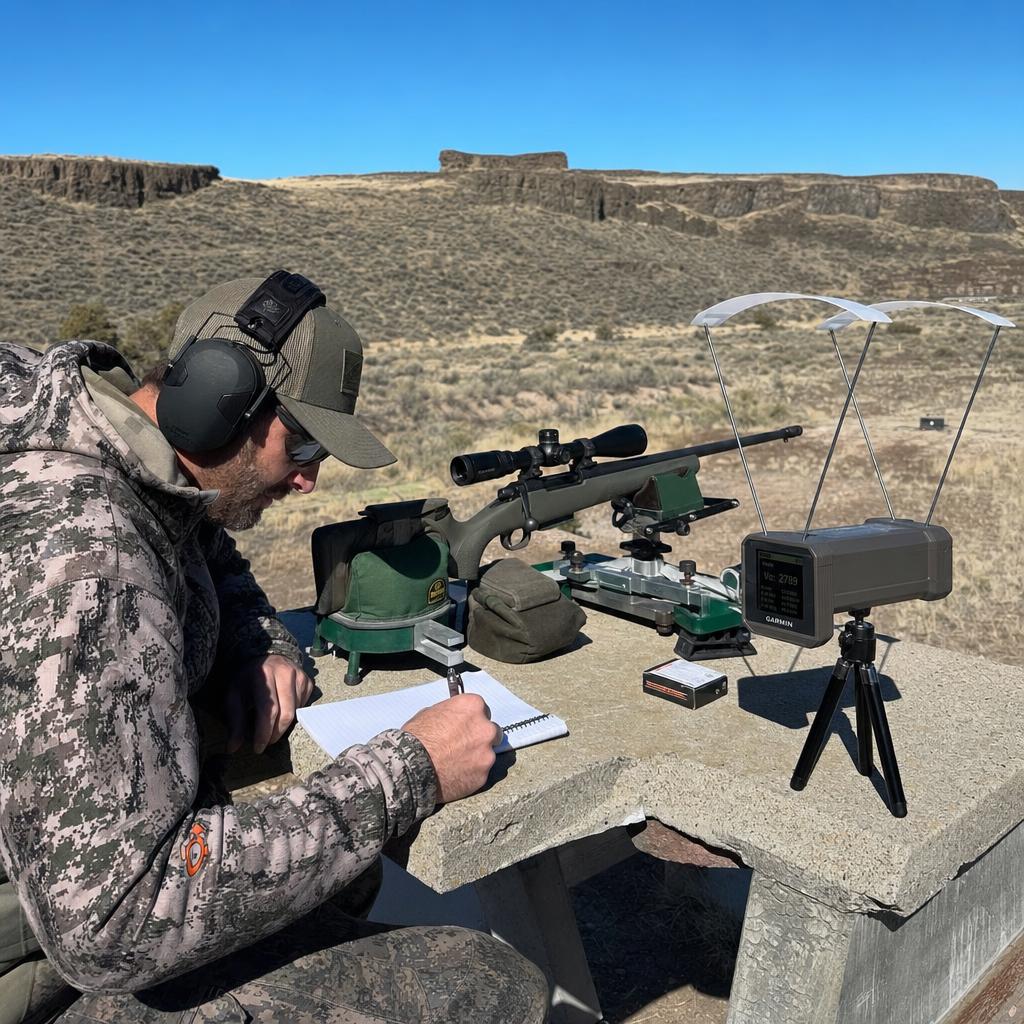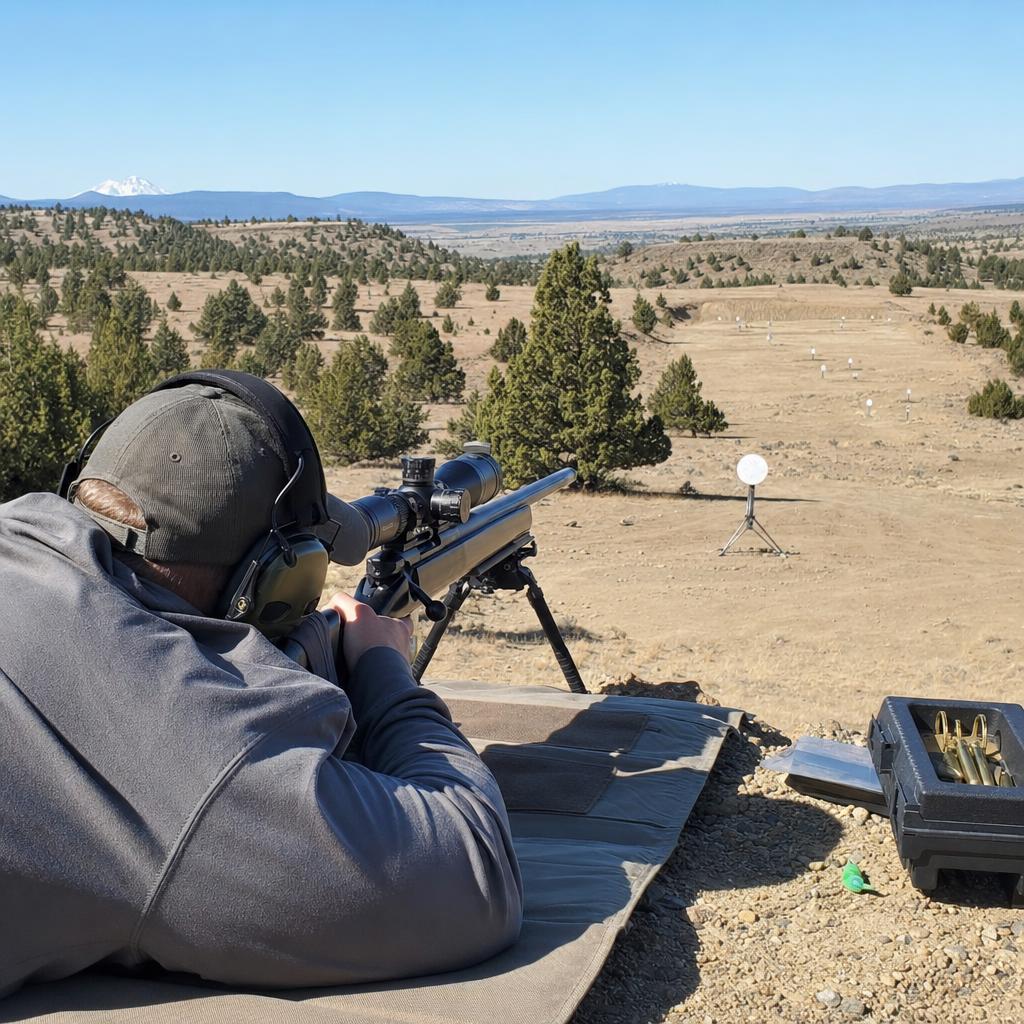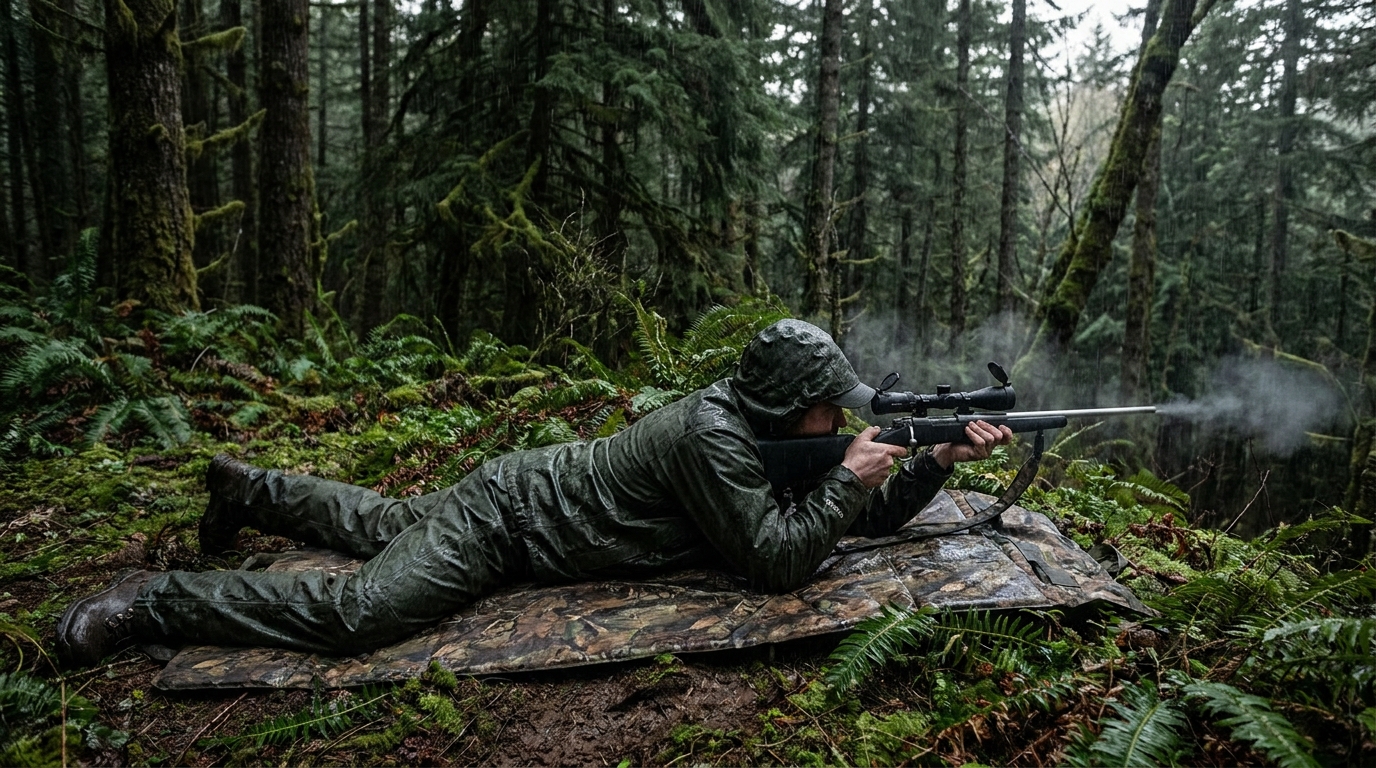
Anyone who's hunted western Oregon knows the feeling: you've glassed a buck across a clearcut, ranged him at 180 yards, and you're watching rain bead up on your scope objective and run in sheets down your barrel. Do you take the shot? Will your optic stay clear long enough to see the crosshairs? Is your ammunition going to perform the way it did on the bench last August?
Wet-weather shooting is a skill set that doesn't get enough attention in hunting media, most of which is filmed and written in the dry West or on fair-weather range days. But for Pacific Northwest hunters—whether you're chasing Roosevelt elk in the Coast Range, blacktails in the Coast Range fog, or ducks in the Klamath Basin downpour—rain is a constant. Here's how to deal with it like a professional.
Rifle Selection and Prep for Wet Country
Stock Materials
Traditional wood stocks absorb moisture, swell, and shift point of impact. A walnut-stocked rifle that shot 1/2 MOA at your August range session may shift a full inch at 100 yards after being exposed to a soaking wet Oregon November. Synthetic stocks—whether injection-molded polymer, fiberglass, or composite—are dimensionally stable in wet conditions. If you're hunting seriously in Oregon's wet zones, a synthetic stock is not a luxury, it's a practical necessity.
Hunters committed to wood stocks should ensure their action is properly pillar-bedded or glass-bedded so the action floats in the stock and is isolated from wood movement. It doesn't solve the problem entirely, but it mitigates it.
Metal Finish
Blued steel is beautiful and rusts. In wet Pacific Northwest hunting conditions, a blued rifle carried through brush and exposed to rain without constant drying and oiling will develop surface rust in days. Stainless steel barrels and actions are the pragmatic choice for wet country. They still require care, but they're dramatically more forgiving. Alternatively, Cerakote or similar coating over a blued action provides excellent moisture protection without sacrificing aesthetics.
Pre-Season Prep
Before wet season hunting, wipe down all metal with a thin coat of quality lubricant (Sentry Solutions TUF-GLIDE, Hornady One Shot, or even a light coat of Rem Oil). Pay special attention to the muzzle crown—water sitting in the bore affects the first shot. Carry a rubber muzzle cap and remove it only when you're ready to shoot.
Optics in the Rain
Lens Covers
Flip-up lens caps are the single most valuable wet-weather optics accessory. Covers from Butler Creek, Vortex, and Leupold flip open instantly with one thumb, keep your objective and ocular lenses perfectly dry until the moment you shoot, and eliminate the need to wipe lenses in the field. Get covers that fit your scope before your season starts, not during it.
Anti-Fog Treatments
Fogged eyepiece lenses are a miserable problem in cold, wet conditions when you're moving hard and generating body heat. Anti-fog treatments (Fog Tech, Cat Crap, or even a very light smear of dish soap wiped off) applied to the ocular lens help significantly. Lens tissues for on-the-fly cleaning are worth packing—keep them in a Ziploc in your chest pocket, not the bottom of your pack.
Waterproofing Ratings
Modern hunting scopes from reputable manufacturers (Vortex, Leupold, Nightforce, Swarovski) are fully waterproof and nitrogen- or argon-purged. They will not fog internally in rain. If your scope is fogging internally—moisture between the lenses—it's compromised and needs to go back to the manufacturer. Don't hunt on a fogged scope; it will cost you a shot when it counts.
Ammunition in Wet Conditions
Primer Sealing
Modern centerfire rifle ammunition from major manufacturers (Federal, Hornady, Winchester, Nosler) uses sealed primers that resist moisture intrusion for reasonable field exposure. Carrying rounds loose in a wet vest pocket for an 8-hour hunt won't compromise your ammunition. What can cause problems is extended submersion or ammunition that's been stored improperly before the hunt—old, unsealed surplus ammunition, improperly sealed handloads, or rounds with visibly degraded case necks.
Handloaders should crimp their primers lightly and consider applying a thin coat of nail polish or Lee liquid alox around the primer pocket if they're hunting extremely wet conditions. Factory ammo doesn't require this.
Magazine and Chamber Management
Keep a round chambered when hunting in rain. Cycling ammunition through your chamber repeatedly introduces moisture and debris into the feeding process. Chamber one round and carry on—it's safer and cleaner. If you're hunting with a bolt-action and expect a long sit in heavy rain, consider whether leaving the action empty and chambering quickly on a shot is preferable. Most experienced wet-country hunters keep the chamber loaded with confidence in their modern ammunition's moisture resistance.
Zero Stability in Wet Conditions
A well-bedded rifle with a quality scope and properly torqued rings should not shift zero when exposed to rain. If your rifle is shifting zero in the rain, the culprit is almost always stock movement (especially wood stocks swelling), scope ring screws that weren't properly torqued, or a scope mount that's allowing movement. Torque your ring screws to manufacturer specifications with a proper torque driver—don't guess. Leupold and Seekins rings typically spec 15–18 in-lbs on the ring screws. Check ring and base screws before every season.
Confirm your zero after any prolonged exposure to wet conditions. A 30-minute session at the range after a rainy-day scouting trip takes 15 minutes and catches problems before the opening day opener instead of during it.
Shot Execution in Rain
Rain affects the shooter as much as the equipment. Key points:
- Don't rush. The urgency to shoot before the rain gets worse is one of the leading causes of poor shot execution. Rain is not going to degrade your ammunition's performance or significantly affect your bullet's trajectory at hunting ranges. Settle your position, control your breathing, and take the shot right.
- Wind estimation is harder in rain. The audible and visible wind indicators you use in dry conditions—grass movement, leaf flutter, mirage—are suppressed in heavy rain. Be conservative at range in significant rain and consider whether the conditions justify the shot.
- Stable position matters more. Wet ground is slippery. A bipod sinks into soft soil at a different angle than dry ground. Take an extra second to verify your position is solid before committing to the shot.
- Wipe the lens, then shoot. One quick wipe with a lens cloth immediately before your shot in heavy rain can be the difference between a clean sight picture and a smeared one. Keep the cloth accessible.
Post-Hunt Care
After a wet hunt, don't put your rifle away wet. Wipe down all exterior metal surfaces with a dry cloth and apply a light protective coating. Remove the stock if possible and allow the action to air dry. Run a dry patch through the bore, followed by a lightly oiled patch. Store the rifle with the muzzle down in a dry environment to prevent moisture from pooling in the action.
Scopes generally require no special care beyond drying the exterior. Don't apply solvents to coated lenses—warm water and a microfiber cloth is the safe choice.
The Bottom Line
Pacific Northwest hunting is wet hunting. The hunters who succeed in this country don't wait for perfect conditions—they prepare for imperfect ones. A stainless, synthetic-stocked rifle with quality waterproof optics, properly torqued rings, and flip-up lens caps will perform reliably in any Oregon weather. The rest is execution. Don't let a little rain between you and the shot you've worked all season for.