Davis Lake sits in a quiet corner of the Deschutes National Forest about 35 miles southwest of La Pine, dammed on its southeast end by an ancient lava flow that crept down from Moolack Mountain roughly 6,000 years ago. It's a shallow, weedy, volcanic-basin lake—the kind of water that gets overlooked by anglers blasting past on Highway 97 toward better-known fisheries. That's exactly why serious fly anglers and float tubers keep coming back to it year after year.
Why Davis Lake Is Different
Unlike the deep, cold cirque lakes common in the Oregon Cascades, Davis is a warm, weedy, vegetation-choked flat with an average depth of around 10 feet. That makes it terrible for trollers and perfect for float tubes. The weed beds—primarily aquatic grasses and emergent reeds along the north shore—hold massive populations of damselflies, callibaetis mayflies, leeches, and chironomids. Big rainbows work these edges methodically, and a well-presented fly or soft-plastic in the right color can produce fish in the 18–24 inch range without breaking a sweat.
Davis also holds a healthy largemouth bass population. The bass share the same weedy structure the trout favor, and they grow surprisingly large in Davis's nutrient-rich water. It's not uncommon to land bass pushing 4–5 pounds in the shallower bays on the north and west ends.
Getting There
From Bend, take US-97 south toward La Pine, then turn west on Forest Road 46 (Cascade Lakes Highway). Davis Lake is accessible via FR 4660 off FR 46, roughly 35 miles from La Pine. The road is paved most of the way and accessible to standard vehicles in summer. Two campgrounds—East Davis and West Davis—sit on opposite shores and both have primitive launches suitable for float tubes, kick boats, and small canoes. No gas motors are allowed on Davis Lake, which keeps the water calm and the fishing pressure manageable.
Float Tube Setup
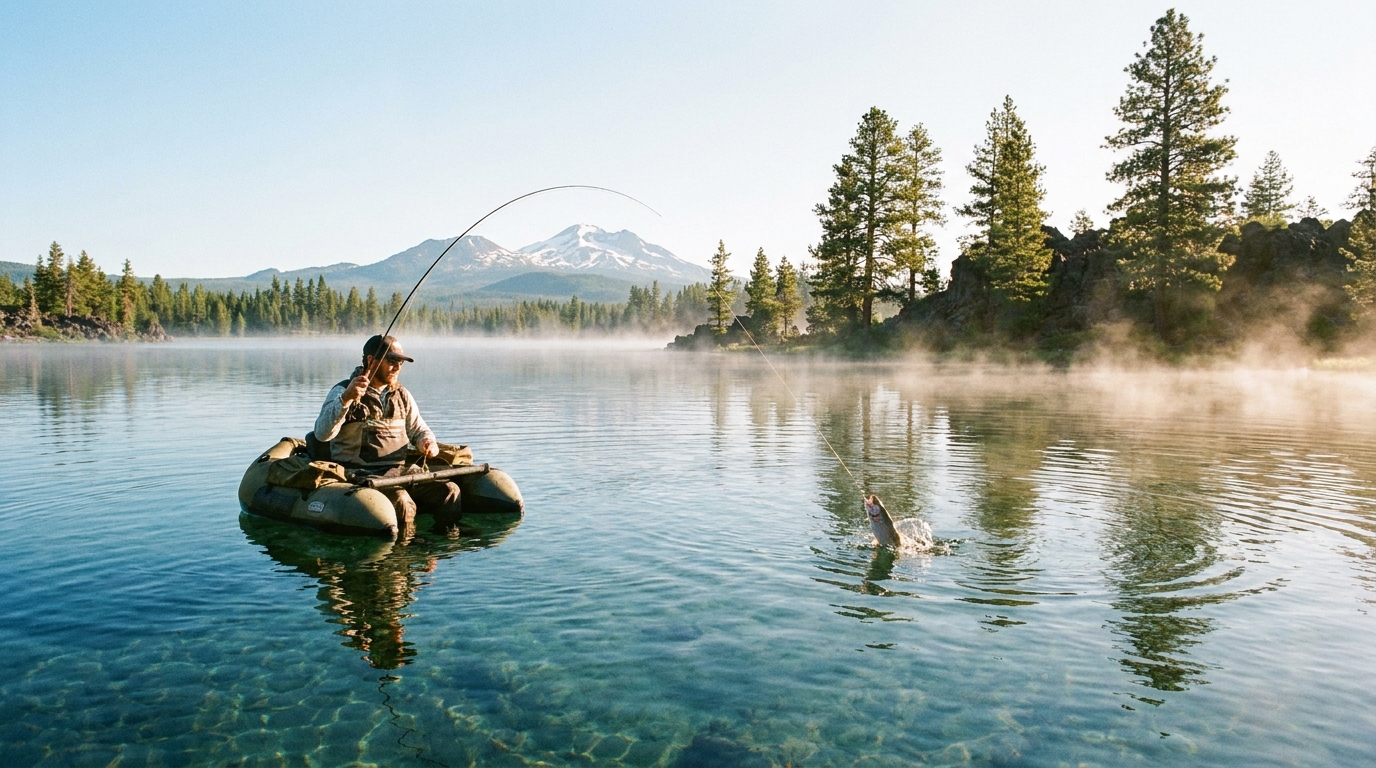
A U-boat or round float tube with flippers is ideal for Davis. The weed beds are dense enough in places that a kayak or canoe can be difficult to maneuver, but fins let you slip through tight channels and hover over productive edges. Bring a stripping basket if you're fly fishing—the weeds will eat loose line in a hurry. Keep your rod tip high on the retrieve to stay above the vegetation.
Waders are necessary even in summer. Davis sits at 4,400 feet elevation and the water stays cold enough to be uncomfortable without neoprene or breathable waders. 3mm neoprene is comfortable for most of the summer season.
Best Times and Tactics
Spring (May–June)
Ice-out typically happens in April, and fishing picks up fast. The callibaetis hatch is the marquee event—these speckled mayflies emerge in clouds from mid-morning through early afternoon on calm days. Match them with a size 14–16 Parachute Adams or Comparadun dry fly and work the edges where the hatch is thickest. Damselfly nymphs fished slow along weed edges are equally productive. Intermediate sink-tip lines outperform floating lines for nymph fishing here.
Summer (July–August)
The peak float tube season. Fish are spread across the lake but concentrate near submerged weed edges early and late in the day. Midday, look for fish holding deeper near the lava rock fingers on the east shore. Leech patterns in black or olive on a slow strip retrieve are reliable killers all season. For bass, Texas-rigged worms or rubber frogs worked over weed mats produce explosive surface strikes in the evening hours.
Fall (September–October)
Arguably the best trout fishing of the year. Rainbows feed aggressively ahead of the cold, and the crowds thin out dramatically after Labor Day. Woolly Buggers, Sparkle Leeches, and large damselfly patterns all work. Water clarity improves in fall, so drop to lighter tippet—5X fluorocarbon is a good starting point.
Regulations and Licensing
Davis Lake is currently open to all legal angling methods, though this has changed in past years—always check the current Oregon Sport Fishing Regulations before your trip. A valid Oregon fishing license and Combined Angling Tag are required. The daily bag limit for trout is standard statewide regulations unless posted otherwise at the site.
What to Bring
- Float tube or kick boat with fins and a pump
- 3mm neoprene or breathable waders
- 5- or 6-weight fly rod with intermediate sink-tip line
- Fly box: Callibaetis dries (size 14–16), damselfly nymphs (size 10–12), Woolly Buggers (black, olive, brown)
- 7-foot medium-action spinning rod for bass (optional)
- Stripping basket
- Sunscreen, hat, and bug spray (mosquitoes are fierce at Davis in June)
- Camp stove—both campgrounds are primitive with no water hookups
The Bottom Line
Davis Lake won't win any awards for scenery compared to the postcard-perfect Cascade lakes nearby, but it consistently produces quality fish for anglers willing to slow down and work the water with intention. The no-motor rule keeps it peaceful, the weed beds keep it productive, and the 4,400-foot elevation keeps the crowds thin. If you've been sleeping on Davis, this is the summer to fix that.