Most Oregon anglers know about the Deschutes River, the Metolius, the Upper Williamson. But ask them about Crane Prairie Reservoir and you'll get a divided room. Half have never fished it. The other half guard it like a family secret. That second group is onto something.
Crane Prairie sits at 4,450 feet on the upper Deschutes drainage, just south of Bend in the Deschutes National Forest. It's a shallow, weedy, nutrient-rich impoundment — about 3,400 acres at full pool — and it grows rainbows and brown trout to sizes that make you question whether the fish you just netted is real. Rainbows in the 18- to 24-inch class are common mid-summer. Browns pushing 5 to 8 pounds are caught every season.
What Makes Crane Prairie Different
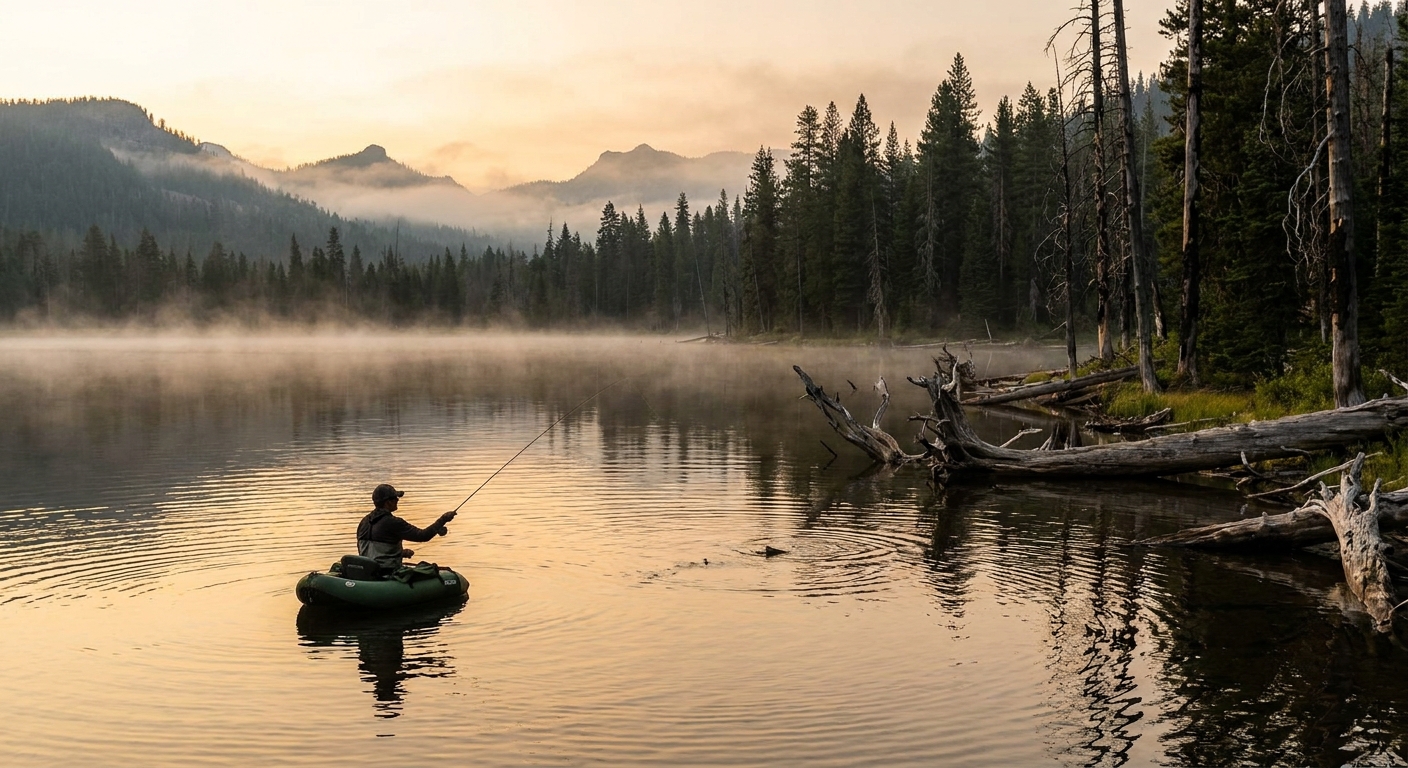
Crane Prairie was originally flooded in the 1920s when the Deschutes was dammed. The standing dead timber — lodgepole snags visible throughout the reservoir — gives the place an otherworldly look and creates complex structure for fish to orient to. Combined with extensive weed beds of aquatic vegetation and a calendar packed with insect hatches, Crane Prairie essentially functions as one giant, very shallow trout lake.
Average depth is around 6 to 8 feet at full pool. That shallow, warm water speeds up insect development and allows the reservoir to support dense invertebrate populations: chironomids, callibaetis mayflies, damselflies, dragonflies, leeches, and scuds. Trout here eat constantly and grow fast.
When to Fish
The reservoir typically opens to fishing in late April, but the best action begins in June once water temperatures stabilize and the hatches kick into gear. Late June through early September is prime time for surface and subsurface fly fishing. The callibaetis hatch runs from mid-morning to early afternoon on calm days throughout the summer. Damselfly nymphs migrate to shore and emergent structure in June and July, triggering aggressive feeding. Chironomid hatches can occur any morning the wind lays down.
Fall, from mid-September through the late-October closure, brings big brown trout activity as pre-spawn fish patrol the shallows. This is when the true trophy hunting happens.
Access and Boat Launches
From Bend, take Highway 46 (Century Drive/Cascade Lakes Highway) south approximately 44 miles. Signs direct you to Crane Prairie Reservoir. There are two main developed campgrounds and boat ramps: Quinn River Campground on the north arm and Crane Prairie Campground on the south end, both managed by the Deschutes National Forest. Day-use launch fees apply.
Motors are allowed but kept slow — the weedy, snag-laden water rewards patience. A float tube, pontoon boat, or small pram lets you work the weed edges quietly and access the best structure without spooking fish.
Effective Techniques and Flies
Chironomid Fishing Under an Indicator
In calm mornings, suspend a chironomid pupa pattern under a strike indicator at depths of 4 to 7 feet, just above the weed beds. Patterns in olive, black, and red/brown with a silver rib in sizes #14 to #18 cover the bases. Fish it motionless or with an extremely slow hand-twist retrieve. Crane Prairie rainbows will inhale a still chironomid with absolutely no hesitation.
Callibaetis Mayfly
The callibaetis hatch is Crane Prairie's most exciting surface opportunity. Nymphs in sizes #14 to #16 fished slowly through weed edges produce well in the pre-hatch window. Once the hatch starts, switch to a Sparkle Dun, Parachute Adams, or Callibaetis Comparadun and watch for risers. The takes are deliberate — trout cruise the surface sipping emergers and adults in a lane. Match their rhythm, not their urgency.
Damselfly Nymphs
Late June and early July, damselfly nymphs migrate from deeper weed beds toward shore and emergent structure. Cast a Swimming Damsel or Olive Marabou Nymph in size #10 to #12 toward the reed edges and retrieve with slow, undulating strips. Strikes can be explosive.
Leech Patterns for Big Browns
Large olive or black woolly buggers and leech patterns fished on sinking lines along weed edges and submerged timber will move the reservoir's biggest brown trout. Retrieve in long strips with pauses. Fall evenings are best, but this technique produces fish all summer when other methods go quiet.
Regulations
Check current ODFW regulations before fishing. Crane Prairie has historically had artificial lures and flies only restrictions with size and bag limits on trout. The slot limit and special restrictions can change year to year — always verify at myodfw.com or pick up the current Oregon Sport Fishing Regulations booklet. A valid Oregon fishing license with Combined Angling Tag is required.
Gear Up Right
- Rod: 5- or 6-weight, 9 to 9.5 feet for indicator fishing and casting into wind
- Lines: Floating line for indicators and dry flies; intermediate or type 2 sink tip for damsel and leech work
- Leader: 12- to 15-foot fluorocarbon for chironomids; 9-foot tapered for dry flies
- Tippet: 4X to 5X fluorocarbon for subsurface; 4X for drys
- Polarized glasses: Essential for spotting fish and reading weed structure
Crane Prairie isn't a walk-up, dip-a-worm fishery. It rewards anglers who pay attention to the hatch, move quietly, and present a fly with patience. Get that right and you'll be holding the kind of fish that made you want to fly fish in the first place.