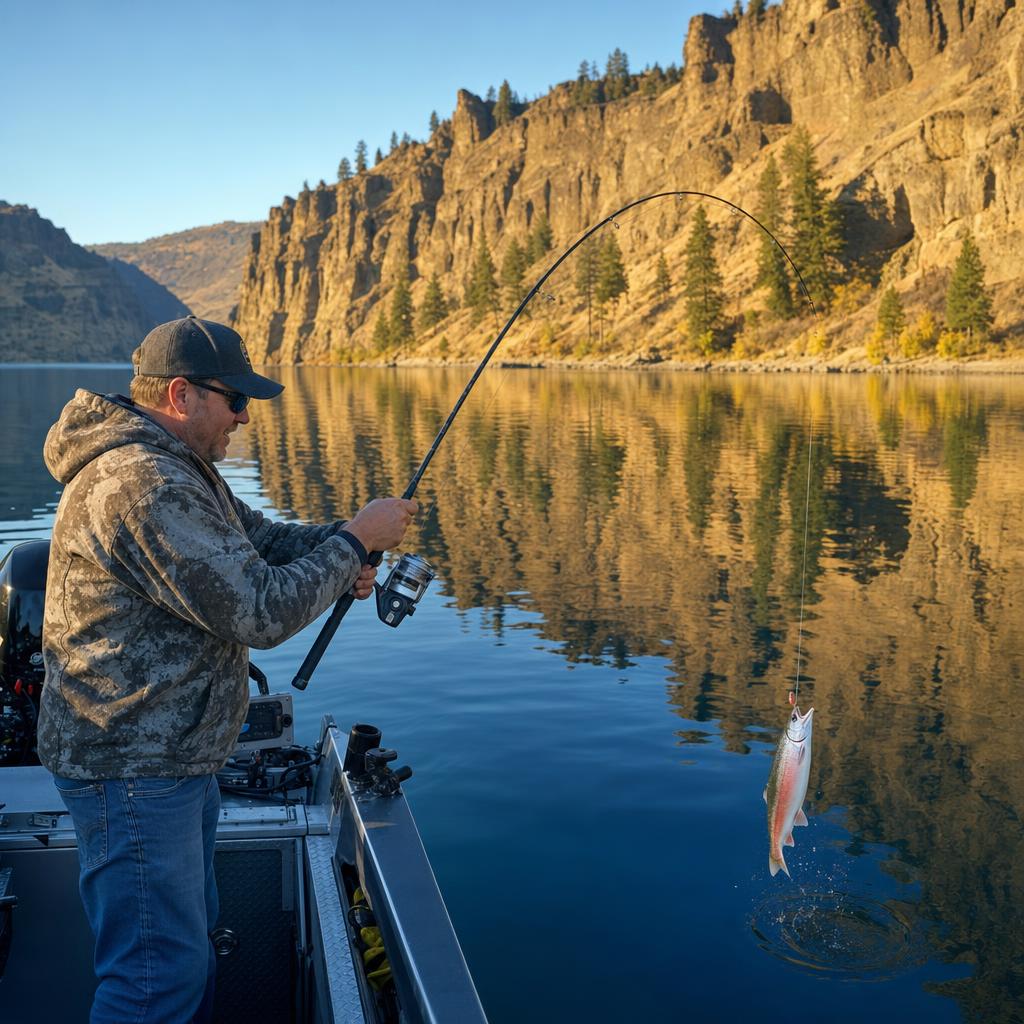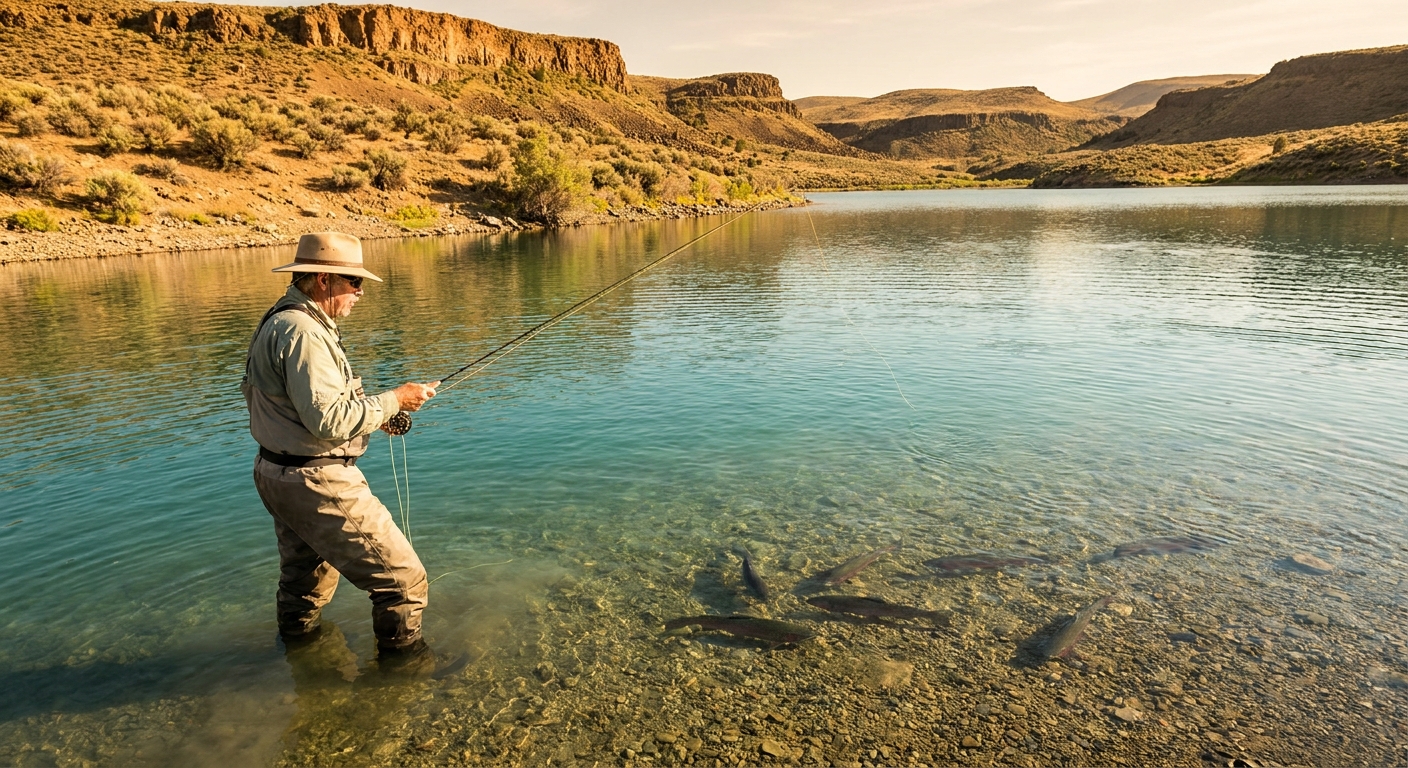
If you mention Ana Reservoir to most Oregon anglers, you'll get a blank stare. Tucked into the remote Warner Valley of Lake County, roughly 80 miles north of Lakeview on Highway 31, Ana Reservoir doesn't show up in the glossy fishing magazines. But it should. Fed entirely by Ana Springs — one of the largest natural springs in Oregon — the reservoir maintains a steady temperature year-round and supports a population of wild redband trout that punch well above their weight class for a high desert fishery.
What Makes Ana Reservoir Special
The magic of Ana Reservoir starts at the source. Ana Springs pushes approximately 150 cubic feet of water per second out of the ground at a near-constant 58–62°F, regardless of season. That cold, clear, well-oxygenated water creates habitat that redband trout thrive in — even in the dead of summer when most Eastern Oregon lakes turn into warm bathtubs.
The redbands here are native fish, the same lineage that has inhabited the Great Basin interior drainages for thousands of years. They're not the hatchery rainbows stocked into a lot of Oregon reservoirs. Expect wild-looking fish with vivid red lateral stripes, heavy spotting, and a fighting spirit that belies their size. Fish in the 12–16 inch range are common; fish pushing 18–20 inches show up regularly for those who know the water.
When to Fish
Ana Reservoir fishes well from ice-off (typically March) through early July, then again in the fall after water temperatures drop back down. Summer is the trickiest season — while the spring-fed inflow keeps things cooler than most high desert lakes, surface temperatures can still climb enough by August to push fish deeper and reduce activity during midday hours.
- April–June: Prime time. Fish are shallow and active. Hatches of midges, Callibaetis mayflies, and early damselflies draw fish to the surface consistently.
- Late June–July: Fish early morning and evening. Damselfly nymph patterns and leeches work well subsurface during midday.
- September–October: Fall sees fish fattening up for winter. This is trophy season — the largest redbands of the year.
Gear and Tactics
Fly Fishing
A 5-weight rod is the workhorse here. The reservoir is shallow enough that a floating line handles most situations from April through June, with an intermediate sink-tip useful in summer for getting nymphs down 4–6 feet. Long leaders (12–15 feet) and light tippet (4X–5X) are standard — the clear, spring-fed water means the fish can see everything.
Top fly patterns for Ana Reservoir:
- Callibaetis nymphs (size 14–16) — Match the dominant mayfly hatch from May through July
- Damselfly nymphs (size 10–12, olive) — Deadly fished on a slow hand-twist retrieve in June
- Chironomid pupae (size 14–18, black, red, or olive) — Year-round producer under an indicator
- Woolly buggers (size 8–10, black or olive) — For searching fish in off-color conditions
- Parachute Adams or Comparaduns — When you see fish rising to the surface
Spin Fishing
Spin anglers do well with small inline spinners (Rooster Tail or Panther Martin in gold or silver, sizes 1–2), small Kastmasters, and PowerBait suspended under a float near inlet areas. The spring channel near the Ana River inlet is a consistent producer early in the season.
Access and Logistics
Ana Reservoir sits on Bureau of Land Management and state-managed land. The main BLM access road turns west off Highway 31 about 2.5 miles north of the small community of Summer Lake. A rough dirt road leads approximately 1.5 miles to the reservoir — high-clearance vehicles are recommended, especially after wet weather.
There is primitive camping available near the reservoir with no fee, though facilities are minimal (no water, no restrooms). Bring everything you need, including water. Cell service is essentially nonexistent in the Warner Valley — download your maps and ODFW regulations before you leave pavement.
Regulations
Check current ODFW regulations before your trip. Ana Reservoir has been managed as a fly fishing and artificial lures only area in past seasons, with catch-and-release rules for wild redband trout. Bag limits and gear restrictions can change annually — always verify the current rules for Lake County Zone 8.
The Full Warner Valley Experience
While you're in the area, the Warner Valley deserves more than a single day. Hart Mountain National Antelope Refuge is 40 miles to the southeast — the hot springs there are world-class and completely free. The Summer Lake Wildlife Area holds excellent waterfowl hunting in season. And the birding in the Warner Wetlands is among the best in Oregon during spring migration.
Ana Reservoir won't give you solitude year-round — locals know about it, and word is slowly getting out. But it remains one of the least-pressured productive fisheries in Oregon for wild redband trout. Get out there before that changes.