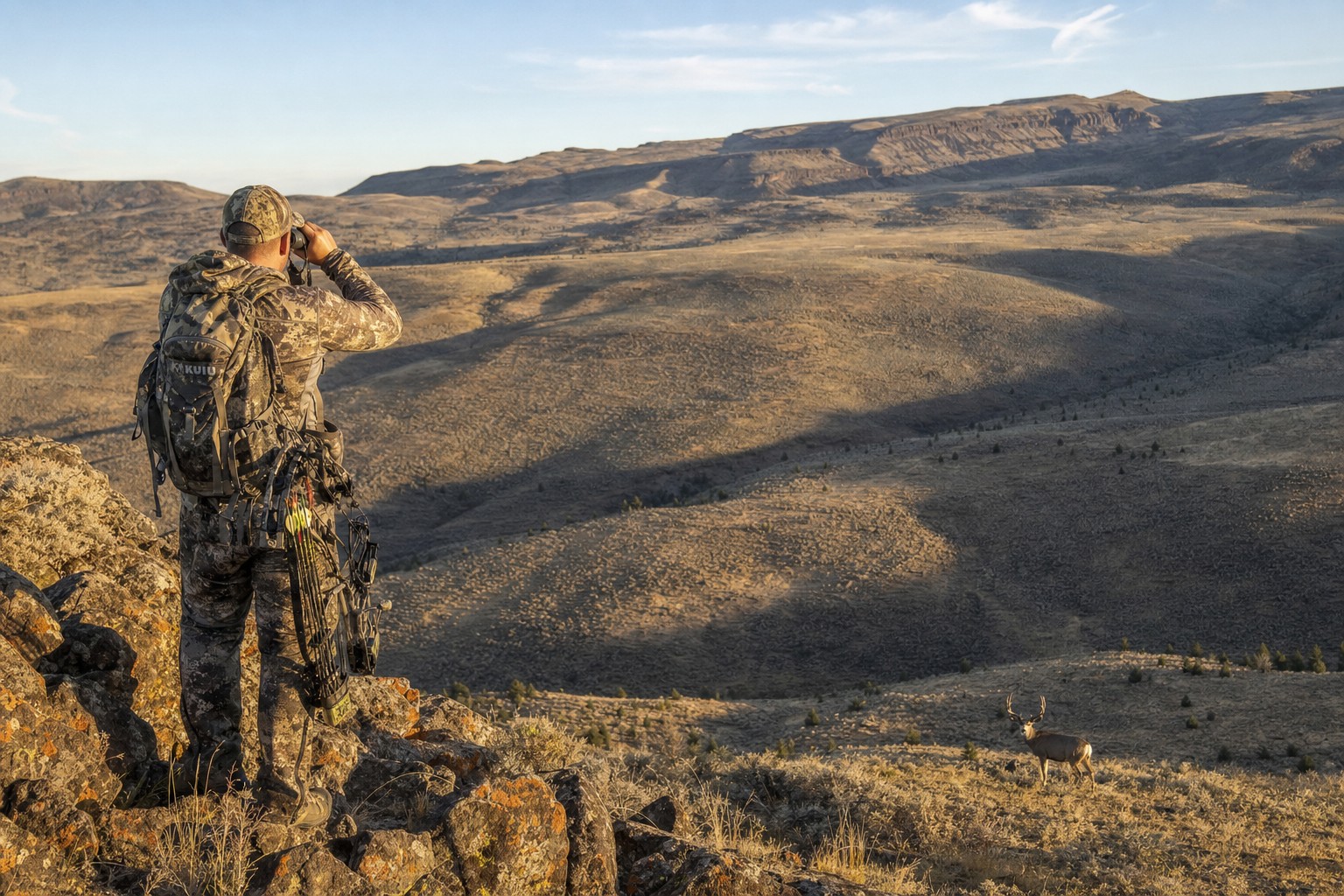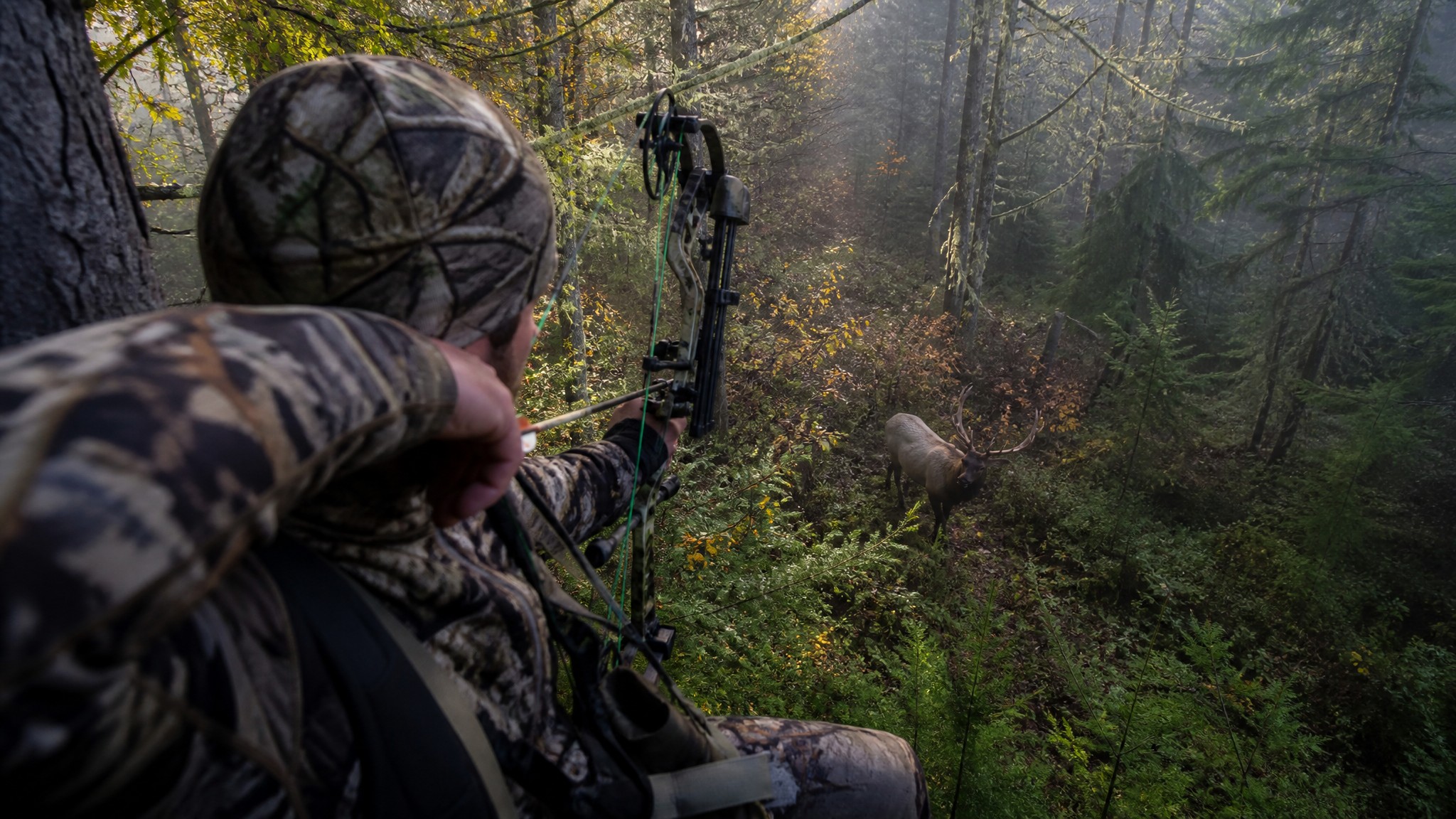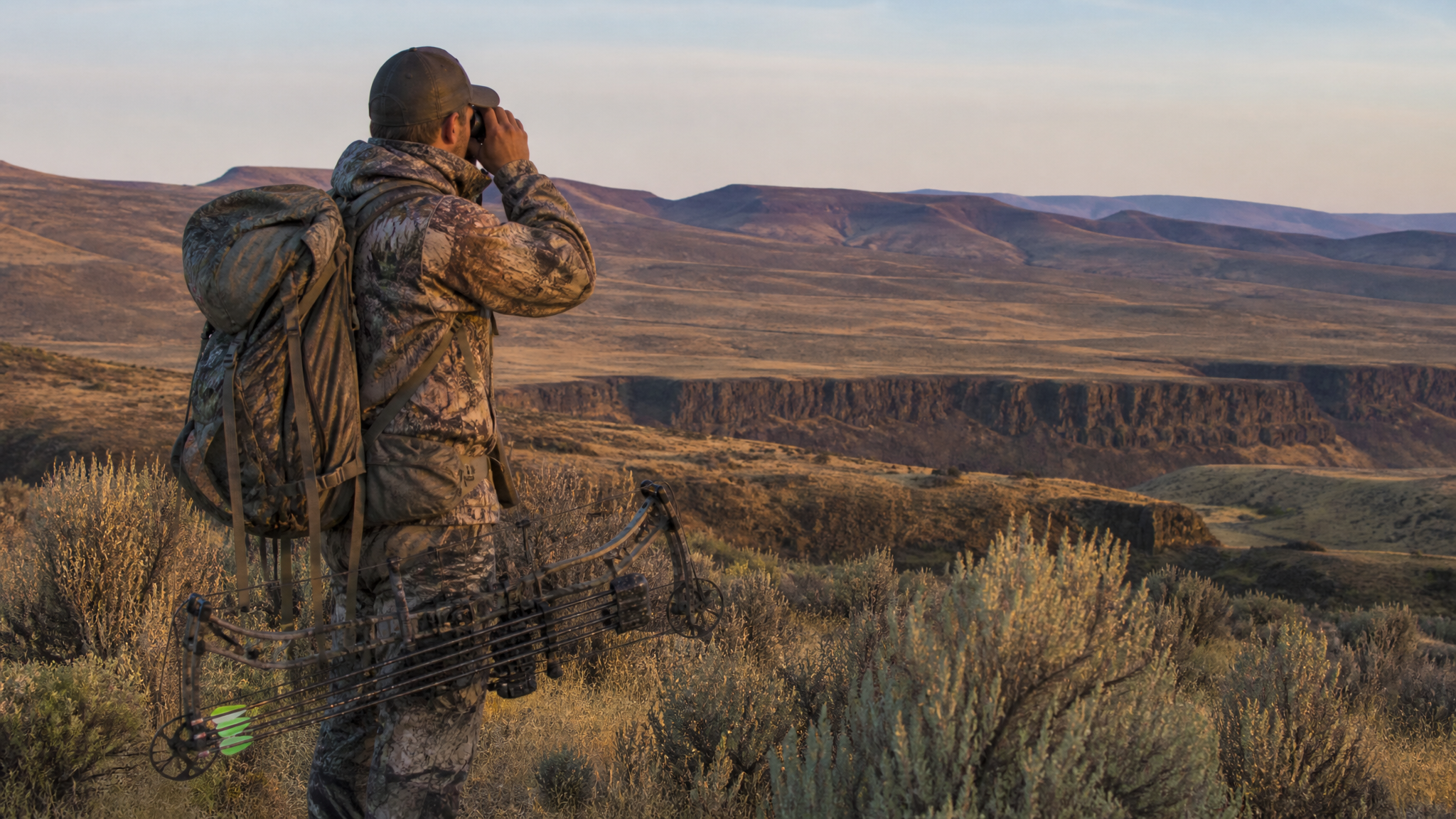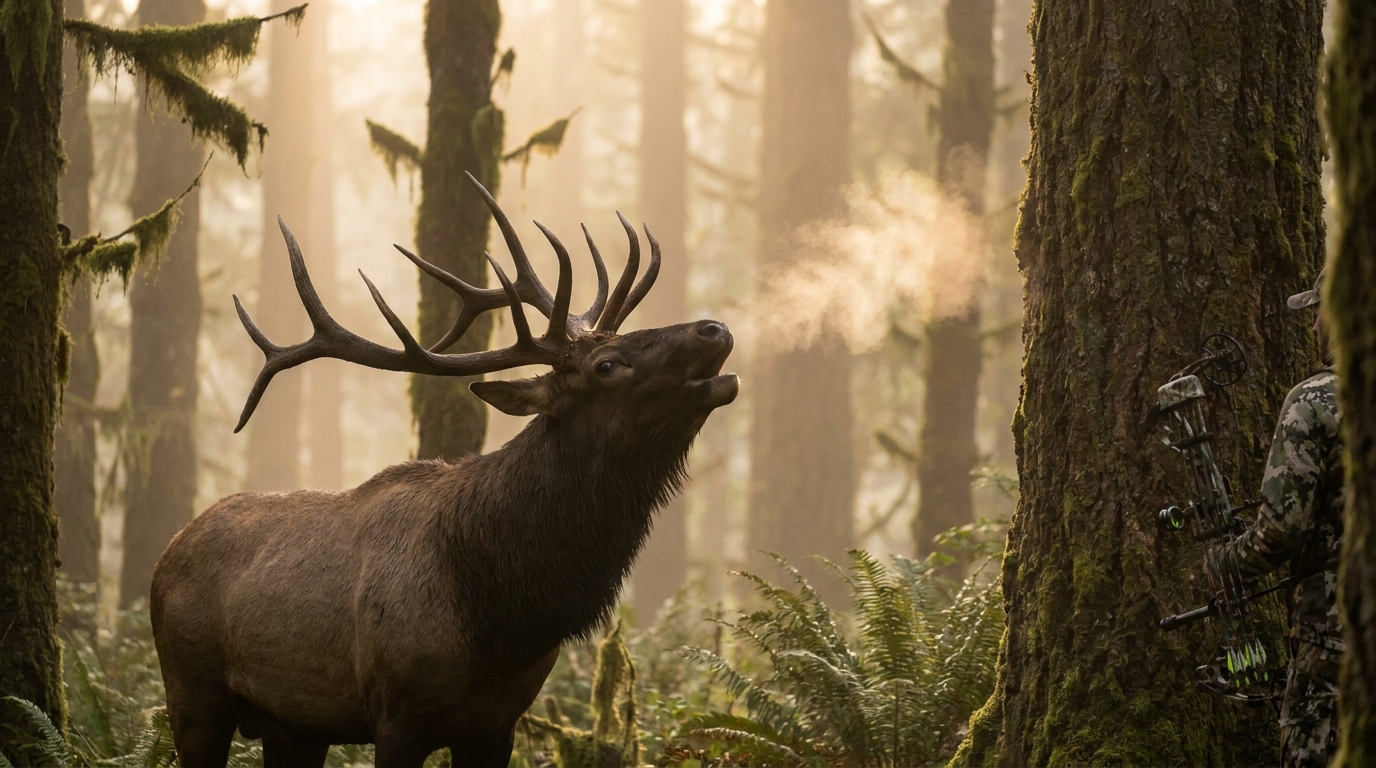
There is nothing in bowhunting that matches the sensation of a screaming bull closing the distance through timber, thrashing brush with his antlers, stopping 30 yards away with his eyes burning and steam rolling off his neck. Elk calling is the chess match that makes it happen—and it is also the thing that most hunters get wrong. Here is what actually works in Oregon elk country during the archery opener.
The Oregon Archery Season and the Rut Calendar
Oregon archery elk season typically opens in late August and runs through September, placing it squarely in the pre-rut and rut window. Understanding where bulls are in their rut cycle during your specific hunt dates determines which calling tactics work and which ones burn out bulls before you can close the deal.
- Late August – Early September: Bulls are in velvet or just hardened up. They are gathering cows and establishing dominance hierarchy but are not yet in full rut. Soft cow calls and subtle bugles work best. Aggressive challenge calls are usually premature.
- Mid-September: This is the window. Bulls are bugling freely, actively tending cows, and will respond aggressively to both cow calls and competitor bugles. The single best two-week window of the Oregon archery season.
- Late September: Peak rut pressure has bulls locked on cows. They may go suddenly quiet. This is when patience and repositioning beats aggressive calling.
Understanding Bull Behavior Before You Call
Most failed calling encounters happen because the hunter starts calling without reading the bull first. Before you reach for a call, answer these questions:
- Is the bull alone, or does he have cows? A bull already with cows is managing his harem and may not come looking for more trouble—he will often circle or hang up. A lone bull is a much easier target for a challenge bugle.
- Is he already heading your way? If so, do not call. Let him come. Over-calling is the single most common mistake in elk hunting.
- What is his body language? A bull with his head up, ears forward, and walking stiff-legged is already fired up. One that is feeding with his head down is less committed—light cow calls to pull him in.
The Call Sequence That Closes Deals
Step 1: Locate with a Challenge Bugle
Early morning, before direct sunlight hits the timber, send out a single medium-pitched challenge bugle. Do not scream—a 4–5 second bugle is enough. Listen for 3–4 minutes. If you hear a response, shut up and close distance before calling again. Every time you call, you are giving the bull a compass bearing to triangulate.
Step 2: Close the Distance
Elk are loud. When a bull bugles and hears a bugle back, he expects to see another elk within a minute or two. Hunters who set up and call from 400 yards away give bulls too much time to locate them by sight, smell, or simply by the lack of elk presence. Get within 150 yards—ideally 80–100—before you start a real calling sequence.
Step 3: Cow Call Aggressively
A bull that knows another bull is nearby wants the cows that bull supposedly has. A series of mew and estrus chirp cow calls from a diaphragm or Phelps reed will often pull him in faster than more bugling. Sound like a hot cow and a distant competitor simultaneously—use a diaphragm for cow calls while your hunting partner bugles from 50 yards behind you. The bull should try to cut you off from the other bull.
Step 4: The Raking Close
If a bull hangs up at 60–80 yards in the timber, thrash a nearby tree limb with a stick. Antler raking suggests a bull is right there with cows. This tactic closes more hung-up bulls than additional calling. Do it hard and aggressively—bulls make a lot of noise.
Calls Every Elk Hunter Needs
- Diaphragm (mouth call): The most versatile tool in your pack. Practice cow mews, estrus chirps, and calf calls at home until they are muscle memory. Leaves your hands free to draw.
- External reed bugle tube: Phelps Game Calls, Rocky Mountain Hunting Calls, and Carlton make quality tubes. An external reed gives you more volume and pitch control for reaching distant bulls.
- Cow call (open reed): A Primos Hoochie Mama or similar push-button call is fine for beginners and works great at close range for finishing bulls.
- Raking stick: A 24-inch section of branch or a collapsed shooting stick. Not technically a call, but it closes more bulls than anything in your bag at 60 yards.
Wind, Terrain, and Setup
All the calling skill in the world evaporates the moment a bull winds you. Elk have a sense of smell that shames most deer, and a bull that smells you is gone—not spooked to a different ridgeline, but gone from your zip code for the rest of the day.
Set up with the wind in your face or a crosswind. In Oregon Cascades and Blue Mountains, thermals shift dramatically as the day warms—plan for upslope thermals after 10 AM and position yourself accordingly. Calling from the bottom of a drainage in the morning only to have your scent stream uphill over the approaching bull is a classic mistake.
Use terrain to funnel elk through shooting lanes. Set up where the bull has to pass within range of a natural choke point: a saddle, a trail through dense brush, or a timber opening he needs to cross to get to you. Do not call from the open. You want to be slightly back in the timber with a clearing in front of you.
Oregon Units Known for Vocal Bulls
Not every Oregon elk unit produces the same calling response. Units with higher bull-to-cow ratios and older age structure tend to have more aggressive rutting behavior. Some historically strong archery calling areas include the Starkey Unit (limited entry), the Desolation Unit in the Blues, and the southern Cascades units (Roseburg, Winchuck, and Dixon). Even in good units, vocal activity fluctuates year to year based on weather and hunting pressure.
High-pressure OTC units near population centers can have bulls that have been called to repeatedly and refuse to commit. In these spots, finesse calling—subtle cow mews, long silent waits, and stealthy repositioning—will outperform aggressive bugling every time.
When to Stop Calling
The most underappreciated elk calling skill is knowing when to be quiet. Once a bull is committed and closing distance, put the calls away. Give him time to close the gap. Move only when his head is behind a tree. Draw only when he is looking away. The calling got him there—your patience and shot execution close the deal.
Oregon archery elk is one of the hardest, most rewarding hunts in the West. Do the work in the off-season on your calling, know your unit, and when that first September morning lights up with screaming bulls in the timber, you will have the tools to make it happen.