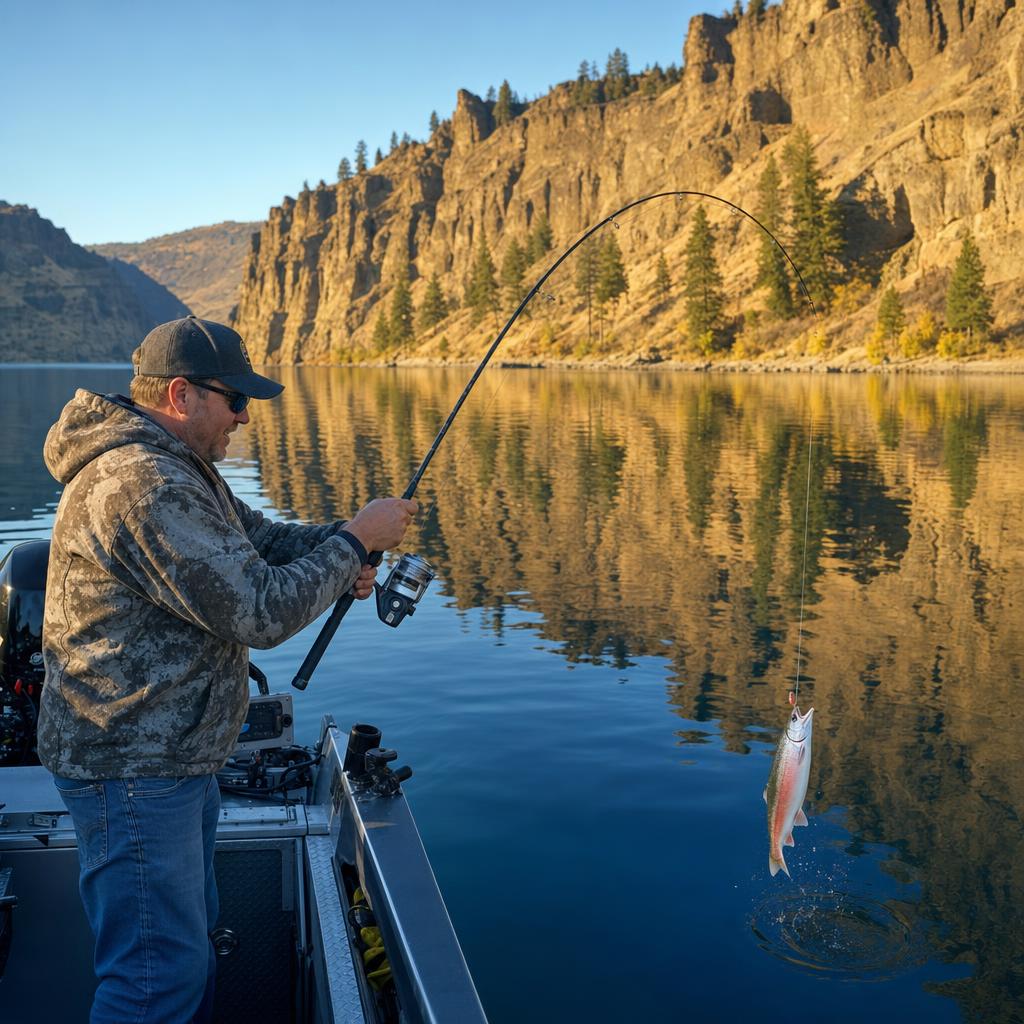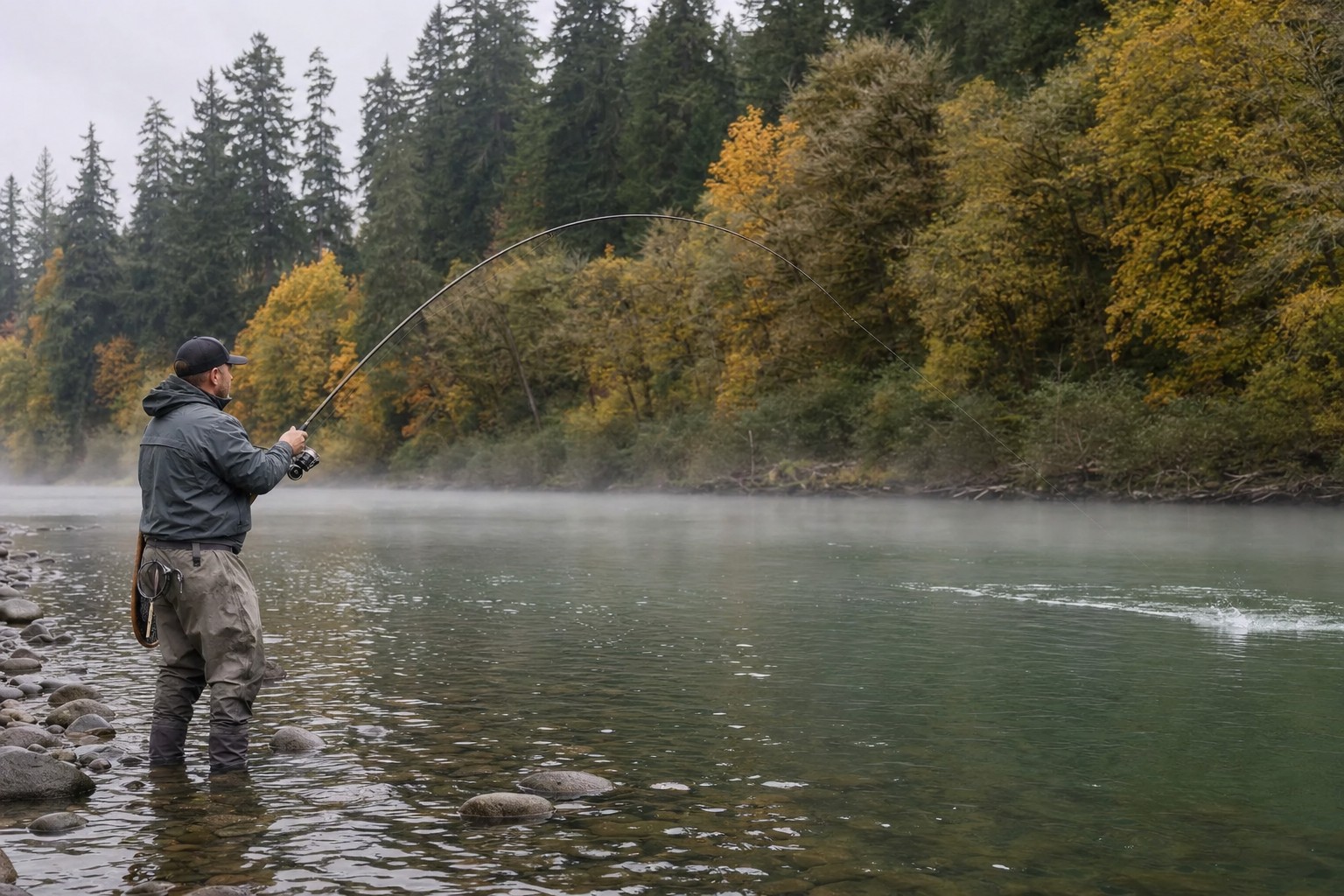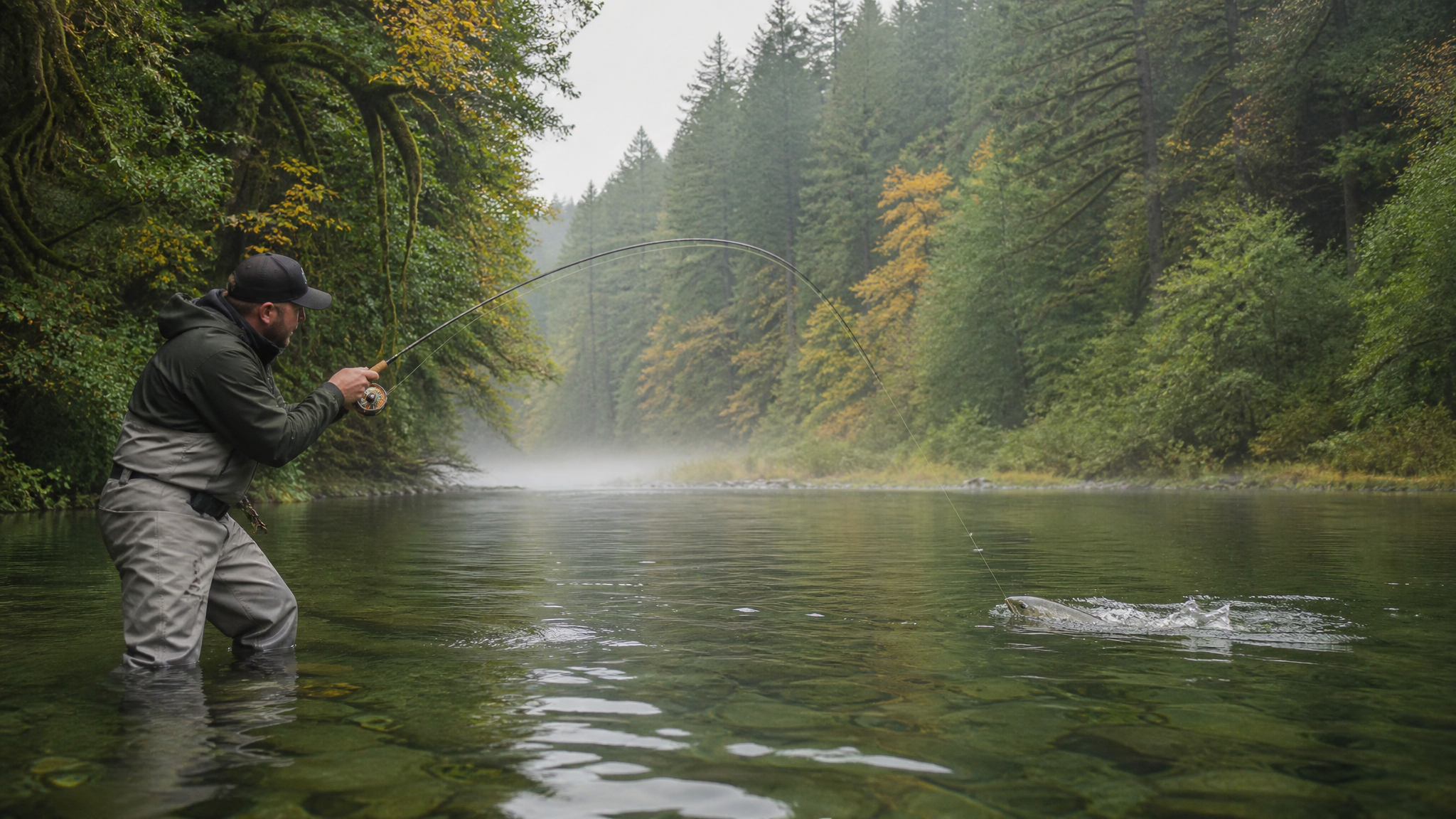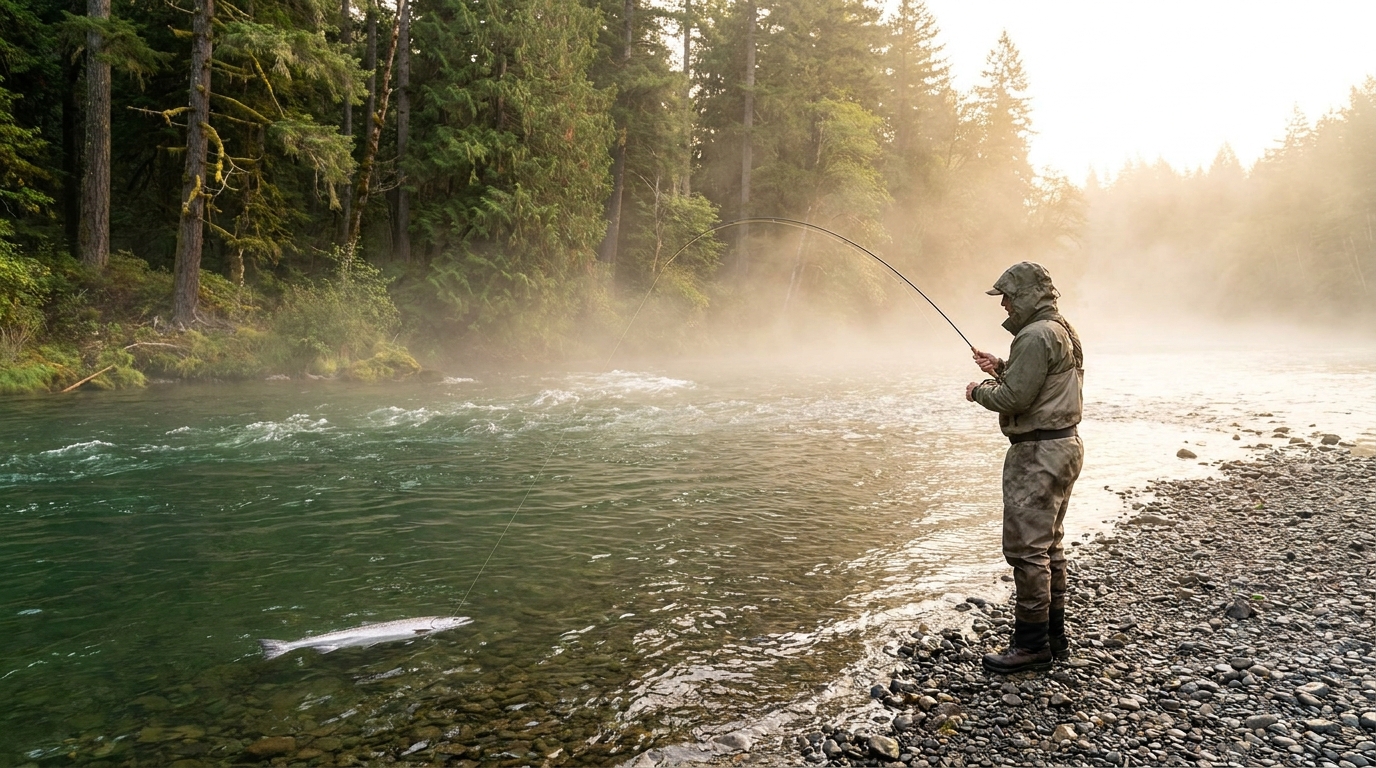
Most Oregon salmon hunters think you need a drift boat, a guide, or a long drive to find quality Chinook fishing. The Clackamas River proves otherwise. This mid-size Willamette tributary punches well above its weight class, delivering springers to 30+ pounds within 30 miles of downtown Portland—and a good share of those fish are taken by wading anglers working the bank. If you know the timing and the holes, you do not need a boat to fill your tag.
The Run: Timing and Numbers
Spring Chinook enter the Clackamas from the Willamette as early as March and push through June, with the peak typically arriving mid-April through late May. In recent years, ODFW counts at the Clackamas hatchery near Carver have ranged from 3,000 to over 8,000 adults in a strong season. Check the ODFW weekly fish counts page—when daily counts start climbing past 100 fish per day at the ladder, the bank holes downstream are worth a serious look.
Water temperature drives everything. Springers are most active and aggressive when temps sit in the 48–56°F range. Use a simple stream thermometer or check USGS gauge data for the Estacada site. Once temps push above 60°F in late June, the fish get lethargic and the bite slows dramatically.
Top Bank Access Spots
The Clackamas has several well-known bank access points that hold fish throughout the run:
- Barton Park (Barton): One of the most productive and accessible stretches on the lower river. Multiple gravel bars and tailouts hold staging fish. Get there early—it fills up fast on weekends.
- Clackamette Park (Oregon City): At the confluence with the Willamette, this spot intercepts fresh fish before they turn up the Clackamas. The deepwater seam along the far bank holds fish on incoming tides.
- Carver Park: Closer to the hatchery and a solid mid-river option. The long gravel bar below the boat ramp gives anglers plenty of room to spread out.
- Riverside Park (Gladstone): Good for an evening session after work. The tailout below the park holds resting fish, especially during higher water.
Gear Setup for Bank Fishing
Springers demand sturdy gear. Most serious bank anglers on the Clackamas run a 9.5–10.5 foot medium-heavy spinning rod or a 9–10 foot baitcasting setup rated for 20–40 lb line. Do not skimp on line—a 30-pound springer in fast current will find every weak point in your setup.
Mainline choices: 30 lb braid with a 20–25 lb fluorocarbon leader is the go-to. The braid gives you sensitivity and zero stretch for positive hooksets; the fluorocarbon provides abrasion resistance near sharp rocks and behaves naturally in clear water.
Hook selection matters more than most anglers realize. A size 2/0 to 4/0 Gamakatsu Octopus hook in red or pink is a proven producer on the Clackamas. Use a snell knot for proper hook alignment—it dramatically improves hookup ratios on hard-mouthed springers.
Productive Presentations
Roe Fishing
Fresh-cured roe is the gold standard. Cure your eggs with Pro-Cure, BorX O Fire, or Fire Cure in pink or orange. Keep bags small—golf ball size or smaller. Fish the seam between fast and slow water at the bottom of a riffle, letting the bait bounce along the gravel in the zone where fish rest.
Spinners and Spoons
When the water is slightly off-color (6–18 inches of visibility), hardware shines. A 3/4 oz Blue Fox Vibrax in chartreuse or a Cleo spoon in orange/gold can draw reaction strikes from fish that will not touch bait. Cast upstream, let the lure sink to depth, and retrieve just fast enough to feel blade vibration. Work the lure through the entire productive depth zone before stepping downstream.
Kwikfish and Plugs
Divers rigged with a Kwikfish K14 or K15 are deadly when you can park the lure in front of holding fish. Wrap the belly of the plug with a thin strip of fresh tuna or sardine. In slower bank holes, you can anchor the diver and let the plug work in the current for 10–15 minutes before moving.
Regulations Recap
Always verify current ODFW regulations before fishing—the Clackamas has specific rules about gear, closures above Cazadero Dam, and hatchery retention requirements. In most years, the lower river from the mouth to Cazadero Dam is open to spring Chinook retention for adipose-clipped (hatchery) fish. Wild fish must be released. Carry your tag, punch it immediately upon retention, and know the boundary markers.
Reading the Water
Springers do not lie in the fastest current—they use it as a highway but rest on the edges. Focus your presentations on three key features: (1) the seam where fast water meets slow, (2) the tailout at the bottom of a run where the river shallows before the next rapid, and (3) deep, dark pools behind large boulders. Fish hold tight to the bottom. If you are not occasionally ticking the rocks, you are probably fishing too shallow.
Local Knowledge Matters
The Clackamas has a passionate local fishery. Stop into The Hook (Gladstone) or Fisherman's Marine and Outdoor (Oregon City) before your trip—these shops track the bite closely and will tell you straight whether fish are moving and which banks are producing. A $10 spool of leader and five minutes of conversation is the best scouting tool on the river.
Spring Chinook on the Clackamas are not a secret, but they reward the anglers who do their homework. Learn the water, get your timing right, and this urban river can produce some of the best bank fishing you will find anywhere in the state.