Why Coos Bay Deserves Your Attention This Summer
Most Oregon anglers chasing striped bass head straight to the Coos Bay area with tackle better suited for salmon and come away wondering why they struck out. Striped bass fishing is a different game — part ambush, part structure, part patience — and Coos Bay delivers some of the best striper action on the Oregon coast from June through September. If you haven't targeted these fish yet, you're sitting on one of the state's most underutilized trophy fisheries.
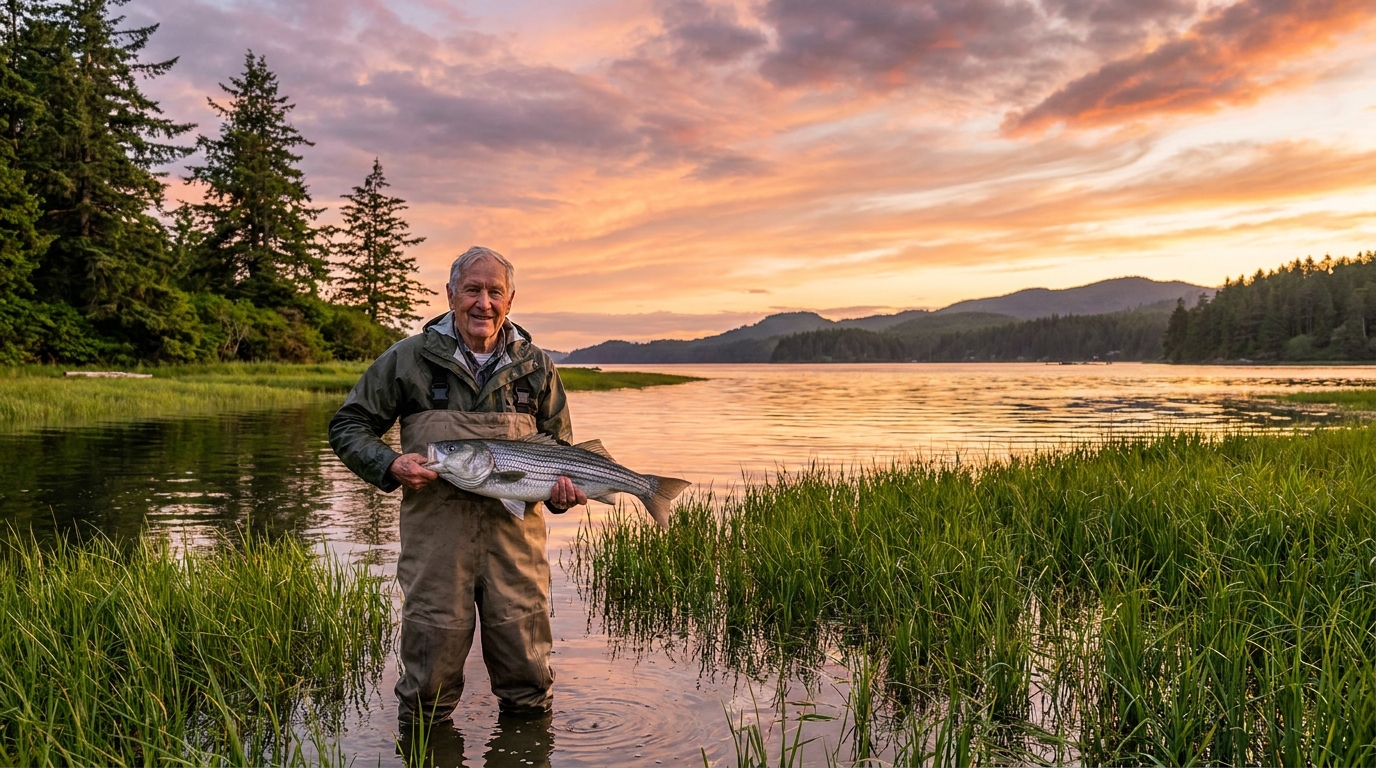
Striped bass aren't native to the Pacific Coast, but they've been here long enough to establish a self-sustaining population in several Oregon estuaries. Coos Bay holds the most consistent run, with fish commonly running 10 to 25 pounds and occasional giants pushing past 40. These aren't the same schoolie bass you'd chase on the East Coast — Oregon stripers are big, aggressive, and willing to eat in both fresh and brackish water.
Reading the Tides: When to Be on the Water
Striped bass in Coos Bay are tidal fish. Full stop. Show up at the wrong stage of the tide and you'll spend four hours watching a flat, featureless waterway. Time your trips around moving water and you'll find fish stacked on structure every time.
The outgoing tide is generally the most productive. As water drains from the upper bay and South Slough, baitfish — primarily anchovies, sand lance, and juvenile salmon — concentrate in current seams at channel edges and creek mouths. Stripers post up at the head of these drainages and ambush everything that passes. The two to three hours of strong outgoing current before low tide are prime.
Incoming tide produces well too, particularly in the upper reaches of the South Slough National Estuarine Research Reserve. As clean Pacific water pushes in, stripers follow it up the channels looking for bait. Work the mouths of the tidal creeks on a strong incoming tide and you'll find fish.
Avoid slack water. Fish move, spread out, and become almost impossible to locate without them pinned to structure by current.
Top Access Points and Locations
Coos Bay itself is navigable by boat from Empire to the upper Charleston reach, but bank anglers aren't shut out. Here are the most productive access points:
- Charleston Marina and South Slough Entrance: The confluence of South Slough and the main bay channel is a consistent producer. Bank access from the Charleston boat basin gives you shots at fish moving in and out of the slough on tidal exchanges. Throw cut bait toward the channel edge during outgoing tide.
- Kentuck Inlet: This small tidal arm off the upper bay holds stripers during high and incoming tides. The road that parallels the inlet provides good bank access. Work lures along the channel edges where current scours the bottom.
- McCullough Bridge Area: The US-101 bridge over the North Slough creates current-breaking structure that stripers love. Cast upstream and let lures swing through the shadow line at the base of the pilings. Access from either bank.
- Isthmus Slough: This upper bay arm is underrated. It's skinny water — most of it less than 10 feet deep — but stripers push into Isthmus Slough on high tides to hunt the flats. Walk the levee roads and sight-fish for surface-feeding fish in the morning.
Tackle and Techniques That Consistently Produce
You don't need specialized gear for Coos Bay stripers, but a few adjustments from standard bass or salmon tackle will put more fish in your hands.
Bait Fishing
Bait is the most reliable method for beginners and veterans alike. Anchovy and herring are the top producers — whole or cut, fished on a sliding sinker rig near the bottom of the channel. Use a 3/0 to 5/0 octopus hook, a 24-inch fluorocarbon leader testing 25 to 30 pounds, and enough weight to hold bottom in the current (typically 2 to 4 ounces). Cast to channel edges and creek mouths. Let the bait soak with minimal tension so fish can pick it up without feeling resistance.
Smelt and small surf perch also work when anchovy is unavailable. Clamming bays usually have bait shops, but call ahead — supply can be hit or miss mid-summer.
Lure Fishing
Stripers are aggressive visual predators and lure fishing can be explosively effective when fish are active. Top choices for Coos Bay:
- Bucktail jigs (1–2 oz): The classic striper lure. White, chartreuse, or a combination. Cast to structure, let it hit bottom, and retrieve with short, sharp hops. This catches fish everywhere from Charleston to Isthmus Slough.
- Swimbaits (4–6 inch): Paddle-tail swimbaits on a 3/4 to 1.5 oz swimbait head excel in the channel. Match the size of the local baitfish. White and silver are the go-to colors in Coos Bay's often-murky water.
- Topwater (summer mornings): When the bay is glassy and fish are pushing bait to the surface in Isthmus Slough or on the upper flats, a Zara Spook or pencil popper will produce heart-stopping strikes. Early morning only — once wind picks up, go subsurface.
- Jigging spoons (2–3 oz): Useful for getting down in strong current when other lures won't sink fast enough. Let it flutter down to structure and retrieve erratically.
Fly Fishing
Fly fishing for stripers isn't common in Coos Bay, but it's viable in the upper sloughs and on the flats during calm high tides. An 8 or 9-weight rod with a sinking-tip or full-sink line and a 4-inch Clouser Minnow in white and chartreuse will do the job. Sight-fishing for pushing fish on the Isthmus Slough flats during a morning high tide is as technical and exciting as any freshwater trout fishing Oregon offers.
Oregon Regulations and Limits
Oregon currently allows the retention of striped bass in coastal bays — check ODFW's current Sport Fishing Regulations for the most current bag and size limits, as these change periodically. As of recent seasons, the limit has been generous compared to salmon and steelhead, reflecting the population health in Coos Bay. There is no license endorsement required for striped bass beyond your standard Oregon fishing license.
Note that some portions of South Slough within the NERR boundary may have additional access restrictions — know before you go. The ODFW office in Charleston is worth a call before your first trip.
Making the Drive Worth It
Coos Bay is a 2.5 to 3-hour drive from the Willamette Valley — far enough to plan for at least two full fishing days. Time a two-day trip around consecutive strong tidal movements, ideally a morning outgoing tide one day and an evening incoming the next. Book lodging in North Bend or Charleston, pick up bait at a local shop the evening before, and be on the water by first light.
Most anglers who make this trip once come back every summer. Coos Bay striped bass fishing is that good, and that overlooked. Show up with the right tackle, read the tides, and fish the structure — the fish will do the rest.