Crossbow hunting in Oregon has evolved substantially. Once limited to hunters with documented physical disabilities that prevented use of a conventional bow, crossbows in Oregon are now legal for general archery seasons under specific regulations that have expanded over recent years. If you've been curious about crossbows — whether you're a conventional bowhunter looking to extend your mobility options or a rifle hunter who wants to experience archery season — now is a good time to understand what's allowed and what works.
Oregon Crossbow Regulations: What's Currently Allowed
Oregon's crossbow rules are managed by ODFW and have changed in recent seasons, so always consult the current Oregon Big Game Regulations before heading afield. As of recent regulatory cycles, the key points are:
- General archery seasons: Crossbows are legal statewide during general archery deer and elk seasons, subject to draw tag or general tag requirements depending on the unit.
- Controlled hunts: Crossbows may be used in controlled archery hunts — check specific hunt descriptions, as some hunts may specify equipment restrictions.
- Physical disability exemption: Hunters with qualifying disabilities have had crossbow access for longer and may have access in additional seasons or zones. Contact ODFW for exemption details if applicable.
- Prohibited seasons: Some special hunts or zones may prohibit crossbows — read the fine print on your specific tag.
The minimum draw weight requirement for crossbows in Oregon is typically 100 pounds, and bolts must be at least 16 inches long with a broadhead of at least 7/8-inch cutting diameter. Verify these specifications in current regulations as they can be updated.
Choosing a Hunting Crossbow
The crossbow market has grown dramatically, and quality options exist at every price point. For hunting Oregon's mixed terrain — from dense Coast Range timber to open high desert — you want a crossbow that balances power, compactness, and reliability.
Speed and Power
Modern hunting crossbows generate speeds from 350 to 450+ fps. For deer and elk hunting at typical archery ranges (under 60 yards), 350 fps is more than adequate. Higher speeds help flatten trajectory at longer ranges but often come with more noise and vibration. Most hunters do well with a crossbow in the 370–410 fps range — fast enough for confident longer shots but manageable in terms of noise and felt recoil.
Width Matters
Reverse-draw and narrow-limb designs have made crossbows much more compact than the wide-limb models from a decade ago. If you're hunting from a blind, a tree stand, or navigating dense brush, axle-to-axle width when cocked matters. Look for models that measure 12 inches or less at full cock for treestand or blind hunting convenience.
Recommended Platforms
- TenPoint Flatline 460: One of the most accurate crossbows on the market, reverse-draw design, narrow profile. Expensive but exceptional build quality.
- Ravin R29X: Compact, fast, and accurate. The HeliCoil technology keeps the cables parallel throughout the power stroke. Popular choice for western hunters who cover ground on foot.
- Excalibur Micro 340 TD: A recurve crossbow — simpler mechanics, more durable in field conditions, and takes down for pack-in hunts. Excalibur's reputation for reliability is well-earned.
- Barnett HyperFlite: A solid value option for hunters who want a capable platform without the premium price tag. Performs reliably at distances that matter for most hunting situations.
Optics and Bolt Selection
Most crossbows ship with a multi-reticle scope designed to compensate for bolt drop at various distances. These work adequately, but aftermarket scopes with illuminated reticles improve low-light usability significantly — a genuine advantage during the last minutes of legal shooting light when deer and elk are most active.
For bolt selection, match bolt weight to your crossbow manufacturer's recommendations. Most hunting setups perform best with bolts in the 400–450 grain range including broadhead weight. Heavier bolts hit harder, penetrate better, and are quieter — all advantages for hunting. Go with 2-inch or 4-inch vanes depending on your broadhead type (fixed blades often require shorter vanes for consistent flight).
Broadheads for Crossbow Hunting
Crossbows drive bolts at high speeds, which can cause some mechanical broadheads to open prematurely in flight. Fixed-blade broadheads generally work more reliably in crossbows for this reason. Slick Trick, G5 Montec, and Muzzy MX-3 are proven fixed-blade options that fly well at crossbow speeds.
If you prefer mechanicals, use designs rated for crossbow speeds — Rage Hypodermic and NAP Spitfire DOA are commonly recommended for crossbow use. Always test your broadhead of choice by shooting tuned field-point groups, then confirming impact with broadheads before hunting season.
Hunting Tactics: Adapting Bowhunting Skills
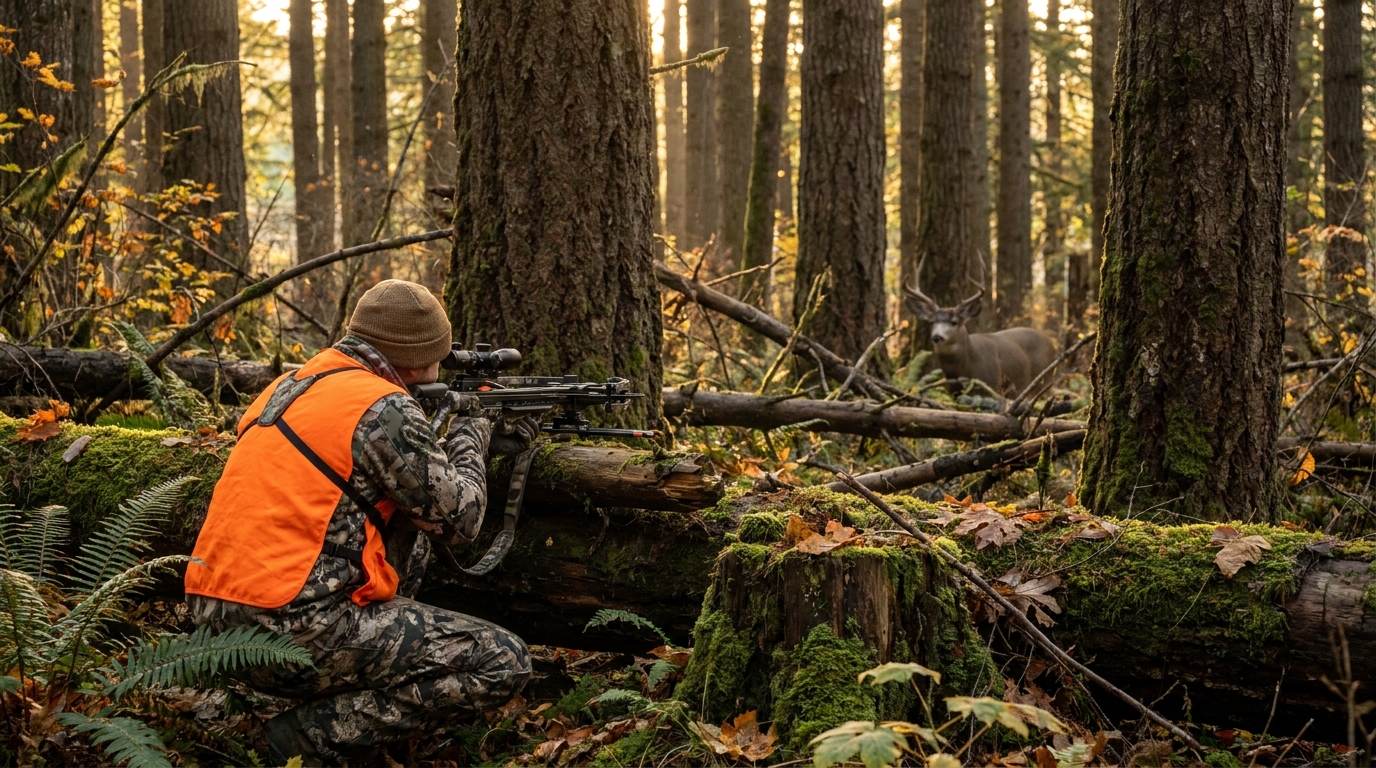
Crossbow hunting tactics mirror conventional archery hunting much more than rifle hunting. You're still working at close range — under 60 yards for most shots, ideally under 40 — which means wind, scent control, and stand or blind placement are just as critical as with a compound bow.
One advantage crossbows offer is that they can be held at full draw without fatigue. This lets you pre-aim and wait for a deer or elk to step into a clear shooting lane, rather than drawing and timing the shot in one motion. In treestand hunting over mineral licks, scrapes, or travel corridors, this is a genuine advantage when an animal is slow to present a clean angle.
Range your lanes before a deer arrives. Know your 30-yard, 40-yard, and 50-yard distances relative to landmarks in your shooting area. Set up your scope reticle for those distances before season. When the moment comes, you should be thinking about shot placement — not frantically estimating distance.
Decocking Safely
One aspect of crossbow hunting that catches new users off guard is safe decocking. Never dry-fire a crossbow — it can destroy the bow and cause serious injury. Most modern crossbows include a cocking/decocking device or a discharge target for safe field decocking. Barnett and TenPoint both offer built-in safe-zone discharge features on some models. If your crossbow lacks a built-in decocking method, carry a blunt or dedicated discharge bolt and use a safe backstop at the end of each hunt. Make decocking protocol part of your pre-season routine before it matters in the field.
Crossbow hunting opens archery season access to hunters who couldn't participate otherwise and extends the season options for experienced bowhunters. Approach it with the same discipline and close-range ethics you'd bring to a compound bow, and you'll find it a deeply rewarding way to hunt Oregon's deer and elk.