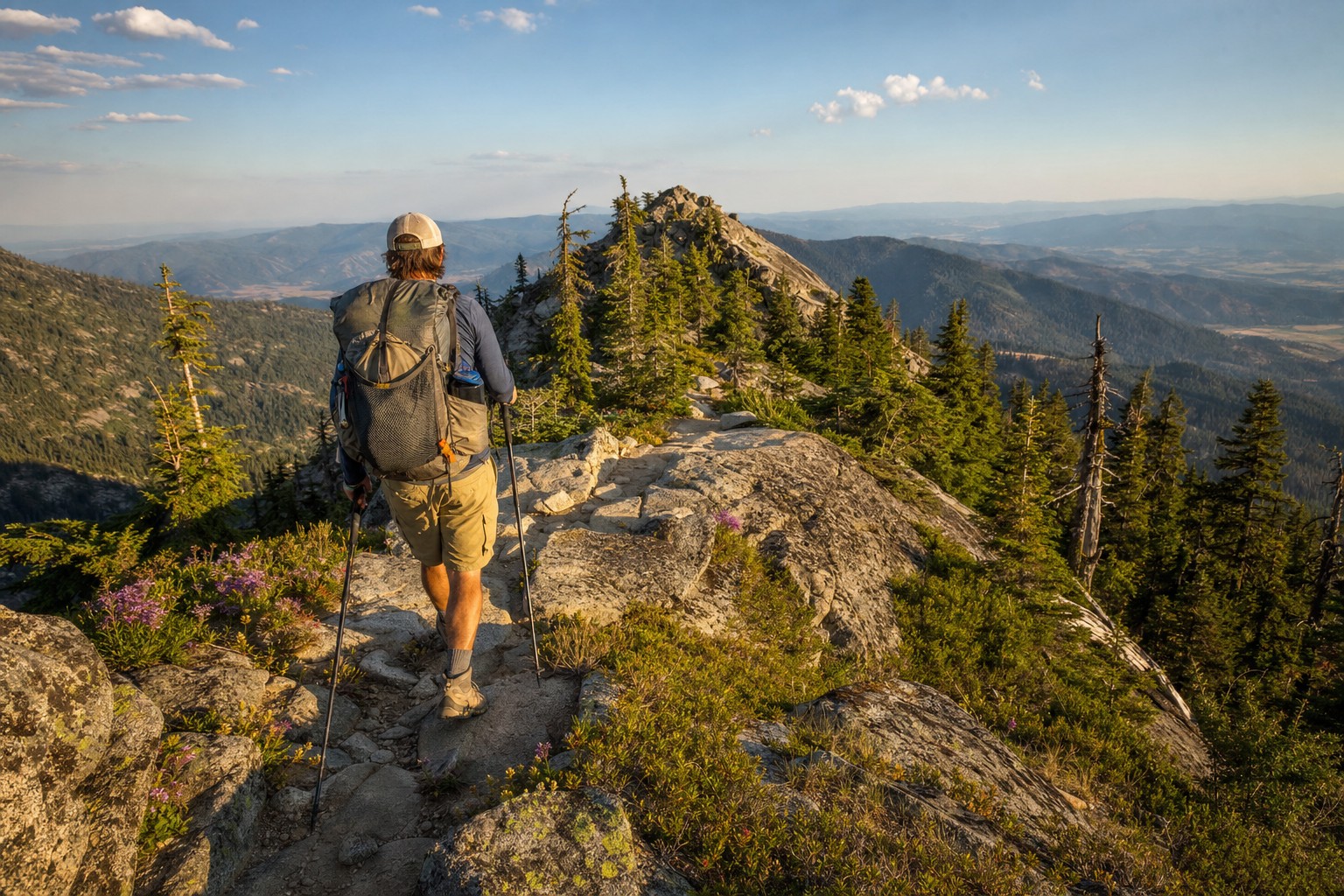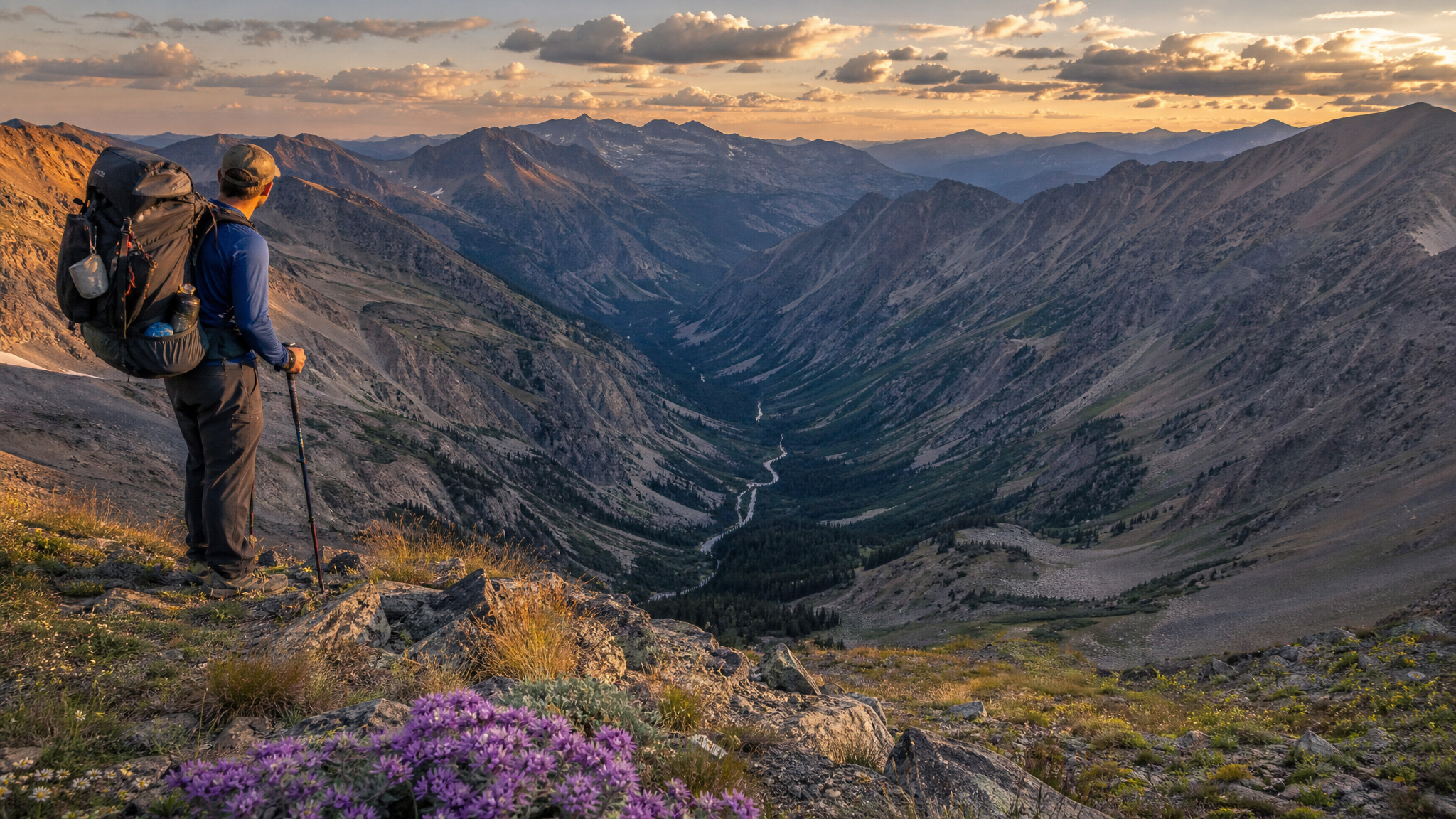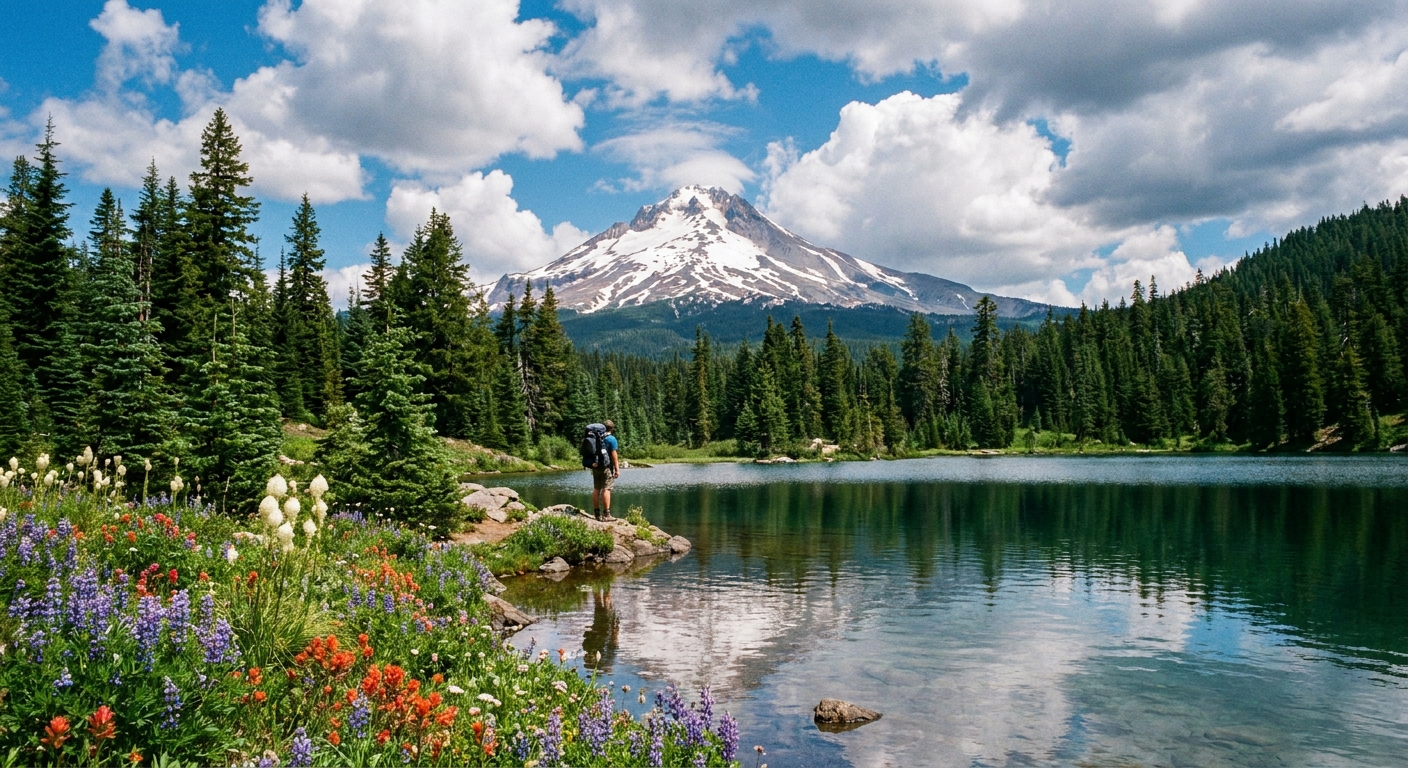
Drive south from Bend on Highway 97 toward Crescent and you pass through high desert ponderosa country that gives no hint of what waits to the west. Turn toward the Cascades and climb into the Willamette National Forest, and eventually a glaciated volcanic summit comes into view: Diamond Peak, 8,744 feet, rising above a landscape of subalpine lakes, pumice flats, and dense lodgepole forest. The Diamond Peak Wilderness sees a fraction of the traffic that the Three Sisters, Crater Lake, or even Mount Jefferson attract, which makes it one of Oregon's most rewarding quiet-season destinations for backpackers who do their homework.
Why Diamond Peak
The wilderness is compact: roughly 52,000 acres straddling the Lane and Klamath county line. Within that area you get a genuine volcanic summit with a non-technical scramble route, a dozen named lakes ranging from shallow lily-pad basins to clear blue alpine pools, and a section of the Pacific Crest Trail running along the mountain's western flank. Solitude is real here — even on summer weekends you can camp at lakes a mile off the PCT without seeing another soul.
The best season runs from late July through September. Snow can linger on north-facing slopes and high passes into July in typical snow years, and Diamond Peak's summit holds snow on its upper northwest face well into August. Plan accordingly: call the Crescent Ranger District before your trip to get a current conditions report.
Getting There: Trailheads and Access
Emigrant Pass Trailhead (Primary East-Side Access)
From Crescent on Highway 97, take Highway 58 west approximately 3 miles, then turn north on Forest Road 60 (also signed as Crescent Lake Highway). Continue about 5 miles to the junction with Forest Road 6010. Turn west on FR 6010 and drive approximately 3 miles to the Emigrant Pass Trailhead. This gives you direct access to the east side of the wilderness and the Lakeview Mountain and Digit Point trails.
Divide Lake Trailhead (West-Side Access)
From Highway 58, turn north on Forest Road 2149 near the Willamette Pass ski area. Drive approximately 3 miles to the trailhead at the road end. This is the primary access point for Divide Lake, the Marie Lake route, and the PCT connection on the west side of Diamond Peak. Most loop itineraries begin here.
A Northwest Forest Pass is required at both trailheads. Self-issue wilderness permits are available at the trailhead register.
The 2-Day Loop: 18 Miles, Divide Lake Trailhead
This loop connects the PCT, the Marie Lake trail, and the Diamond Peak summit approach into a satisfying two-day itinerary. Total distance is approximately 18 miles with roughly 3,000 feet of cumulative elevation gain. It is achievable for fit hikers with moderate backpacking experience.
Day 1: Divide Lake Trailhead to Marie Lake (approximately 9 miles)
From the Divide Lake Trailhead, the trail climbs gradually south through lodgepole and mountain hemlock forest before reaching Divide Lake at about 2 miles. The lake sits in a shallow basin and is a pleasant rest stop with good campsites, though most of the better camping on this loop is further in. Do not camp here on Day 1 unless conditions require it.
Continue south and west to intercept the Pacific Crest Trail. Turn south (left) onto the PCT and follow it along the western flank of Diamond Peak through some of the most scenic terrain in the wilderness. The trail traverses pumice slopes with open views and drops to cross several small streams before reaching the junction with the Marie Lake trail at approximately 7 miles total.
Turn east onto the Marie Lake trail and climb 1.5 miles to Marie Lake, a beautiful subalpine basin at 6,680 feet with deep blue water, meadow shores, and excellent campsites along the north and east sides. Filtered water is available from the lake. Camp here and let the silence settle in.
Day 2: Marie Lake to Diamond View Lake, Summit Approach, Return (approximately 9 miles)
From Marie Lake, the summit approach begins on an unmaintained user trail that heads northwest and then north up Diamond Peak's lower south and west slopes. This route is not shown on all maps — look for the most-traveled boot path heading uphill from near the lake's outlet. The scramble to the summit crosses talus and pumice fields and steepens considerably in the final 600 feet. The summit area is rocky and exposed with spectacular views: Mount Jefferson and the Three Sisters to the north, Crater Lake country to the south, and the desert plateau of Eastern Oregon stretching to the horizon. Allow 3 to 4 hours round-trip from Marie Lake for the summit and back.
After returning to Marie Lake, pack up camp and follow the trail east toward Diamond View Lake, roughly 2 miles from the camp. Diamond View sits at a slightly lower elevation and has a different character — shallower, with warmer water and more wildflower growth along the shore. Good views up to the peak itself. Continue east and north on the trail system, descending through forest back toward Divide Lake and the trailhead. The return section is mostly downhill and can be covered efficiently.
Camping, Water, and Leave No Trace
Camp at least 200 feet from lake shores and streams as required in wilderness areas. Marie Lake and Diamond View Lake are the most popular camping destinations on this loop; arrive before 3 PM on summer weekends to secure a site. Water sources are reliable throughout the route from snowmelt and lake inlets through early September. Treat or filter all water. Bear canisters are not required but are recommended; hanging food on a bear line is the standard practice here.
What to Pack
Temperatures drop sharply after sunset at elevation, even in midsummer. A sleeping bag rated to 20 to 25 degrees Fahrenheit is appropriate for July and early August nights. The summit approach requires approach shoes or light trail runners with ankle support due to loose pumice and talus. Bring trekking poles — the descent from the summit is steep and the pumice is unstable underfoot.
- Navigation: Download the USGS Diamond Peak quad or load the route on Gaia GPS or CalTopo before leaving cell range. The summit approach trail is not maintained and GPS is useful.
- Bug protection: Mosquitoes are present near lake shores in July and early August. Bring head net and insect repellent.
- Layers: Wind on the summit ridge can be sustained and cold. A puffy jacket and wind shell belong in your pack regardless of the forecast.
Permits and Regulations
No advance permit or reservation system is currently in place for the Diamond Peak Wilderness. Self-issue permits are completed at the trailhead register. A Northwest Forest Pass is required for vehicle parking at the Divide Lake and Emigrant Pass trailheads. Check the Willamette National Forest website before your trip for any updates to regulations or fire restrictions, which can be in place through much of the summer in dry years.
Why This Trip Matters
Oregon has no shortage of spectacular wilderness. What the Diamond Peak Wilderness offers that the better-known areas increasingly cannot is space and quiet. The trail system is well-maintained, the scenery is legitimate high-Cascades alpine, and the summit is a real objective without requiring technical climbing. For any Oregon backpacker who has checked off the Three Sisters and Eagle Cap and is looking for the next destination, Diamond Peak belongs near the top of the list.