The Arrow Rest Decision That Affects Every Shot You Take
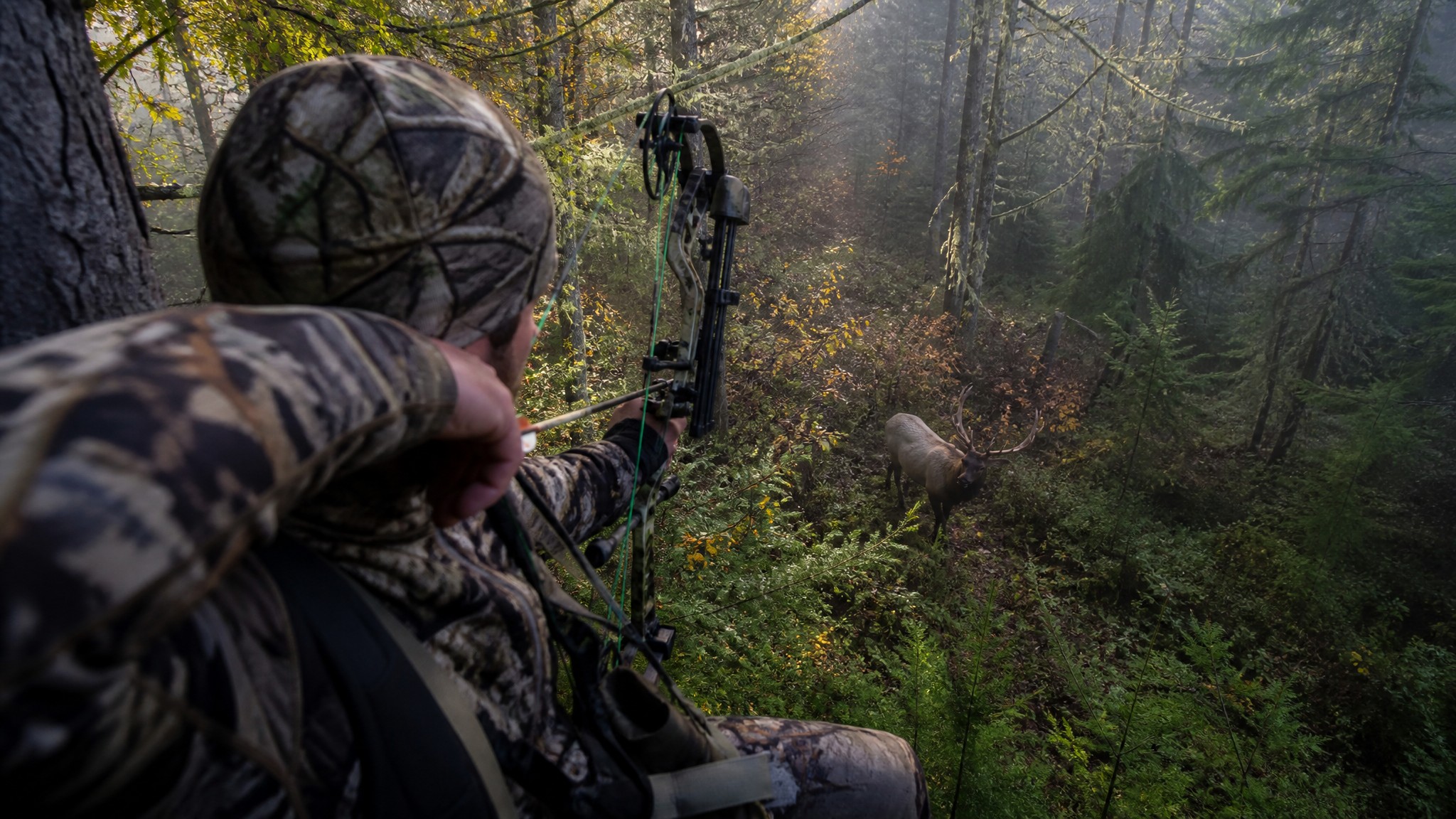
Ask ten bowhunters which arrow rest they prefer and you'll get eleven opinions. The drop-away vs. whisker biscuit debate has been going on for decades, and both sides have valid points — because both rests genuinely work for hunting. The question is which one works better for your hunting situation, your bow setup, your shooting style, and the conditions you encounter in the field. This breakdown cuts through the marketing noise and gives you what you actually need to make the right call.
How Each Rest Works
The Whisker Biscuit
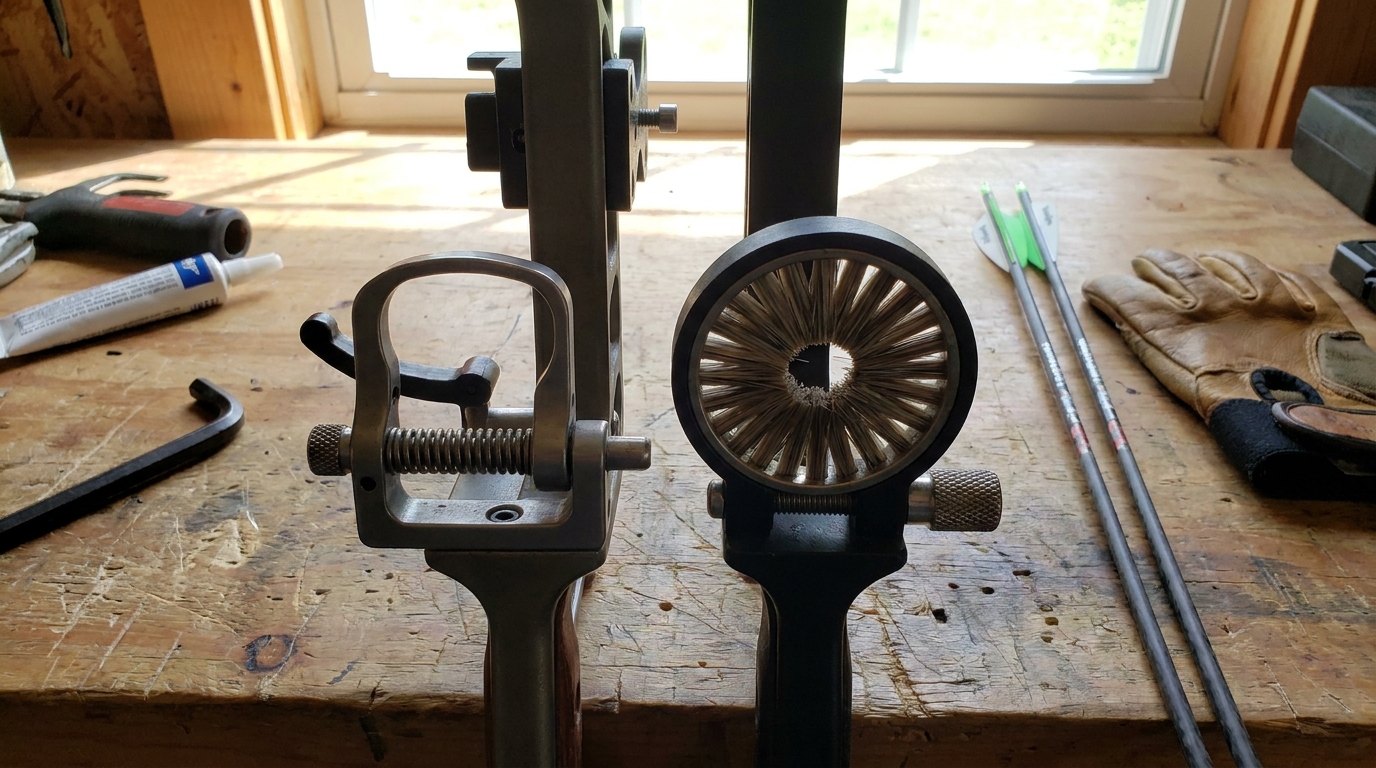
The Whisker Biscuit (originally from Carolina Archery Products) is a containment rest — a circular ring of bristles that completely surrounds and supports the arrow shaft. The arrow rides in the bristles at all times during the draw and through most of the power stroke, with the fletching passing through the bristles at the shot. Because the arrow is fully contained, it cannot fall off the rest no matter what position you're shooting from, how much brush you're navigating, or how unsteady your hold.
Biscuit-style rests are also remarkably simple. There are no moving parts, no timing issues, no cables to connect. Mount it, paper tune the bullet hole, and shoot. The setup process takes minutes rather than hours.
Drop-Away Rests
Drop-away (also called fall-away) rests support the arrow from below on a launcher arm. At the shot, the launcher arm drops rapidly — triggered by movement of the downstroke cable, the limb, or a separate cord tied to the cable — clearing the fletching entirely before it can make contact with the rest. Done correctly, a properly timed drop-away gives the arrow a completely clear and unobstructed flight path from launcher contact through the shot.
Quality drop-away rests include the Hamskea Hybrid Hunter Pro, QAD Ultra-Rest HDX, Trophy Taker Pronghorn Pro, and Ripcord Arrow Rest, among many others. Each has slightly different timing mechanisms and mounting approaches, but the core principle is the same.
Accuracy: The Real Comparison
This is where most hunters start the debate, and for good reason. Arrow flight accuracy is the whole point.
In controlled bench testing, a properly tuned drop-away rest consistently produces marginally tighter groups than a Whisker Biscuit — the reason being that any contact between fletching and bristles, however brief, introduces a small inconsistency in arrow flight. A perfectly timed drop-away eliminates that contact entirely.
However — and this is a significant however — the difference in a hunting context is usually measured in fractions of an inch at 40 yards. Both rests, properly tuned with a well-spined arrow, are capable of sub-3-inch groups at 60 yards in the hands of a competent shooter. The limiting factor in most hunting scenarios is the shooter, not the rest.
Where the drop-away advantage becomes more meaningful:
- Shooting helical fletching (more aggressive contact with biscuit bristles)
- Shooting at distances past 60 yards
- Running large-diameter vanes (2.5" or bigger)
- Precision competitions where every fraction of an inch matters
Reliability in the Field
Here's where the Whisker Biscuit's advocates have the strongest argument. In the real world of hunting — brush-covered ridgelines, steep canyon draws, tree stand ascents with a bow hoist, kneeling shots at sharp angles — a containment rest eliminates one entire category of failure mode: the arrow falling off.
Drop-away rests have moving parts, and moving parts can fail. The cord or cable connection can slip or break. Timing can drift as the rest's components wear. Cold temperatures thicken lubricants and can cause the mechanism to move slower than designed. None of these failure modes are common with quality rests, but they exist. A Whisker Biscuit's failure modes are essentially limited to bristle wear over time — a very slow process.
The practical implication: a hunting scenario that involves waiting in a tree stand, navigating dense brush to a ground blind, or drawing at an animal from a contorted position is a scenario where arrow containment has real value. Many experienced bowhunters have a story about a drop-away rest arrow that slipped off during a critical moment. Far fewer have that story about a Whisker Biscuit.
Noise and Stealth
The Whisker Biscuit creates a soft friction sound as the arrow is drawn — bristles against arrow shaft. In most hunting situations this is completely inaudible. In the extreme quiet of a late-season tree stand with a deer at 15 yards, some hunters claim to hear it. Whether the deer hears it is debatable; in most field testing, the draw noise from a biscuit doesn't register as significant compared to the bow's string movement and limb noise.
Drop-away rests are effectively silent during the draw, since the arrow rests on a stationary launcher until the shot. They can produce a subtle click when the arm resets between shots, but this is a negligible concern in most hunting scenarios.
Setup and Tuning Difficulty
Whisker Biscuit: Mount it. Set arrow height. Paper tune. Done. 30 minutes to an hour for a beginner; 15 minutes for an experienced bow setup.
Drop-away rest: Mount the rest. Connect the cord or cable to the correct yoke point. Set timing so the launcher arm drops fully before the fletching reaches it. Paper tune. Walk-back tune or French tune for left-right accuracy. This process takes an experienced bow technician 1–2 hours and a beginner a full afternoon — or a frustrating trip to a pro shop.
Improperly timed drop-away rests that appear to shoot well at the range can deliver degraded performance at hunting distances because poor timing manifests subtly. Getting drop-away timing right matters, and verifying it with slow-motion video is the only foolproof method.
Which Rest Is Right for You?
Choose a Whisker Biscuit if:
- You hunt in dense brush or timber where arrow containment has real value
- You shoot from tree stands, ground blinds, or awkward positions frequently
- You prioritize simplicity and minimal failure points
- You're a newer bowhunter who doesn't want to spend significant time on bow setup
- You shoot inside 50 yards in most hunting situations
- You run standard 2" or 2.1" vanes with modest helical
Choose a Drop-Away if:
- You prioritize maximum arrow flight consistency at longer distances
- You're comfortable with bow setup and tuning
- You run aggressive helical or large vanes
- You shoot 3D competition in addition to hunting (drop-aways dominate competitive archery)
- You regularly take shots past 50–60 yards
- You're confident in your rest's mechanical reliability and check it regularly
Recommended Models
Whisker Biscuit options:
- Carolina Archery Products Whisker Biscuit Kill Shot (~$35): The original, still excellent. Available in sizes for different arrow diameters.
- Trophy Ridge Whisker Biscuit Pro (~$45): Slightly upgraded materials and brush stiffness. Good long-term durability.
Drop-away options:
- QAD Ultra-Rest HDX (~$120): The gold standard for hunting drop-aways. Extremely reliable, excellent timing, great arrow support through the draw cycle. Highly recommended.
- Hamskea Hybrid Hunter Pro (~$130): Outstanding for precision tuning. Preferred by many competitive bowhunters who also hunt.
- Ripcord Arrow Rest (~$100): Cable-driven, reliable, and a favorite among western elk hunters. Simple mechanism, proven track record.
- Trophy Taker Pronghorn Pro (~$85): Value-priced without sacrificing meaningful reliability. Good entry point into quality drop-aways.
The Bottom Line
There is no universally correct answer in the drop-away vs. Whisker Biscuit debate — which is precisely why it's been going on so long. A Whisker Biscuit on a well-tuned bow will kill elk, deer, and bears at hunting distances without a moment's hesitation. A properly set up drop-away will do the same with a small theoretical accuracy advantage that matters more on paper than in the field. What matters most is that you choose one, shoot it thousands of times before the season, know its quirks, and trust it completely when the animal steps out. Confidence in your equipment is worth more than any marginal performance gap between these two proven rest designs.