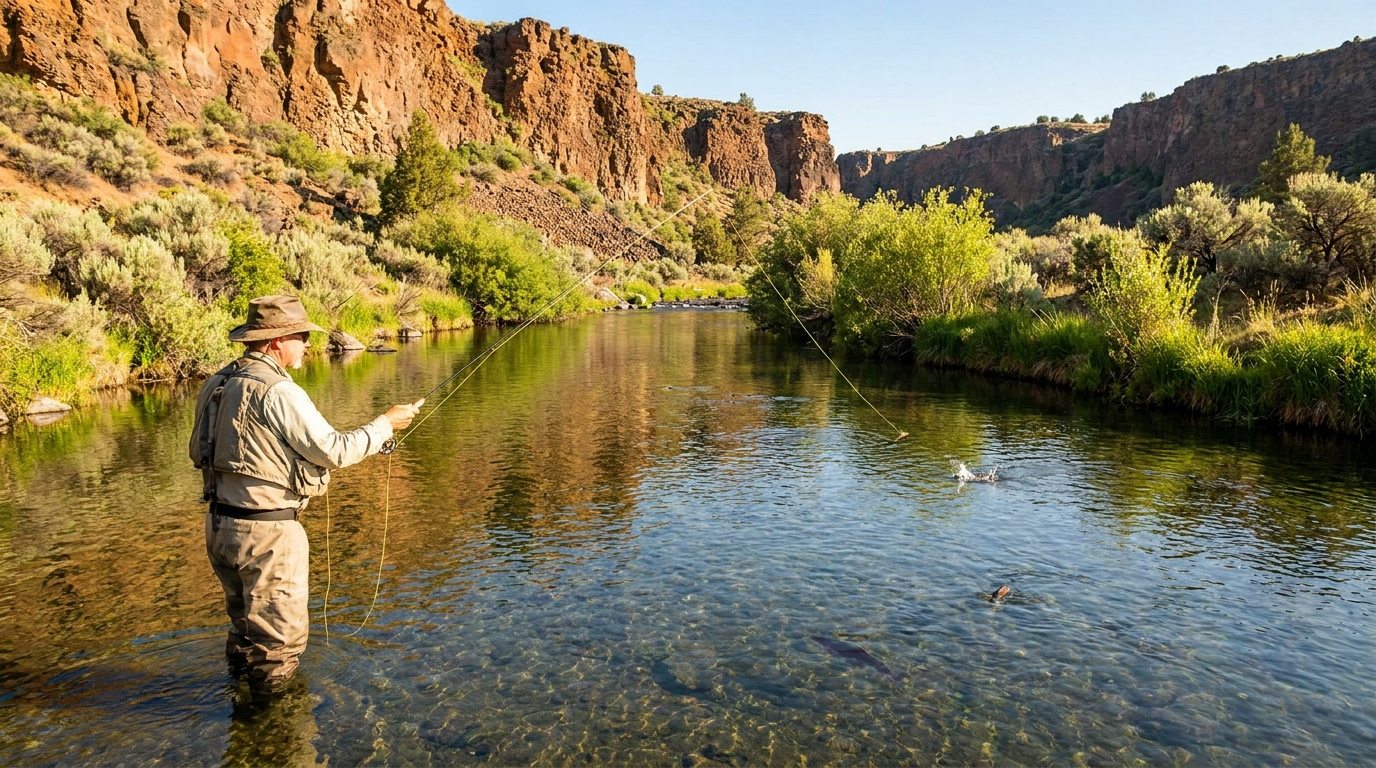
Most Oregon fly fishers can rattle off the Deschutes, the McKenzie, the North Umpqua. The upper Williamson River barely registers — and that is exactly why you should be fishing it. This spring-fed system in the Klamath Basin flows cold and clear year-round, threading through ponderosa flats and rimrock meadows between Klamath Marsh and Chiloquin. The fish are wild, the access is genuine public land, and on a June morning you may share the river with nobody but a great blue heron.
The Fish: Upper Klamath Redband Trout
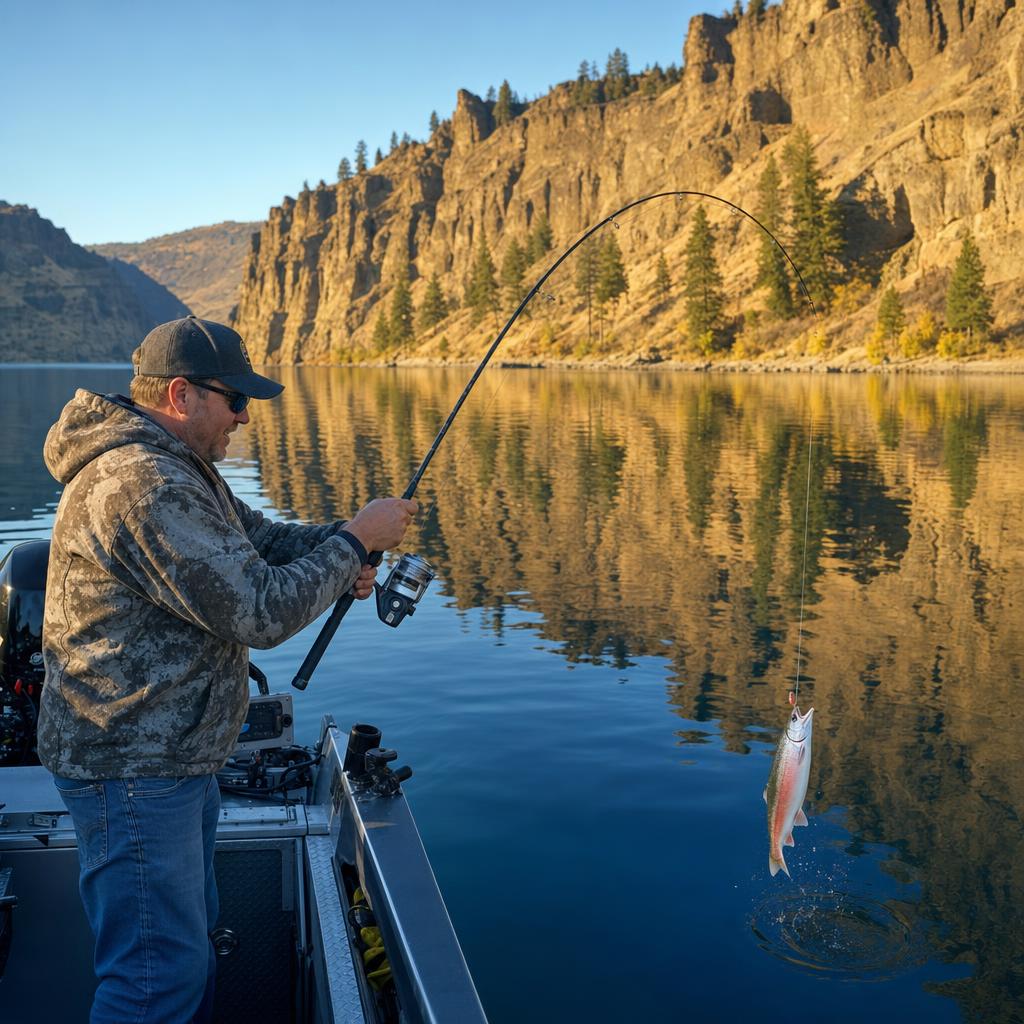
The Williamson is home to wild redband rainbow trout — a genetically distinct strain adapted to the Klamath Basin's alkaline, high-desert waters. These are not hatchery fish. Upper Williamson redbands are deep-bodied, strong, and strikingly colored, with crimson lateral bands and heavily spotted flanks. Fish in the 14–18 inch class are common in good holding water. Twenty-inch redbands exist, though they are earned.
The Oregon Department of Fish and Wildlife manages the upper river as a wild-trout fishery with special regulations. Above the Kirk Road bridge, the river is artificial lures and flies only with a two-fish limit. Know the current regulations before you wade — they change, and the wardens do patrol this corridor.
River Access and the Best Reaches
The upper Williamson flows through a mix of Fremont-Winema National Forest, BLM, and Klamath Tribal land. Tribal boundaries are clearly posted and strictly enforced — stay on the public water. The most productive public reach runs from the Klamath Marsh outlet downstream through the Spring Creek confluence to the Kirk Road area.
- Klamath Marsh area: Slow, meandering channels with abundant weed beds. Prime for sight-fishing to rising fish on summer evenings.
- Spring Creek confluence: Cold, crystal-clear spring water enters here, concentrating fish during warm spells. One of the most reliable summer spots on the river.
- Kirk Road corridor: More classic riffle-run-pool structure. Better for standard swing and nymph techniques, with some legitimate deep holes.
Timing: When to Go
Late May through early July is the sweet spot for the upper Williamson. Snowmelt has stabilized, water temperatures are ideal in the 48–58°F range, and multiple hatch cycles overlap. The river fishes well into September as long as ambient temperatures stay reasonable — the spring-fed flows buffer summer heat better than snowmelt streams.
Avoid early spring when Klamath Marsh runoff muddies the system. Late summer can bring algae issues in some slower sections as the Klamath Basin heats up.
Hatches and Fly Selection
The Williamson carries a legitimate hatch calendar that rewards preparation:
- PMDs (Pale Morning Duns): Late May through July, morning and midday. Size 16–18 sparkle duns and comparaduns do the work.
- Callibaetis: The dominant summertime mayfly in the slower, weedy sections. Size 14–16. Fish get locked onto these.
- Tricos: August mornings bring dense spinner falls in the marsh sections. Tiny — size 20–22 — but the action can be phenomenal.
- Caddis: Evening caddis activity peaks June through early August. Elk Hair Caddis in tan and olive, sizes 14–16.
- Chironomids: Year-round, especially in the slower channels. Fish them under an indicator in 3–6 feet of water when nothing is rising.
Nymphing the Williamson
Between hatches, nymphing is deadly. A two-fly rig with a size 14 Hare's Ear as the point fly and a Zebra Midge as the dropper covers the bases. Fish it tight-line style in the seams and current edges. The redbands here are aggressive when they are feeding — subtle strikes are less common than hard, confident takes.
Gear Recommendations
A 9-foot 4-weight or 5-weight rod handles the upper Williamson well. The slower sections demand longer, finer leaders — 12-foot leaders tapered to 5X or 6X for dry fly work. In the faster rifle and run sections, 9-foot leaders to 4X are fine for nymphing. Polarized glasses are non-negotiable on this river — reading feeding lanes and spotting fish in the clear water is half the game.
Wading is straightforward in most sections. The bottom is predominantly gravel and sand with occasional weedy muck in the marsh areas. Felt-soled wading boots or rubber soles with studs are both appropriate. This is a float-worthy river in sections, but walk-and-wade access is excellent and often more productive.
Getting There
The upper Williamson corridor is roughly 30 miles north of Klamath Falls via US-97 and then northeast on Williamson River Road. Cell service is essentially nonexistent above Kirk. Download your maps before you leave town — Gaia GPS and OnX Fishing both have the public land boundaries marked. Fill your gas tank in Chiloquin.
The upper Williamson will not show up on a list of Oregon's most famous trout rivers. That is the point. Go before it does.