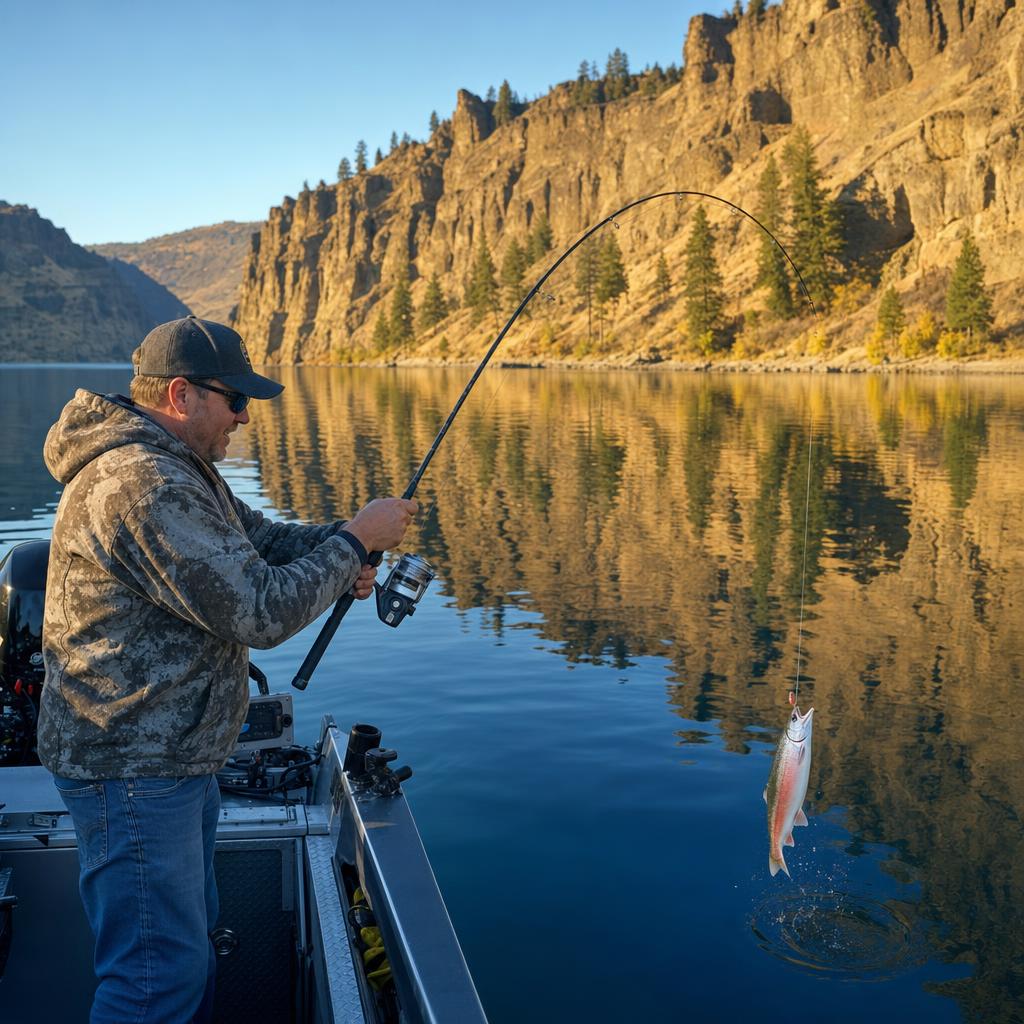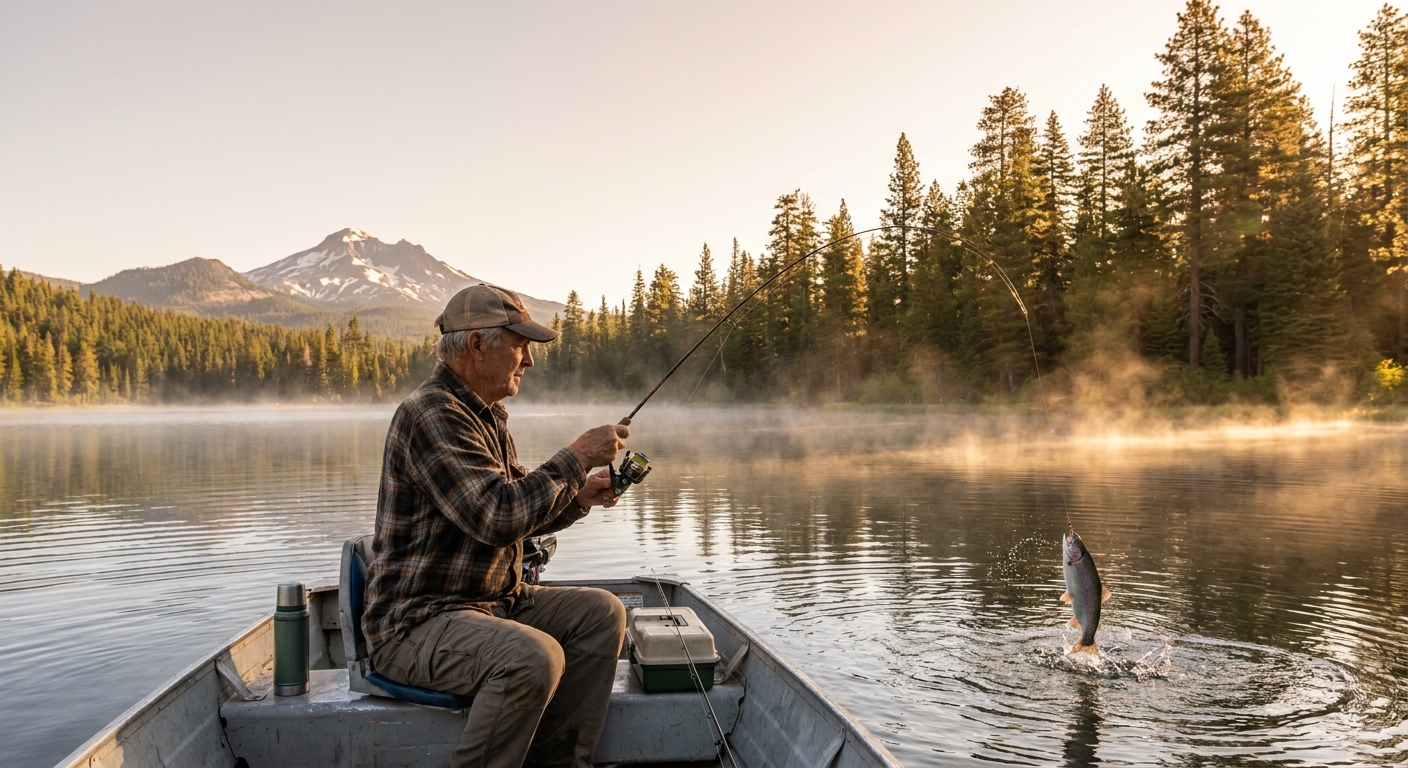
Sitting at 4,950 feet in the southern Oregon Cascades, Lake of the Woods is the kind of fishery most anglers blow right past on their way to Crater Lake or Klamath Falls. That's exactly why it deserves a harder look. This 1,145-acre volcanic lake near the Klamath-Jackson County line holds rainbow trout, brown trout, yellow perch, and largemouth bass — four distinct species that fish completely differently and keep you busy from Memorial Day through Labor Day.
What's in the Water
ODFW stocks Lake of the Woods with legal-sized rainbow trout multiple times throughout the summer season, typically in May and June, with follow-up plants depending on returns. But the lake also holds a self-sustaining population of brown trout that grows surprisingly large — double-digit fish aren't mythical here, they're just not easy. Browns tend to suspend in deeper water during warm summer afternoons and move to the shallows and inlet/outlet areas after dark.
The bass population is one of the least-talked-about in southern Oregon. Largemouth push into the weedy north and northwest coves by late May and stay shallow through August. Fish from 12 to 16 inches are common; anything over 3 pounds is a legitimate trophy for an elevation lake.
Yellow perch school heavily near the boat docks and in the shallower eastern bays. They're a family fishery — kids with bobbers and worms can fill a bucket. Don't sleep on them for the table either. A perch fry from a lake this clean is a good day by any measure.
Summer Timing and Access
The lake is accessible via Highway 140 between Medford and Klamath Falls, about 35 miles from either city. Aspen Point Campground (USFS) and the Lake of the Woods Resort both offer boat launches. The resort rents boats and canoes if you don't haul your own. Electric motors only on certain areas — check current ODFW regulations before you go, as motor restrictions have shifted in recent years.
Early morning is the most productive window, full stop. Trout hold near the surface when water temps are coolest, and bass are aggressively feeding along structure before the sun kills the bite. By 10 a.m. on a bluebird day, the trout action slows and shifts deeper. Overcast days extend the window significantly — some of the best rainbow fishing happens on cloudy afternoons when you'd otherwise think about calling it.
Tactics That Produce
Trolling for Rainbows and Browns
If you're in a boat, slow trolling is the most consistent method for covering water and finding actively feeding trout. Start with:
- Wedding Ring spinners tipped with white or pink PowerBait corn in chartreuse or rainbow
- Rapala Original Floaters in rainbow trout pattern, size 7 or 9
- Needlefish in frog pattern — classic southern Oregon Cascade lure, and it works here
- Flatfish in silver/red or gold, size X4 to X5
Run lures at 1.5 to 2.5 mph, experimenting with depth until you find the temperature break. In June that's often 8 to 15 feet. By August, drop your lead-core or add a downrigger — the fish may be at 25 to 30 feet by midday.
Shore Fishing
Bank access is good on the south and east shorelines. PowerBait fished on a sliding egg sinker with 4- to 6-pound fluorocarbon is the standard early-season setup. In June, fresh ODFW plant fish stack near the launch and dock areas — not always where they stay long-term, but a reliable early-window bite. Work back into the brushy coves with small spinners (Rooster Tail 1/16 to 1/8 oz) for more adventurous fishing.
Bass Fishing
Target the north shore coves with weed mats, laydowns, and dock structures. Weightless Senko rigs in green pumpkin or watermelon red are money. Morning topwater — a small Heddon Zara Puppy or Strike King KVD Splash Jr. — can generate explosive strikes when the bass are shallow. Keep presentations finesse-oriented; this isn't a big-water bass lake where you throw heavy Texas rigs and burn them back.
Camping and What to Bring
Aspen Point Campground fills fast on summer weekends — reserve through Recreation.gov. Weekday visits or arriving Sunday for a Monday/Tuesday stay dramatically improves your camping odds. The elevation keeps temps comfortable even during July heat waves that flatten the valley below. Bring layers; 40-degree mornings in June are normal.
Nearest bait and tackle: the Lake of the Woods Resort store has basics. For specialty tackle and current fishing reports, hit Bi-Mart or a fishing shop in Medford before the drive up. Cell service is marginal at the lake — download your maps and regulations beforehand.
Regulations at a Glance
- Valid Oregon fishing license required (combination license covers most species)
- Trout: 5 per day, 8-inch minimum — check current ODFW regs for species-specific rules
- Bass: 5 per day, no minimum size
- Perch: no daily limit
- Motor restrictions: verify current rules at myodfw.com before launch
Lake of the Woods isn't a secret fishery in the sense that nobody knows about it — the resort has been there since 1926. But on a Tuesday in late June with the trout freshly planted and a morning hatch pushing fish to the surface, it can feel like it belongs entirely to you. That's the kind of fishing worth making the drive for.