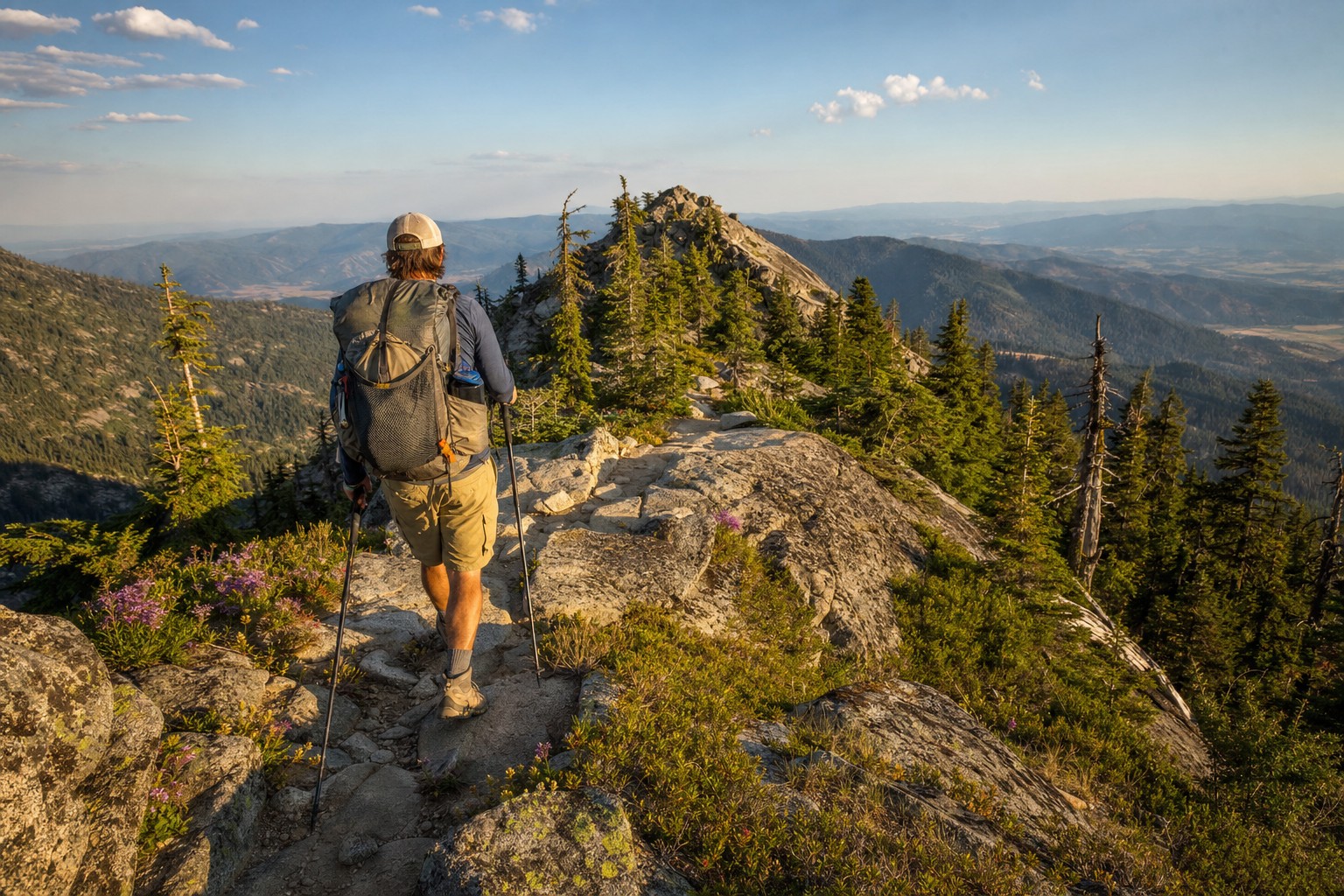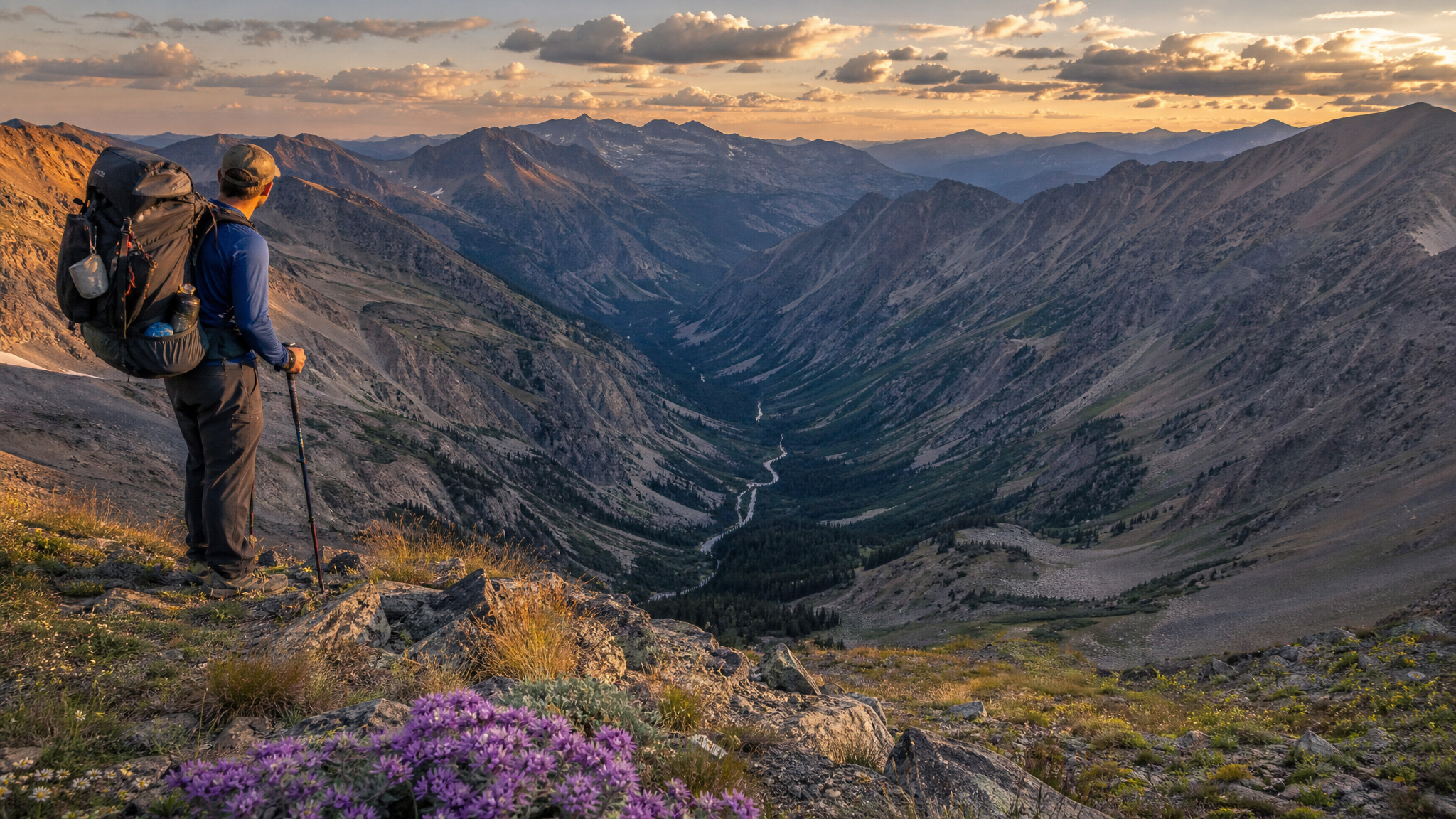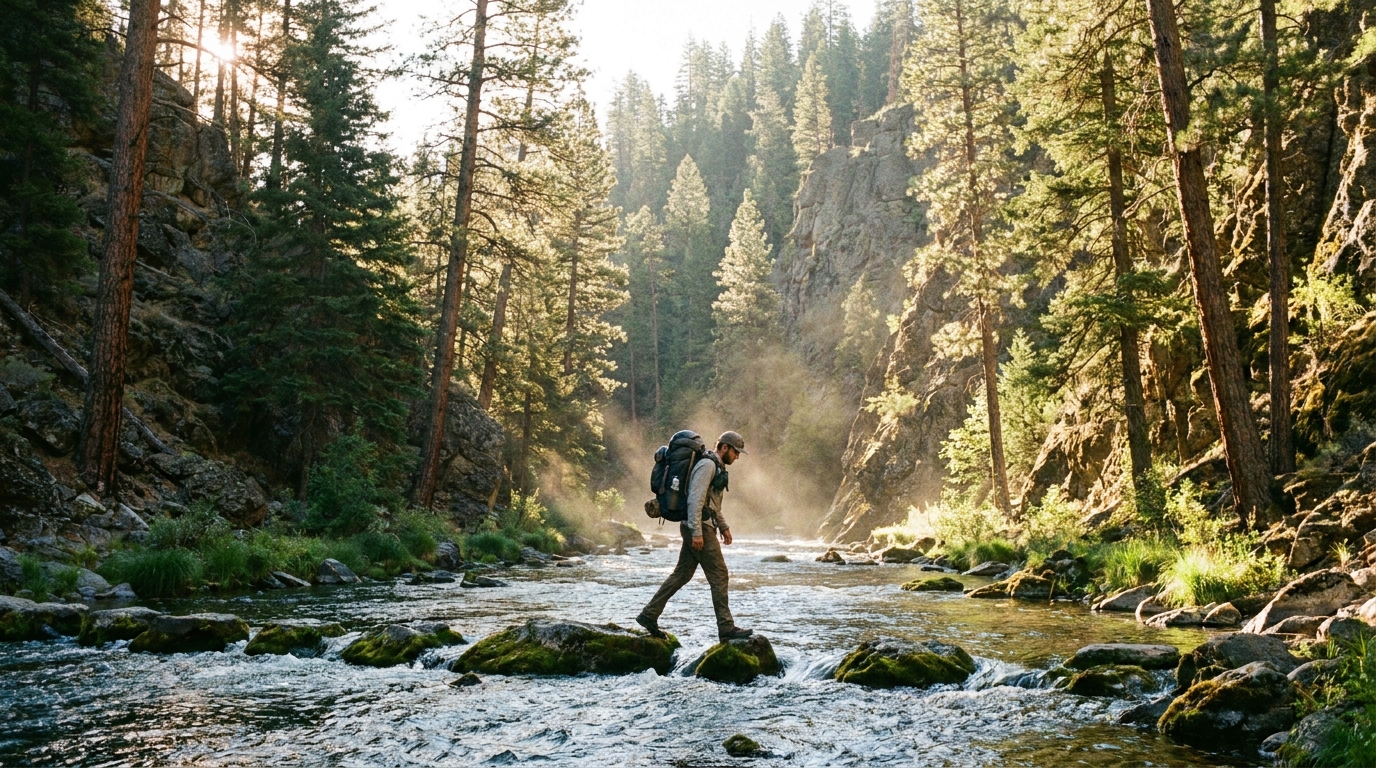
The North Fork John Day Wilderness covers 121,000 acres in the Blue Mountains of northeastern Oregon — rugged, forested, and strikingly undervisited compared to the state's flashier Cascade destinations. The North Fork of the John Day River, one of Oregon's cleanest cold-water streams, cuts through the heart of this roadless country, and the trail system that follows it offers some of the best combination backpacking-and-fishing trips in the state. Wild spring Chinook, summer steelhead, and native redband trout all run or hold in these waters, making the North Fork a genuine wilderness fishing destination alongside its scenic and historical appeal.
The wilderness also sits in the middle of Oregon's historic gold rush country. Mining artifacts, abandoned dredge pits, and old camp ruins appear throughout the drainage, adding a layer of history that you won't find in the Cascades. If you want solitude, clear water, mountain scenery, and a real sense of stepping back in time, the North Fork John Day Wilderness deserves a place on your map.
Getting There
The primary access to the North Fork John Day Trail is via the North Fork John Day Campground, located at the end of Forest Road 5506, approximately 25 miles south of Dale, Oregon on Highway 395. From Pendleton, take Highway 395 south about 50 miles, turn right on Forest Road 55, and follow signs to the campground. From John Day, head north on Highway 395 and look for the Forest Road 5506 turnoff north of Granite.
A Northwest Forest Pass is required for parking at the trailhead. Self-issue wilderness permits are available at the trailhead register and are required for overnight stays in the wilderness — a quick and free process.
The 3-Day Loop: North Fork Main Corridor to Granite Creek
Day 1: North Fork TH to Trout Creek Camp (~10 miles)
From the trailhead, the North Fork John Day Trail heads upstream through a mix of ponderosa pine, Douglas fir, and patches of lodgepole. The river is never far from the trail in the early miles, and you'll have near-constant views and access to some of the best pocket water for redband trout in the wilderness.
The trail is well-maintained for the first few miles, with some rocky sections as you gain elevation after the first creek crossing. At approximately mile 7, the canyon opens up into broader meadows where the river slows and deepens — classic steelhead water in late summer and a good elk wallow area worth glassing in the mornings. Make camp in the Trout Creek area where a reliable tributary provides fresh water and a flat bench above the river offers good sites.
Fishing note: This stretch holds native redband trout averaging 8–12 inches, with an occasional 15-inch fish. Use a small elk hair caddis or parachute adams on a 4-weight rod. The fish are wild and eager.
Day 2: Trout Creek Camp to Granite Creek Junction (~9 miles)
The second day takes you deeper into the wilderness as trail traffic drops to near zero. The canyon narrows again after Trout Creek, and the river quickens through a series of short rapids and plunge pools. Watch for osprey fishing these pools — they're a reliable indicator of where the fish are concentrated.
At approximately mile 5 of Day 2, you'll pass the remains of an old mining operation — collapsed log structures, rusted iron equipment, and a tailings pile beside a side creek. This is one of dozens of historical mining sites within the wilderness, and it's worth spending 20 minutes exploring. Gold was first discovered in this country in 1862, and the rush that followed briefly made this part of Oregon one of the most populated regions in the Pacific Northwest.
Continue upstream to the Granite Creek confluence, where a series of good camp spots sit on a sandy bench above the river. This is base camp for Day 3's loop back.
Day 3: Granite Creek Return via Ridge Trail (~11 miles)
Day 3 climbs out of the river canyon via the Granite Creek Trail, gaining approximately 1,800 feet over the first 4 miles through old-growth ponderosa and fire-scarred ridgelines. The views from the ridgeline looking south toward the Strawberry Mountains are worth the climb.
From the ridge, the trail descends gradually through a high-country meadow system that holds Rocky Mountain elk year-round — in June, you may see cow-calf groups in the open parks. The descent back toward the trailhead passes through a beautiful old-growth section of yellow pine before rejoining the main river corridor for the final 3 miles back to the campground.
What to Bring
- Water: Carry a filter — the river water is clean but treat all sources. A Sawyer Squeeze or Katadyn BeFree handles the volume easily for a 3-day trip.
- Navigation: Download the CalTopo or onX Backcountry tile set for this area before you lose cell service. The trail junctions are signed but not always obviously so at creek crossings.
- Fishing gear: If you plan to fish, pack an Oregon Combined Angling License. The North Fork John Day is catch-and-release only for steelhead; check current ODFW regulations for trout retention rules.
- Bear protection: Black bears are present throughout the wilderness. Use a bear canister or an Ursack Major hung at least 10 feet up and 4 feet from the trunk. Don't cook in your tent.
- Season timing: Best conditions are mid-June through October. Snow can linger on the ridge portions through late May. August and September bring heat and some trail dust but also prime dry-fly fishing for redband trout.
Wildlife
Beyond elk and black bear, the North Fork drainage is home to mule deer, mountain goat on the higher ridgelines, coyotes, and an impressive bird list including great gray owls, white-headed woodpeckers, and the ever-present mountain chickadee. The river itself hosts kingfishers, mergansers, and harlequin ducks in the faster water. Bring binoculars — this is some of Oregon's best wildlife-watching country in a setting with almost no other people.
The North Fork John Day Wilderness won't make the Instagram highlight reels like Crater Lake or the Three Sisters, and that's precisely why it deserves your attention. Plan the trip, put in the miles, and you'll come home with the kind of story that takes a while to tell properly.