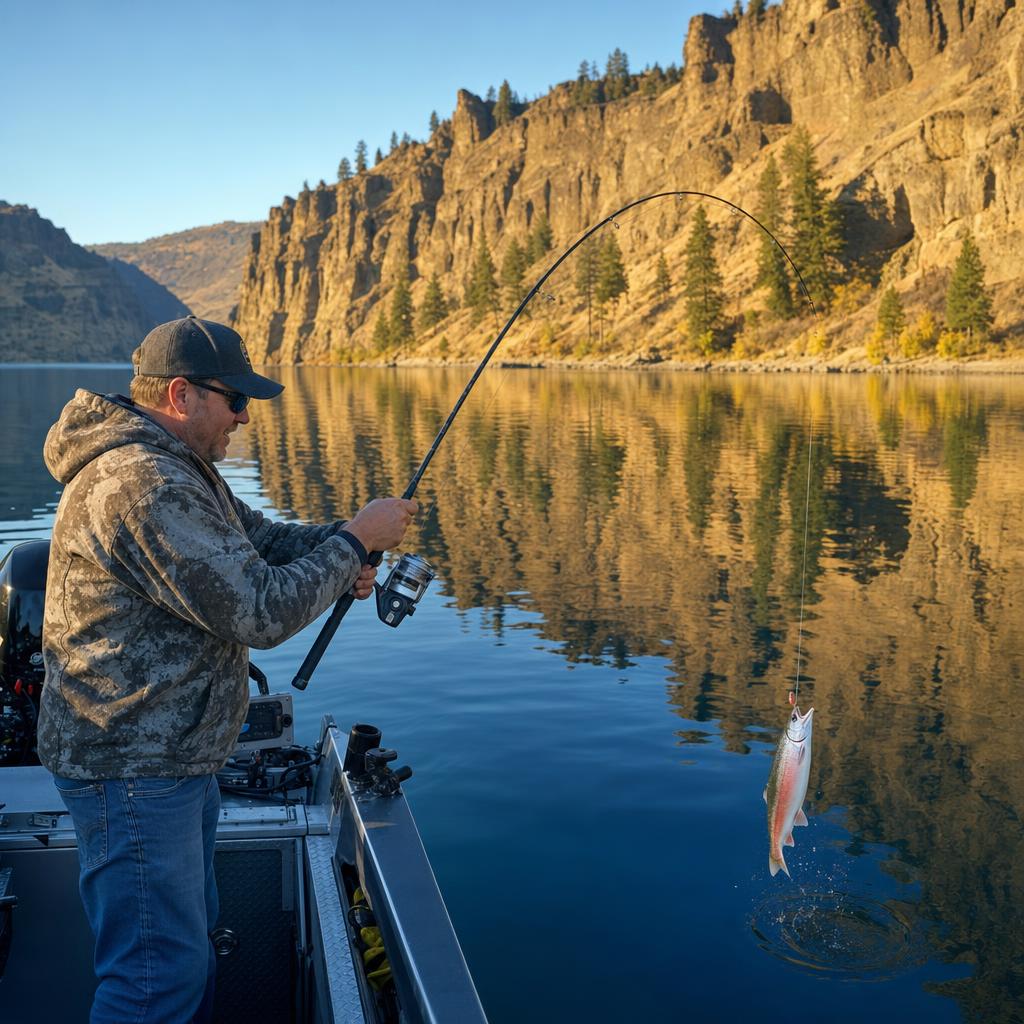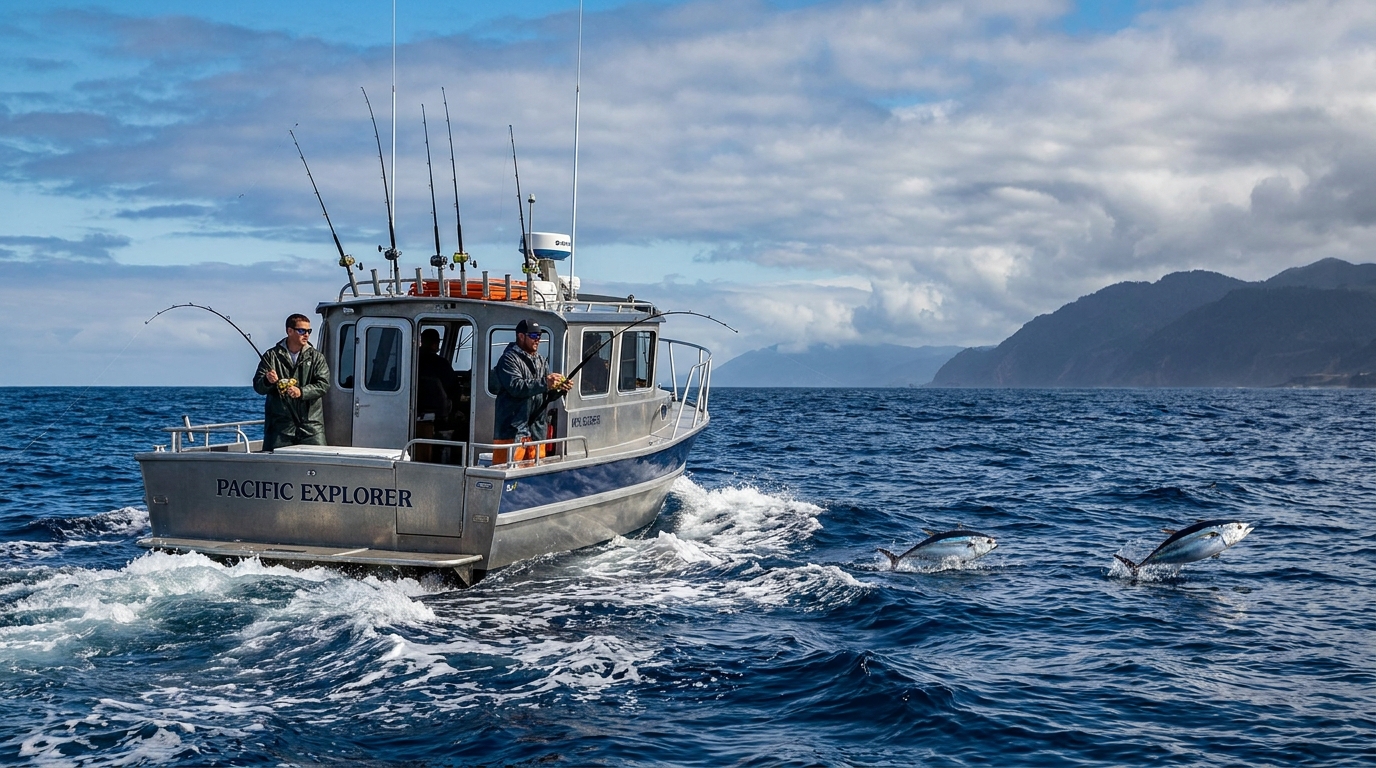
There's a moment offshore — usually 30 to 50 miles out from Tillamook Bay, Depoe Bay, or the Yaquina River jetty — when the water changes color. Green-gray Pacific chop transitions into a deep cobalt blue, the sea surface temperature climbs a degree or two on the gauge, and somewhere below the surface, albacore tuna are slashing through baitballs. If you've never run offshore for Oregon albacore, you're missing one of the most electrifying and productive fisheries the Pacific Northwest has to offer.
When the Tuna Arrive
Oregon's albacore season is tied to the northward push of warm surface water — specifically the 58–64°F temperature band that tuna follow as the Pacific heats up through summer. Most years, fish first appear in Oregon-accessible water sometime in late June or early July, with peak fishing running through August and into September. Some years, a lingering cold upwelling keeps fish well south until mid-July, so always check SST (sea surface temperature) charts before committing to a run.
NOAA's CoastWatch browser and OSPO satellite tools are your best free resources. Look for warm-water fingers or eddies pushing toward the coast and note where the thermal break — the sharp line between cold green upwelling water and warm offshore blue — sits. Tuna concentrate right along that edge, especially on the warm side.
Boat and Safety Considerations
Offshore tuna fishing in Oregon is not a beginner's game. Runs of 30–60 miles in Pacific swells require a capable, well-maintained vessel of at least 22 feet with twin engines, reliable navigation electronics, an EPIRB, and a crew that knows how to use all of it. File a float plan, carry an inflatable life raft if you're running that far, and check NOAA forecasts for the full weather window — not just the morning departure. The Pacific can build fast.
Many anglers in the Oregon coastal towns run 25–28 foot boats purpose-built for offshore work. If you don't have a boat, charter options out of Depoe Bay, Newport, and Garibaldi run scheduled albacore trips when the fish are in range, and they're worth it for your first season learning the patterns.
Trolling Spread Setup
Trolling is the standard technique for locating albacore and covering water efficiently. A typical spread runs 6–8 lures behind the boat at 7–9 knots. Here's a proven Oregon setup:
- Long riggers (120–150 ft back): Feather jigs in cedar plug style — blue/white, pink/white, and green/yellow are all proven colors. Size 4/0–6/0 hooks, 80–100 lb fluorocarbon leaders.
- Short riggers (60–80 ft back): Skirted trolling lures or small squid chains. Let these run shallower to cover the surface strike zone.
- Flat lines (30–50 ft back): Sometimes a surface popper or a simple bucktail with a strip bait will trigger fish that miss the back of the spread.
- Corner lines: Daisy chains of small squids tipped with a hook in the trailing bait — deadly on finicky fish.
Run your spread in a V-pattern or staggered arrangement to minimize tangles when the inevitable chaos of multiple hook-ups begins. And it will.
When the Bite Turns On: Stop-and-Jig
Once you hook up on a trolling pass and land a fish, don't just keep trolling. Slow down or stop. Albacore school tight, and where there's one, there are hundreds. Break out the lighter tackle — spinning rods spooled with 40–50 lb braid and 6-inch jigs or scrambled-egg style soft plastics — and start jigging. The action can be ridiculous. It's not uncommon for a boat to catch 30–50 fish in an hour once they've found the school and stopped on it.
Cut a small piece of fresh albacore belly, thread it onto your hook as a strip bait, and you'll increase hook-up percentage significantly on pressured or finicky fish.
Tackle Recommendations
- Trolling rods: 6–7 ft medium-heavy trolling rods rated 30–50 lb, conventional reels with lever drag (Penn Fathom 15–25, Shimano Tekota)
- Jigging rods: 7 ft medium-heavy spinning rods, 5000–8000 size reels (Shimano Stradic or Daiwa BG), 40 lb braid to 4 ft 60 lb fluorocarbon leader
- Hooks: Size 4/0–6/0 inline single hooks for jigs; replace factory trebles with stronger single hooks on metal jigs
- Lures: Zuker feathers, Wahoo type cedar plugs, Nomad DTX Minnows, Yozuri Bonita
The Table Fare Argument
Albacore tuna caught in cold Oregon waters are, pound for pound, the best-eating fish in the Pacific. Unlike canned tuna, fresh or flash-frozen albacore has a rich, buttery flavor with none of the dry, chalky texture people associate with the grocery store product. Blood-line removed and properly chilled on ice the moment they hit the boat, Oregon albacore can be seared rare like ahi, smoked over alder, canned in olive oil, or eaten raw as sashimi. A full day on the tuna grounds can fill a chest freezer with high-quality protein that lasts all winter.
Bleed your fish immediately — cut the pectoral fin and let the fish bleed into the ocean or a bucket before icing. This single step makes a dramatic difference in the quality of the meat.
Ports to Launch From
- Garibaldi (Tillamook Bay): The northernmost practical launch for tuna. Long run, but good facilities and fuel.
- Depoe Bay: The smallest navigable bay on the Oregon coast. Watch the bar conditions carefully — it can be gnarly on a swell. Good launch point when conditions cooperate.
- Newport (Yaquina Bay): The most popular and practical home port for Oregon offshore fishing. Full-service marina, fuel, bait, and multiple charter operations.
- Winchester Bay / Umpqua River: Southern option, closer to fish earlier in the season when the warm water is farther south.
Licensing and Regulations
Oregon anglers need a valid Oregon combination angling license for saltwater tuna. There is no bag limit on Pacific albacore tuna in federal waters — take what your boat can handle and ice properly. Always verify current ODFW and NOAA regulations before your trip, as rules can change season to season.
The offshore tuna grounds are primarily in federal waters (beyond 3 nautical miles), so familiarize yourself with federal marine regulations as well.
Final Word
Oregon offshore albacore is a bucket-list fishery hiding in plain sight. The runs are doable in a day, the fish are willing when the conditions align, and the payoff — a cooler full of the finest tuna you'll ever eat — is hard to beat. Watch your SST charts starting in June, keep your gear rigged and ready, and when the water goes blue, go fish.