The Pacific Northwest has no shortage of spectacular wilderness destinations, but most of them require a four-hour drive before the trailhead is even in view. The Salmon-Huckleberry Wilderness, tucked into the Mount Hood National Forest just east of Sandy, Oregon, is the exception. From downtown Portland, you’re at the trailhead in under 90 minutes — and once you’re inside the wilderness boundary, you’d never guess you were this close to a metro area of two million people.
This 44,560-acre wilderness protects one of the most intact old-growth Douglas fir forests remaining in the Oregon Cascades west of the crest. Massive trees, dense fern understory, wild huckleberry fields, and the Salmon River drainage system make it a genuinely wild place despite its proximity to civilization. For weekend backpackers, day hikers, and hunters holding Clackamas County deer and elk tags, it deserves far more attention than it gets.
Geography and Access
The Salmon-Huckleberry Wilderness sits on the southwest flank of Mount Hood, bordered by the Salmon River to the south and US Highway 26 to the north. The town of Zigzag and the community of Brightwood are the nearest services. Key trailheads include:
- Salmon River Trailhead (lower): Off Salmon River Road, about 5 miles south of Zigzag. This is the most popular entry point and provides access to the lower Salmon River canyon and old-growth forest corridor.
- Huckleberry Mountain Trailhead: From Zigzag, follow Lolo Pass Road and Forest Road 1825. This provides high-elevation access to the Huckleberry Mountain ridge and views of Mount Hood, Mount Jefferson, and the Cascades spine on clear days.
- Devils Peak Trailhead: Via Forest Road 2613 south of Highway 26. Provides access to Devils Peak Lookout (5,045 feet), one of the better ridge campsites in the wilderness.
A Classic Weekend Route: Salmon River Canyon to Huckleberry Ridge
This 18-mile loop (with some road walking) covers the full range of what the Salmon-Huckleberry has to offer: old-growth canyon bottom, mid-elevation forest, and open ridge with views.
Day 1: Lower Salmon River to Canyon Camp (6 miles)
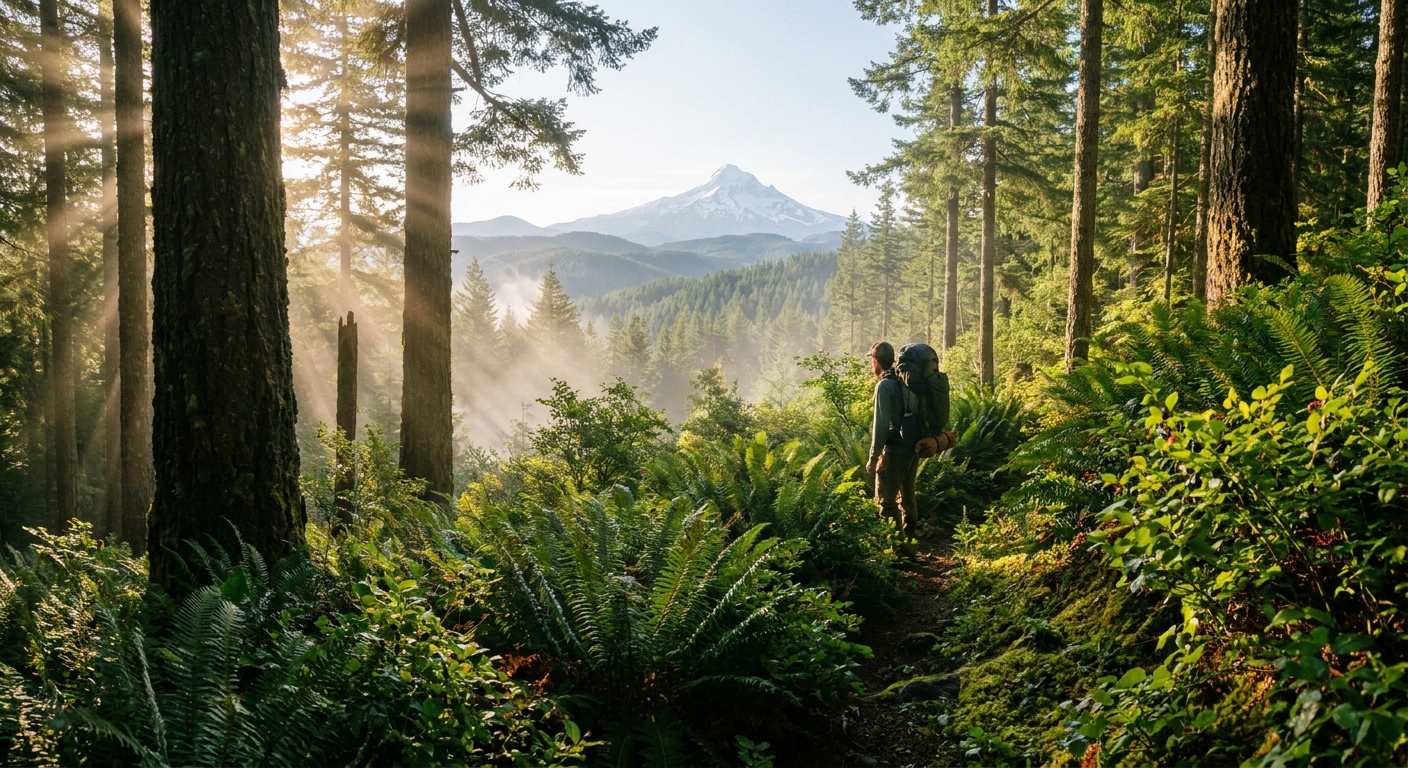
Start at the lower Salmon River Trailhead and follow the river upstream through one of the finest old-growth Douglas fir and western hemlock groves in the region. Trees here exceed 250 feet with trunk diameters of 4-6 feet — the scale of the forest is genuinely impressive. The river runs clear and cold, and there’s excellent camp water throughout. Designated campsites appear periodically; Canyon Camp at approximately 6 miles makes an ideal first night. The trail is gentle by Oregon standards, gaining only 800 feet over this stretch.
Day 2: Canyon Camp to Huckleberry Mountain (5 miles, 2,500 ft gain)
This is the grunt day. Leave the river and climb the connecting trail toward Huckleberry Mountain ridge. The grade is sustained but manageable with a loaded pack. As you gain elevation, the old-growth transitions to younger mixed conifer, then opens into the huckleberry fields that give the wilderness half its name. By late July through September, these fields can be loaded with wild huckleberries — bring a container and plan accordingly. Camp on or near the ridge; dispersed camping is allowed throughout the wilderness outside of riparian zones.
Day 3: Ridge Walk to Devils Peak and Out (7 miles)
Follow the ridge toward Devils Peak Lookout (staffed seasonally by the Forest Service). On a clear summer morning, you’ll see Mount Hood looming over your left shoulder, Mount Jefferson to the south, and on exceptional days, all five major Cascade volcanoes from Rainier to Shasta. Descend via Forest Road to the Zigzag area and your shuttle vehicle, or complete the road walk back to your trailhead.
Wildlife and Hunting Opportunities
The Salmon-Huckleberry Wilderness sits within ODFW’s Clackamas Zone for deer and within general elk units. Columbia blacktail deer are common throughout the wilderness, and Roosevelt elk occasionally move through the higher elevations. The wilderness designation means no motorized vehicles, which — combined with the relatively low hunting pressure from a hiking-only population — creates pockets of genuinely undisturbed deer habitat.
General season archery deer hunting runs September through October, with general rifle season opening in mid-October. Hunters willing to backpack two or three miles into the wilderness boundary before setting up camp will find dramatically less pressure than roadside hunters on the National Forest boundary areas. Blacktail country means close-range shooting in dense timber — prepare accordingly with a compact rifle or short-draw archery setup.
Seasonal Notes
- June–July: Snow lingers on the upper ridge into June some years. Lower Salmon River is excellent for wildflowers and cold river crossings. Expect mud on upper trails until mid-July.
- August–September: Prime season. Huckleberries ripe, views clear, bugs minimal. Best all-around window for backpacking and photography.
- October: Fall color in the old-growth understory is underrated. Hunting season adds purpose to the trip. Expect rain by late October — pack accordingly.
- November–May: Upper trails can be snowy and icy. Lower Salmon River Trail is hikeable year-round but wet. Winter steelhead in the lower Salmon River outside wilderness boundary can add a fishing component.
Essential Gear and Leave No Trace
The Salmon-Huckleberry’s proximity to Portland means it sees significant weekend use on the lower Salmon River trail. Practice Leave No Trace principles carefully here:
- Camp at established sites near the river; disperse on the upper ridge
- Use a bear canister or hang food — bears are active here, particularly in huckleberry season
- A Northwest Forest Pass ($5 daily, $30 annual) is required at most trailheads
- Water is abundant but treat all sources; Giardia is present throughout Oregon’s wilderness streams
- Cell service is essentially nonexistent inside the wilderness; download offline maps on Gaia GPS or CalTopo before leaving home
The Case for Going Midweek
Like almost every wilderness within 90 minutes of Portland, the Salmon-Huckleberry suffers from weekend crowding — at least on the lower river. The upper ridge and the cross-country approaches are empty even on summer Saturdays. If flexibility allows, a Tuesday through Thursday trip will feel like genuine wilderness even on the popular lower canyon. A summer Thursday evening start gets you ahead of the weekend wave and into position for a silent Friday morning on old-growth river bottom that feels genuinely far from everything.
That’s the thing about the Salmon-Huckleberry: it actually is far from everything, even when it’s close to home. That’s a rare thing in Oregon, and worth protecting.