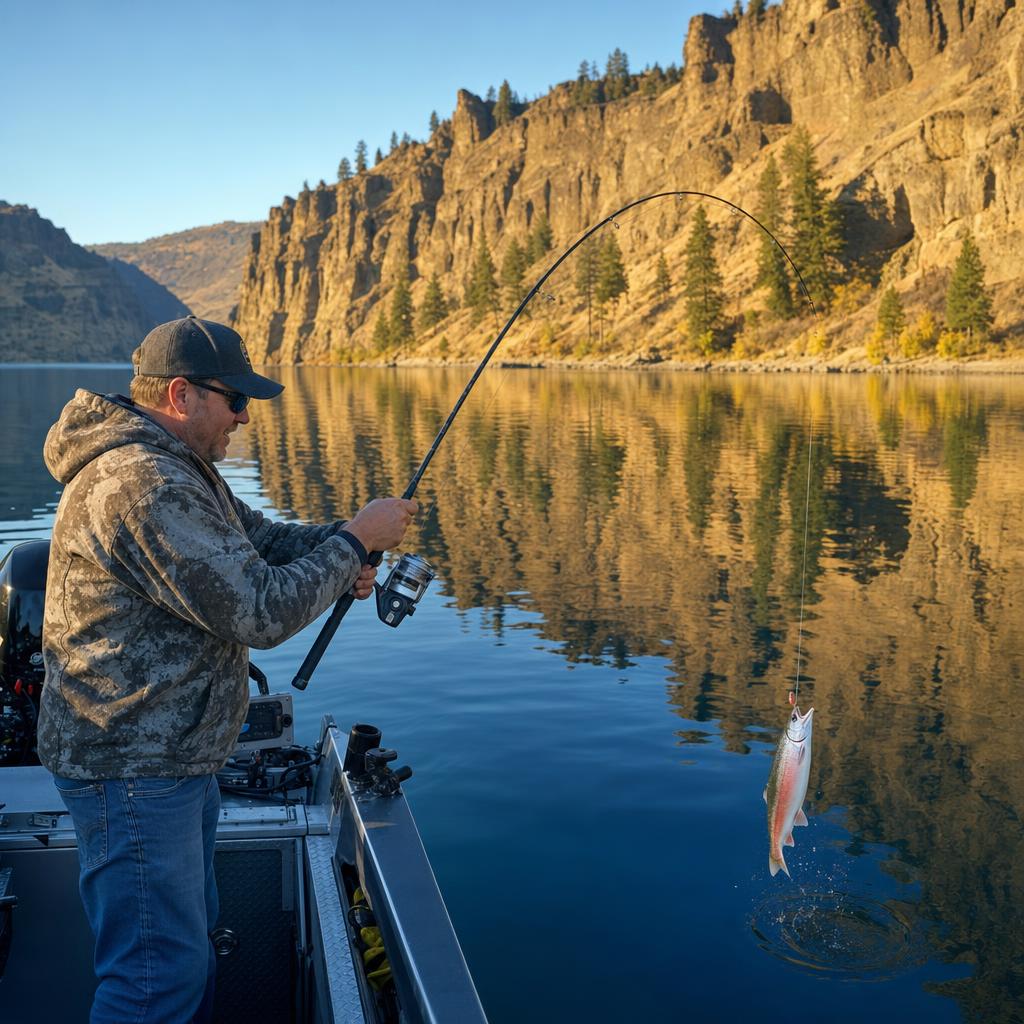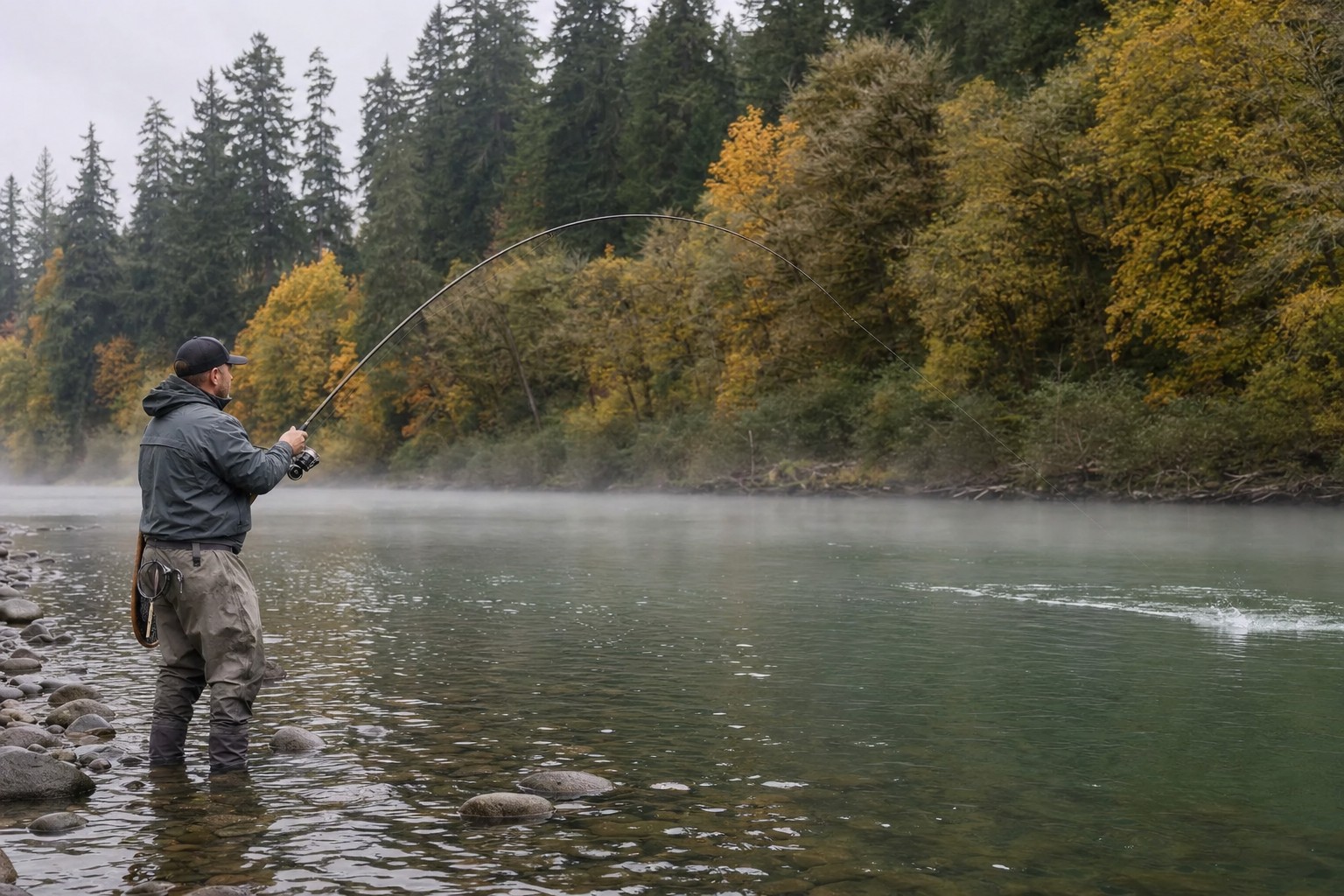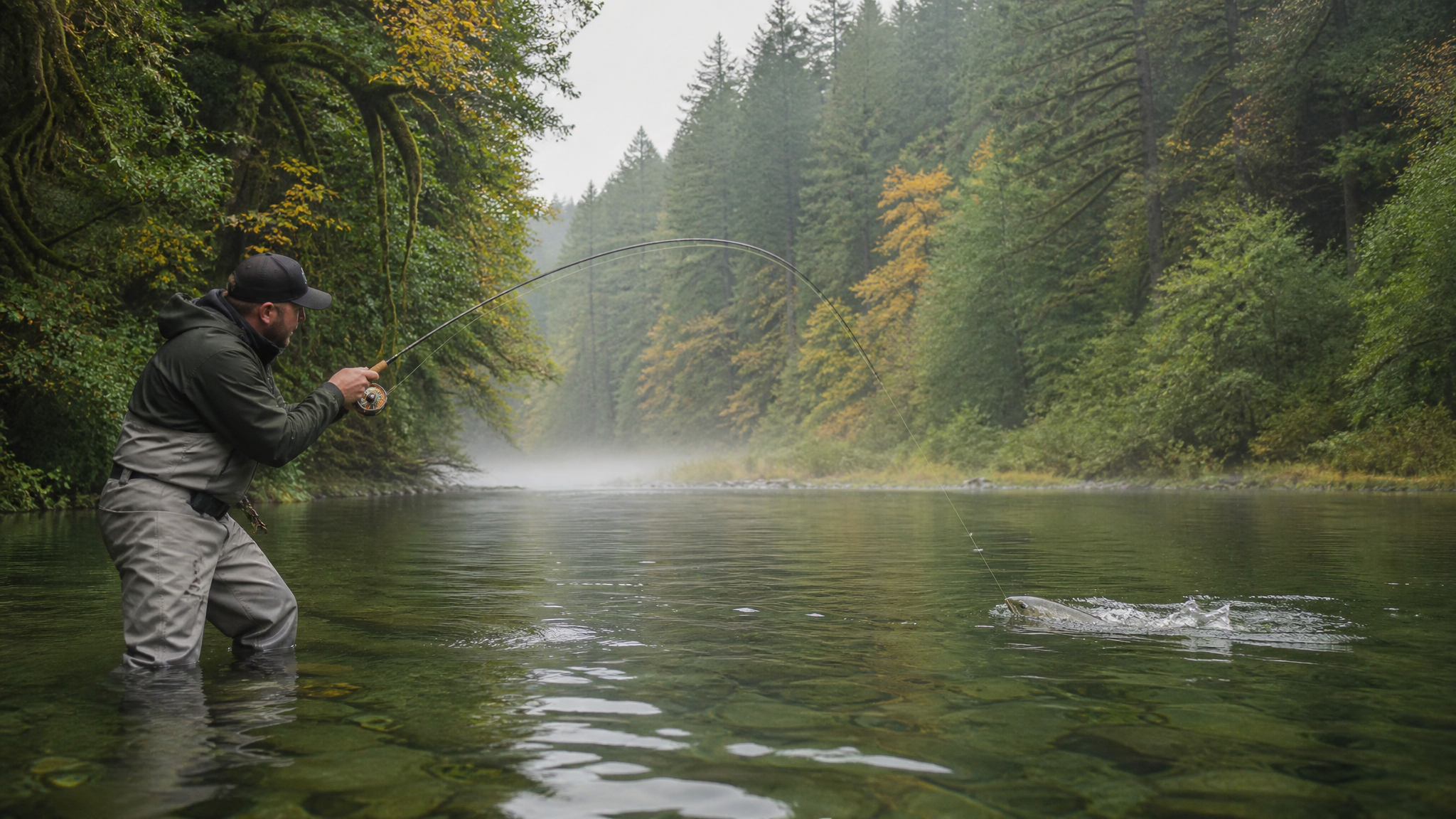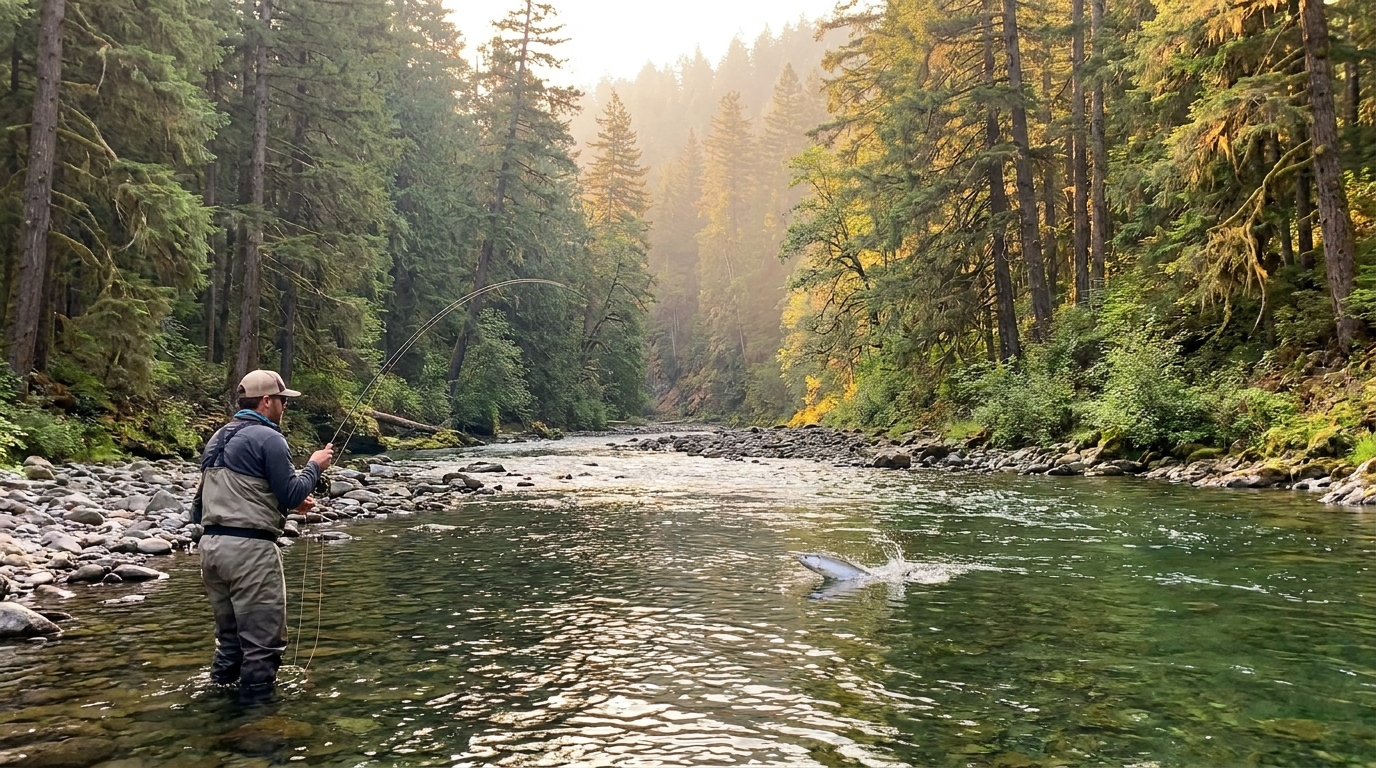
Ask any steelhead angler within 60 miles of Portland where to go for a summer hatchery fish without burning a full tank of gas, and the Sandy River will come up every time. Flowing out of Mount Hood and into the Columbia just east of Troutdale, the Sandy is a legitimate summer steelhead river with returning hatchery fish, solid public access, and enough water variety to reward both fly anglers and gear fishermen.
Summer returns typically begin in earnest by late June and peak through July and August, with fish still trickling in through September. ODFW hatchery plants have improved in recent years, and the Sandy consistently produces hatchery steelhead in the 6-to-10-pound range, with occasional larger wild fish encountered and released. Check current regulations carefully — wild steelhead must be released on the Sandy, and hatchery fish are identified by the clipped adipose fin.
Access Points Worth Knowing
The Sandy offers several excellent public access points, and knowing the right ones can make the difference between a crowded bank and a productive wade.
- Oxbow Regional Park — One of the best year-round access points on the lower Sandy. Day use fees apply but the park offers a long stretch of fishable water, camping, and a genuine hole-to-riffle variety. Wade carefully — the lower Sandy moves fast when flows are up.
- Revenue Bridge (Highway 26) — Quick pull-off access near the confluence of the Zigzag River. Parking is limited but the water just below the bridge often holds fish stacking before moving upriver.
- Dodge Park — Managed by Multnomah County, Dodge Park sits on a beautiful bend of the Sandy with gravel bars, classic summer steelhead water, and good wading when flows drop to summer levels. Go early on weekends.
- Marmot Road Area — Upper Sandy access above the former Marmot Dam site. The river runs cold and clear here and feels more remote despite being close to Sandy, Oregon. Bank access requires some scouting, but the fish are there.
Reading Summer Flows
The key to summer Sandy River success is understanding how flow affects fish behavior and wading safety. Check the USGS gauge at Marmot daily before your trip. Ideal wading flows on the Sandy typically run between 700 and 1,400 cfs for most anglers — above that and the swift, boulder-strewn nature of the river becomes treacherous. Below 500 cfs, fish can get lethargic in warmer water. Target early mornings in July and August when water temperatures are coolest, typically 55 to 62 degrees Fahrenheit at the best times. If you are pulling temps above 68 degrees, reel up and come back another day — warm-water stress on wild fish is real.
Gear and Technique for Hatchery Fish
Summer Sandy steelhead respond well to a range of approaches, but a few stand above the rest:
Drift Fishing
The most effective technique for covering water efficiently on the Sandy is drift fishing with cured roe or sand shrimp under a float or free-lined. Use a mainline of 12 to 15 lb monofilament, drop to a 10 lb fluorocarbon leader, and run a No. 2 or No. 4 hook. Keep your drift natural and drag-free through the seams. The Sandy's fast, clean water means fish will track a bait but drop it immediately if tension feels wrong.
Fly Fishing
The Sandy is genuinely excellent summer fly water. A 9-foot, 8-weight rod handles the varied currents well. In summer low water, focus on swinging classic patterns such as Intruders, Freight Trains, and Purple Perils through the tailouts of deeper runs. When fish are aggressive and actively moving, skating a greased dry fly down the seam can produce explosive surface takes. Morning and evening are when the fly fishing is best; midday sun pushes fish deep and makes them lockjawed.
Spoons and Spinners
Do not overlook hardware on the Sandy. A 1/3 oz Blue Fox Vibrax in silver or chartreuse worked through a run's holding water is a legitimate summer steelhead producer. Keep it near bottom in faster currents and use the slow-roll retrieve in slicks and tailouts. Hardware is particularly effective when fish are holding in shallower gravel flats where a float rig is harder to control.
Local Intel and Timing Windows
The Sandy receives meaningful angling pressure given its proximity to the Portland metro area. Fish the weekday early morning window — 6:00 to 10:00 AM on a Tuesday or Wednesday — for the best combination of active fish and manageable crowds. The weekends can get crowded quickly, especially at Dodge Park and Oxbow. Post-freshet conditions after a brief late-August rain can trigger a new push of fish that rewards anglers who check the gauge and react quickly.
Licenses and steelhead tags are required. Verify current punch card rules on the ODFW website before your trip, as hatchery retention limits can change within the season based on run counts. The Sandy is a special river — close enough for an after-work session, productive enough to justify a full day, and beautiful enough to make a skunk feel almost tolerable.