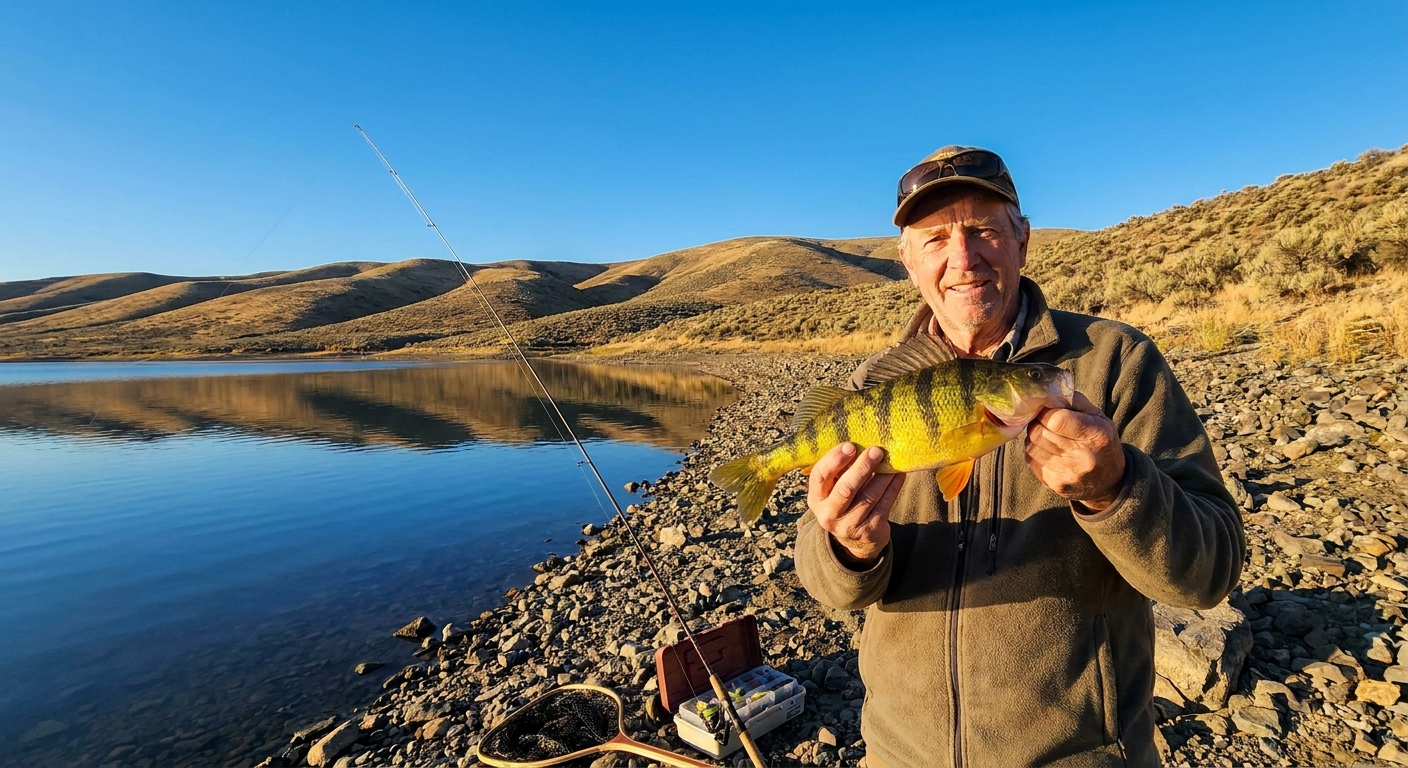
Most Eastern Oregon anglers load their boats for bass at Prineville Reservoir or chase kokanee up at Odell Lake. Meanwhile, a perfectly good panfish is stacking up in the shallower bays, irrigation backwaters, and slow river stretches all across Malheur and Harney counties — and almost nobody is targeting them. Yellow perch (Perca flavescens) are abundant, fun to catch, and one of the finest table fish you will ever clean. If you have not made a dedicated perch trip to Eastern Oregon, this summer is the year to start.
Where to Find Yellow Perch in Eastern Oregon
The most productive perch water in the region is concentrated around the Malheur River drainage and the series of irrigation impoundments scattered across Malheur County. Warm Springs Reservoir near Juntura holds solid populations of perch in the 8- to 11-inch class, especially along the tule-lined shallows on the north end. Water levels fluctuate depending on irrigation demand, so call the Bureau of Land Management Vale District office before making the drive out to confirm conditions.
Bully Creek Reservoir outside Vale is another strong producer. The perch here tend to school tight to submerged brush piles and rock piles along the dam face in early summer, then push into the shallower flats as water temperatures peak in July and August. Fishing from a float tube or small kayak gives you a major advantage — you can work the structure quietly without spooking fish in the clear high-desert water.
Do not overlook the Malheur River itself between Juntura and the town of Malheur. The slow, silty bends hold perch in surprising numbers, especially near bank cover, overhanging willows, and where irrigation return flows enter the main channel. These river fish run slightly smaller than reservoir fish but can be remarkably dense during summer afternoons.
Timing Your Trip
Summer perch fishing in Eastern Oregon peaks from mid-June through late August. The fish are most active in the morning hours — roughly two hours after sunrise until about 10:00 AM — and then again in the evening as temperatures drop. Midday heat in the high desert can push surface water temperatures above 75°F in shallower impoundments, which does not kill the bite entirely but definitely slows it. Fish deeper in the afternoon, targeting the 8- to 15-foot zone where temperatures remain more stable.
The Oregon Department of Fish and Wildlife (ODFW) classifies yellow perch as a warm-water game fish throughout most of Eastern Oregon with no closed season and no size limit. Daily bag limits vary by water body, so check the current ODFW Eastern Oregon Sport Fishing Regulations for the specific reservoir or river you plan to fish before you go.
Tackle and Technique
Yellow perch are not complicated fish, which is part of their appeal. A light or ultralight spinning rod in the 5.5- to 6.5-foot range paired with a 2000-series reel loaded with 6-pound monofilament or 8-pound braid with a 4-pound fluorocarbon leader is the standard setup for most Eastern Oregon perch water.
Best Rigs for Eastern Oregon Perch
- Drop shot with a small minnow imitation: A 1/16- to 1/8-oz drop shot weight with a 2- to 3-inch paddle tail swimbait on a size 6 or 8 hook is deadly on structure-holding fish. Work it slowly along bottom and let the bait hang stationary — perch often strike on the pause.
- Live bait under a small float: Small night crawlers, wax worms, or meal worms fished 2 to 4 feet under a slip float account for more Eastern Oregon perch than everything else combined. This rig is particularly effective in the tule shallows at Warm Springs and Bully Creek.
- Micro jigs: 1/32- to 1/16-oz tube jigs or marabou jigs in chartreuse, white, or orange. Effective when fish are suspended in open water or stacked tight over submerged structure.
- Blade baits: Small Swedish Pimple-style spoons in the 1/8-oz range are excellent for vertical jigging from a boat, particularly during midday when fish drop down to cooler water.
Cleaning and Cooking
Here is the honest reason experienced anglers get excited about perch: they are exceptional table fare. The white, flaky meat is mild and holds up beautifully to pan frying, beer battering, or a simple cast-iron sauté in butter and garlic. Cleaning perch is straightforward — a sharp filet knife, a quick cut behind the pectoral fin angled down to the backbone, and you run the blade along the ribs. Perch skin can be left on or removed depending on preference; many anglers leave it on for pan frying where it crisps up nicely.
Plan for approximately six to eight fish per person for a solid meal, though legal limits on most Eastern Oregon waters allow you to take considerably more if the bite cooperates. A cooler with ice is essential — perch deteriorate quickly in summer heat, so keep them cold from the moment they leave the water.
Gear Up and Go
A summer perch trip to Eastern Oregon is one of the more underrated outdoor experiences in the Pacific Northwest. You can launch a kayak or float tube at Bully Creek for free, the fishing pressure is virtually nonexistent, the scenery is spectacular high desert canyon country, and you will eat like royalty at the end of the day. Bring the light tackle, bring extra worms, and bring a cast iron skillet.