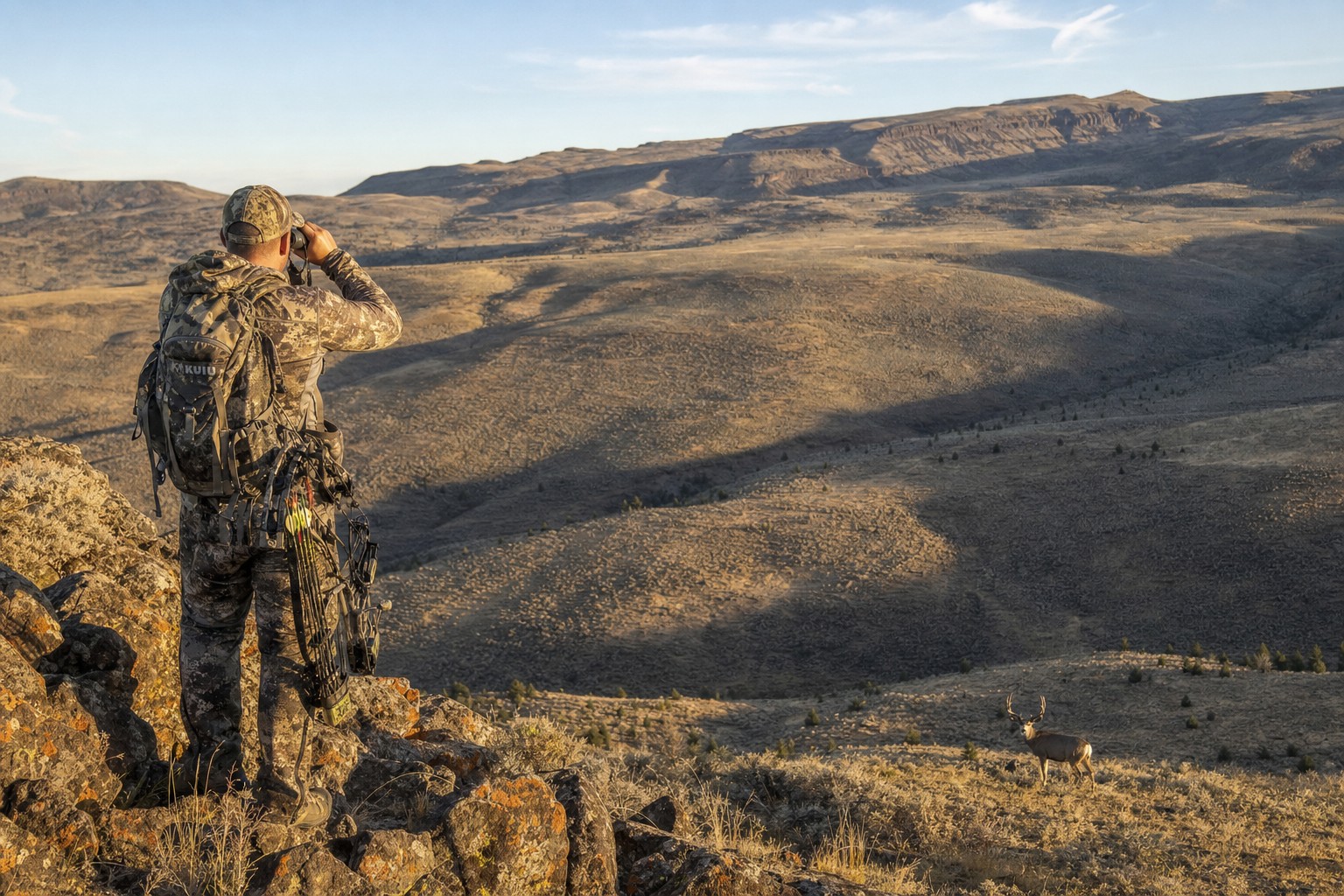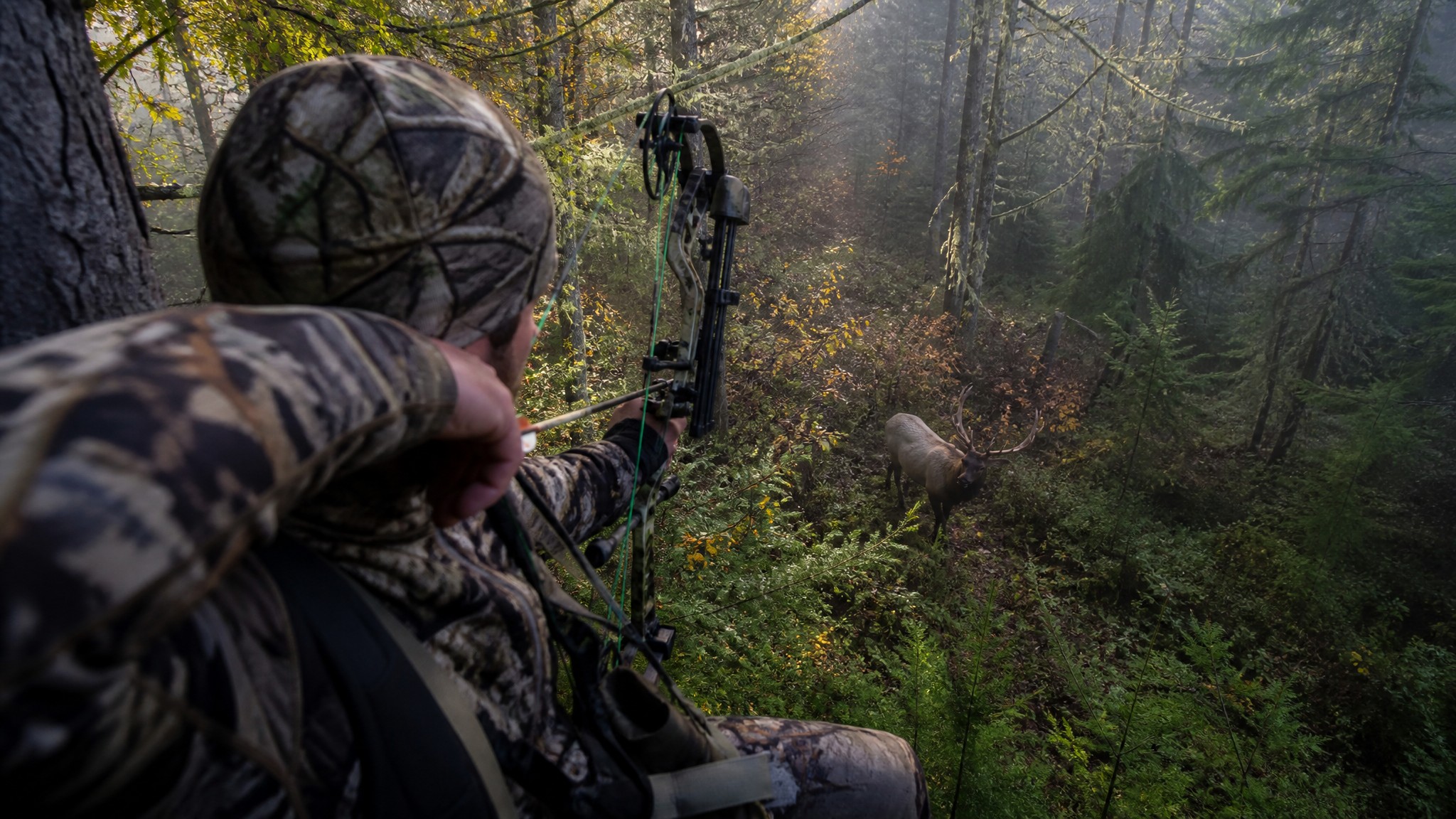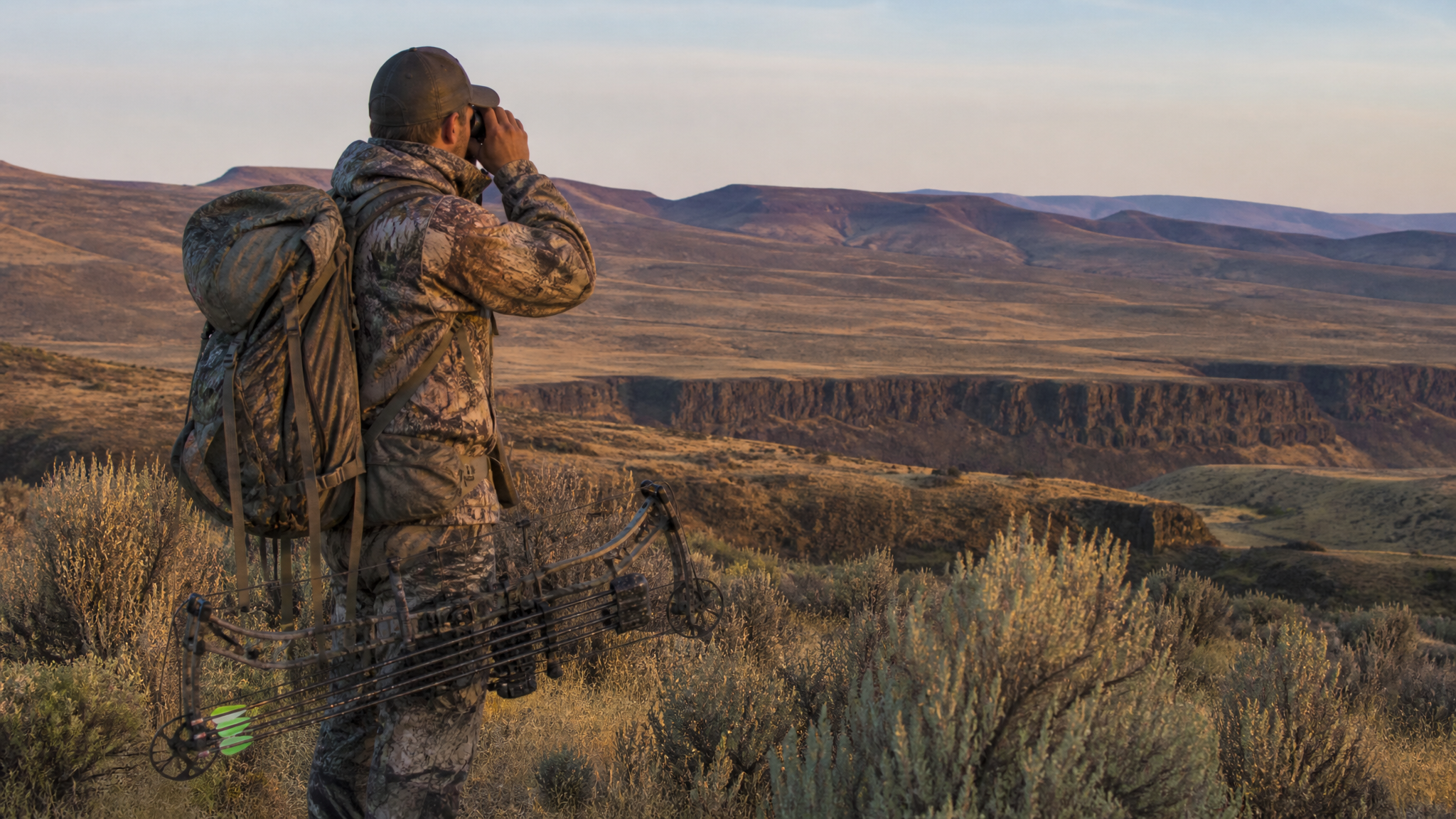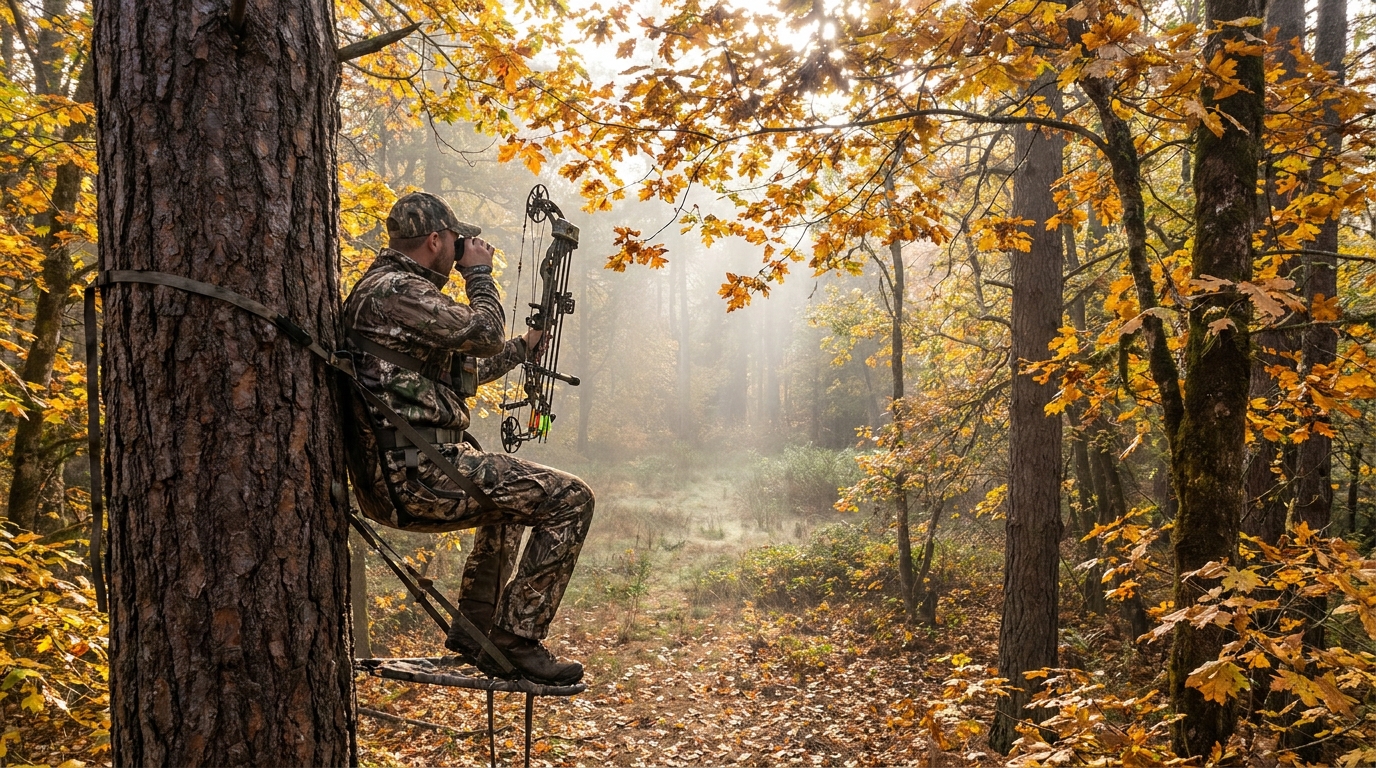
A few years ago, a hunter draped over a tree in a climbing harness and a piece of cordage would have drawn confused looks from the rest of the camp. Today, tree saddle hunting has gone from fringe technique to one of the fastest-growing methods in the bowhunting world — and for good reason. A saddle setup packs smaller than a compact treestand, weighs less than a climbing stand, lets you wrap around a tree trunk to shoot 360 degrees, and can be rigged in a tree that no conventional stand could access. For Western hunters who cover miles and need to stay mobile, it's a game-changer.
This guide covers the fundamentals: what a saddle setup actually is, how to choose gear, how to hang it safely, and how to shoot from the saddle position effectively before deer season opens.
What Is a Tree Saddle?
A tree saddle is essentially a climbing harness designed specifically for hunting. You wear the harness like a seat, clip a lineman's bridge (a short piece of webbing or rope) around the tree, and lean back against the bridge while standing on a small platform called a tether or aider. Unlike a conventional treestand where you sit in a seat and shoot forward, a saddle hunter faces the tree and leans back, using the tree trunk as concealment and the saddle as a suspension point.
The result: a platform that's quieter, smaller, and more versatile than virtually any commercial treestand. A full saddle setup — harness, platform, lineman's belt, and sticks — can weigh as little as 7–9 pounds and pack into a daypack without protruding above your head.
Core Gear You Need
The Saddle
The saddle itself is the harness component. Entry-level saddles from Tethrd (the Phantom), Latitude Outdoors, and Aider Hunting run $150–$300 and are adequate for most hunters. More premium options from Tethrd (the ONE), HuntStand, or custom builders offer adjustable panels, reinforced leg loops, and better weight distribution for all-day sits that are significantly more comfortable.
What to look for: adjustable bridge attachment points for different tree diameters, easy-access carabiner attachment for your main tether, padded leg straps (non-negotiable for sits over two hours), and webbing loops for accessory attachment.
The Platform
While some saddle hunters free-hang without a platform, most use a small hunting platform — essentially a folding step roughly 8x10 to 12x16 inches — attached to the tree via a strap. The Tethrd Predator, Hawk Helium, and Lone Wolf Hand Climber with platform adapter are all popular options.
The platform gives your feet a resting point and allows you to shift position silently. It's the difference between comfortable hunting and a miserable hang that ends at noon.
Climbing Sticks
You need a way to get up the tree. Sectional climbing sticks — 3 to 5 sections of 20-inch ladder that strap to the trunk — are the standard. Tethrd Phantoms, XOP Sticks, and Hawk Helium sticks are well-regarded options. Four sticks at 20 inches per section gets you to 25–30 feet of height, which is adequate for most whitetail and mule deer hunting.
Some saddle hunters use arborist spikes (gaffs) for faster tree ascent, but check your state regulations — spikes damage the cambium layer of the tree and are prohibited in some situations on public land.
The Main Tether and Bridge
The main tether connects your saddle to the tree above your platform and is your primary fall arrest point. Use a rated, sewn tether — not a homemade rope rig. The Tethrd rope bridge, Hunter Safety System lineman's belt, and similar products are rated to appropriate fall arrest loads. Do not improvise on this component.
Getting Into Position Safely
The number one rule of saddle hunting: maintain three points of contact at all times while climbing. As you place each stick, connect your lineman's belt to the tree above the stick you're about to step onto. This keeps you attached to the tree even if a stick fails or your foot slips. Never disconnect your lineman's belt to move your main tether without having an alternate attachment point secured first.
Set your platform at a comfortable height — typically 20–25 feet for open country, 15–20 feet in thick timber where shots are close. Attach your main tether about 6 inches above head height, lean back to test your suspension point, and spend a few minutes adjusting before you commit to your sit.
Shooting from the Saddle
This is the part that surprises first-time saddle hunters: the shooting position is different, and it requires practice. Because you're facing the tree and leaning back, you shoot off to either side of the trunk, using the tree as cover. To turn, you pivot your feet on the platform and rotate your body — the bridge rides around the tree trunk with you, allowing 360-degree shooting with no repositioning of the platform.
Practice the pivot at home before the season. Set up your saddle on a designated practice tree (or a porch post), get at height, and shoot 30–50 arrows from the saddle position. You'll quickly identify if your tether height needs adjustment and which side rotation feels more natural.
Key shooting adjustments for saddle hunters:
- Draw weight: Some hunters drop 5 lbs from their normal draw weight to account for the tension of leaning into the tether. Try both ways during practice.
- Shot angle: Saddle shots often occur at sharper quartering angles because you're shooting off the side of the tree. Practice these angles specifically.
- Elbow clearance: Watch your bow arm elbow on steep downward shots — the wrapped position around the tree can create a different clearance scenario than a traditional stand.
Why Saddle Hunting Fits the Western Style
Most saddle hunting content is targeted at Midwestern whitetail hunters, but the technique is arguably even more valuable in the West. Oregon and Washington public land hunters often face the choice of either packing a heavy hang-on stand miles into a drainage or hunting from the ground in country where the deer have the elevation advantage. A saddle kit changes that calculus entirely.
Columbia blacktail in the Coast Range, mule deer on east-side ponderosa ridges, and blacktail in the Cascade foothills all spend time near timber. A hunter who can read the terrain, identify a high-use tree on the edge of a feeding area, and be set up 25 feet in the air within 20 minutes of arriving has a genuine advantage — especially when that hunter also carries only 8 pounds of tree gear instead of 25.
Invest a few weeks of practice before season, build the climbing habit correctly, and the saddle will likely become your primary platform for the rest of your bowhunting career.