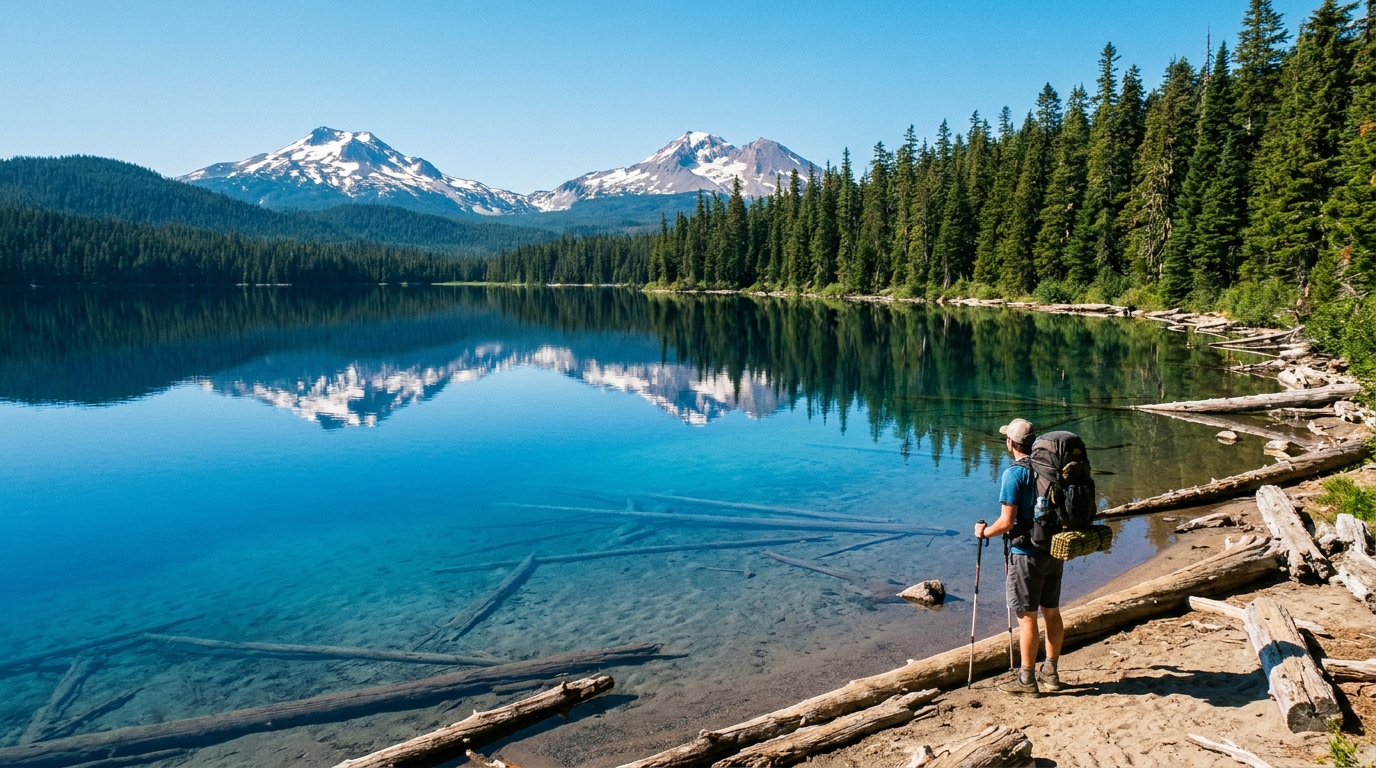
Waldo Lake is the kind of place that makes you wonder why you ever spend weekends somewhere else. At 5,414 feet in the central Oregon Cascades—about 35 miles southeast of Eugene via Hwy 58—it's the second-largest natural lake in Oregon and one of the clearest bodies of water on the planet. Visibility in Waldo often exceeds 100 feet; the lake is so oligotrophic (nutrient-poor) that nearly nothing grows in it, which is why you can see the bottom in 30 feet of water as clearly as a swimming pool. The surrounding Waldo Lake Wilderness offers excellent loop options that combine lakefront travel with high ridge routes and secluded satellite lakes.
Overview of the 3-Day Loop
This loop totals approximately 23 miles with around 2,400 feet of cumulative elevation gain—very manageable over three days. The route circumnavigates the lake via the North Waldo and West Shore trails, with a side trip to Rigdon Lakes and Jim Waldo Lake adding variety and solitude.
- Day 1: North Waldo Trailhead → Shadow Bay Campground via West Shore Trail (8.5 miles)
- Day 2: Shadow Bay → Jim Waldo Lake → Rigdon Lakes → North Waldo (9.5 miles)
- Day 3: North Waldo → North Shore Trail → North Waldo Trailhead (5 miles)
Getting There
From Eugene, take Hwy 58 east approximately 60 miles to the Waldo Lake Road (Forest Road 5897) turnoff near milepost 60, just past the small community of Oakridge. Follow Waldo Lake Road about 12 miles to the North Waldo Campground and Trailhead. The road is paved most of the way and accessible to standard 2WD vehicles. Northwest Forest Pass required for trailhead parking.
Day 1: West Shore to Shadow Bay (8.5 Miles)
Start at the North Waldo Trailhead and head south on the West Shore Trail (#3590). This trail follows the western shoreline through old-growth mountain hemlock and lodgepole pine, with periodic lake views. The forest is open and the walking is easy. Watch for the unmarked use trails that lead down to small beaches—great for a quick water filter stop or a look at the clarity up close. Shadow Bay Campground, roughly 8.5 miles south, has designated sites with a bear box and limited lake access. Camp early enough to explore the quiet southern bays by foot before dark.
Day 2: Rigdon Lakes and Jim Waldo Lake (9.5 Miles)
This is the best day on the loop. Head east from Shadow Bay on the Rigdon Lakes Trail (#3590A), which climbs a modest ridge before dropping into a sub-basin holding Upper and Lower Rigdon Lakes. These smaller lakes see a fraction of Waldo's traffic and offer excellent brook trout fishing. Bring a small UL rod—a 4-weight packable fly rod or a UL spinning setup works well here. From Upper Rigdon, continue east to Jim Waldo Lake, a beautiful alpine lake with a well-drained campsite on the north shore. The route then loops back north to rejoin the main trail at the east shore of Waldo Lake. End the day at the North Waldo area, where designated tent sites are available near the boat launch.
Day 3: North Shore Return (5 Miles)
A short, pleasant morning walk along the north shore returns you to the trailhead. The north shore trail stays close to the water and passes through open forest with views across the entire lake. Watch for osprey working the shallows—Waldo Lake has a small population that nests in the dead snags on the northeast shore.
Permits and Regulations
The Waldo Lake Wilderness is managed by the Willamette National Forest (Middle Fork Ranger District). As of 2026, there is no permit quota system for overnight backpacking at Waldo. Camping within 200 feet of the lake is prohibited to protect the extraordinary water quality—there are designated sites at Shadow Bay and North Waldo that comply with this rule, and dispersed camping is permitted in the wilderness away from the lake. Campfires are prohibited within the Waldo Lake Basin year-round due to fire risk and Leave No Trace concerns. Bring a stove.
When to Go
Snow typically clears the loop trail by mid-July. August is prime: long days, minimal mosquitoes (though early July can be brutal), stable weather. September is arguably the best month—crowds drop, temps are cooler for hiking, and the fall colors begin in the larch and huckleberry. The lake can be accessed until mid-October before early-season snow closes Waldo Lake Road.
Gear Notes for Waldo
Mosquitoes are notoriously savage in July—bring a head net and consider permethrin-treating your clothing. The exposed ridges on Day 2 can get afternoon thunderstorms in August; start early on long days. Water from Waldo Lake itself is some of the cleanest in Oregon, but always filter or treat it. A UL packable rod and small selection of flies or spinners for Rigdon and Jim Waldo lakes is worth the extra 4 ounces—the brook trout fishing is legitimate.
The Bottom Line
Waldo Lake is one of those Oregon destinations that belongs on every backpacker's list. The lake itself is reason enough to go—there is nothing quite like standing on a shoreline and watching the bottom disappear 80 feet below you in crystal clarity. The surrounding wilderness is quiet, well-maintained, and easy enough for fit beginners while still covering enough ground to satisfy experienced hikers. Plan the trip for late summer, pack a fishing rod, and give yourself three full days to do it right.