Before anything else: yes, snipe are real birds. Wilson's snipe (Gallinago delicata) is a legitimate North American shorebird, a member of the sandpiper family, and one of the most challenging upland/wetland game birds a shotgunner can pursue. The joke about sending kids on snipe hunts exists precisely because the real bird is so difficult to find and hit that nobody believes it's worth hunting. It absolutely is.
Oregon hosts strong populations of Wilson's snipe through the fall migration, and the Willamette Valley, Klamath Basin marshes, coastal estuaries, and agricultural sloughs of the state's interior valleys are loaded with them from September into December. Most hunters walk right past them. That's your opportunity.
The Bird
Wilson's snipe is a stocky, cryptically patterned shorebird — brown-streaked on top, cream-bellied — with a long, straight bill adapted for probing soft mud. Adults typically weigh 3.5 to 4.5 ounces. They roost and feed in wet, boggy ground: flooded fields, stock ponds, irrigation ditches, willow margins, and wet meadows with rank grass cover. When flushed, they rocket nearly straight up with a sharp scape call, then jink and twist unpredictably before leveling off. That erratic flight is what makes snipe hunting the supreme test of shotgunning reflexes.
Oregon Season and Limits
Oregon's snipe season traditionally opens in early September — the same general window as the early teal season — and runs through late February. The daily bag limit is 8 birds, with a possession limit of 24. These are generous numbers that reflect both the species' abundance and the difficulty of actually harvesting them. Check the current Oregon Sport Fishing and Hunting Regulations at myodfw.com for exact dates and any zone-specific rules before heading out.
A valid Oregon hunting license and a Federal Duck Stamp are required (snipe are migratory birds and fall under the Federal Migratory Bird Treaty Act).
Where to Hunt in Oregon
Willamette Valley
The valley's agricultural lowlands hold snipe wherever there's flooded or saturated ground. Look at the edges of grain fields with irrigation runoff, stock pond margins, drainage ditches along the valley floor, and wet pastures with sedge and rush cover. Sauvie Island Wildlife Area near Portland, Finley National Wildlife Refuge near Corvallis, and Ankeny NWR south of Salem all hold good numbers. Map the wet areas with OnX or Google Earth before walking in.
Klamath Basin
The Klamath Basin is world-class waterfowl country, and it produces snipe to match. The wet meadows and marsh margins around Upper Klamath Lake, Klamath Marsh National Wildlife Refuge, and the agricultural areas of the Klamath Valley hold snipe throughout the fall migration. Access regulations vary between state and federal wildlife areas — check before you go.
Coastal Estuaries
Oregon's coastal bays and estuaries — Tillamook Bay, Netarts Bay, Coos Bay, and Siletz Bay — all hold snipe in the marsh grass and mud flat margins. These birds can be extremely concentrated during and after storm fronts that push migrants down the coast.
Hunting Tactics
Walk-Up Without a Dog
You can hunt snipe without a dog. Walk slowly through likely habitat — wet grass margins, muddy field edges, boggy seeps — and be ready for an instant flush. The birds hold tight in dense cover and will sometimes flush nearly underfoot. Walk with your gun at the ready. When the bird rockets up, track it through its initial jink and shoot when it levels off, usually at 20 to 35 yards. Resist the urge to shoot the instant it flushes — the initial jinking makes that shot nearly impossible.
With a Flushing Dog
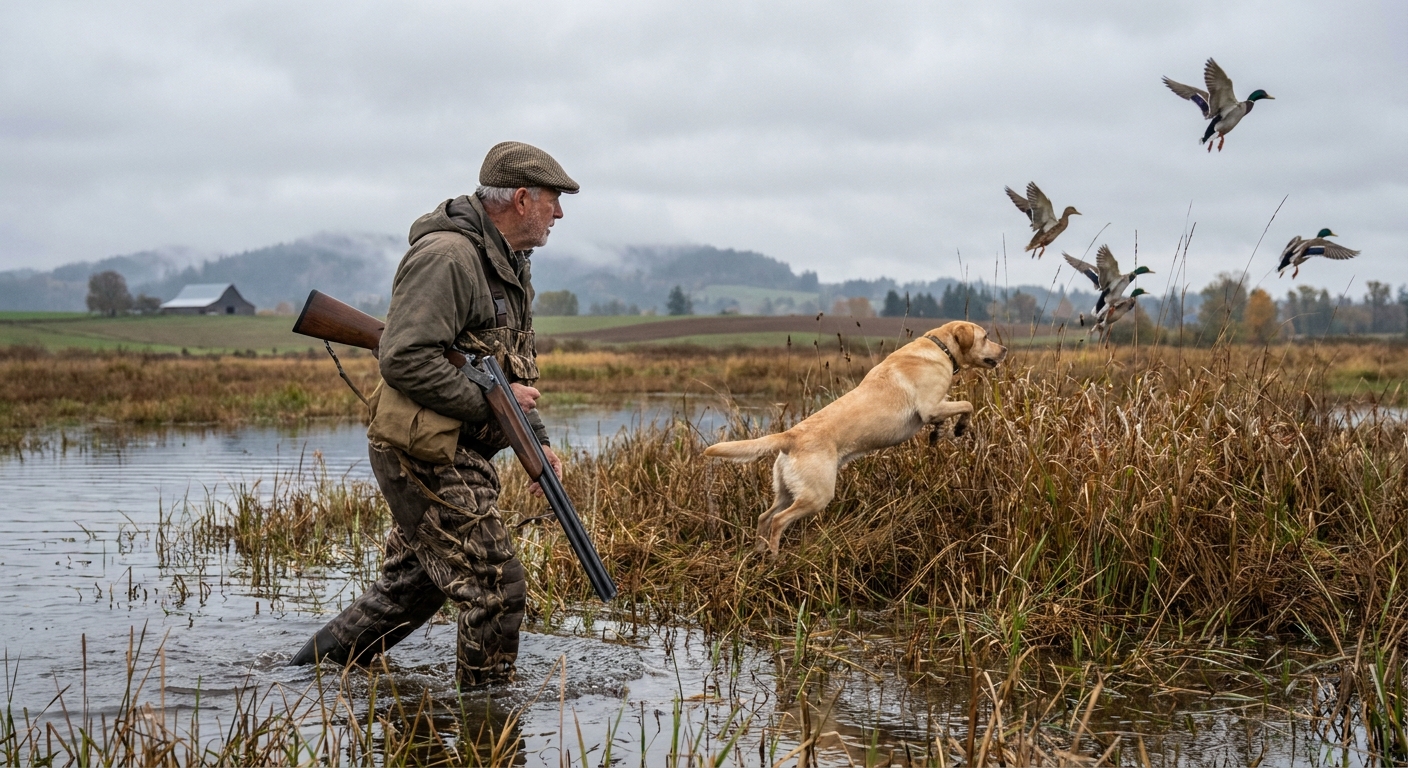
A Labrador, springer spaniel, or cocker spaniel is a significant advantage for both flushing and retrieving. Snipe blend perfectly into mud and dead grass, and a fallen bird without a dog is often a lost bird. Work the dog tight, keep it quartering ahead of you in the likely wet margins, and shoot as you would on any fast flushing upland bird.
Shooting Tips
The instinctive wingshooter has an advantage over deliberate, aimed shots on snipe. Mount the gun, track the bird, and pull the trigger when the barrel passes through it — thinking too hard gets you behind. Open to improved cylinder or modified choke. Full choke patterns are too tight for the unpredictable presentations this bird offers.
Guns and Loads
- Gauge: 20 or 12, either works well; 28-gauge in the hands of a skilled shooter is a genuine pleasure
- Choke: Improved Cylinder to Modified — open chokes work best
- Shot: #8 or #9 steel (required in most wetland zones due to migratory bird non-toxic shot rules) or bismuth/TSS for pattern density
- Load: Light field loads — snipe are small birds; heavy magnum loads are overkill
Wilson's snipe hunting is genuinely challenging, genuinely rewarding, and genuinely overlooked by almost every Oregon hunter. If you want a season-opening bird hunt that tests your wingshooting and rewards your knowledge of wet habitat, this is it. Go find some boggy ground, put on your rubber boots, and prove the joke wrong.